


Grotto Falls is one of the classic waterfall hikes in Great Smoky Mountains National Park, thanks to the rare chance to walk behind a 25-foot curtain of water. Families with kids, newer hikers, and experienced trekkers alike make the pilgrimage up the Trillium Gap Trail to this shady cove above Gatlinburg. If you are trying to decide whether the hike is right for you, it helps to understand how difficult it truly is, what the trail conditions are like in each season, and the practical details that can make or break your day.
Get the latest updates straight to your inbox!
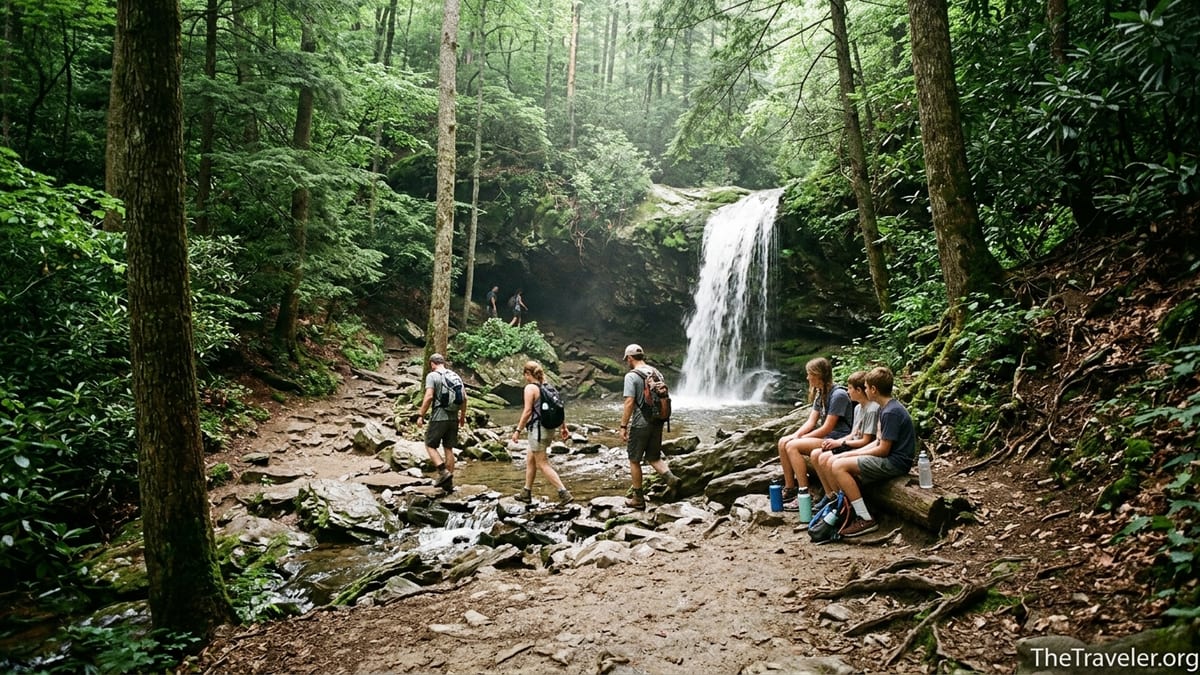
Where Grotto Falls Is and How the Hike Works
Grotto Falls sits on the Tennessee side of Great Smoky Mountains National Park, above Gatlinburg, along the one-way Roaring Fork Motor Nature Trail. The falls are reached by hiking a portion of the Trillium Gap Trail, a historic route that ultimately climbs all the way to Mount LeConte. Most visitors, however, turn around at the waterfall itself, making this an accessible taste of the Smokies without a full-day mountain climb.
The official Grotto Falls hike is roughly 2.6 to 3.0 miles round trip, depending on which guide you read, with about 500 to 600 feet of total elevation gain. In practical terms, that means a steady but moderate uphill walk of about 1.3 to 1.5 miles from the trailhead to the waterfall and then an easier downhill return on the same path. Many local outfitters in Gatlinburg, as well as visitor publications distributed in town, list the hike as “easy to moderate,” which matches most hikers’ experience.
Access is an important detail. From roughly May through late November in most recent seasons, you typically reach the trailhead via the Roaring Fork Motor Nature Trail, a narrow, one-way scenic road that starts just outside downtown Gatlinburg. In winter and early spring, this road usually closes for the season, which can shift how you access the trail and add extra road walking from the closure gate. Before you commit your day, check current conditions with the Great Smoky Mountains National Park information line or visitor centers in Gatlinburg or Sugarlands.
Because Grotto Falls is close to town and relatively short, it draws significant crowds, particularly on summer weekends and during peak leaf season in October. Parking is limited at the trailhead pullouts along Roaring Fork, and it is common to see motorists slowly circling, waiting for a space. Arriving before 9 a.m. or later in the afternoon after 3 p.m. dramatically improves your chances of both finding a spot and enjoying a quieter trail.
How Difficult Is the Grotto Falls Hike Really?
On paper, Grotto Falls is considered an easy-to-moderate hike. For many reasonably active visitors, the 2.6 to 3.0 miles round trip and moderate elevation gain feel like a comfortable half-day outing. The ascent is gradual rather than brutally steep, and there are plenty of natural rest points where the trail crosses small streams or passes through especially scenic sections of hemlock and hardwood forest.
That said, difficulty is relative. If you regularly walk two to three miles at home and can handle some hills, you will probably find this hike manageable, especially if you take breaks. For example, a family visiting from Nashville with school-age children who are used to neighborhood walks will often describe Grotto Falls as “a good workout but not too hard.” In contrast, if you are not accustomed to walking, have heart or joint issues, or are dealing with summer heat and humidity for the first time, the same trail can feel more strenuous than the numbers suggest.
When compared with other popular Smokies waterfall hikes, Grotto Falls usually falls in the middle. The paved section to Laurel Falls is shorter and technically easier, though ongoing construction closures and crowding can complicate a visit. Abrams Falls is longer, with more rolling ups and downs and a reputation for feeling tougher, and Rainbow Falls climbs more steeply with significantly more elevation gain. Many visitors who have done all three describe Grotto Falls as “more of a steady climb than a leg-burner.”
Trail ratings in local visitor guides and on hiking apps generally list Grotto Falls as “easy” or “moderate.” Hiking maps from regional outfitters in Gatlinburg sometimes categorize it as 3 miles round trip with a “moderate” symbol, the same category as other family-friendly waterfall hikes but below the tougher all-day climbs to Mount LeConte. If you are comfortable walking up a few flights of stairs without being completely winded, you will likely handle this trail with thoughtful pacing.
What the Trail Is Like Underfoot
Understanding trail conditions is key to judging whether Grotto Falls is a good match for your ability. The route follows the Trillium Gap Trail through a cool, shaded forest dominated by hemlocks, rhododendron, and hardwoods. For much of the way, the tread is packed dirt with embedded rocks and occasional roots. There are no technical scrambles, ladders, or hand-over-hand sections, but you will consistently need to watch your footing.
The trail crosses several small streams, often on stepping stones or shallow fords. After steady rain or during spring snowmelt, these crossings can be slick, and the path itself may be muddy. Many visitors in running shoes find they get their feet wet if they do not pick their steps carefully. Low-cut hiking shoes with good traction or trail running shoes are usually a better bet than flat-soled sneakers or sandals. Lightweight trekking poles can also help with balance, especially for hikers with knee issues.
As you get closer to the falls, the trail becomes rockier and more uneven. The final approach often has wet, mossy stones and roots, since the air around the waterfall is perpetually damp. This is the section where you are most likely to see people stumble or slip while trying to take photos. If you plan to walk behind the waterfall, expect slick rock and a narrow passage where you may need to pause to let others pass.
Because the trail steadily gains about 500 to 600 feet of elevation, you will notice the climb, but there are no extended, brutally steep stretches on the standard hike to the falls. The grade tends to alternate between gentle uphill and short, slightly steeper pitches. Most hikers find it easier on the lungs than some of the park’s longer climbs but more engaging than a flat stroll like the Gatlinburg Trail near Sugarlands Visitor Center.
Seasonal Conditions, Weather, and Crowd Patterns
Trail difficulty at Grotto Falls varies noticeably by season. In spring, especially from late March through May, melting snow at higher elevations and frequent rain can saturate the trail. Creek crossings run higher, and mud can turn certain sections into slippery, uneven footing. On the positive side, temperatures are cool and wildflowers start to carpet the forest floor, making this a rewarding time for hikers who bring waterproof footwear and are comfortable navigating wet ground.
Summer, from June through August, is the most popular season. Days are warm to hot, humidity is high, and afternoon thunderstorms are common. Although the forest canopy and the cool air around the waterfall take the edge off the heat, the uphill hike can still feel strenuous, especially for visitors coming from drier climates. It is not unusual to see families taking frequent breaks at trail-side rocks or logs, sharing water and snacks. Crowds are heaviest during this period, and parking along Roaring Fork often fills by mid-morning, particularly around long weekends and school holidays.
Autumn transforms the hike with fall foliage, especially from late September through late October in most years. The temperatures are generally more comfortable, but leaf litter can hide rocks and roots, making footing trickier in some stretches. This is also one of the busiest times on the trail, as visitors from across the Southeast come for foliage drives and short hikes. Expect full parking areas and a constant stream of hikers on fair-weather weekends.
Winter introduces its own challenges and charms. Roaring Fork Motor Nature Trail typically closes seasonally, which changes how you access the trailhead and may add distance if you need to park at the closure and walk in along the road. Snow and ice are possible on higher sections of the trail, and even on cold but dry days, shaded rocky areas near the falls can hold slick patches. On the other hand, crowds thin drastically, and hikers who come prepared with traction devices, warm layers, and extra care often find they have sections of the path almost to themselves.
Planning Your Visit and Logistics From Gatlinburg
Because Grotto Falls is so close to Gatlinburg, many visitors plan it as a half-day hike before or after exploring town. A typical schedule for a reasonably fit group might include leaving a downtown Gatlinburg hotel or cabin around 8 a.m., stopping at a coffee shop along the Parkway for breakfast, then driving the few minutes to the start of Roaring Fork Motor Nature Trail. After allowing time to navigate the narrow, slow one-way road and find parking, most groups hit the trail by 9 a.m., spend 2 to 3 hours hiking and enjoying the falls, and then return to town for lunch.
Parking at the Grotto Falls trailhead is free, but like the rest of Great Smoky Mountains National Park, a parking tag is now required if you will be parked for more than a short period. Daily tags are relatively inexpensive and can be purchased at visitor centers, self-serve kiosks in key parking areas, and some locations in Gatlinburg. Many travelers staying several days in the region opt for a weekly tag, which is more cost-effective if you plan to hike multiple trails such as Clingmans Dome, Alum Cave, or Laurel Falls.
Roaring Fork itself is a one-way loop road with narrow lanes, sharp curves, and no shoulders in many places. Large RVs and trailers are not permitted, and drivers unused to mountain roads should allow extra time. In busy periods, it can easily take 30 to 40 minutes from the start of the loop to reach Grotto Falls parking, even though the distance is short on the map. Visitors staying in cabins off Cherokee Orchard Road or along the back roads near Roaring Fork often have a small advantage, as they can avoid some of the traffic entering from the center of Gatlinburg.
If you arrive to find the main pullouts at the trailhead full, be patient and avoid creating unofficial parking spots. Rangers do ticket vehicles blocking traffic or damaging roadside vegetation. Often, waiting a few minutes for day hikers to return, or continuing a little farther along Roaring Fork to turn around and come back, will yield an open space. Starting early or planning a shoulder-season visit outside the peak of summer makes the logistics much smoother.
Gear, Safety, and Who This Hike Is Best For
One of the reasons Grotto Falls is so popular is that it does not require specialized gear. Many hikers complete it in sturdy athletic shoes, shorts or hiking pants, and a light daypack. That said, a few well-chosen items can significantly improve your comfort and safety. Footwear with good tread is especially important; trail running shoes or light hiking shoes work well. A basic 16 to 20 liter daypack with at least one to two liters of water per person, some snacks, and a light rain jacket is usually sufficient for most three-hour outings.
Because of stream crossings and the splash zone around the falls, some hikers like to pack a small microfiber towel or an extra pair of socks. If you plan to take photos on a smartphone, a simple waterproof pouch can give you peace of mind when you step behind the falls. Trekking poles are helpful but optional for most people; they are particularly useful for older hikers, those with knee issues, or anyone unsteady on rocky terrain.
Families with children frequently choose Grotto Falls as a first “real” Smokies hike. School-age kids who are used to walking will usually do well as long as you build in breaks, carry enough snacks, and set expectations that it is an uphill walk on the way in. Parents of toddlers often opt for child carriers rather than strollers, as the trail is not suitable for wheels. For multi-generational groups, a common pattern is that fitter family members carry small daypacks and help others navigate rockier sections near the waterfall.
As with any waterfall hike, a cautious mindset around the water is important. The rocks near and behind the falls are slick, and a fall can cause injuries ranging from bruises to sprains or fractures. Rangers routinely advise visitors to stay off wet, algae-covered boulders and to avoid climbing on logs or rocks directly in the plunge pool. Even on hot days, the water is cold, and currents can be surprisingly strong near the base of the falls, especially after heavy rain.
Extending the Hike and Comparing Nearby Trails
For hikers who find the 2.6 to 3.0 mile out-and-back to Grotto Falls too short, the Trillium Gap Trail continues beyond the waterfall toward Mount LeConte. Extending your outing even a mile or two past the falls gives you a taste of a quieter, more rugged trail, with fewer crowds and more noticeable elevation gain. Local hiking guides often suggest experienced hikers aim for the Trillium Gap area or, for a full-day challenge, the summit of Mount LeConte, though that is a substantially more strenuous outing that most casual visitors will not tackle.
Those looking to plan a weekend of varied hikes around Gatlinburg often pair Grotto Falls with other classic trails. For a very easy day, you might choose the Gatlinburg Trail or a short walk to Cataract Falls near Sugarlands Visitor Center, saving Grotto Falls for the next morning. For a moderate challenge, combining Grotto Falls on one day with the hike to Alum Cave Bluffs on another provides two very different experiences: one in a lush, shaded cove with a waterfall you can walk behind, and the other on a more exposed, rocky trail with sweeping mountain views.
Within driving distance, Cades Cove offers the Abrams Falls hike, which is longer and considered a bit more strenuous than Grotto Falls due to rolling climbs and a more remote feel. Visitors who start with Grotto Falls and find it manageable sometimes later choose Abrams Falls as their next step up in difficulty, often scheduling it on a cooler day. Others discover that the Grotto Falls level of effort is their comfort zone and instead repeat it at a different time of year to experience seasonal changes.
Because parking, traffic, and seasonal closures all factor into hiking plans, many regular Smokies visitors recommend building flexibility into your schedule. If Roaring Fork is closed for weather or maintenance, or parking is impossible when you arrive, it is wise to have a backup plan like the Chimneys Picnic Area trails, Cataract Falls, or the Little River Trail in Elkmont. In this way, Grotto Falls becomes part of a larger menu of short to moderate hikes rather than the only objective of your day.
FAQ
Q1. How long does it take to hike Grotto Falls round trip?
Most visitors spend about 2 to 3 hours hiking Grotto Falls, including time for breaks, photos, and relaxing at the waterfall. Very fit hikers may complete it in closer to 90 minutes, while families with young children or frequent photo stops often take the full three hours.
Q2. Is Grotto Falls suitable for beginners and kids?
Yes, Grotto Falls is a popular choice for newer hikers and families with school-age children who can comfortably walk a couple of miles. The trail is uphill on the way in and has roots and rocks, so it is not a simple sidewalk stroll, but most beginners find it manageable with breaks and good footwear.
Q3. Can you really walk behind Grotto Falls?
Yes, one of the main draws of this hike is the ability to walk behind the 25-foot waterfall. The rock ledge creates a shallow cave-like space where the trail passes behind the curtain of water. The ground here is often wet and slippery, so move slowly, wear shoes with good traction, and watch children closely.
Q4. Is the Grotto Falls trail open year-round?
The trail itself is generally open year-round, but road access via Roaring Fork Motor Nature Trail is usually seasonal. In winter and early spring, the road often closes for the season, and snow or ice can affect conditions. Before your trip, check with park information sources or visitor centers in Gatlinburg for current road and trail status.
Q5. Do I need a parking tag or permit to hike Grotto Falls?
You do not need a backcountry permit for a day hike to Grotto Falls, but you do need a valid Great Smoky Mountains National Park parking tag if you will be parked for more than a brief stop. Daily, weekly, and annual tags are available at park visitor centers and automated kiosks in the area.
Q6. What is the best time of day to hike Grotto Falls?
Starting early in the morning, ideally before 9 a.m., is usually the best strategy. Early hikers enjoy cooler temperatures, better chances of finding parking along Roaring Fork, and slightly lighter crowds on the trail. Late afternoon can also be pleasant, but you should allow enough time to finish before dark.
Q7. What should I wear and bring on the hike?
Wear breathable layers suited to the season, along with sturdy shoes or trail runners that have good grip. Pack at least one to two liters of water per person, snacks, a light rain jacket, and sun protection even though much of the trail is shaded. A small first-aid kit and a phone with an offline map are good additions, and trekking poles can help with balance on rocky sections.
Q8. How does Grotto Falls compare to Rainbow Falls or Laurel Falls?
Compared with Rainbow Falls, Grotto Falls is shorter with less elevation gain and is generally considered easier. Laurel Falls, when fully open, is shorter and partially paved, but it often feels more crowded and has exposure along some sections. Many visitors view Grotto Falls as a comfortable middle ground with a good effort-to-reward ratio.
Q9. Are dogs allowed on the Grotto Falls trail?
No, dogs are not allowed on most trails in Great Smoky Mountains National Park, including the Trillium Gap Trail to Grotto Falls. Service animals trained to perform specific tasks for people with disabilities are the exception. If you are traveling with a pet, you will need to make other arrangements while you hike.
Q10. Is Grotto Falls a good choice in very hot or rainy weather?
In hot weather, the shaded forest and cool air around the waterfall make this a more comfortable option than many exposed hikes, but the uphill walk can still feel demanding. During or immediately after heavy rain, the trail can become muddy and slick, and creek crossings run higher. Many hikers choose to avoid the trail during thunderstorms or intense downpours and opt for a clearer window in the forecast.