


Abrams Falls is one of the classic waterfall hikes in Great Smoky Mountains National Park, and its relatively short distance has made it a magnet for first-time visitors. At about 5 miles round trip with a big, photogenic cascade at the end, it looks beginner friendly on paper. The reality on the ground is more nuanced. Whether a new hiker can handle Abrams Falls Trail without struggling depends on fitness, expectations, and timing, as well as some very real safety considerations that surprise many visitors.
Get the latest updates straight to your inbox!
What Abrams Falls Trail Is Really Like
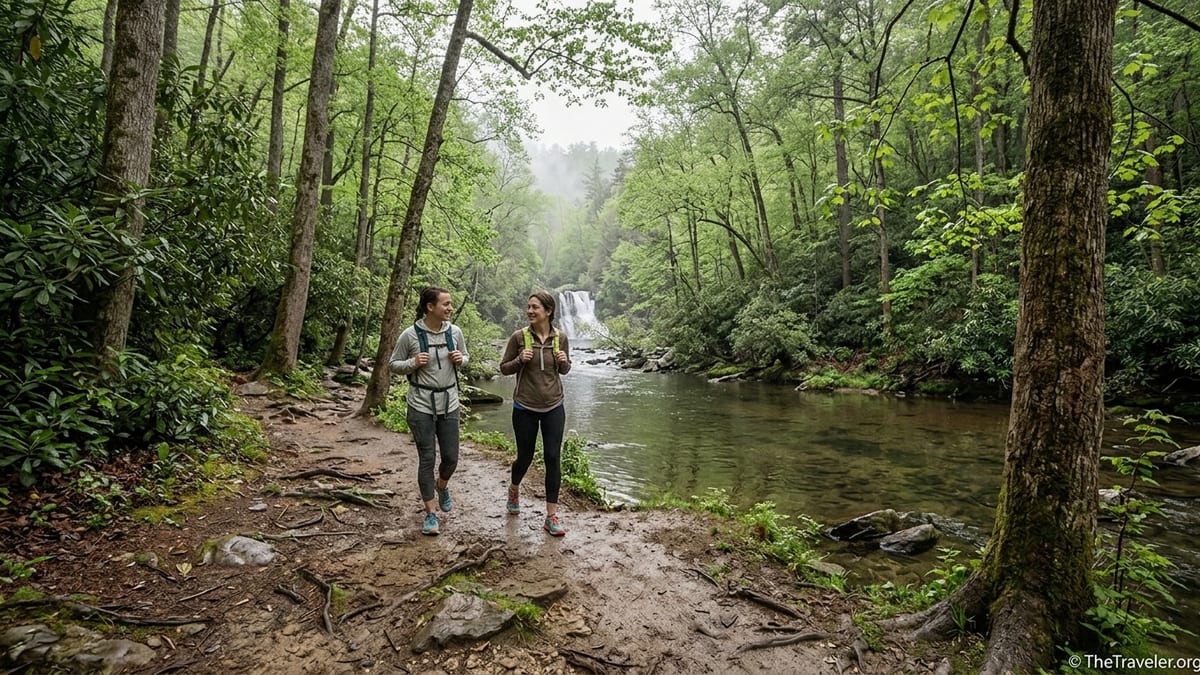
Abrams Falls sits in the Cades Cove area of Great Smoky Mountains National Park in eastern Tennessee. The official National Park Service description lists the hike as roughly 5 miles round trip from the Abrams Falls trailhead on the Cades Cove Loop Road, with the trail rolling along Abrams Creek through hardwood forest and rhododendron thickets before reaching a 20 to 25 foot waterfall that plunges into a deep pool. Although the waterfall is not especially tall, it carries a heavy flow, which is part of what makes the hike so popular.
Most guidebooks and outfitters around Townsend and Gatlinburg rate the trail as moderate rather than easy. Mapping apps such as onX and Gaia GPS typically show around 600 to 700 feet of cumulative elevation gain spread across several hills rather than a single big climb. The path is well defined but includes rocky sections, roots, short but steep pitches, and occasional muddy spots after rain. For a fit day hiker who is used to walking a few miles at home, this will feel like a solid but manageable outing. For someone whose usual exercise is flat city sidewalks, it can be a workout.
Another point that shapes the experience is crowding. Abrams Falls is one of the better known waterfall hikes in the Smokies, and on peak days you may find the small parking lot at the end of the Cades Cove Loop Road full by mid-morning. That means beginners are often sharing the trail with families, photographers, and hiking groups of all ages. The social atmosphere can be reassuring, but it also means you cannot always go at your own pace, particularly on narrow sections where people bunch up.
Finally, conditions matter. Great Smoky Mountains can be humid and hot from late spring through early fall, and this canyon-like valley traps warm air. In midsummer, a beginner attempting Abrams Falls in the early afternoon may find the combination of rolling hills, heat, and humidity far more tiring than the mileage suggests. In contrast, a cool October morning can make the same trail feel pleasantly moderate, with colorful foliage and comfortable temperatures.
Current Safety and Access Considerations
Before deciding whether Abrams Falls is appropriate for a first hike, travelers should be aware of current safety advisories. As of spring 2026, the National Park Service has periodically closed Abrams Falls Trail because of aggressive bear activity in the area. Local coverage and park communications in April described at least one incident where a bear reportedly bit a visitor near the falls, prompting a temporary closure while rangers monitored conditions and hazed wildlife away from heavily used areas.
The park’s own “Current Conditions” page is updated regularly and lists specific trail closures, including any active closure of the Abrams Falls Trail or the road section that accesses the trailhead. Trail status can change with little notice because of bear behavior, storm damage, or high water along Abrams Creek. A beginner already anxious about their first hike is likely to have a much better experience if they verify that the trail is fully open and that no special cautions apply on the day of their visit.
Water safety is another serious concern. The pool at the base of Abrams Falls looks inviting, especially on a hot summer afternoon, and social media images often show visitors at the water’s edge. The National Park Service explicitly warns that swimming is strongly discouraged here because of powerful currents, undertows, and slippery rocks near the falls. Over the years there have been multiple drownings and near misses at this site. For beginners who may not yet have a strong “safety reflex” in outdoor settings, it is critical to understand that this is a place to admire the water from shore, not to climb around behind the falls or wade near the plunge pool.
Traffic and timing can also affect safety and stress levels. To reach the trailhead, visitors must drive almost the full length of the one-way Cades Cove Loop Road. In busy seasons this loop often backs up behind wildlife sightings and slow-moving vehicles. It can easily take 45 minutes to an hour just to reach the parking area from the start of the loop. Beginners who arrive late in the day sometimes find themselves rushing the hike to get out before dark or hiking back in fading light. Planning an early start and allowing for the drive can make the entire outing feel more relaxed and manageable.
How Hard Is It Physically for a True Beginner?
In hiking terms, Abrams Falls is a short to medium distance day hike with moderate difficulty. For context, many visitors compare it with nearby Laurel Falls, which is paved for part of the way and significantly shorter. Laurel Falls is often described as an easy introduction for first-time hikers. Abrams Falls is a meaningful step up from that: longer, rougher underfoot, and with more elevation change, even though it is still far easier than strenuous Smokies classics like Alum Cave Trail or the steep routes to Mount LeConte.
For a person who walks 2 to 3 miles on flat ground a few times each week, Abrams Falls may feel like a solid workout but not extreme. Expect to spend roughly 2.5 to 3.5 hours hiking, including breaks, if you keep a beginner friendly pace. The rolling hills on the way to the falls require sustained but not brutal effort; many new hikers report breathing hard on some climbs but recovering quickly. Trekking poles can help lessen strain on knees during the short downhill sections on the return, which is something older beginners and those with joint issues notice.
However, many people who describe themselves as “beginners” on this trail have very different baselines. A visitor driving from a low elevation city, unused to hills and humidity, may find the same hike surprisingly tough. In online reviews, it is common to see comments like “harder than I expected for 5 miles” or “rocky and rooty in spots, not a stroll.” Parents hiking with younger children often report that kids aged six to ten can complete the hike if they are used to walking at home and if adults build in plenty of snack and rest stops. Elderly visitors or those with limited mobility tend to find the continual ups and downs more challenging.
The good news is that the trail allows for turning around at any point. There are several scenic spots along Abrams Creek in the first mile and a half where nervous beginners can take a break, gauge how they feel, and decide whether to continue. If the first uphill section after the initial footbridge leaves someone exhausted, it is better to enjoy a short creekside stroll, then head back, than to press on to the falls and risk a miserable or unsafe return trip.
Who Should Probably Skip Abrams Falls on a First Trip
While many newcomers can enjoy Abrams Falls, some travelers are likely to struggle. Anyone with significant knee, hip, or balance issues should think carefully before choosing this trail as a Smokies introduction. Uneven footing, roots, and the repeated small climbs and descents can aggravate joint pain and increase the risk of a fall. In these cases, flatter riverside walks such as the Middle Prong Trail near Tremont, or shorter nature trails in the Cades Cove area, often provide a better starting point.
People with heart or lung conditions, or those who become easily short of breath on stairs, may also find Abrams Falls taxing. The Smokies’ humidity and summer heat amplify effort, and there are no bail-out points where a vehicle can pick you up. If someone is unsure how their body will respond, it makes sense to talk with a medical provider before the trip and to try a few practice walks at home that include hills or stair climbs equivalent to what they might encounter.
Families traveling with toddlers or very young children should be cautious. Although you will see families carrying children in hiking backpacks along Abrams Falls, managing five miles of uneven terrain while carrying extra weight requires experience. New parents who have not used a child carrier on a trail before may find a shorter, less committing walk more appropriate for a first outing. The drop-offs and moving water near the falls also require constant supervision, which can be stressful after a long hike in hot weather.
Finally, beginners who are anxious about wildlife encounters might prefer a more open, well trafficked trail during periods of active bear advisories. Abrams Falls passes through bear habitat, and rangers have issued temporary closures in recent seasons because of bears showing little fear of humans along this route. Nervous hikers may have a better experience starting on a busier, partially paved path closer to park visitor centers, then building up to more secluded waterfall hikes later in the trip.
How First-Time Hikers Can Set Themselves Up for Success
For beginners who still want to experience Abrams Falls, preparation makes the difference between struggling and finishing with a smile. One of the most practical steps is to treat the hike like a small event rather than a casual stroll. In the week or two before your trip, practice walking 2 to 3 miles on local greenways or neighborhood hills while wearing the shoes you plan to hike in. If you can comfortably manage a one-hour brisk walk at home, you are more likely to feel confident on the rolling terrain of the Abrams Falls Trail.
Footwear matters. While you do not need technical mountaineering boots, lightweight hiking shoes or trail running shoes with good grip make a real-world difference compared with smooth-soled sneakers. The trail crosses wet, rocky sections and can be slick with fallen leaves in autumn. A beginner in basic running shoes might slip more often and tire from constantly watching foot placement, while someone in shoes with tread can move more naturally.
Time of day and season also affect how tough the hike feels. Starting early, ideally before 9 a.m., avoids the worst of midday heat and gives you more room to move at your own pace without jostling for space at every viewpoint. Spring and fall often offer cooler air and more moderate trail traffic than peak summer weekends. Many local lodging providers in Townsend and Wears Valley encourage guests to plan Abrams Falls on a weekday morning, grabbing a simple packed breakfast and coffee and heading straight to Cades Cove to be near the front of the loop when it opens.
On the trail itself, pacing and breaks are key. New hikers sometimes push hard up the first hill, get out of breath, and then feel discouraged. A steadier approach, where you walk until your breathing deepens and then stop briefly to sip water, tends to produce a much more pleasant day. A typical beginner-friendly rhythm might involve a short break every 15 to 20 minutes on the way in, then a slightly longer rest at the falls before turning back.
Gear, Water, and Food: What Beginners Actually Need
For a fair-weather day on Abrams Falls, beginners do not need a full backpacking setup, but they do need more than a car-park stroll would require. The most important item is water. The Smokies are infamous for summer humidity, and even in spring and fall, hiking uphill with a small pack can be surprisingly sweaty. A reasonable target for a first-timer is to carry at least one liter of water per person, with more in hot weather. A simple reusable bottle or a hydration bladder both work; what matters is that you have enough and that it is easily accessible so you actually drink it.
Snacks are almost as important. Real-world experience on this trail shows that energy dips are common just before the falls on the outbound leg and again shortly after leaving the falls on the return. Bringing salty and carbohydrate-rich snacks such as trail mix, crackers, or granola bars helps maintain energy and mood, especially for kids. Many families in rental cabins around Townsend report packing a small lunch to eat at a safe distance from the water’s edge, away from slippery rocks.
Weather-appropriate clothing can help keep a manageable hike from turning into a slog. Quick-drying shirts, lightweight hiking pants or shorts, and a light rain jacket or wind shell in spring and fall are often enough. Cotton jeans and heavy sweatshirts, which stay damp, can make you feel chilled when you stop or overheated in the sun. A small daypack to hold clothing layers, snacks, and water is usually sufficient; there is no need for large internal-frame backpacks on this route.
Finally, a few small safety items are worth adding even for a well-traveled day hike. These include a basic first aid kit for blisters and minor scrapes, a headlamp or small flashlight in case the hike runs longer than expected, and a paper map or offline map on a phone. Cell coverage in Cades Cove can be spotty, and new hikers sometimes underestimate how quickly clouds can roll over the Smokies or how dark the forest becomes at dusk.
Best Times and Alternative Options for Nervous Beginners
Seasonality plays a big role in whether beginners struggle on Abrams Falls. Spring brings cool temperatures and wildflowers, but also muddy sections from snowmelt and spring rains. Summer offers lush greenery and longer daylight but can be hot, humid, and crowded, which amplifies fatigue. Autumn is often the sweet spot: cooler air, colorful foliage, and somewhat less oppressive humidity, though fall weekends can be extremely busy with leaf-peeping traffic through Cades Cove.
Winter hikes to Abrams Falls are less common for first-timers but not unheard of in mild spells. The trail can be icy in shady areas, and the Cades Cove Loop Road itself may be temporarily closed after storms. For beginners, winter conditions increase both difficulty and risk and are best approached only with local advice and appropriate gear such as microspikes.
Travelers who decide that Abrams Falls feels like too big a jump can still enjoy waterfall or creekside hikes that are kinder to newcomers. Around the Smokies, outfitters and park rangers often steer nervous first-timers toward places like the Middle Prong Trail at Tremont or the paved portions of the Gatlinburg Trail, both of which provide scenic rivers without as much elevation change. Families who want a waterfall experience with less commitment might choose a short roadside cascade stop combined with a visit to a visitor center and a picnic, then save Abrams Falls for a future trip when everyone has a bit more hiking under their belts.
Another option for cautious beginners is to hike only part of Abrams Falls, treating it as an out-and-back stroll along the creek rather than a mission to reach the waterfall. Even walking one mile in and one mile out offers a taste of Smokies forest, flowing water, and wildlife, with fewer physical demands. This approach lets new hikers learn how their bodies respond to uneven ground in a controlled way, and it leaves the full falls experience as a rewarding goal for a follow-up visit.
The Takeaway
So can beginners handle Abrams Falls Trail without struggling? Many can, provided they are reasonably active in daily life, choose appropriate conditions, and prepare both mentally and physically for a moderate hike. The combination of a manageable distance, rolling hills, and a dramatic waterfall payoff makes this a justifiably popular choice for a first “real” hike in the Smokies.
At the same time, Abrams Falls is not a casual sidewalk stroll. Heat, humidity, uneven footing, and the trail’s repeated climbs and descents can catch newcomers off guard, and the water at the base of the falls presents real hazards that demand respect. Those with significant mobility limitations, health concerns, or intense anxiety about wildlife may find that easier trails offer a more enjoyable introduction to the park.
The most important step for any beginner considering Abrams Falls is honest self-assessment. If you can comfortably walk a few miles at home, are willing to start early, carry adequate water and snacks, and respect park safety advisories, you are likely to find the hike challenging in moments but deeply rewarding overall. If not, the Smokies offer plenty of alternative walks where you can build confidence first, then return to Abrams Falls when you are ready to enjoy it rather than endure it.
FAQ
Q1. Is Abrams Falls Trail currently open to hikers?
Trail status can change because of bear activity, storm damage, or maintenance, and in spring 2026 the trail has seen temporary closures for aggressive bears. Always check the Great Smoky Mountains National Park current conditions page or speak with rangers at a visitor center shortly before your hike.
Q2. How long does it take a beginner to hike Abrams Falls?
Most first-time hikers should plan on 2.5 to 3.5 hours to complete the roughly 5 mile round trip, including breaks and time to rest at the falls. Faster, very fit hikers may take less, while families with young children might need closer to 4 hours.
Q3. Is Abrams Falls Trail safe for children?
Many families hike Abrams Falls with school-age kids who are used to walking, but the distance and hills can be demanding for younger children. The area near the falls has slippery rocks and moving water, so close supervision is essential and children should be kept well away from the plunge pool.
Q4. Can I swim at Abrams Falls?
Swimming is strongly discouraged by the National Park Service because of powerful currents, undertows, and hidden hazards in the pool below the falls. Even strong swimmers have gotten into trouble here, so it is safest to enjoy the view from shore and cool off by resting in the shade instead.
Q5. Do beginners need hiking boots for Abrams Falls?
Sturdy footwear is important, but full heavy boots are not required. Lightweight hiking shoes or trail running shoes with good traction are usually enough. Smooth-soled casual sneakers can be slippery on wet rocks and roots and may make the hike feel more difficult.
Q6. What should I bring on my first hike to Abrams Falls?
At a minimum, bring at least one liter of water per person, some high energy snacks, weather-appropriate clothing layers, and a small daypack. A basic first aid kit, a headlamp, and trekking poles can further increase comfort and safety, especially for beginners.
Q7. When is the best time of day for beginners to hike Abrams Falls?
Early morning is usually best. Starting before mid-morning helps you avoid both midday heat and the heaviest trail traffic, and gives you plenty of daylight if you take a slower pace or longer breaks.
Q8. How does Abrams Falls compare to other Smokies hikes for new hikers?
Abrams Falls is generally harder than short, partially paved trails like Laurel Falls but easier than steep, strenuous routes such as Alum Cave or the climbs to Mount LeConte. It falls in the moderate category and is a reasonable goal for beginners who already walk several miles at home.
Q9. Are bears common on Abrams Falls Trail?
Black bears live throughout Great Smoky Mountains National Park, and sightings along Abrams Falls Trail do occur. In recent seasons, aggressive bear behavior has led to temporary trail closures. Carry bear spray only where legal, follow all food storage rules, make noise as you hike, and give any wildlife plenty of space.
Q10. What should I do if Abrams Falls feels too hard once I start?
If you find yourself very tired or uncomfortable early on, it is perfectly acceptable to turn around before reaching the falls. Take a break, drink some water, and honestly assess how you feel. Enjoy the forest and creek views you have already experienced, then choose a shorter or flatter trail for another day while you build up your hiking fitness.