


In Great Smoky Mountains National Park, two waterfall hikes near Gatlinburg regularly top visitor wish lists: Grotto Falls and Laurel Falls. On paper, they sound similar: short to moderate distances, classic Smokies scenery, and easy access from town. In reality, they offer very different experiences. With Laurel Falls Trail closed for a long‑term rehabilitation project through at least fall 2026, and Grotto Falls growing busier every year, understanding those differences matters more than ever when you are planning a limited vacation day.
Get the latest updates straight to your inbox!
Quick Overview: Two Very Different Waterfall Experiences
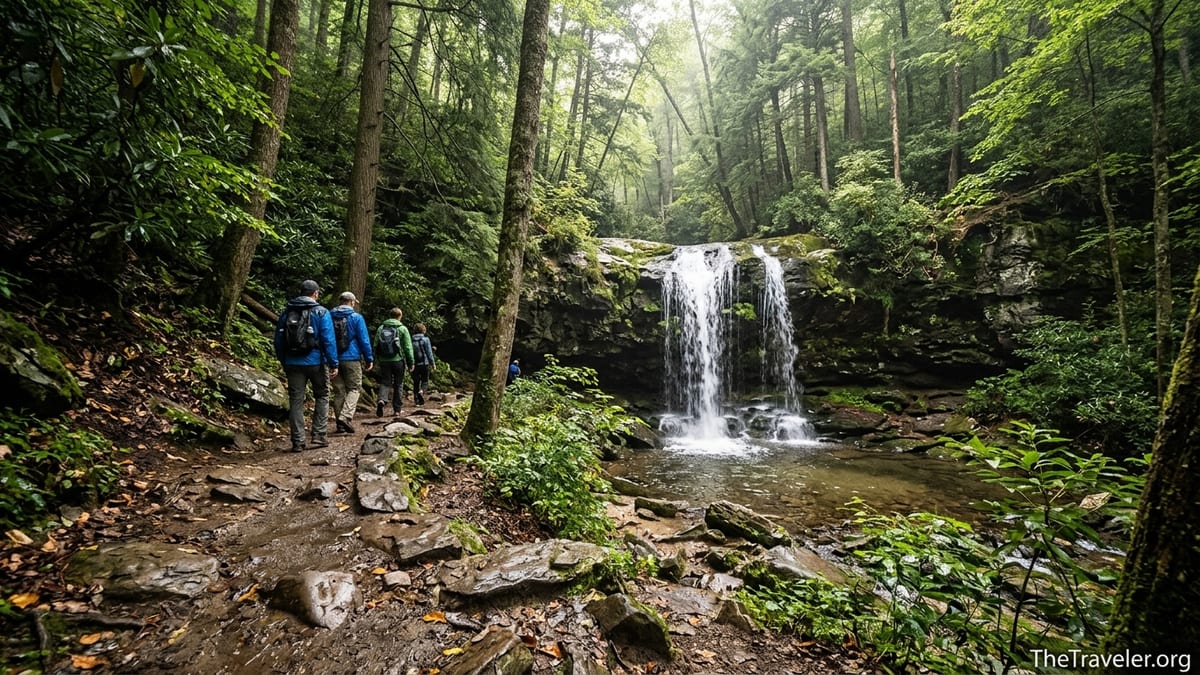
Grotto Falls and Laurel Falls both sit on the Tennessee side of Great Smoky Mountains National Park, a short drive from downtown Gatlinburg. Yet the character of each hike is distinct. Grotto Falls is reached via the Trillium Gap Trail off the Roaring Fork Motor Nature Trail and is best described as a classic forest hike: about 2.6 to 3.0 miles round trip, with a steady but manageable climb through cool, mossy woods to a 25‑foot waterfall you can actually walk behind.
Laurel Falls begins from Fighting Creek Gap along Little River Road, roughly 3 to 4 miles west of Sugarlands Visitor Center. The round‑trip distance to the falls is about 2.6 miles, but the trail is paved most of the way and was historically marketed as an easier, stroller‑friendly option. Its wide, partially paved surface and much shorter drive from Gatlinburg made it one of the single most crowded hikes in the entire national park, especially in summer and on holiday weekends.
Today, there is a key planning asterisk: the National Park Service has closed Laurel Falls Trail for an 18‑month rehabilitation project that began in early 2025, with a closure notice extending through at least fall 2026. During this time you cannot legally hike to Laurel Falls from the traditional trailhead, although you may still see the area on maps or older guidebooks. Grotto Falls, by contrast, remains open, though access is shaped by the seasonal schedule of the Roaring Fork Motor Nature Trail, which usually closes in winter and reopens in spring.
When you put both hikes side by side, it becomes easier to decide which one best fits your trip. The right choice depends less on which waterfall is prettier and more on your group’s fitness, timing, appetite for crowds, and whether you are visiting during Laurel’s long closure.
Trail Basics: Distance, Difficulty, and Elevation
If you are planning with kids, older parents, or anyone who does not hike often, trail stats matter. Grotto Falls is typically listed around 2.6 to 3.0 miles round trip with roughly 550 to 650 feet of elevation gain. Most of that gain is spread steadily across the outbound leg, so you are walking uphill almost the whole way to the falls and downhill all the way back. The Park Service and local outfitters generally rate the hike “moderate” rather than easy, mainly because of the elevation and some rocky, root‑filled sections.
Laurel Falls has a similar round‑trip distance of about 2.6 miles but gains its elevation more quickly. Before the current closure, most guidebooks called it an “easy to moderate” hike because the paved surface gave beginners extra confidence. That label could be misleading. The grade is sometimes steeper than Grotto’s, and the pavement is cracked and uneven in spots, especially nearer the top. Parents routinely pushed lightweight strollers up the hill, but many reported it felt more like a workout than a casual stroll, particularly on humid afternoons.
For a real‑world comparison, imagine a family staying in a Gatlinburg hotel who want to squeeze in a morning hike before lunch. With Grotto Falls, they should budget about 2 to 3 hours round trip, including a 30‑minute break at the waterfall. With Laurel Falls, when it is open again, many families complete the hike in 1.5 to 2 hours, but that can stretch longer during peak crowds when the narrow upper section of trail backs up into a slow‑moving line.
If your group includes true non‑hikers or anyone who struggles with uneven ground, Laurel will likely be the easier choice once it reopens, assuming the rehabilitation improves the surface and railings as planned. If everyone is reasonably steady on their feet and you prefer real dirt under your boots, Grotto Falls offers a more traditional mountain trail while still staying accessible to most beginners.
Scenery and Atmosphere: Forest Stroll or Iconic Vista?
Both hikes deliver classic Smokies scenery, but the feel is different from the moment you step out of the car. Grotto Falls begins along the Trillium Gap Trail on the Roaring Fork Motor Nature Trail, a one‑way historic road lined with dense forest, cascades, and old cabins. Once you leave the small parking area, you are quickly swallowed by hemlocks and rhododendron. The trail winds alongside small streams and across footbridges, with frequent birdsong and a notable drop in air temperature on hot days. It feels like a forest walk, with the waterfall as the satisfying finale.
The real magic of Grotto Falls is the ability to walk behind the waterfall itself. The trail literally passes in a shallow recess behind the curtain of water. Children and photographers love this feature. On a hot July afternoon you may stand behind the falls, feel the cool spray on your face, and look out through the water at the pool and rocks beyond. It is an immersive, sensory experience that few other Smokies falls offer.
Laurel Falls, in contrast, is as much about the destination view as the journey. The trail is carved into the mountainside, with occasional partial views across the valley, especially when the leaves are off the trees. The falls themselves are a tall, two‑tier cascade dropping a combined 80 feet or so, split by a narrow bridge that crosses the stream. Most visitors cluster here, taking photos on the bridge or at the base of the upper falls. After heavy rain, the volume of water can be impressive, and in autumn the surrounding laurel and hardwoods often blaze with color.
If you crave the sense of being deep in the woods with fewer distant road noises, Grotto Falls has the edge. If you are looking for a quick payoff at a visually dramatic waterfall overlook, Laurel Falls will satisfy once it is safely reopened, though the atmosphere is more social than serene in peak season.
Crowds, Parking, and the New Reality of Reservations
In practical terms, the biggest difference between these hikes may be crowd levels and parking logistics. Before its closure, Laurel Falls was widely considered one of the most congested trails in Great Smoky Mountains National Park. A combination of short distance, partial pavement, and easy access from Gatlinburg led to overflowing trailhead lots and dangerous roadside parking along Little River Road. On many summer Saturdays, the 30 to 40 official spaces were full by 8:00 a.m., with drivers circling or giving up and heading to other destinations.
To tackle those problems, the park tested timed parking reservations and shuttle access to Laurel Falls in recent years. That pilot program, and the current 18‑month construction project, are part of a long‑term plan that will almost certainly include some form of reservation system and permanent roadside barriers once the trail reopens. Hikers can expect that in a future summer, a typical visit might involve booking a specific arrival window days or weeks in advance, then using an authorized shuttle from Gatlinburg or Townsend rather than relying on luck for roadside parking.
Grotto Falls faces its own pressure, but on a smaller scale. The Roaring Fork Motor Nature Trail lot at Trillium Gap has fewer than 20 dedicated spaces for Grotto Falls, plus some overflow along the one‑way road where parking is permitted. On busy summer mornings it is common to find the lot full by late morning. However, the dynamic here is different: once spaces are taken, traffic simply keeps moving along the loop road. You may have to drive the 5.5‑mile scenic loop and try again later, or adjust plans and settle for a pullout picnic or short roadside stream walk.
Realistically, anyone staying in Gatlinburg in June or July who wants to hike Grotto Falls should aim to reach the Roaring Fork gate not long after it opens in the morning. That might mean leaving town between 7:30 and 8:00 a.m. during peak weeks. In return, you are rewarded with quieter trails, softer morning light for photos, and a better chance of wildlife sightings such as salamanders or, very occasionally, a black bear visible at a respectful distance.
Seasonality, Weather, and Current Closures
Timing can make or break your experience. The most important seasonal detail is that the Roaring Fork Motor Nature Trail, the driving route to Grotto Falls, typically closes in winter due to snow and ice risk. Exact dates vary from year to year, but the pattern is generally from late November through March. In that window, reaching the Trillium Gap Trailhead may not be possible by private vehicle, which effectively puts Grotto Falls off the table for most winter visitors.
From spring through late fall, Grotto Falls is reliably accessible, but conditions change dramatically. In April and early May, the trail can be muddy with lingering wet spots, yet wildflowers begin to bloom and water flow is usually strong. In midsummer, afternoon thunderstorms are common; hikers who start late in the day should bring a light rain jacket and be prepared for slick rocks around the waterfall. Autumn brings cooler temperatures and colorful foliage, but also some of the year’s heaviest crowds as leaf‑peepers descend on the park.
Laurel Falls has historically been a year‑round hike apart from short‑term weekday closures for maintenance or geotechnical work. The current situation is very different. The National Park Service has explicitly closed Laurel Falls Trail from the trailhead at Fighting Creek Gap to junctions with connecting trails for an extended rehabilitation period that began in January 2025 and is expected to last roughly 18 months. This means that if you are planning a Smokies visit for late 2025 or much of 2026, Laurel Falls will simply not be an option, no matter what older guidebooks or blog posts may suggest.
For travelers who booked a cabin months ago after seeing Laurel Falls on a “Top 5 Easy Hikes” list, this can be disappointing. The practical response is to reframe your plans and pivot to alternatives like Grotto Falls, Cataract Falls near Sugarlands Visitor Center, or the paved Gatlinburg Trail along the river. Checking the park’s official conditions page a few days before your trip is essential; in recent years, sudden storm damage and high water have temporarily closed popular access roads, and you do not want to discover that at the trailhead.
Kids, Strollers, and Mobility Concerns
For families, especially those traveling with small children or relatives with limited mobility, the question often boils down to which waterfall hike is more forgiving. Once Laurel Falls reopens, it will likely remain the better choice for those who need the most stable surface. Even before the rehabilitation, the partially paved path allowed parents to push compact strollers almost to the falls, and many older adults felt more secure on the pavement despite the grade and cracks.
Grotto Falls, by contrast, is not stroller‑friendly. Roots, rocks, and occasional wet patches near small stream crossings are part of the trail’s charm but can be tricky for toddlers or anyone with weak ankles. That said, elementary‑age kids who enjoy being outdoors often thrive on this hike. The promise of walking behind a waterfall can be a powerful motivator for reluctant hikers, and many parents report that their children barely notice the uphill climb when they are hopping over rocks and scanning for salamanders in the creeks.
If someone in your group uses a cane or has trouble with balance, think carefully about Grotto Falls. Hiking poles can help, but the uneven surface right around the waterfall, where spray dampens the rocks, is particularly challenging. In those situations, an alternate easy walk like the short path to Cataract Falls or simply exploring the level area around Sugarlands Visitor Center may be safer and more relaxing while still delivering a taste of Smokies scenery.
Another factor is heat. On a humid July afternoon, the shaded forest of Grotto Falls often feels cooler than the more exposed sections of Laurel Falls. Families who can start early may find that Grotto’s canopy and streamside breezes keep kids happier on the way up. Push the hike into mid‑day, and either trail can feel uncomfortably hot, particularly for toddlers being carried in packs.
Wildlife, Safety, and Trail Etiquette
Both hikes traverse prime Great Smoky Mountains habitat. Deer, wild turkey, and black bears live throughout the area, and sightings are not uncommon, especially in early morning or near dusk. Bears are a particular point of concern for visitors unfamiliar with mountain hiking. Both Laurel and Grotto Falls are in active bear country, and all food, even energy bars and flavored drinks, should be stored responsibly. The park requires that you keep at least 50 yards from bears and never feed or approach them for photographs.
On Grotto Falls, where the trail is narrower and the forest feels more enclosed, encountering wildlife can be more intimate. It is important to teach children to stop, stay calm, and give animals space. At the waterfall itself, slippery rocks and cold, fast‑moving water present a bigger everyday safety risk than wildlife. Many visitors climb onto boulders for photos or venture behind the falling water; stepping carefully and wearing shoes with decent grip is essential. Flip‑flops and smooth leather soles are a recipe for falls.
Laurel Falls has a different safety profile. The paved surface and constructed rock walls give a false sense of security. In reality, there are steep drop‑offs beside portions of the path, and the rock slabs around the falls can be extremely slick. Rangers have responded to numerous slips and twisted ankles from people stepping off the official trail to pose closer to the water. Once the rehabilitation is complete, you can expect more railings, improved guardwalls, and clearer signs, but common sense and good footwear will still matter.
On either hike, simple etiquette goes a long way: hike single‑file when others are passing, keep voices moderate so everyone can enjoy the sound of the forest, and yield to uphill hikers when the trail narrows. On busy days at Laurel Falls, the narrow bridge at the middle of the falls effectively becomes a one‑way chokepoint; alternating groups and moving through quickly allows everyone a chance at the view and a photo without gridlock.
Practical Trip Planning: Costs, Timing, and Nearby Stops
From a budget standpoint, there is no entrance fee for Great Smoky Mountains National Park, but as of recent years you do need a paid parking tag if your vehicle is parked in the park longer than a minimal time. Tags are sold by duration, typically in daily, weekly, or annual formats, and are valid throughout the park. Expect to buy at least a day tag for any serious hiking day, whether to Grotto Falls, Laurel Falls when it reopens, or elsewhere.
Gas and time are the other real costs. From most downtown Gatlinburg hotels, driving to the Laurel Falls trailhead on Little River Road usually takes 15 to 20 minutes when traffic is light, though that can double during busy summer afternoons as vehicles stack up leaving town. Reaching the start of the Roaring Fork Motor Nature Trail, then continuing to the Grotto Falls lot, also tends to take 20 to 30 minutes, with longer times during the peak of fall foliage season when visitors stop frequently at overlooks and historic cabins along the one‑way road.
Many visitors pair each hike with a nearby stop to make the most of the drive. A morning at Grotto Falls can easily be followed by a slow loop of the rest of Roaring Fork, taking in historic homesteads and short roadside stream walks. For Laurel Falls, once it reopens, you might continue west along Little River Road to picnic areas or combine the hike with a visit to Elkmont, where old vacation cabins and river access offer a different slice of park history.
If you dislike driving mountain roads or worry about limited parking, consider booking a commercial shuttle or guided hike from Gatlinburg or Pigeon Forge. Several local companies authorized by the park offer drop‑off and pick‑up services at popular trailheads, sometimes bundled with naturalist‑led tours. That adds cost compared with driving yourself, but for some travelers the convenience of skipping the parking scramble is worth the extra expense.
The Takeaway
Choosing between Grotto Falls and Laurel Falls is less about which waterfall is objectively better and more about what kind of hiking experience you want from your Smokies trip. In the near term, the decision is largely made for you: with Laurel Falls Trail closed for extensive rehabilitation work through at least fall 2026, Grotto Falls is the only one of the two that is reliably available.
Looking further ahead, when both trails are open, Laurel Falls will likely remain the more structured, managed experience, with paved sections, some form of parking reservation or shuttle system, and intense popularity that can turn the upper viewpoint into a lively crowd scene. It is the right pick for visitors who need a comparatively firm surface, want a shorter time commitment, and do not mind sharing the trail with many others.
Grotto Falls, on the other hand, will continue to shine as a moderate forest hike where the journey is as rewarding as the destination. The chance to walk behind the waterfall, the cool shade of hemlocks, and the sense of being tucked deeper into the woods make it ideal for families with active kids and adults who want a more immersive taste of mountain hiking without committing to an all‑day climb.
Whichever hike you choose on your next Great Smoky Mountains vacation, build in extra time, start early, and check the latest conditions from the National Park Service before you go. With a little planning, both waterfalls can become highlights of your trip, memorable not only for the photos you bring home but for the mountain air, forest sounds, and shared effort it took to reach them.
FAQ
Q1. Is Laurel Falls currently open to hikers?
As of mid‑2026, Laurel Falls Trail is closed for an extended rehabilitation project and is expected to remain closed through at least fall 2026. Always verify current conditions with the National Park Service shortly before your visit.
Q2. How long does the Grotto Falls hike take for an average visitor?
Most visitors should plan on 2 to 3 hours for Grotto Falls, including time at the waterfall. Strong hikers moving steadily might finish in about 90 minutes, while families with young children often take closer to 3 hours.
Q3. Which hike is easier for beginners, Grotto Falls or Laurel Falls?
Once Laurel Falls reopens and its improvements are complete, it will likely remain slightly easier for beginners due to its partial pavement and consistent grade, even though it can feel steep. Grotto Falls is still beginner‑friendly, but its rooty, rocky surface requires more balance.
Q4. Can I push a stroller on either trail?
Grotto Falls is not suitable for strollers because of uneven terrain and roots. Laurel Falls has historically seen many visitors pushing lightweight strollers on the paved lower sections, but even there the grade and cracked pavement made it challenging. After the current rehabilitation, stroller access may improve but you should still be prepared for a workout.
Q5. Do I need a parking reservation or shuttle for these hikes?
For Grotto Falls you currently only need a valid park parking tag and to find an open space at the small trailhead lot, which often fills by late morning in peak season. For Laurel Falls, the park has tested timed parking and shuttles in the past and is likely to formalize some combination of reservations and shuttle service once the trail reopens.
Q6. When is the best time of day to hike Grotto Falls?
Early morning is ideal for Grotto Falls, especially in summer and fall. Arriving near the opening of Roaring Fork Motor Nature Trail greatly improves your chances of finding parking, provides cooler temperatures, and usually means fewer people on the trail and at the waterfall.
Q7. Is it safe to walk behind Grotto Falls?
Yes, walking behind the waterfall is part of the official trail and is generally safe if you move slowly and watch your footing. The rocks are wet and can be slick, so sturdy shoes with good traction are important, and children should be closely supervised.
Q8. Which waterfall is better for photography?
Both are photogenic. Grotto Falls offers unique shots from behind the water and in the shaded ravine, while Laurel Falls provides dramatic images of a taller, two‑tier cascade from a narrow bridge. Serious photographers often appreciate Grotto’s softer light and more natural surroundings, but Laurel’s classic profile is iconic.
Q9. Are bears a concern on these trails?
Both trails pass through active black bear habitat, so you should always be bear‑aware: hike in small groups, make noise, secure food and scented items, and never approach wildlife. Bear incidents remain rare compared with the number of visitors, but sightings do happen and should be treated with caution and respect.
Q10. If Laurel Falls is closed, what are other easy waterfall alternatives?
If Laurel Falls is unavailable during your trip, consider Grotto Falls for a moderate hike, Cataract Falls near Sugarlands Visitor Center for a very short walk, or exploring roadside cascades along Roaring Fork Motor Nature Trail and Little River Road. None fully replace Laurel Falls, but together they offer a mix of easy and moderate options.