


More news on this day
Severe thunderstorms over Houston have triggered a ground stop at George Bush Intercontinental Airport, helping drive more than 500 American Airlines cancellations in just two days and stranding travelers across the United States at the height of the summer travel season.
Get the latest news straight to your inbox!
Houston Ground Stop Ripples Across American’s Network
According to published coverage from local Houston media and flight-tracking data, the Federal Aviation Administration implemented a ground stop affecting inbound flights to George Bush Intercontinental Airport on Saturday morning, as intense thunderstorms moved across the metro area. The restrictions limited arrivals to the busy Texas hub and forced airlines to hold or divert aircraft already in the air while keeping many departures on the ground.
Publicly available schedules show that American Airlines, which operates a significant schedule through Houston in partnership with its regional affiliates and codeshare partners, responded by trimming near-term operations while the weather system stalled over southeast Texas. Aircraft and crews that could not arrive on time into Houston then missed their scheduled turns to other cities, creating a knock-on effect for flights far beyond the immediate storm zone.
Over the subsequent 48 hours, aggregated data from flight status services indicate that American cancelled more than 500 flights systemwide, including departures touching major hubs such as Dallas Fort Worth, Charlotte, Miami, and Phoenix. Many additional services operated with extended delays as aircraft waited out the weather or queued for new departure slots once air traffic restrictions eased.
The situation reflects the heightened vulnerability of intertwined hub-and-spoke networks, where a local operational halt at one large airport can quickly cascade across dozens of routes. For travelers, even flights that did not list Houston as an origin or destination were affected if their aircraft or crew rotations were routed through the city earlier in the day.
How Ground Stops Disrupt Airline Operations
Ground stops are an air traffic management tool used to slow or temporarily halt the flow of flights into an airport when conditions exceed safe or manageable limits. Aviation guidance notes that they may be triggered by severe convective weather, low visibility, runway closures, traffic control system issues, or other hazards. Once in place, flights destined for the affected airport are kept at their departure points or rerouted until conditions improve.
For a carrier like American Airlines, which orchestrates tightly timed waves of arrivals and departures at its hubs, a ground stop effectively breaks the rhythm of the schedule. Aircraft that were supposed to complete a sequence of flights in one day suddenly arrive hours late or not at all, leaving subsequent legs without planes or crews. When those delays grow too long, airlines often cancel later flights entirely to prevent crews from exceeding duty-time limits and to give operations a chance to reset.
Industry analyses published this month on U.S. airline performance show that cancellations and long tarmac delays have been trending upward heading into the summer period, with one consumer watchdog group finding that roughly one in twelve flights nationally arrived an hour or more late in recent months. The latest storm-related disruptions at Houston and on American’s network fit within that pattern of strained on-time performance during peak demand and volatile weather.
Operational planning documents and educational material on airline disruptions emphasize that severe weather can quickly magnify underlying constraints, such as limited spare aircraft, tight crew availability, and congested airspace along popular corridors. Once schedules are significantly out of position, carriers frequently need a full day or more of relatively calm conditions to restore normal operations.
Charlotte, Dallas Fort Worth and Other Hubs Feel the Strain
While Houston Bush Intercontinental has been the focal point for the weekend storms, the impact on American Airlines has extended across several of its primary hubs. Publicly available airport and airline information shows that Charlotte Douglas International Airport in North Carolina, a major fortress hub for American, has seen rolling delays and selected cancellations as aircraft arriving late from Texas and other regions disrupt departure banks.
Travelers sharing their experiences on aviation forums and social platforms describe missed connections, overnight delays and multi-day rebookings involving Charlotte, Dallas Fort Worth, and other American strongholds. Some passengers reported being offered re-routes through alternative hubs or secondary cities as the carrier attempted to work around bottlenecks created by weather and crew positioning challenges.
Dallas Fort Worth, American’s largest hub, has also been sensitive to severe weather this month, with earlier thunderstorms prompting precautionary operational alerts and ground delay programs. When such events overlap across multiple large airports, the carrier’s ability to shuffle aircraft and crews diminishes, making it more likely that localized issues translate into widespread cancellations.
Regional spokes feeding into these hubs are sometimes hardest hit. Publicly accessible cancellation tallies show that shorter flights linking smaller cities to American’s main hubs tend to be among the first removed from the schedule when disruptions occur, as airlines prioritize long-haul services and routes with heavier passenger loads.
Passengers Confront Long Lines, Limited Options
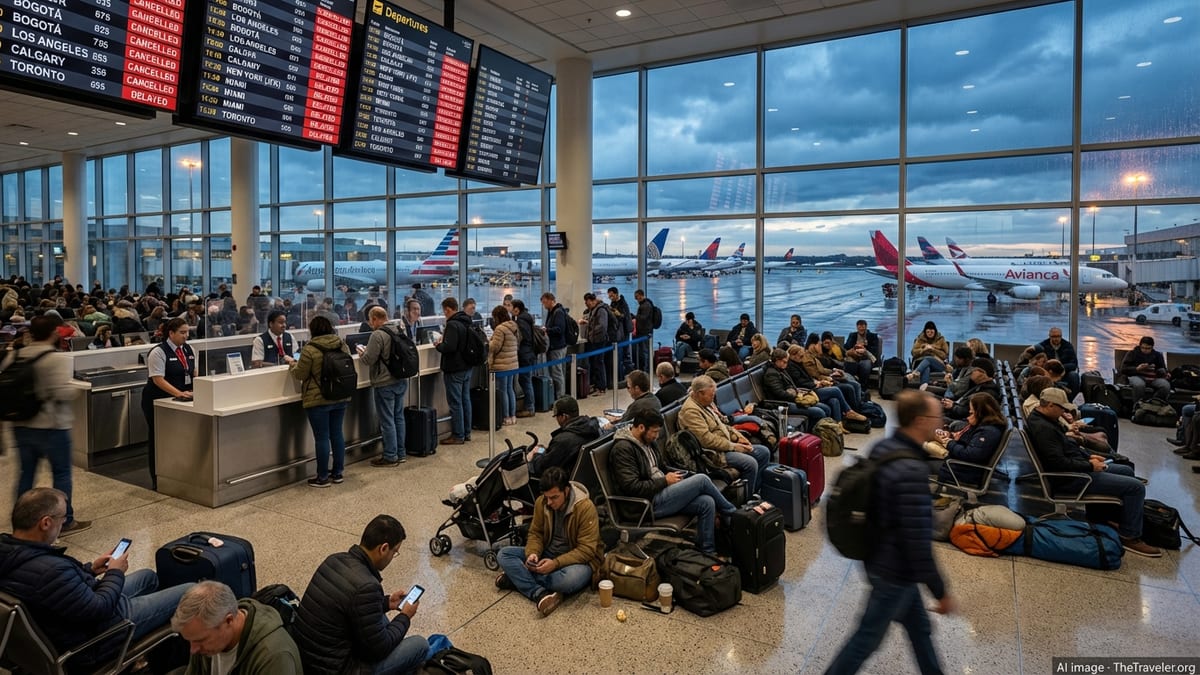
The wave of cancellations tied to the Houston ground stop has translated into long lines at check-in counters and customer service desks, as travelers attempt to secure new itineraries. Reports from affected airports describe crowded terminal areas, long hold times for call centers, and difficulty finding same-day alternatives on American or competing carriers, especially on popular leisure routes.
Consumer advocates regularly advise passengers caught in weather-related disruptions to act quickly, using airline apps, websites, and airport kiosks in addition to staffed counters to search for rebooking options. Because weather is typically categorized as outside an airline’s control, U.S. regulations do not require carriers to provide hotel or meal vouchers in these circumstances, although some travelers report receiving goodwill accommodations or being able to use travel credits or miles to book replacement flights.
Available guidance from travel experts suggests that passengers look beyond their original routing when storms hit a hub city. In some cases, flying into or out of a nearby airport, or accepting a connection through a different hub, can significantly shorten delays. However, with American and other large carriers already operating near capacity during peak summer weekends, spare seats can be scarce once hundreds of flights cancel in a short span.
Travel insurance policies may offset some out-of-pocket expenses, but policy terms vary widely. Publicly available advice from insurance providers stresses the importance of purchasing coverage before a specific weather event is forecast or named, and of carefully documenting delays, cancellations and receipts if a claim is later filed.
What This Means for the Summer Travel Season
The disruptions surrounding Houston’s ground stop arrive just as the U.S. peak summer travel period accelerates, offering a preview of the challenges airlines and passengers may face over the coming months. Recent government and industry data indicate that domestic air travel demand is at or above pre-pandemic levels, even as carriers continue to navigate pilot shortages, constrained fleets and complex air traffic control conditions.
Analysts quoted in recent transportation reports have warned that, in such an environment, relatively routine thunderstorms can trigger outsized disruption when they strike a major hub at the wrong time of day. The more than 500 American Airlines cancellations recorded over two days highlight how quickly operations can unravel when severe weather collides with tight schedules.
Travel planners and aviation observers expect airlines to continue using preemptive cancellations as a tool throughout the summer, particularly when forecasts call for organized storm systems over hub regions. By cancelling flights in advance, carriers can sometimes reduce the number of travelers stranded at airports and give customers more time to adjust itineraries, even though the headline cancellation numbers may appear higher.
For passengers, the latest wave of cancellations underscores the value of flexibility. Booking earlier flights in the day, allowing longer connection windows, and monitoring weather patterns around key hubs such as Houston, Dallas Fort Worth, and Charlotte can help reduce the risk of severe disruption, even if no itinerary is completely immune to the effects of a sudden ground stop.