


More news on this day
Flights are moving again at Ronald Reagan Washington National Airport after a security-related ground stop halted arrivals and departures on Tuesday, but travelers face lingering delays and disrupted schedules as airlines work to clear a substantial backlog.
Get the latest news straight to your inbox!
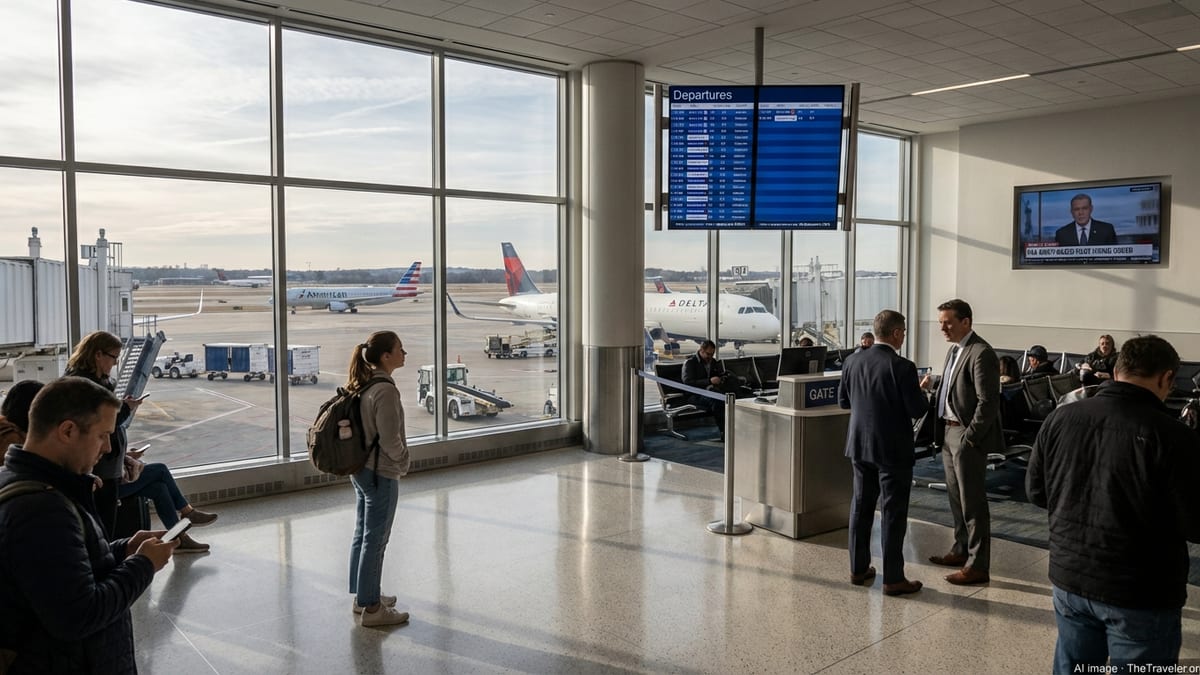
Ground stop lifted after security-related disruption
According to publicly available information from the Federal Aviation Administration, air traffic into and out of Reagan National was temporarily halted on Tuesday afternoon following a security-related incident involving an inbound flight. Published coverage from Washington-area outlets indicates that the pause affected both arrivals and departures, with some flights diverted to other East Coast airports while the situation was assessed.
The FAA’s online status dashboard showed a coordinated traffic management initiative known as a ground stop in effect for the airport, followed by a shift into a ground delay program designed to meter the flow of aircraft once limited operations resumed. Advisories for the Washington airspace region later reflected the end of the formal ground stop period, signaling that flights could once again be released for departure to Reagan National.
By early evening, tracking data and airline status pages showed aircraft landing and taking off from the airport, confirming that the immediate operational halt had been lifted. However, the return to regular movements did not translate into an immediate return to normal schedules, with rolling delays continuing into the night.
Local transportation reports noted that the disruption coincided with typically busy late-afternoon and early-evening departure banks, magnifying the impact on passengers and airline operations across the domestic network.
Delays and cancellations continue to affect travelers
Even after the ground stop ended, delay data for Reagan National showed many departures running well behind schedule, along with a smaller number of outright cancellations. Publicly available flight boards on airline and airport websites displayed waits ranging from 30 minutes to more than two hours on some routes, particularly for aircraft that had been held on the ground at their origin cities during the halt.
Airline operations teams must reposition aircraft and crews after a broad stoppage, and that process can take several flight cycles to resolve. Aviation-planning research has long noted that disruptions concentrated at a major hub or constrained airport can propagate across the national network, causing secondary delays at other cities long after the original trigger has passed. For passengers at Reagan National, that translated into extended gate holds, rebookings onto later flights, and missed connections through other hubs.
Published coverage from regional outlets described scenes of crowded concourses as travelers checked mobile apps and departure screens for updated departure times. Some flights that had been scheduled to arrive earlier in the day landed hours late, then turned back out with delayed evening departures, compounding the backlog as the operational day wound down.
Travel experts often advise that once a ground stop lifts, conditions remain unsettled for several hours while airlines sequence delayed flights, accommodate displaced passengers, and adhere to crew duty-time limits. The situation at Reagan National on Tuesday followed that pattern, with flight-status tools indicating knock-on effects persisting into the late evening.
How ground stops and ground delay programs work
A ground stop is one of the more stringent tools available to air traffic managers. Under such a measure, flights destined for a particular airport are temporarily held at their departure points and not cleared for takeoff until the stop is lifted. Public aviation references explain that these steps are used for severe weather, equipment outages, airspace congestion, or security-related events that sharply reduce an airport’s ability to safely accept traffic.
Once the immediate constraint begins to ease, the FAA can transition to a ground delay program. In this phase, flights are assigned specific expected departure clearance times that spread arrivals into the affected airport over a longer window, reducing the risk of gridlock on taxiways and in surrounding airspace. For passengers, that often means earlier transparency on revised estimated times, but it does not eliminate the inconvenience of waiting at the gate or undergoing multiple schedule adjustments.
Reagan National has a constrained runway layout and operates in complex, sensitive airspace along the Potomac River, factors that can make it especially vulnerable to ripple effects from traffic-management initiatives. Industry submissions to federal regulators in recent years have cited the airport’s relatively high count of ground delay programs and ground stops compared with many similarly sized facilities, emphasizing that even short disruptions can translate into pronounced schedule instability.
When a ground stop is coupled with peak travel periods, such as late afternoon or early evening, the process of untangling delays can become even more challenging. Airlines must balance the needs of passengers already at the airport with those still en route, manage aircraft that have diverted to alternate fields, and maintain compliance with safety and crew-rest regulations.
Advice for passengers flying through Washington
Travelers with tickets into or out of Reagan National in the hours following the incident are being encouraged by publicly available guidance from airlines and airport channels to monitor their flight status closely and allow extra time at the terminal. Same-day schedule changes, aircraft substitutions, and gate changes are more common following an event that disrupts normal traffic flow.
Those with tight connections through other hubs may be particularly affected as delays at Reagan National cascade into missed onward flights. Some carriers have historically introduced temporary travel waivers in response to significant operational interruptions, allowing passengers to move their trips to different flights or dates without change fees. Passengers can typically review any such options through airline websites or mobile applications.
For upcoming trips, aviation analysts often recommend early-morning departures when possible, as those flights are less likely to be affected by the accumulated delays that build throughout the day. On days when a ground stop has recently occurred, that guidance can be especially useful, since evening flights are more prone to rolling disruptions as airlines attempt to restore normal operations.
Reagan National remains a critical gateway for business and government travel in the Washington region, and its dense schedule and limited runway capacity leave little margin when unexpected events arise. The latest ground stop illustrates how quickly conditions can change for air travelers and why real-time information, flexible planning, and patience remain essential for anyone flying through the nation’s capital.