


More news on this day
Travel across Spain suffered fresh disruption as more than 500 flights were delayed and a handful cancelled at Barcelona and Madrid airports, leaving passengers on Vueling, Iberia, Ryanair and other carriers facing missed connections, overnight stays and uncertainty at the height of the summer season.
Get the latest news straight to your inbox!
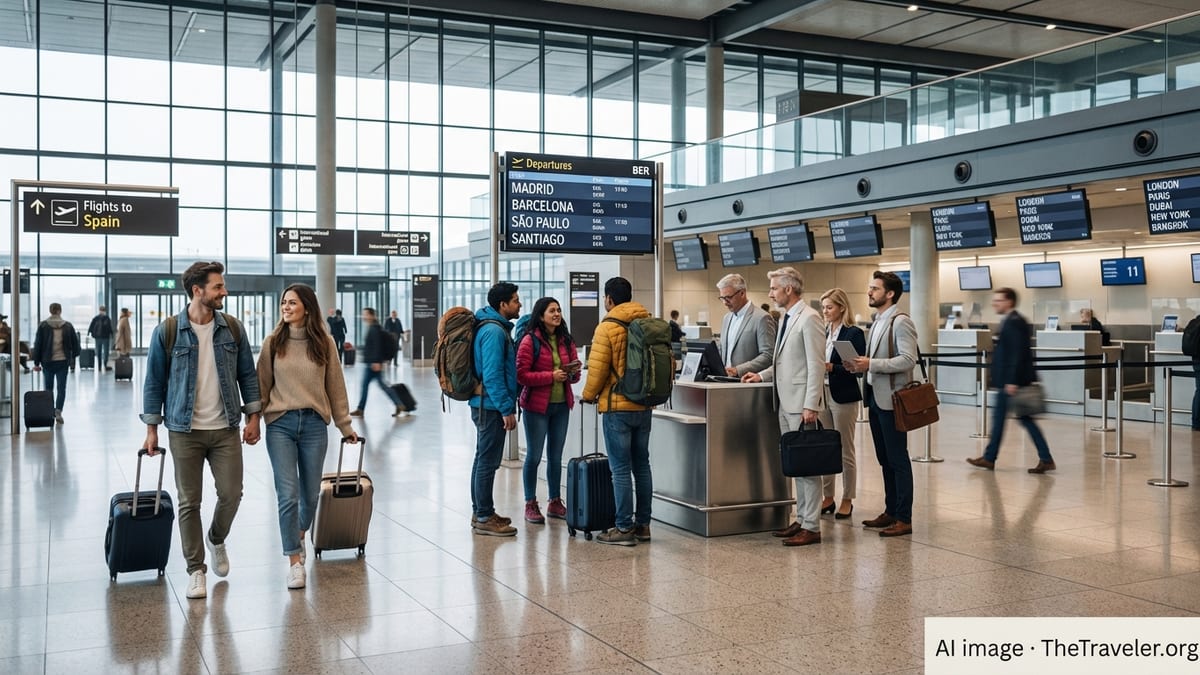
Major Hubs Struggle With Wave of Disruptions
Barcelona El Prat and Madrid Barajas, Spain’s two busiest airports, experienced a sharp spike in operational disruption, with local flight monitoring data indicating that more than 500 services were delayed and at least four were cancelled in a single day. The impact was concentrated on short haul routes linking Spanish cities and key European destinations, where tight turnaround times magnified even modest delays.
Publicly available information shows that carriers including Vueling, Iberia and Ryanair bore the brunt of the disruption, alongside several other European low cost and full service airlines that rely on Barcelona and Madrid as key transfer points. With both airports handling record or near record passenger volumes this summer, the system had limited flexibility to absorb cascading delays.
Operational reports from the airports indicate that the pattern of disruption built throughout the day as early delays rippled across aircraft rotations. By evening, some departures were leaving several hours late, while isolated cancellations were used to recover schedules, leaving passengers to be rebooked on later services or routed through alternative airports.
The disruption coincides with a period of strong demand. Recent figures from Spain’s airport operator show traffic at both hubs running ahead of last year, with Barcelona surpassing 28 million passengers in the first half of the year and Madrid exceeding 6 million passengers in June alone, increasing the likelihood that any operational stress rapidly affects large numbers of travellers.
Vueling, Iberia and Ryanair Schedules Under Pressure
Vueling, which uses Barcelona as its main base, saw significant knock on effects across its domestic and European network as aircraft and crews were held up. The airline’s model relies on multiple legs per day for each aircraft, and delays on initial sectors can quickly propagate to later flights, leading to missed connections for passengers travelling on combined itineraries.
Iberia, which anchors operations at Madrid, also faced disruption on its feeder and European services. According to published coverage, the Spanish flag carrier has expanded its schedule for the summer season, increasing frequencies on popular routes between Madrid, Barcelona and other major European cities. On days of heavy delays, however, this additional capacity can be difficult to deploy efficiently, particularly when aircraft arrive late from earlier sectors.
Ryanair, one of the largest operators in Spain, has recently highlighted concerns about congestion and processing times at several Spanish airports. Earlier public statements from the carrier have pointed to the cumulative impact of infrastructure constraints, staffing challenges and new border control systems on punctuality. When such factors combine with adverse weather or air traffic flow restrictions, knock on delays can become widespread.
Other European carriers with codeshare or feeder services into Spain’s main hubs were also caught up in the disruption, as missed arrival slots or aircraft being out of position forced schedule adjustments. Travellers booked on through tickets with connections in Barcelona or Madrid were among those most exposed to missed onward flights and overnight diversions.
Passenger Experience: Long Queues, Missed Connections
Accounts shared on social media and travel forums on the day of the disruption describe long queues at check in desks, transfer counters and security checkpoints, particularly in the late afternoon and evening peaks. With information screens frequently updating and boarding gates changing, some travellers reported confusion about whether flights were still operating on revised timetables or had been quietly removed from the schedule.
Passengers on domestic and short haul European routes reported waits of several hours in terminal areas, with limited seating and difficulty obtaining clear information about revised departure times. In some instances, travellers stated that boarding began shortly before the three hour delay threshold, only for further hold ups to occur while ground handling issues were resolved, prolonging the overall disruption.
Those affected by outright cancellations faced the added challenge of rebooking during a busy travel period when alternative flights were already heavily sold. According to experiences described in public forums, some passengers were rerouted through other Spanish or European airports, while others were advised to return the following day. For travellers with fixed holiday rentals or tour departures, these changes resulted in shortened stays or missed events.
Families travelling with children and visitors with tight onward connections, such as cruise departures or long haul flights, appeared to be among the most heavily impacted. Reports indicate that even when rebooking options were available, overnight accommodation and transportation between airports and city centers added to the overall cost and stress of the disruption.
Why So Many Flights Are Being Delayed
Industry data and recent analyses of European air traffic trends indicate that several structural factors are contributing to more frequent and longer delays at major hubs such as Barcelona and Madrid. Strong post pandemic demand has pushed passenger numbers to record levels at many airports, often outpacing the growth in staffing and infrastructure capacity needed to process crowds smoothly.
In Spain, seasonal peaks tied to school holidays and major events place further strain on airport systems. Air traffic control capacity constraints across parts of Europe, as well as localized weather events such as thunderstorms and heat related restrictions, can trigger flow control measures that force airlines to hold flights on the ground or reduce speeds en route, contributing to late arrivals and subsequent missed departures.
For low cost and hybrid carriers operating high utilization fleets, even a short unscheduled delay can disrupt several subsequent rotations. When multiple airlines at the same airport experience similar issues, key resources such as stands, ground handling teams and baggage systems become bottlenecks, slowing down turnarounds and compounding the problem.
Published information from consumer organizations and regulators also points to the growing complexity of passenger handling obligations under European rules. While these regulations are designed to protect travellers, arranging vouchers, meal allowances and hotel accommodation for large numbers of delayed customers during a single disruption event can absorb staff time and contribute indirectly to longer queues and slower information flows at service desks.
Know Your Rights and Practical Next Steps
European legislation sets out standard protections for passengers facing long delays or cancellations on flights departing from EU airports or operated by EU carriers. Public guidance from Spain’s aviation and consumer agencies notes that travellers may be entitled to care such as refreshments, communications and accommodation when delays exceed certain thresholds, as well as financial compensation in some circumstances where disruption is not caused by extraordinary factors beyond the airline’s control.
Airlines including Vueling, Iberia and Ryanair provide dedicated sections on their websites and mobile apps explaining how to submit delay or cancellation claims, request refunds when flights are not operated, or seek reimbursement for essential expenses incurred during disruption. Traveller advocacy groups advise keeping boarding passes, booking confirmations and receipts for meals, transport and hotels as documentation for any subsequent claim.
For those due to travel through Barcelona or Madrid in the coming days, aviation analysts recommend building in additional buffer time for connections, particularly when itineraries involve separate tickets on different airlines. Checking flight status before leaving for the airport, pre downloading airline apps and ensuring contact details are up to date on reservations can help passengers receive alerts about schedule changes as early as possible.
Despite the current disruption, both airports and airlines are continuing to adjust staffing, processes and schedules in an effort to stabilize operations during the busy summer period. However, with traffic remaining high and multiple external factors influencing punctuality, travellers are likely to face periodic waves of delays and limited cancellations through the peak season, underscoring the value of flexible planning and a clear understanding of their rights.