


More news on this day
Thousands of US air travelers are facing fresh disruption this week as a series of Federal Aviation Administration ground stops and weather-related slowdowns ripple through major hubs during the peak summer season.
Get the latest news straight to your inbox!
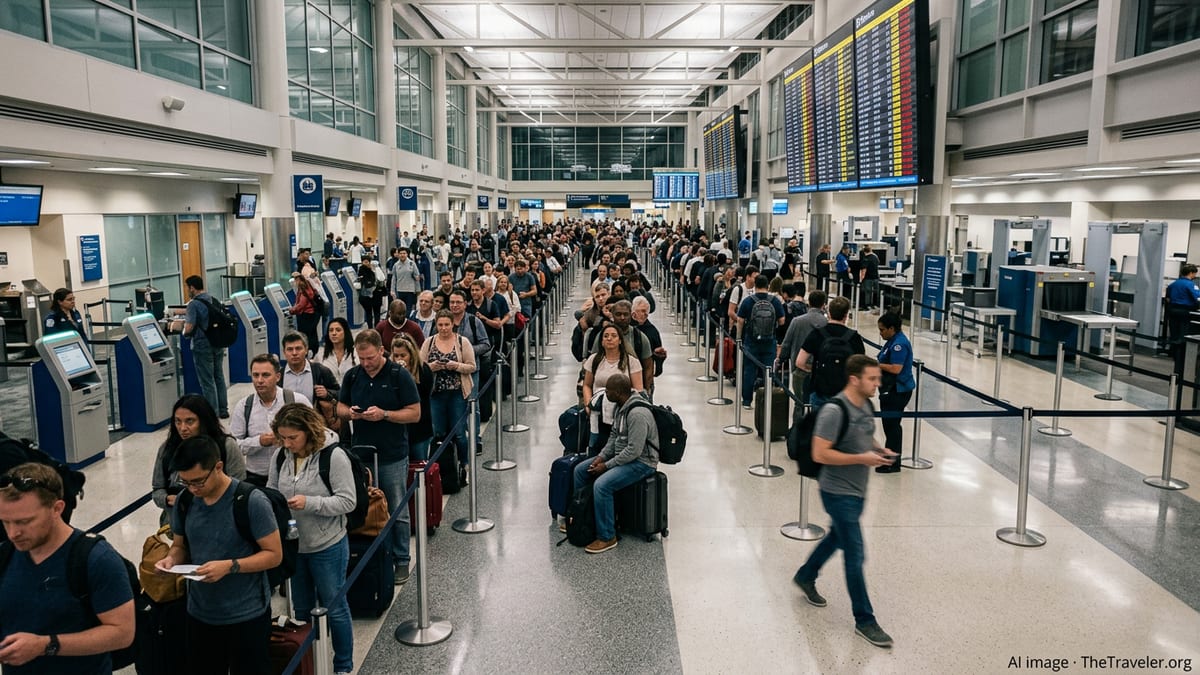
Storm Cells, System Snags Drive Airport Ground Stops
Recent days have brought a patchwork of local ground stops across the United States, with thunderstorms and infrastructure problems forcing temporary halts to departures at some of the country’s busiest airports. According to published coverage and FAA operational data, Charlotte, Boston and Phoenix have all seen departures frozen for stretches of time in July, triggering rolling delays and cancellations that extended well beyond the immediate storm windows.
At Charlotte Douglas International Airport, an FAA advisory led to a ground stop on July 10 as intense afternoon thunderstorms moved over the region. Local reports indicate that flights bound for the North Carolina hub were held at their origin airports while those already on the ground waited out lightning and heavy rain, with delays compounding into the evening as crews timed out and aircraft fell out of position.
Just days earlier, on July 5, a fueling system malfunction at Boston Logan International Airport prompted another FAA-directed ground stop. Publicly available information shows that departures were halted while technicians worked on the issue, leaving aircraft stuck at gates and causing a spike in cancellations as airlines struggled to rework schedules late into the night.
In Phoenix, storms moving through the Valley led to a short-lived ground stop at Sky Harbor International Airport on July 12. Local television coverage described a burst of delays as planes waited for the ground stop to be lifted, underscoring how even a brief pause at a major hub can send disruption cascading through already tight summer schedules.
What an FAA Ground Stop Actually Means for Passengers
Ground stops are among the most visible tools the FAA and air traffic managers use to protect safety and manage congestion when conditions deteriorate. FAA guidance describes a ground stop as an order that holds certain flights at their departure airports, preventing takeoff for a defined period or until specific conditions improve at the destination or along the route.
Under these procedures, flights bound for the affected airport are kept on the ground where they originated, rather than adding to airborne queues or forcing diversions once they arrive in constrained airspace. The FAA’s National Airspace System publications explain that these measures are coordinated between the agency’s command center, regional facilities and airlines, and are often layered on top of ground delay programs that meter traffic into busy hubs over time.
For passengers, the distinction between a ground stop and other forms of delay is largely invisible. What travelers experience is a departure board that abruptly shifts from “on time” to “delayed” or “canceled,” sometimes with only a short notice window. Because ground stops generally arise from safety, weather or infrastructure constraints, consumer rules do not typically require airlines to provide hotel rooms or meal vouchers, leaving many travelers to shoulder additional costs during overnight disruptions.
Once a ground stop is lifted, recovery can still take hours. Crews may have exceeded their duty limits, aircraft may be out of position, and connecting banks may be missed. The result is a wave of knock-on delays across the domestic network, even in regions where the weather is clear.
Summer Travel Strain Adds to Long-Running Reliability Concerns
The latest disruptions are landing during what aviation analysts describe as an intensely pressured summer for US aviation. Demand for domestic and international travel has returned strongly, yet staffing, aircraft availability and airspace capacity remain finely balanced, particularly at coastal and mid-continent hubs that serve as linchpins for large airline networks.
Federal planning documents and industry analysis show that the FAA has already asked airlines to trim schedules at certain congested airports to reduce the risk of systemic meltdowns. At Chicago O’Hare, for example, regulators moved earlier this year to cap peak operations in an effort to prevent a repeat of last summer’s heavy delays, when on-time performance slumped and severe weather exposed the limits of the airport’s capacity.
Despite such steps, travelers report that cancellations and long delays continue to feel more frequent. Online discussions among frequent flyers this month describe a pattern in which nearly every round trip now carries at least one major disruption, often tied to storms along the East Coast or in major connecting hubs like Dallas, Atlanta and Denver. While anecdotal, these experiences align with federal statistics showing that weather remains the single largest driver of delays, especially in late afternoon and evening periods when summer thunderstorms are most common.
Analytical work using federal on-time performance data has also highlighted how congestion and demand interact with weather to magnify problems. When schedules are tightly packed, a single ground stop can cause a chain reaction of missed connections and aircraft rotations, making it more difficult for airlines to recover before the next day’s departures.
Recent Disruptions Echo Earlier Systemwide Shocks
The localized ground stops of this month are far smaller in scale than the nationwide grounding that stunned travelers in January 2023, when an outage in the FAA’s Notice to Air Missions system briefly halted all domestic departures across the United States. That episode, examined in detail in government and media reports, marked the first nationwide ground stop since the airspace closures ordered after the September 11, 2001 attacks.
Subsequent incidents, though narrower, have kept attention focused on aviation’s vulnerability to both technical failures and software outages. In July 2024, a widespread information technology failure linked to a major cybersecurity provider affected airlines around the world, leading several large US carriers to initiate their own departure pauses and cancel thousands of flights over several days. Those disruptions left lasting questions about redundancy, backup procedures and the ability of both airlines and regulators to respond swiftly when digital systems fail.
Recent FAA strategy documents point to continued efforts to modernize the National Airspace System, replacing aging infrastructure and refining traffic management tools such as ground stops and ground delay programs. The objective, according to these published materials, is to reduce the likelihood that single-point failures or local weather events will cascade into nationwide disruptions.
Travel advocates note, however, that even as technology improves, the basic physics of thunderstorms, limited runway capacity and finite crew availability will continue to translate into painful days for passengers when multiple problems converge.
What Travelers Can Do When Ground Stops Hit
For travelers caught in this summer’s disruptions, preparation and flexibility remain the most practical defenses. Aviation experts and consumer advocates generally recommend booking the first flight of the day where possible, as early departures are less exposed to the rolling effects of afternoon storms and prior delays that can turn into cancellations later in the schedule.
Monitoring flight status through airline apps and signing up for text or email alerts can also provide earlier warning when a ground stop or major delay looks likely. While FAA dashboards and command center summaries provide a high-level view of airspace conditions, airlines are typically the first to push out concrete schedule changes and rebooking options specific to each traveler’s itinerary.
When conditions deteriorate rapidly, travelers may have to make quick decisions about whether to wait out a delay, request a different routing through less affected hubs, or accept an overnight stay and fly the following day. Reports from recent disruptions indicate that those who proactively seek alternative connections or nearby airports often have better outcomes than passengers who wait in long customer-service lines at the gate.
With several weeks of the busy summer travel season still ahead, operational summaries from the FAA suggest that more days of challenging weather are likely, particularly across the East Coast and central states. For passengers, that means the possibility of additional ground stops, extensive delays and another round of difficult travel days before conditions ease in the fall.