


More news on this day
Delta Air Lines is once again leading U.S. flight cancellations, with a second straight day of widespread disruptions tied to repeated ground stop orders at Atlanta’s Hartsfield-Jackson airport and ongoing staffing strains across the carrier’s network, according to flight-tracking data and operational bulletins.
Get the latest news straight to your inbox!
Second Day of Elevated Cancellations Across Delta’s Network
Publicly available flight-tracking tallies show Delta with the highest number of cancellations among major U.S. carriers for a second consecutive day in mid-July 2026, significantly outpacing rivals that are operating with more limited disruptions. The cuts span domestic and international routes, but remain concentrated around Delta’s largest hub in Atlanta, where operational challenges have been mounting since early summer.
While overall cancellation counts vary by source and time of day, the trend indicates that Delta’s operation is absorbing a disproportionate share of the current turbulence. Travelers connecting through Atlanta, Detroit, Minneapolis and New York report a growing pattern of scrubbed departures, rolling delays and last-minute aircraft swaps that leave crews and aircraft out of position for subsequent flights.
This latest disruption builds on a series of difficult operational days for the carrier dating back to late spring, when the airline began posting elevated cancellation numbers even on days without widespread severe weather. Online discussion among customers and employees highlights frustration over the frequency and timing of schedule changes, particularly when cancellations arrive hours before departure while competitors continue to operate along similar routes.
Atlanta Ground Stops Amplify Pressure on the Hub
Federal air traffic advisories show multiple ground stop events affecting Atlanta and the surrounding airspace in recent weeks, limiting arrivals and departures at the world’s busiest airport at key times. Coordination bulletins reference formal ground stop programs issued for Atlanta and its associated en route center, reflecting a mix of storms, volume and staffing-related constraints in the region’s air traffic system.
When a ground stop is in effect, flights destined for the affected airport are held at their origin, quickly creating a logjam in airline operations. For a carrier as reliant on its hub structure as Delta, even a relatively brief halt in movements at Atlanta can cascade through the schedule, leading to crews and aircraft missing their planned rotations and triggering cancellations later in the day or into the following morning.
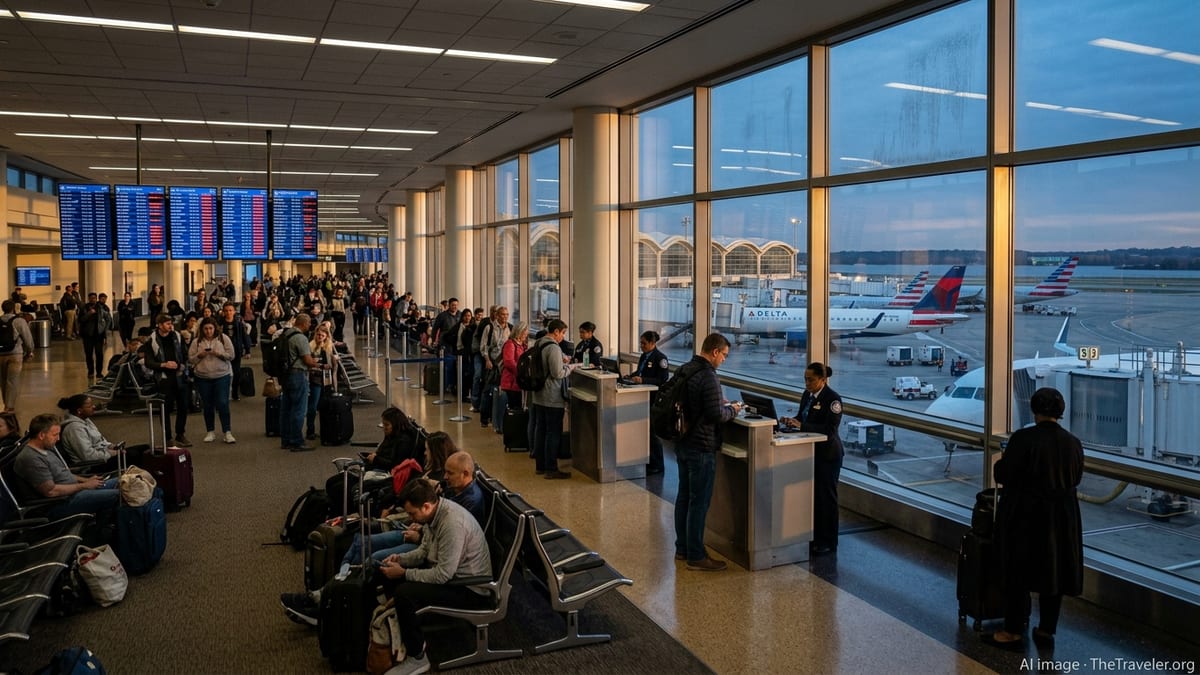
Recent traveler accounts from Atlanta describe hours-long waits, diversions to secondary airports and an acute shortage of available hotel rooms and rental cars as passengers scramble to secure alternatives. Social media posts and forum reports depict crowded concourses and long lines at customer service counters, as the airline works to rebook customers while managing ongoing air traffic constraints.
Staffing Constraints Expose Operational Fragility
Alongside the air traffic issues, public commentary and independent analyses point to staffing-related challenges within Delta’s operation that are compounding the effect of each disruption. Reports highlight instances in which flights appear to have available aircraft and gates, but cannot depart because a captain or key cabin crew member is unavailable or has reached regulatory duty-time limits.
Industry-facing guides and explanatory materials describing Delta’s 2026 operation note that crew scheduling and “trip coverage” processes can become strained when multiple irregular events overlap, especially if there are not enough schedulers and tracking staff to respond quickly. In this environment, seemingly isolated events such as a single pilot calling in sick or a late inbound aircraft can ripple into cancellations if a replacement cannot be sourced in time.
Online discussions among Delta employees and frequent flyers suggest that some work groups are stretched thin, citing examples of repeated delays attributed to “crew availability” or “staffing” even on days with fair weather. While Delta continues to emphasize its long-term hiring and training investments in official financial communications, the near-term effect for passengers is an operation that is less resilient when confronted with air traffic restrictions or convective storms around Atlanta.
Customer Impact: Missed Connections and Overnight Stays
The combination of ground stops and staffing shortages has hit connecting passengers particularly hard. Travelers attempting to move through Atlanta report missed onward flights, long rebooking windows and unexpected overnight stays when the final leg of a journey is canceled late in the day. Some accounts describe families spending hundreds of dollars on hotels, meals and alternative transport while waiting for seats on the next available flights.
On consumer forums, several customers recount being stranded for extended periods at Atlanta after an initial cancellation, only to find later departures also delayed or scrubbed as crew and aircraft remained out of place. Others note that same-day alternatives on other airlines are limited once a disruption takes hold at a major hub, leaving travelers with few immediate options beyond waiting or arranging their own ground transportation.
Passenger advocacy discussions highlight the complexity of reimbursement and compensation when cancellations are linked to a mix of weather, air traffic and airline staffing decisions. Some travelers report partial relief through change-fee waivers and flexible rebooking policies tied to operational bulletins, while others say requests for broader reimbursement have been denied on the basis that certain costs fall outside the carrier’s published commitments.
Broader Questions About Reliability as Summer Peaks
The latest wave of cancellations arrives as Delta continues to promote its operational performance and financial strength in public filings and earnings materials, underscoring a tension between long-term strategic messaging and the short-term experience at the gate. The airline has highlighted its global network, premium offerings and investments in hubs such as Atlanta as competitive advantages at a time of strong travel demand.
At the same time, aviation watchers note that repeated days with elevated cancellations, especially when not tied solely to extraordinary weather, can erode an airline’s reputation for reliability. Recent online commentary from once-loyal frequent flyers describes a shift of some high-value customers to rival carriers after multiple trips were disrupted by cancellations attributed to crew or operational constraints.
Analysts following U.S. aviation trends suggest that the pressures seen at Delta this summer reflect broader strains across the system, including tight labor markets for specialized roles, aging air traffic infrastructure and increasingly volatile weather patterns. For now, however, the data indicates that Delta is bearing a larger share of the disruption on these latest days of cancellations, placing renewed focus on how the carrier will stabilize its operation as the peak summer travel period continues.