


More news on this day
Severe weather linked to Tropical Depression 09W has disrupted operations at A.B. Won Pat International Airport in Guam, with nine cancellations and five delays reported on Sunday, affecting United Airlines, Korean Air, Japan Airlines and Jin Air services across the United States, Japan, South Korea, the Philippines and Micronesia.
Get the latest news straight to your inbox!
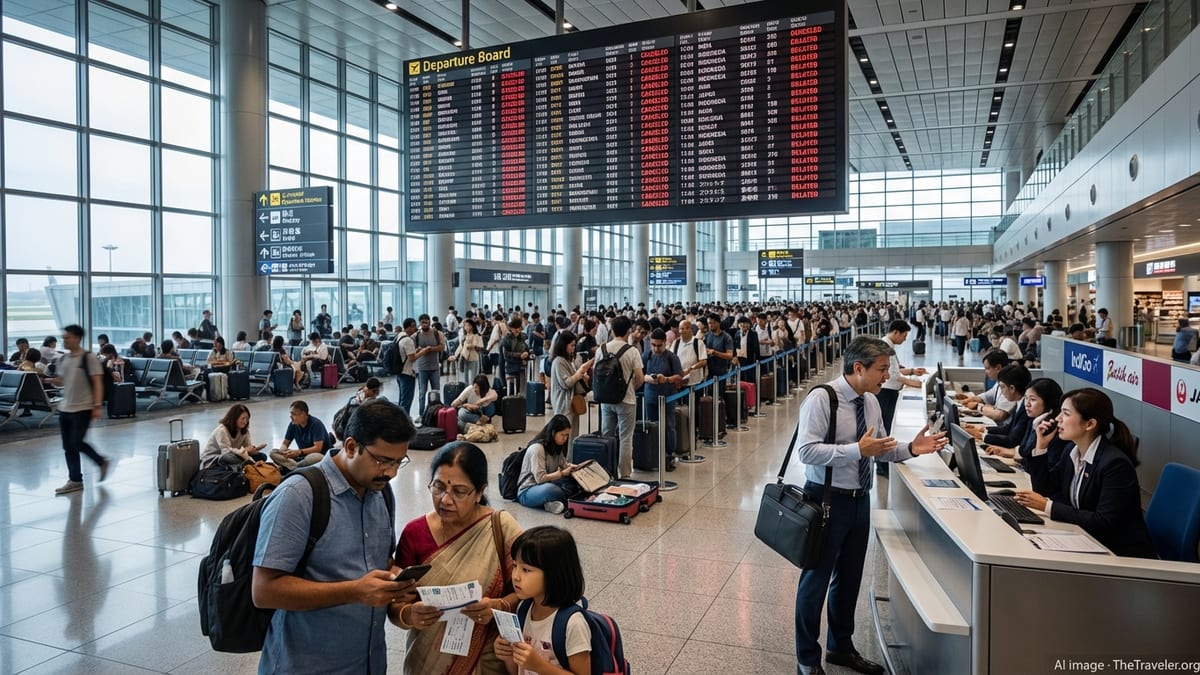
Weather System Near Guam Triggers Widespread Disruption
Publicly available information indicates that a developing tropical system in the western Pacific, identified as Tropical Depression 09W, has led airlines to trim or suspend selected services into and out of Guam on July 5, 2026. The disturbance has brought periods of heavy rain, gusty winds and reduced visibility in the region, conditions that commonly prompt more conservative operating decisions for island airports with limited diversion options.
Travel waiver notices and operational updates show that carriers began adjusting schedules from late in the week as forecast models converged on a track passing close enough to Guam to raise concerns over crosswinds and storm bands near A.B. Won Pat International Airport. While the airport has remained open, the combination of airfield conditions and network constraints has translated into a cluster of outright cancellations and rolling delays across short and medium haul routes.
The current set of nine cancellations and five delays reported for Sunday represents a notable operational hit for an airport of Guam’s size, where many international routes operate only once daily or a few times per week. For travelers, even a small number of cancellations can quickly cascade into multi day disruptions when alternative seats are scarce.
United Airlines Adjusts Transpacific and Island Connections
United Airlines, which maintains the largest network at Guam, has been among the most affected carriers. According to published coverage and schedule data, United has canceled several flights linking Guam with key hubs such as Tokyo Narita, Osaka Kansai, Nagoya, Honolulu, Manila and Micronesian points, aligning its actions with an existing weather related travel waiver that already covered Guam for early July.
Route maps and timetable information show that these Guam services feed extensive onward networks in the United States and Japan, meaning each cancellation disrupts not only origin and destination traffic but also connecting itineraries. Travelers bound for North America via Honolulu or Tokyo, or for secondary Japanese cities via Narita, have faced rebookings, extended layovers or overnight stays as United consolidates passengers on the limited number of flights still operating.
In Micronesia and the wider western Pacific, Guam functions as a critical intermediate hub. Suspended services to Saipan, Chuuk, Koror and other island points interrupt essential links for both residents and visitors. Publicly available government and airport documentation from earlier disruption events underline how quickly these island services can be thinned when weather or operational pressures arise, a pattern that appears to be repeating under the current storm related adjustments.
Korean Air, Japan Airlines and Jin Air See Asia Links Squeezed
Japanese and Korean carriers operating to Guam have also reported disruption. Flight status summaries and media reports indicate that Japan Airlines and Korean Air, in particular, have experienced cancellation heavy patterns on their Guam services, trimming frequencies between Guam and major East Asian gateways such as Tokyo Narita and Seoul Incheon.
For leisure oriented routes that rely heavily on weekend departures, a cluster of cancellations on a single day can mean missed holiday starts or shortened stays. Passengers originating in Japan and South Korea who planned nonstop flights to Guam have in many cases been pushed onto later departures, rerouted via alternate hubs or offered full refunds under each airline’s irregular operations policies.
Low cost carrier Jin Air, a significant operator on the South Korea Guam market, has seen a slightly different profile, with publicly available tracking data and industry coverage pointing to a mix skewed more toward extended delays than wholesale cancellations. This pattern reflects the operational challenges of repositioning aircraft and crews around an evolving storm, where departures may be held in the hope of brief weather windows but are ultimately constrained by duty time and turn around limits.
Across these Asian carriers, the net result is tightened capacity into Guam just as summer travel demand in the region remains solid. Historical schedule and capacity reports already showed some seasonal adjustments on Korea Guam and Japan Guam routes this year, and the latest weather related cuts further reduce immediate seat availability for affected dates.
Ripple Effects Across the United States, Japan, South Korea and the Philippines
Although the immediate disruptions are concentrated at Guam, the impact radiates along the wider network of routes that touch the island. For United, canceled or delayed Guam departures can leave aircraft and crews out of sequence for onward legs to the United States, potentially affecting flights to West Coast and Hawaii gateways even once conditions in Guam improve.
In Japan, the suspension or delay of flights between Guam and Tokyo or other cities interrupts a long established leisure corridor. Travel planners note that many Japanese vacation packages to Guam are built around fixed length itineraries of three to five nights, so losing an outbound or inbound leg to a cancellation can require full trip restructuring rather than simple time shifts.
South Korean travelers face similar challenges. With Korean Air and Jin Air both adjusting Guam services, some passengers originating in cities such as Seoul or Busan have seen their direct options curtailed. This has knock on effects for domestic feed within South Korea, as travelers seek alternative connections that still match hotel and tour bookings in Guam.
Routes linking Guam with Manila and other Philippine points, as well as with Micronesian islands, are also experiencing indirect strain. When core trunk services are disrupted, the availability of onward connections tightens, leaving travelers in the Philippines and across Micronesia with fewer viable same day options to reach Guam or continue beyond it.
What Travelers Can Expect in the Coming Days
Based on current forecasts and past patterns for similar tropical systems, conditions around Guam are expected to improve gradually as Tropical Depression 09W moves away from the immediate vicinity. As weather stabilizes, airlines typically move to restore regular schedules, though the process can take several days while aircraft and crews are repositioned and backlogs of displaced passengers are cleared.
Public advisories and airline notices emphasize the importance for ticketed passengers to monitor their bookings closely through official airline channels and airport flight information displays. Same day schedule changes, swap of aircraft types and short notice seat releases are common in the immediate aftermath of a weather event, and travelers who stay alert to updates are often able to secure earlier rebooking options.
Industry data from previous Guam disruptions suggests that routes with daily or multiple daily frequencies, such as Guam Tokyo or Guam Honolulu, are among the first to normalize once operations resume. Less frequent services into smaller Micronesian markets or select secondary Asian cities may remain constrained for longer as carriers prioritize aircraft utilization on higher demand sectors.
For now, the nine cancellations and five delays logged at Guam on Sunday serve as a reminder of the vulnerability of island air networks to even relatively modest tropical systems. As the Pacific typhoon season continues, airlines, airports and travelers across the United States, Japan, South Korea, the Philippines and Micronesia are likely to remain on heightened watch for further weather driven disruptions.