


More news on this day
American Airlines is accelerating a sweeping cabin overhaul that will add significantly more premium seating and power outlets while upgrading inflight Wi‑Fi across much of its fleet, positioning the carrier to compete more aggressively for high-yield travelers in North America and on long-haul routes.
Get the latest news straight to your inbox!
Fleetwide push to add more premium seats
Publicly available planning documents and investor materials indicate that American is in the midst of a multiyear "premiumization" strategy focused on increasing the share of higher-yield seats across its network. The airline is reconfiguring existing aircraft and taking new deliveries with denser premium cabins, including more domestic first class and extra-legroom economy on narrowbodies and refreshed premium products on widebodies.
Recent fleet disclosures describe work already under way to retrofit Airbus A319 and A320 aircraft with new interiors that include additional first class seats, updated trim and finishes, and larger overhead bins. Similar changes are planned for Boeing 737 and Airbus A321 families, giving American a more consistent product on high-frequency business routes where competition from Delta and United has intensified.
On long-haul aircraft, American is rolling out a new generation of premium seating, including its Flagship Suite concept on Boeing 787-9 and Airbus A321XLR jets. These cabins are designed with more privacy and storage for business-class travelers, while premium economy is expanding as a distinct cabin aimed at leisure passengers willing to pay more for extra space and enhanced service.
Regulatory filings for 2026 highlight that the carrier expects an increase in the number of premium seats per flight to contribute meaningfully to revenue growth over the next several years, as the retrofit program scales across the fleet.
Seatback screens return as cabins are refreshed
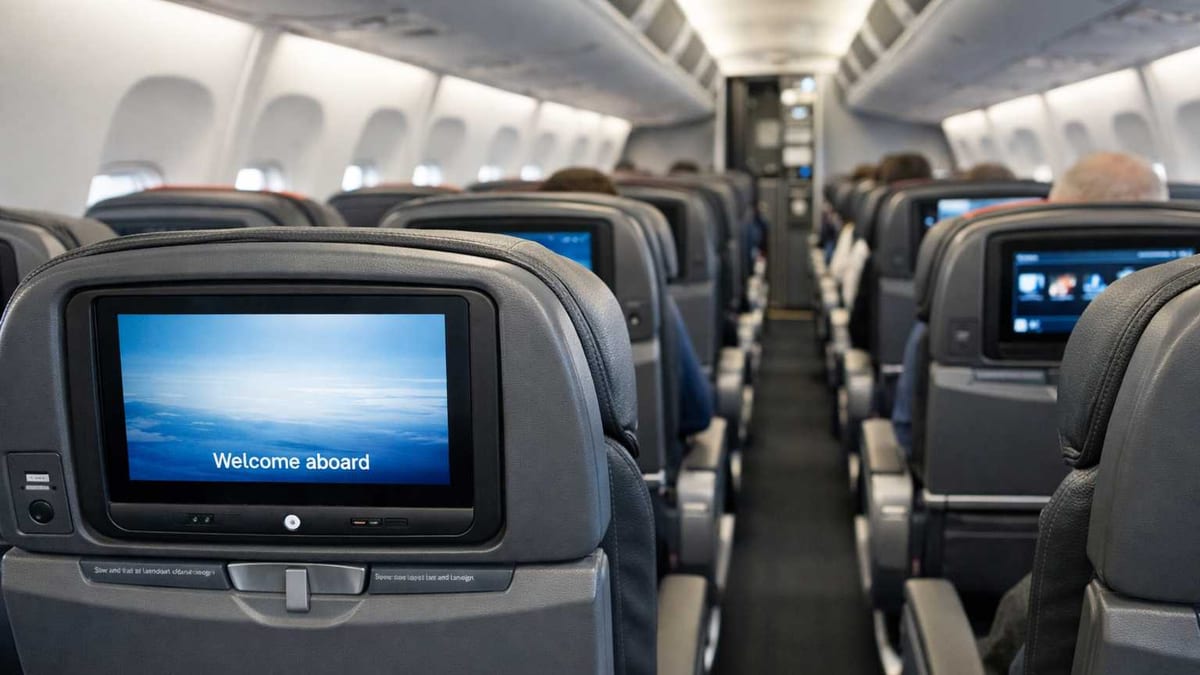
Alongside the shift in seating mix, American is reversing an earlier move away from built-in entertainment. Information shared in recent presentations and widely reported by aviation observers shows that the airline plans to install modern seatback screens on new Boeing and Airbus narrowbody aircraft from late this decade, while also adding the technology to a large portion of retrofitted jets.
The move brings American back in line with rivals that have invested heavily in onboard entertainment as a differentiator on competitive domestic and short-haul international routes. The new systems are expected to support 4K-capable displays, Bluetooth connectivity for personal headphones and a broader catalog of on-demand content, integrated with the airline’s mobile app.
Cabin refresh plans also call for redesigned seats across many narrowbody types, with more in-seat power, adjustable headrests and improved lighting. These changes are intended to support longer stage lengths within North America and transcontinental markets, where travelers increasingly compare hard-product details such as legroom, power availability and screen quality.
Industry analysts note that investing in inflight entertainment and cabin hardware is a capital-intensive but potentially durable way for airlines to differentiate their product, especially as basic economy fares converge across major carriers.
Next-generation Wi‑Fi and free connectivity for members
Connectivity is a central pillar of American’s upgrade program. Company reports over the past year describe the airline as offering more high-speed satellite Wi‑Fi equipped aircraft than any carrier globally, and recent communications outline plans to expand and modernize that capability further.
American has been rolling out complimentary high-speed Wi‑Fi access for members of its AAdvantage loyalty program on mainline flights, supported by sponsorship arrangements. Internal targets disclosed in annual reporting call for Wi‑Fi to be available on essentially every American mainline flight by spring 2026, turning onboard internet access from a paid add-on into a standard feature for many frequent flyers.
The airline has also signaled additional investment in next-generation satellite technology for narrowbody aircraft, including plans reported by industry watchers to retrofit hundreds of Airbus jets with new broadband hardware. That shift is expected to deliver lower latency and more consistent performance during peak usage, particularly on routes where a large share of passengers connect multiple devices.
On the regional side, American’s dual-class jets are slated to receive refreshed interiors with in-seat power and expanded satellite Wi‑Fi coverage. The goal is to narrow the experience gap between shorter regional segments and mainline flights, especially for customers buying first class or extra-legroom seats on smaller aircraft.
Widebody refits focus on premium cabins and consistency
Widebody aircraft are another focus of the premium push. A major refurbishment program is under way for American’s Boeing 777-300ER fleet, with the first aircraft returning to service in mid-2026 after extensive cabin work at a third-party facility. Aviation trade coverage describes the project as one of the airline’s most significant premium upgrades in years, aligning the 777-300ER interior with newer 787-9 configurations.
The refitted 777-300ERs are expected to feature updated business-class seating in a higher-density layout, as well as reconfigured premium economy and main cabin sections designed to boost overall premium seat counts. Subsequent work on 777-200 aircraft is scheduled to follow later in the decade, creating a more uniform long-haul product for transatlantic and transpacific markets.
While American has not publicly detailed every configuration change, the broad direction is clear: more seats that can be sold at a premium, supported by upgraded entertainment, power and connectivity. That approach mirrors similar strategies at global competitors that are reallocating cabin space from standard economy to higher-yield segments.
Consistency across the fleet is particularly important on routes where aircraft swaps are common. By aligning the look, feel and capabilities of its long-haul cabins, American aims to reduce the variability that travelers may experience today when different widebody types operate the same route.
Competitive pressures and traveler impact
American’s upgrades arrive as airlines worldwide race to capture rising demand for premium travel. Corporate contracts and affluent leisure customers have become central to profitability, especially on long-haul and key domestic business routes, pushing carriers to reconfigure aircraft with more business, premium economy and extra-legroom seating.
For American, the strategy may also be a response to criticism from frequent flyers who have compared its older cabins and earlier no-screens policy unfavorably with some rivals. By adding back seatback entertainment, expanding power options and investing in faster, often free Wi‑Fi, the airline is aiming to reposition itself as a more clearly premium choice on high-value routes.
Travelers are likely to see the most immediate changes on narrowbody jets used for transcontinental, sun destination and key hub-to-hub services, where refitted aircraft and new deliveries will be concentrated first. Over time, as more widebodies and regional jets complete their overhauls, the upgraded experience will spread across a larger share of the network.
The scale and duration of the program mean that American’s cabins will remain a mix of old and new for several years. However, if the airline delivers on its published timelines for Wi‑Fi coverage and premium seat growth, passengers flying later this decade can expect a markedly different onboard experience than what has characterized much of the carrier’s fleet in recent years.