


More news on this day
American Airlines is accelerating a multi-year overhaul of its cabins, adding more premium seats and rolling out faster, often free, Wi-Fi in a bid to capture higher-spending travelers and close the gap with key U.S. rivals.
Get the latest news straight to your inbox!
Cabin refresh targets premium growth on key routes
Publicly available information shows that American is in the middle of a significant cabin refresh that prioritizes premium seating across both its long-haul and domestic networks. New Boeing 787-9 and Airbus A321XLR deliveries are arriving with updated Flagship Suite business-class seats and expanded premium cabins, while existing widebodies such as the 777-200 and 777-300ER are being refitted to match the new layout over the next several years.
On narrowbody aircraft, reports indicate that American is increasing the number of domestic first class and extra-legroom seats on many Airbus A321neo and Boeing 737 MAX aircraft. Recent fleet data and investor presentations describe plans to boost the share of lie-flat and premium economy seats at a faster rate than standard economy, signaling a strategic bet that more passengers will pay extra for additional space and upgraded service.
The airline has already used similar tactics in Chicago, where company releases describe the replacement of smaller regional jets with dual-class aircraft featuring first class and main cabin seating on every flight. That move effectively eliminated single-cabin regional services from one of American’s largest hubs and gave the carrier more high-yield seats to sell on short- and medium-haul routes.
Industry analysts note that the broader premium push is meant to drive higher-margin revenue at a time when leisure demand remains strong but competition on basic economy fares is intense. By packing more premium seats into each plane, American is seeking to increase the number of passengers willing to trade up from the main cabin while still keeping overall seat counts competitive.
Free Wi‑Fi for loyalty members and faster satellite service
Alongside the cabin changes, American is reshaping its approach to in-flight connectivity. Company statements and customer communications indicate that, starting in 2026, high-speed Wi‑Fi is becoming free for members of the AAdvantage loyalty program on most domestic flights, including a growing portion of the regional fleet. This shift effectively turns connectivity into a core benefit of membership rather than a paid add-on.
American has promoted the expansion of gate-to-gate satellite Wi‑Fi across both mainline and dual-class regional jets, with power ports at every seat to support streaming and work on personal devices. Regional aircraft such as the Embraer 175 and Bombardier CRJ900 are being refreshed to match the mainline experience more closely, with updated interiors, consistent Wi‑Fi and in-seat power replacing the more basic cabins that previously flew many shorter routes.
In parallel, reports in aviation and business media describe American’s plan to introduce next-generation satellite systems on hundreds of aircraft, including a large portion of its Airbus narrowbody fleet. The upgrades are expected to improve reliability and speeds for streaming, video calls and real-time messaging, bringing performance closer to home broadband on many routes.
Frequent flyers note that the move toward free Wi‑Fi for loyalty members could significantly change onboard behavior, encouraging more passengers to stay connected throughout the flight and potentially increasing sign-ups for the AAdvantage program. For American, that connectivity strategy also deepens engagement with its loyalty ecosystem, where digital channels are used to sell upgrades, credit cards and other travel products.
Regional jets get mainline-style comfort and connectivity
American’s investment is especially visible in its large regional operation, which feeds traffic into hubs such as Charlotte, Dallas–Fort Worth, Miami and Chicago. A detailed news release in late 2025 outlined plans to bring “mainline comfort” to these shorter flights, including new seat coverings, refreshed lighting and unified Wi‑Fi and power standards across the dual-class regional fleet.
Under that initiative, nearly all dual-class regional jets are being outfitted with high-speed satellite Wi‑Fi, in-seat power and a dedicated first-class cabin. The airline has highlighted that, once the program is complete, it will operate more dual-class regional aircraft with Wi‑Fi than any other U.S. carrier, sharply reducing the number of flights where passengers encounter a single-cabin, no-connectivity experience.
By aligning regional and mainline interiors, American is aiming to create a more consistent product for connecting customers who might fly a short regional sector before boarding a long-haul widebody or flagship transcontinental service. Industry observers say that consistency across the journey is increasingly important for high-value travelers, who expect similar levels of comfort and connectivity regardless of aircraft size.
The regional upgrades also support American’s network strategy in mid-sized cities, where dual-class jets can offer a mix of premium and standard seats without the capacity of a larger narrowbody. This allows the airline to maintain frequency while still selling higher-priced seats to corporate travelers and affluent leisure passengers.
Seatback entertainment returns as cabins broaden premium mix
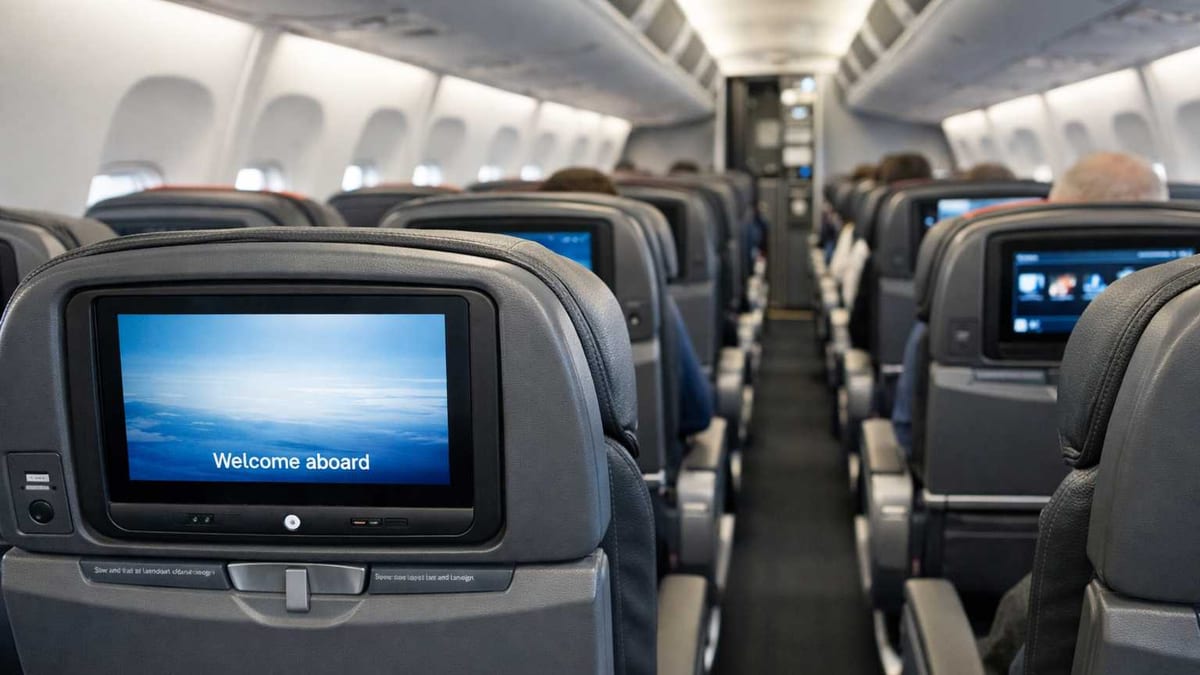
The push for more premium seats is unfolding alongside a reversal in American’s long-standing move away from built-in seatback screens. Recent disclosures and widespread industry coverage describe a new plan to install modern seatback entertainment systems on much of the narrowbody fleet, featuring 4K screens, Bluetooth headphone pairing and integrated power at every seat.
The decision marks a shift from the carrier’s previous strategy of steering passengers toward streaming content on their own devices via onboard Wi‑Fi. With more premium and extra-legroom seats being added, American appears to be positioning its cabins as a higher-end product, where customers paying extra for space and comfort also expect a robust entertainment offering alongside reliable connectivity.
For travelers, the combination of seatback screens, free or low-cost Wi‑Fi and greater access to premium seating could substantially change the onboard experience on routes that historically offered only basic economy-style service. Industry commentators note that this aligns American more closely with competitors that have long marketed their cabins around both comfort and technology, particularly on longer domestic segments.
From a commercial perspective, the expanded premium mix provides additional levers for upselling, including paid upgrades to first class, premium economy and extra-legroom seating. The added technology also enables more targeted onboard marketing through screens and connected devices, potentially opening new revenue streams as American refines its digital strategy.
Balancing density, comfort and loyalty as upgrades roll out
While American’s upgrades focus heavily on premium revenue, they also involve complicated trade-offs in aircraft density and seat configuration. Adding more first class and extra-legroom seats can reduce the number of standard economy seats on some aircraft, raising questions about availability and pricing for lower-fare travelers if demand remains strong.
At the same time, the airline is under pressure to ensure that connectivity and comfort improvements are felt throughout the cabin, not just in premium rows. The expansion of free Wi‑Fi for AAdvantage members, as well as the installation of power outlets and refreshed interiors in the main cabin, indicates an effort to balance those concerns while still steering passengers toward higher-yield products.
For frequent flyers, the evolution of upgrade policies will be closely watched as more premium seats come online. Public program updates suggest a greater emphasis on selling those seats outright, with complimentary and instrument-based upgrades adjusted to reflect the new cabin structures, particularly on routes where premium economy is added as a separate cabin between business and the main cabin.
As the retrofit program progresses over the next several years, travelers can expect to see a patchwork of old and new configurations across the American fleet. Industry coverage suggests that the airline is prioritizing aircraft used on key business and leisure routes for early upgrades, with the goal of making premium seating, high-speed Wi‑Fi and modern entertainment the default experience on a growing share of its domestic and international flights.