


Landing in the right São Paulo airport can save you hours in traffic, reduce stress on tight connections, and even prevent expensive rebooking drama. The city is served by two major airports that often confuse visitors: São Paulo/Guarulhos International Airport (GRU) and São Paulo–Congonhas Airport (CGH). The best choice depends on where you are coming from, where you are going in the city, and how your overall trip is structured.
Get the latest updates straight to your inbox!
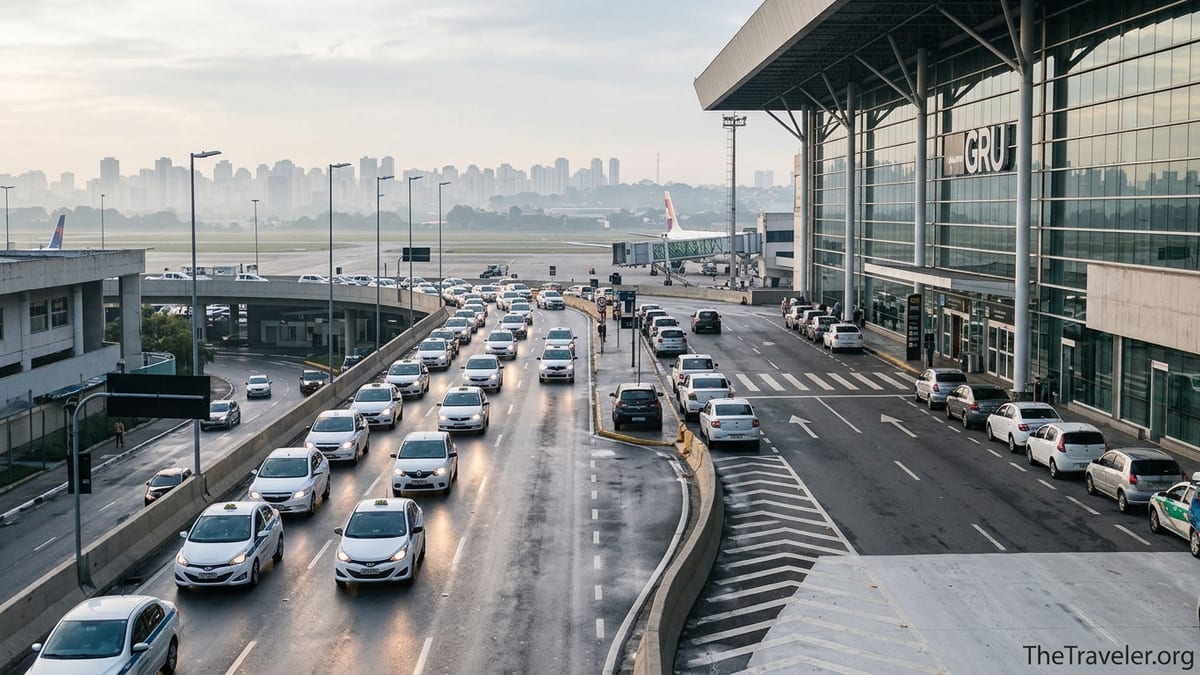
GRU vs CGH at a Glance
São Paulo/Guarulhos International Airport, usually called Guarulhos or simply GRU, is the city’s main international gateway and one of Latin America’s busiest hubs. It sits roughly 25 to 30 kilometers northeast of central São Paulo, in the neighboring city of Guarulhos. Nearly all long-haul flights from North America, Europe, the Middle East and much of South America land here, and most intercontinental airlines only operate to GRU.
Congonhas Airport, code CGH, is São Paulo’s in-city domestic airport. It lies about 8 kilometers from downtown in the Campo Belo area, surrounded by dense residential and business districts. Congonhas focuses on short-haul domestic routes, especially the air bridge between São Paulo and Rio de Janeiro, and is heavily used by business travelers commuting between Brazilian cities.
In practical terms, think of GRU as your gateway if you are flying from New York, Lisbon, London, Doha or Mexico City, or if you are connecting onward to other countries. Congonhas is the better choice for internal hops such as São Paulo to Rio de Janeiro (Santos Dumont), Belo Horizonte, Brasília or Porto Alegre, especially if you are staying in central neighborhoods like Paulista, Jardins, Itaim Bibi or Vila Olímpia.
Many first-time visitors accidentally book the “wrong” airport for their needs, such as arriving internationally at GRU and then scheduling a tight domestic connection out of Congonhas. Understanding the strengths and limits of each airport helps you avoid stressful cross-city transfers and plan logical, time-efficient itineraries.
Which Airport Is Better for International Flights
For almost all international travelers, Guarulhos is the clear choice. It is the main international hub, with three passenger terminals and a long list of global airlines offering nonstop services across the Americas, Europe, Africa and the Middle East. Typical long-haul routes include flights like São Paulo–Guarulhos to Paris, Frankfurt, Madrid, New York, Miami, Doha and Johannesburg operated by major carriers.
If you search for flights from cities such as Los Angeles, Toronto or London to São Paulo, almost every itinerary lands at GRU. Even when you book with Brazilian companies like LATAM or Gol, the international leg usually operates in or out of GRU’s Terminal 3, which handles most long-haul operations. This is where you will find the bulk of international lounges, duty-free shopping and larger aircraft like Boeing 777 or Airbus A350 models.
Congonhas, by contrast, is overwhelmingly domestic. It handles heavy traffic within Brazil and is Brazil’s second busiest airport by passenger numbers, but it is tightly regulated with slot restrictions and short runways that limit larger aircraft. International flights from CGH are rare and usually limited to special cases or short regional operations. For normal vacation or business travel, you should assume that your international arrival or departure will be from GRU, not Congonhas.
For travelers connecting internationally, it is usually best to keep both legs at Guarulhos. For example, if you fly from Chicago to São Paulo and then on to Santiago or Montevideo, aim for an itinerary that connects within GRU. That way you avoid crossing the city and stay in a single terminal complex, with checked bags automatically transferred between flights.
Domestic Routes and When Congonhas Is the Smarter Choice
When it comes to domestic travel inside Brazil, Congonhas really shines. It serves as a major hub for airlines like Gol and LATAM on Brazilian routes, with high-frequency shuttles to cities such as Rio de Janeiro, Brasília, Curitiba, Belo Horizonte and Porto Alegre. On the São Paulo–Rio de Janeiro air bridge, for instance, there can be flights every 30 to 60 minutes at peak times between Congonhas (CGH) and Santos Dumont (SDU), both very central airports.
For a traveler spending several days in São Paulo’s business core near Avenida Paulista or Berrini, then flying on to Rio de Janeiro, a CGH–SDU ticket is often the most efficient option. You can leave your hotel near Paulista, reach Congonhas by taxi or app ride in 20–30 minutes outside rush hour, and then land practically in downtown Rio at Santos Dumont, just minutes from the waterfront and central hotels.
Guarulhos also offers domestic services, especially for longer-range routes or flights that are fed by international connections. For example, you might arrive from Madrid at GRU and then continue on to Recife, Manaus or Foz do Iguaçu without changing airports. In these cases, it makes sense to stay at GRU and use it as your domestic hub, particularly if your connection window is short and you prefer through-checked luggage.
A useful rule of thumb: if your trip is mostly about São Paulo and nearby big cities like Rio, Curitiba or Belo Horizonte, starting and ending at Congonhas is convenient. If you are using São Paulo as a gateway to more distant parts of Brazil or South America, Guarulhos is often the better domestic starting point, especially when booked on the same ticket as your long-haul flights.
Access to Downtown and Main Neighborhoods
The biggest everyday difference travelers feel between GRU and CGH is the time and cost to reach central São Paulo. Guarulhos is around 25 kilometers from the city center. In light traffic, a taxi or ride-hailing car from GRU to Avenida Paulista might take 35–45 minutes. In peak rush hours, particularly weekday mornings toward downtown or late afternoons toward the airport, that same ride can stretch to 1.5 hours or more as traffic thickens on the main highways and access roads.
Recent travelers report typical app-based rides from GRU to central areas falling roughly in the range of 120 to 200 Brazilian reais, depending on demand, route and time of day, with higher prices common in heavy traffic or late at night. There are also fixed-fare taxi services, executive car transfers and an Airport Bus Service that operates to locations such as Paulista Avenue, the main bus terminals and, importantly, Congonhas Airport. The buses take longer than a taxi but can be a calmer option for visitors uncomfortable using apps in Portuguese.
On public transport, Guarulhos is served by the CPTM Line 13 Jade train to Aeroporto–Guarulhos station, with an Airport Express service to key central rail hubs and integration into the broader metro network. A standard city rail ticket is just a few reais, so this can be a very cheap way into town if you are comfortable changing lines and carrying luggage through commuter stations. However, the trip can be cumbersome at peak hours with crowds and multiple transfers.
Congonhas is far closer to where most visitors stay. From CGH to downtown or Paulista, a taxi or ride-hailing car often takes only 15–25 minutes outside rush hour, with fares that are typically much lower than from GRU. Recent real-world estimates place a ride from Congonhas to central neighborhoods in the ballpark of 55 to 80 reais, again depending on traffic, time and exact location. For someone staying in Jardins and catching a morning domestic flight, Congonhas can feel as close as your local city airport rather than a distant hub.
Traffic, Rush Hours and Realistic Travel Times
São Paulo’s traffic is notorious, and it heavily influences which airport will feel “better” on the day you travel. Both airports suffer from congestion on the access roads, but Guarulhos, being further away and dependent on major highways, is more vulnerable to long delays. Travelers on recent trips report that a GRU to Congonhas transfer by road can easily take 1 hour 20 minutes or more in normal daytime traffic, and longer if there is an accident or heavy rain on the main routes.
For trips between GRU and central São Paulo, it is wise to budget at least one hour door-to-door in normal conditions and up to 1.5 hours during weekday rush hours. If your flight lands at 8:00 in the morning on a weekday, for example, expect slow-moving traffic as commuters head downtown. Conversely, very late evening or early morning arrivals can enjoy quick 30- to 40-minute drives when the main roads are relatively clear.
Congonhas benefits from being closer, but that does not fully shield it from congestion. Neighborhood streets around CGH can clog up at peak times, particularly on rainy evenings or when there are major events in the city. Nonetheless, because the distance is short, even in heavy traffic a taxi from Paulista to Congonhas might take 40 minutes rather than an hour and a half. For a business traveler leaving a meeting at 16:30 near Faria Lima and catching a 19:00 domestic flight, that margin can be the difference between a comfortable check-in and a mad dash through security.
One practical technique is to check live traffic conditions and ride-hailing estimates the day before your trip at the same time you expect to travel. If you see that a weekday afternoon ride from your hotel near Paulista to GRU regularly shows 1 hour 15 minutes with occasional spikes, plan accordingly and leave earlier. When in doubt, be conservative; the cost of an extra hour waiting at the gate is far less than the stress and expense of missing an international flight.
Public Transport Options: Train, Metro and Buses
Guarulhos is better connected to the regional rail network. The CPTM Line 13 Jade links Aeroporto–Guarulhos station with other lines that reach central hubs such as Brás, Tatuapé, Luz and Barra Funda. There is also an Airport Express service that runs directly to core stations, often without transfers. Tickets are priced at the standard São Paulo rail fare, which in early 2026 is just over five reais for a single ride, making this an extremely budget-friendly way to cross the metropolitan area.
The main challenges with the train are the number of transfers and the experience of riding with luggage on commuter services that can be crowded at peak times. A typical journey from GRU to Avenida Paulista by train might look like this: take the Airport Express from Aeroporto–Guarulhos to a central station such as Luz or Brás, change to a metro line heading toward Paulista, and then either walk or take a short taxi to your hotel. The entire trip can take around one to one and a half hours door-to-door, similar to a car in heavy traffic but at a fraction of the price.
Bus options from Guarulhos include the Airport Bus Service, which operates coach-style buses from GRU to key points like Congonhas, major bus terminals and the financial district. These buses are more comfortable than city buses, with space for luggage, air conditioning and a fixed fare that is often significantly cheaper than a taxi but more expensive than the train. In practice, many budget-conscious tourists choose the Airport Bus Service on arrival, then use app-based rides for shorter internal trips.
Congonhas, being inside the city, is served primarily by city buses and taxis, with forthcoming rail expansion projects designed to connect it directly to the metro. For now, travelers commonly rely on taxis or app-based rides given the relatively affordable cost and short distance. However, if you are comfortable with local buses and have light luggage, there are routes connecting Congonhas to nearby metro stations, from which you can ride to Paulista, the historic center or other districts.
Common Booking Mistakes and How to Avoid Them
One of the most frequent and stressful mistakes visitors make is booking flights into one airport and out of the other with very tight connection times. For example, a traveler might buy a ticket arriving internationally at GRU at 10:00 and then, while building their own itinerary, choose a separate cheap domestic ticket leaving from Congonhas at 13:00 on the same day. On paper, a three-hour window looks comfortable, but in reality the cross-city transfer, baggage claim, immigration and potential delays make this a risky plan.
Real-world experiences show that even in ideal conditions you should allow at least four to five hours between scheduled arrival at one São Paulo airport and departure from the other, and more if you are not familiar with the language or the city. That buffer accounts for customs, baggage delays, possible flight lateness, traffic across town and check-in cut-off times for the second flight. Many locals consider airport-to-airport transfers an unpleasant necessity and recommend avoiding them entirely if possible.
Another common error is assuming that Congonhas handles international flights just because it is closer to downtown. Travelers sometimes search “São Paulo city airport” and, seeing CGH highlighted as a central airport, mistakenly book domestic flights into it after an overnight international arrival at GRU. If the layover is short and on separate tickets, they end up scrambling between airports or needing to rebook. To avoid this, always double-check the airport codes on your reservations: GRU for Guarulhos and CGH for Congonhas. Make sure all same-day connections are planned from the same airport unless you have a generous time margin.
Finally, some visitors underestimate São Paulo’s traffic and overestimate the reliability of tight ground connections. For example, scheduling a meeting downtown ending at 17:30 and booking a 20:30 international departure from GRU sounds realistic in a smaller city. In São Paulo, an accident on the main highway or heavy rain can push the drive toward 1.5 hours or more, leaving little margin for check-in and security. Booking slightly later flights or leaving for the airport earlier can significantly reduce stress and costs.
How to Choose: Itinerary-Based Recommendations
The simplest way to decide between GRU and CGH is to work backward from your actual itinerary. If you are flying from abroad, your arrival will almost certainly be at Guarulhos. From there, ask yourself where you are staying, whether you need a same-day onward flight, and how comfortable you are with public transport or long taxi rides. For example, if you land from Europe at GRU in the evening and fly to Salvador the next morning, it usually makes sense to book both legs in and out of GRU and stay overnight at an airport or nearby hotel.
If your trip is focused on São Paulo and a few nearby cities, using Congonhas wherever possible can make your life easier. Imagine a trip where you fly from Rio to São Paulo for business, spend three nights near Avenida Paulista, then return to Rio. Booking CGH–SDU round trip means both airports are centrally located, your transfers are short and relatively cheap, and you avoid the long slog out to Guarulhos entirely. Many Brazilian business travelers structure their schedules around Congonhas for exactly this reason.
For longer Brazil itineraries that combine international and domestic legs, you might mix airports but on different days rather than as tight connections. One common pattern is to arrive from abroad at GRU, spend several days in São Paulo, and then depart domestically from Congonhas for places like Florianópolis, Porto Alegre or Brasília. In this scenario, you have a relaxed window to move from one airport to the other using the Airport Bus Service, a pre-booked transfer or a taxi at a convenient time, instead of rushing across town on the same day.
When booking, pay close attention to whether your flights are on a single through-ticket or on separate reservations. On a through-ticket, airlines sometimes organize transfers or take responsibility for missed connections, including occasionally providing ground transportation between airports. On separate tickets, you shoulder all the risk and cost. If you do mix GRU and CGH on the same day, make sure your schedule reflects São Paulo realities rather than theoretical minimum connection times.
The Takeaway
Choosing between Guarulhos and Congonhas is less about which airport is “better” and more about which fits your actual travel pattern. Guarulhos is the essential international hub with a growing rail connection and extensive long-haul network, while Congonhas is the compact, convenient in-city powerhouse for domestic routes. Both have heavy traffic to contend with, but CGH’s proximity to downtown usually translates into shorter, cheaper transfers for central stays.
To avoid headaches, keep international flights and important same-day connections at Guarulhos whenever possible, and use Congonhas for domestic hops that start or end after you have already settled into the city. Always build in generous buffers when moving between airports or traveling during rush hours, and do not underestimate the impact of São Paulo’s traffic on your schedule. A bit of planning at the booking stage can turn a potentially stressful arrival into a smooth introduction to South America’s largest metropolis.
FAQ
Q1. Which São Paulo airport should I choose if I am flying from Europe or North America?
For almost all travelers from Europe or North America, you will arrive and depart from Guarulhos (GRU), which is São Paulo’s main international hub. Congonhas (CGH) is mostly domestic and rarely used for long-haul international flights.
Q2. How long does it take to get from Guarulhos Airport to downtown São Paulo?
In light traffic, a taxi or app ride from GRU to areas like Avenida Paulista can take around 35–45 minutes, but in rush hour you should plan for 1 to 1.5 hours due to heavy congestion.
Q3. Is Congonhas Airport closer to the city center than Guarulhos?
Yes. Congonhas is about 8 kilometers from downtown São Paulo, while Guarulhos is roughly 25–30 kilometers away. From CGH, central neighborhoods are usually reachable in 15–25 minutes outside peak times.
Q4. Is it safe to use public transport from Guarulhos to downtown?
The train and Airport Bus Service from GRU are widely used and generally considered safe during normal hours. As in any large city, keep an eye on your belongings and avoid displaying valuables, especially on crowded trains.
Q5. What is the cheapest way to get from Guarulhos Airport into the city?
The cheapest option is typically the CPTM train on Line 13 Jade combined with the metro, which costs only a few reais per segment. It is economical but involves transfers and may be tiring with heavy luggage.
Q6. Can I easily transfer between Guarulhos and Congonhas airports?
You can transfer between them by taxi, ride-hailing apps or the Airport Bus Service, but it is not quick. The road journey often takes around 1 to 1.5 hours, and you should allow at least four to five hours between flights when changing airports.
Q7. Which airport is better for a short business trip to São Paulo’s financial district?
If all your flights are domestic, Congonhas is usually better because it is much closer to Paulista, Faria Lima and Berrini. You will spend less time in traffic and more time at meetings or resting at your hotel.
Q8. Should I avoid evening arrivals at Guarulhos because of traffic?
Not necessarily, but be aware that late afternoon and early evening often bring heavy traffic into the city. If you arrive at these times, factor in a longer transfer or consider using the train or Airport Bus Service to avoid some delays.
Q9. Can I book an international arrival at Guarulhos and a same-day domestic departure from Congonhas?
It is possible, but risky if you leave only a short gap between flights, especially on separate tickets. If you must change airports on the same day, allow several hours of buffer time for immigration, baggage claim and cross-city traffic.
Q10. If I stay near Avenida Paulista, which airport will usually be more convenient?
For domestic trips, Congonhas is generally more convenient thanks to its proximity. For international flights, you will still need to use Guarulhos, but staying near Paulista gives you good access by both airport bus and road transfers.