

More news on this day
Air passengers traveling through Saudi Arabia and the wider Gulf region are facing another wave of disruption as delays and cancellations across Saudia, flynas, Emirates and Qatar Airways services ripple through key hubs in Jeddah, Riyadh, Dubai and beyond, with operational data indicating at least 89 delayed flights and seven cancellations over a short period.
Get the latest news straight to your inbox!
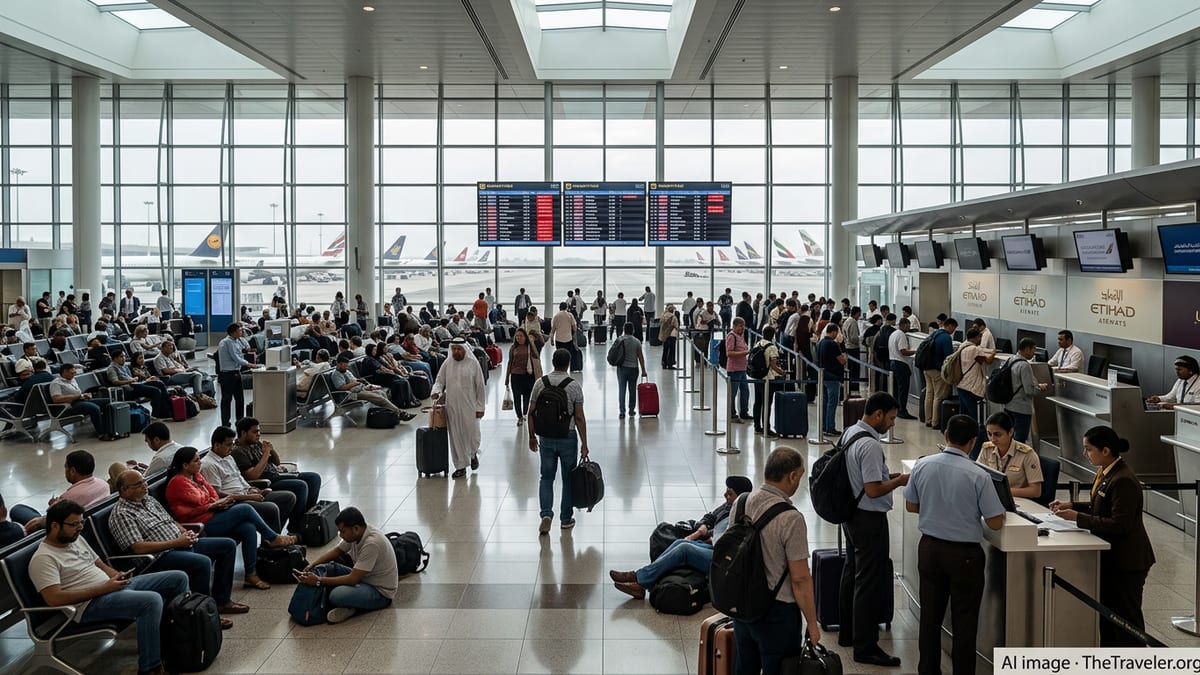
Knock-on Effects Across Jeddah, Riyadh and Dubai
Operational snapshots from airline tracking platforms and airport information boards show disruptions concentrated on some of the region’s busiest corridors, including flights linking Jeddah and Riyadh with Dubai and Doha. These routes are heavily used by both residents and connecting passengers heading between Asia, Europe and Africa, meaning relatively small schedule changes can quickly cascade into wider network issues.
Reports of delayed departures and arrivals across Saudia and low cost carrier flynas have centered on major Saudi gateways such as Jeddah’s King Abdulaziz International Airport and Riyadh’s King Khalid International Airport. Passengers connecting onward via Dubai and Doha on Emirates and Qatar Airways have also reported missed connections and last minute rebookings after initial legs departed late or were canceled.
Publicly available airline feeds and third party flight status services indicate that, over a recent operational window, at least 89 services involving the four carriers experienced departure or arrival delays, while seven were canceled outright. While this is a small fraction of the hundreds of daily flights operated by these airlines, the concentration on a handful of strategic hubs has amplified the impact for travelers caught in the middle of multi stop itineraries.
Travel discussion forums and social media posts from affected passengers describe long queues at transfer desks, uncertainty over rebooking options and difficulties securing hotel accommodation when overnight stays became necessary. These individual accounts mirror the broader picture painted by live timetable data that points to a period of acute, if localized, strain on Gulf aviation networks.
Regional Tensions and Airspace Constraints Add Pressure
Industry coverage over recent months has highlighted how elevated geopolitical tensions in parts of the Middle East have translated into airspace restrictions, reroutings and intermittent suspensions of airport operations in several countries. When key corridors are constrained, carriers are often forced to lengthen flight paths, retime services or hold aircraft and crews out of position, a pattern that can later surface in the form of clustered delays and cancellations.
Published analysis of earlier incidents this year, including temporary suspensions of operations at Dubai International Airport and closures of airspace in neighboring states, has underlined how quickly disruptions in one location reverberate across multiple airlines’ networks. Emirates and Qatar Airways, in particular, rely on tightly timed hub banks at Dubai and Doha to connect large flows of transit traffic. Any constraint on these hubs, even for a few hours, can push schedules into a recovery mode that lasts several days.
For Saudia and flynas, which operate dense domestic and regional schedules from Jeddah and Riyadh, route adjustments around restricted or crowded airspace can reduce operational flexibility. Aircraft and crews may arrive late into Saudi hubs after circuitous routings, cut into scheduled turnaround times and create a backlog that shows up as end of day delay statistics. The recent pattern of 89 delayed flights and seven cancellations appears consistent with this kind of knock on effect.
Aviation analysts have noted that while the underlying causes can be traced to external events, passengers typically experience the result in very practical terms, such as extended time on the tarmac, missed connections or last minute itinerary changes. The latest disruptions affecting Gulf carriers again demonstrate the sensitivity of hub and spoke models to sudden regional constraints.
Impact on Saudia and flynas Passengers in Saudi Arabia
Within Saudi Arabia, Saudia and flynas are handling the bulk of short haul and domestic traffic feeding into international services operated by themselves and partner airlines. When delays strike on domestic links such as Jeddah to Riyadh or Jeddah to Dammam, the effect can cascade into missed long haul departures from both Saudi and foreign hubs.
Data from recent flight status records shows that several delayed services on Saudia and flynas involved departures from Jeddah and Riyadh that were running behind schedule by more than one hour, sometimes longer. In some cases this proved sufficient to break carefully planned connections onto onward Emirates or Qatar Airways flights via Dubai or Doha, leaving passengers needing rebooking options that were themselves constrained by high demand.
Travelers posting online about their experience on Saudi domestic and regional sectors have described situations where a delayed departure out of Jeddah resulted in an unplanned overnight stay at a connecting hub, as later flights were either sold out or had also been affected. Others reported being moved between carriers, for instance from a canceled Qatar Airways service onto an alternative routing that involved Saudia or another Gulf airline, further illustrating the tight interlinkages between these networks.
Operational bulletins issued in recent weeks by regional travel agencies and airport service providers have advised passengers departing Saudi airports to build in additional buffer time and to monitor their flight status closely, particularly when itineraries involve tight connections through Dubai, Doha or other Gulf hubs. The latest sequence of 89 delays and seven cancellations reinforces the rationale behind such advice.
Emirates and Qatar Airways Grapple With Hub Disruptions
For Emirates and Qatar Airways, the recent disruptions are part of a broader pattern of volatility that has periodically affected their hubs over the past few months. Dubai International and Doha’s Hamad International rank among the world’s busiest airports for international traffic, and both operate on complex wave systems where widebody aircraft arrive within narrow windows before redeploying across multiple continents.
When delays develop upstream on feeder flights from Saudi Arabia and elsewhere, Emirates and Qatar Airways can face a choice between holding onward departures to wait for connecting passengers or operating flights on time and rebooking affected travelers onto later services. Depending on the scale of disruption, either option can produce clusters of late arrivals and missed connections that take days to work through.
According to tracking data and traveler reports, some of the seven cancellations recorded during the latest disruption period involved flights linking Gulf hubs with regional destinations that have seen heightened operational risk. These removals from the schedule may have been designed to free up aircraft and crew to stabilize core long haul routes, a strategy carriers have used in previous episodes of regional tension and airspace closures.
Passengers transiting Dubai and Doha during this time have described busy transfer halls and longer waiting times at customer service points, although core airport facilities have remained open and functioning. The situation contrasts with earlier episodes this year when entire hubs temporarily halted operations, but it underlines how even partial schedule adjustments at these mega hubs can affect large numbers of travelers in a short space of time.
What Travelers Should Watch in the Coming Days
While the recorded figure of 89 delays and seven cancellations offers only a snapshot, it suggests a period of elevated operational risk for trips involving Saudia, flynas, Emirates and Qatar Airways, particularly on routes threading through Jeddah, Riyadh, Dubai and Doha. Travel industry bulletins indicate that regional airspace and security conditions remain fluid, raising the possibility of further schedule changes on short notice.
Prospective passengers are being encouraged by airlines, airports and travel intermediaries to keep contact details up to date in booking records so that messages about retimings or cancellations reach them promptly. Many carriers in the region now emphasize the use of mobile applications and text alerts to communicate real time changes, an approach that can help travelers adjust plans more quickly when disruptions occur.
For those already holding tickets, experts recommend allowing longer minimum connection times than would normally be considered sufficient, especially when itineraries depend on a single daily long haul departure from a Gulf hub. Booking slightly earlier feeder flights from Jeddah or Riyadh into Dubai or Doha can provide an extra margin of safety if delays reappear.
Looking ahead, aviation commentators note that as long as regional tensions and airspace uncertainties persist, Gulf carriers are likely to continue making tactical adjustments to their networks. The current cluster of delays and cancellations affecting Saudia, flynas, Emirates and Qatar Airways illustrates how quickly such adjustments can ripple out to passengers, underscoring the importance of close monitoring and flexible planning for anyone traveling through the region’s major hubs.