


More news on this day
Escalating confrontation between Iran, Israel and the United States around the Strait of Hormuz is disrupting some of the world’s busiest air corridors, yet Gulf tourism markets are showing a striking capacity to absorb the shock and keep visitors coming.
Get the latest news straight to your inbox!
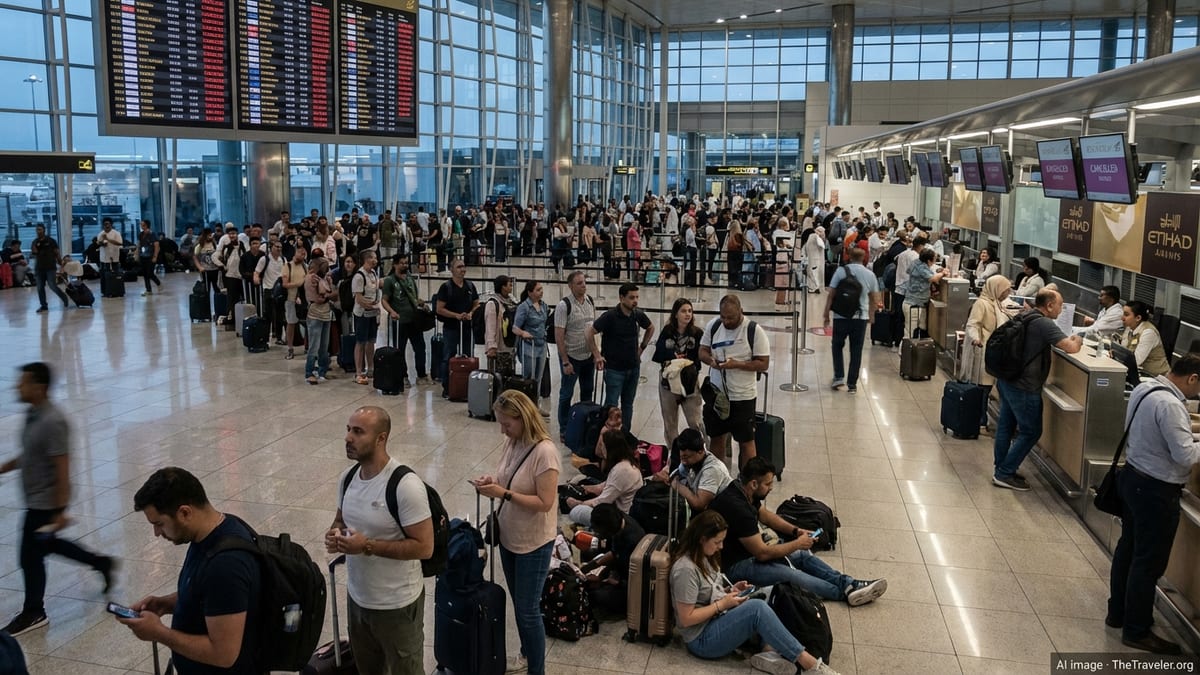
Airspace Closures Remap Key Global Flight Corridors
Recent military escalation involving Iran, Israel and US forces has tightened security restrictions across parts of the Middle East, with ripple effects on long-haul aviation linking Europe, Asia and Africa. Publicly available advisories from aviation and risk consultants describe rolling airspace closures or heavy restrictions in Iran, Iraq, Israel, Jordan, Kuwait, Qatar, Bahrain, Syria and the United Arab Emirates at various points in early 2026, forcing rerouting and cancellations on short notice.
Flight-tracking data cited in media and industry analyses shows aircraft skirting large portions of Iranian and adjacent airspace, adding hundreds of kilometres to certain Europe–Asia sectors. The Middle East had already become a focal point for route adjustments after earlier Iran–Israel exchanges in 2024 prompted temporary shutdowns over multiple countries, and the latest round of conflict has locked in a new, more constrained map for overflight in the Gulf region.
Economic research from global airline bodies notes that the attacks on Iranian territory and the heightened militarisation of the Strait of Hormuz in 2026 amount to the most severe disruption to the region’s aviation network since the pandemic. Available airspace for civil carriers has shrunk not only because of formal regulatory restrictions but also due to company-level risk policies that limit exposure to perceived conflict zones.
Industry specialists point out that the Middle East’s role as a bridge between continents amplifies the impact of each closure. Gulf hubs have acted as connecting points for vast flows of passengers and cargo; when airspace narrows, schedule buffers disappear, connections become more fragile and aircraft utilisation drops, adding pressure to already thin margins.
Rerouting, Higher Costs and Capacity Shifts for Carriers
Gulf and international airlines are responding with a mix of tactical reroutes, schedule thinning and capacity redeployment. Commentaries in regional business outlets describe carriers filing contingency flight plans that thread through safer corridors to the north and south of the Gulf, accepting longer flight times and higher fuel burn as the price of maintaining connectivity.
Risk briefings circulated to corporate travel managers in March 2026 highlighted widespread delays and diversions as airspace closures were introduced, lifted and sometimes reimposed with limited warning. In some cases, national airlines in the region temporarily suspended services to neighbouring hubs or key capitals while attacks or missile launches were reported, before resuming limited operations once threat levels eased.
Analysts quoted in Gulf-based aviation coverage estimate that additional fuel, crew and maintenance costs from extended routings could run into millions of dollars per month for the largest carriers if current patterns persist. There is a secondary effect on global competitors as well, with some non-Gulf airlines increasing capacity on alternative Europe–Asia routings to capture passengers unwilling to transit near the Strait of Hormuz.
Despite the turbulence, several reports suggest that the underlying network remains intact rather than fundamentally broken. Airlines have become more adept at dynamic re-planning since the pandemic, and many already maintain pre-approved alternative routings for high-risk scenarios. The current conflict is therefore eroding profitability and on-time performance more than it is severing the Gulf from global air traffic.
Tourism Demand Proves More Durable Than Expected
While aviation operations absorb the immediate shock, tourism indicators across Gulf Cooperation Council states paint a more mixed picture than the headlines might suggest. International studies on global tourism trends in 2026 describe the Middle East as entering the year with outsized post-pandemic momentum, with international arrivals significantly above 2019 levels and many destinations still expanding capacity.
Sector-focused research from consultancies and multilateral bodies notes that destinations closest to the conflict have experienced sharper declines in visitor numbers and hospitality revenues, especially in luxury segments that tend to be more sensitive to security perceptions. Yet in major Gulf hubs such as the United Arab Emirates, Saudi Arabia and Qatar, demand has softened rather than collapsed, supported by strong domestic and regional travel and by ongoing investment in tourism infrastructure.
A recent hospitality and religious tourism report on Saudi Arabia, for example, highlights continued resilience in key cities, underpinned by rising numbers of pilgrims and a pipeline of new hotels and mixed-use developments. Similarly, coverage of Qatar’s visitor economy points to an industry that weathered recent regional tensions and is now refocusing on marketing campaigns, events and digital services to sustain growth through the remainder of 2026.
Broader economic commentary on the UAE emphasises that the country’s diversified services base and experience managing past shocks have helped maintain confidence among investors and visitors. Authorities in Dubai have announced targeted financial incentives for hotels and tourism-linked businesses this year, signalling a determination to keep the sector on a growth track even as geopolitical risks remain elevated.
Policy Coordination and Crisis Planning Across the GCC
Beyond immediate operational responses, Gulf governments are moving to signal stability to international markets. In April 2026, tourism ministers from GCC states convened an extraordinary virtual meeting to review regional developments and their implications for travel. A joint statement released afterwards stressed that tourism projects and major events across the council countries were progressing as planned, and described the sector as both stable and resilient in the face of current tensions.
The ministers underscored a commitment to keeping Gulf destinations open and attractive, highlighting recent investments in airports, entertainment districts and cultural sites. Official communications from several states have also framed previous experience with crises, including health emergencies and economic shocks, as a foundation for sophisticated risk management capabilities in tourism and aviation.
International policy reports echo the need for such approaches, urging destinations worldwide to embed risk assessment, early warning systems and crisis response into tourism planning. For the Gulf, where aviation connectivity and tourism revenues are closely intertwined, this means integrating security considerations into everything from route development strategies to marketing messages, while ensuring that travellers receive timely, transparent information during disruptions.
Industry advisers argue that this kind of coordination will be crucial if the Iran-Israel-US conflict persists or intensifies. A prolonged period of elevated risk around the Strait of Hormuz could accelerate shifts in global travel patterns, testing whether the Gulf’s major hubs can retain their status as preferred waypoints between East and West.
Outlook: Fragile Skies, But Strong Long-Term Ambitions
Looking ahead, most scenario analyses now treat regional tensions as a structural rather than a temporary factor in Gulf aviation planning. Airlines are likely to continue operating with layered contingency options, higher operating costs and a sharper focus on safety perceptions for international passengers. Insurance premiums, crew rostering and fleet deployment decisions are all being recalibrated to reflect the possibility of further strikes or sudden restrictions.
Yet the longer-term tourism strategies of Gulf states remain largely unchanged. Vision documents and investment plans published over recent years still envisage the region as a leading global destination for leisure, business and religious travel, supported by mega-projects, expanded airport capacity and year-round events calendars. The current conflict may slow some timelines or reshape priorities, but it has not reversed the direction of travel.
For now, the picture is one of contrast: skies that are busier, more crowded and tactically constrained, set against cities that continue to welcome visitors, build attractions and court new markets. As the Iran-Israel-US confrontation plays out, the resilience of Gulf tourism and the adaptability of its airlines will remain critical test cases for how a modern travel hub navigates conflict on its doorstep.