


More news on this day
Across Europe, railways are under mounting pressure to deliver smoother, simpler journeys, as governments, industry and passengers converge on a shared goal: making rail genuinely hassle free.
Get the latest news straight to your inbox!
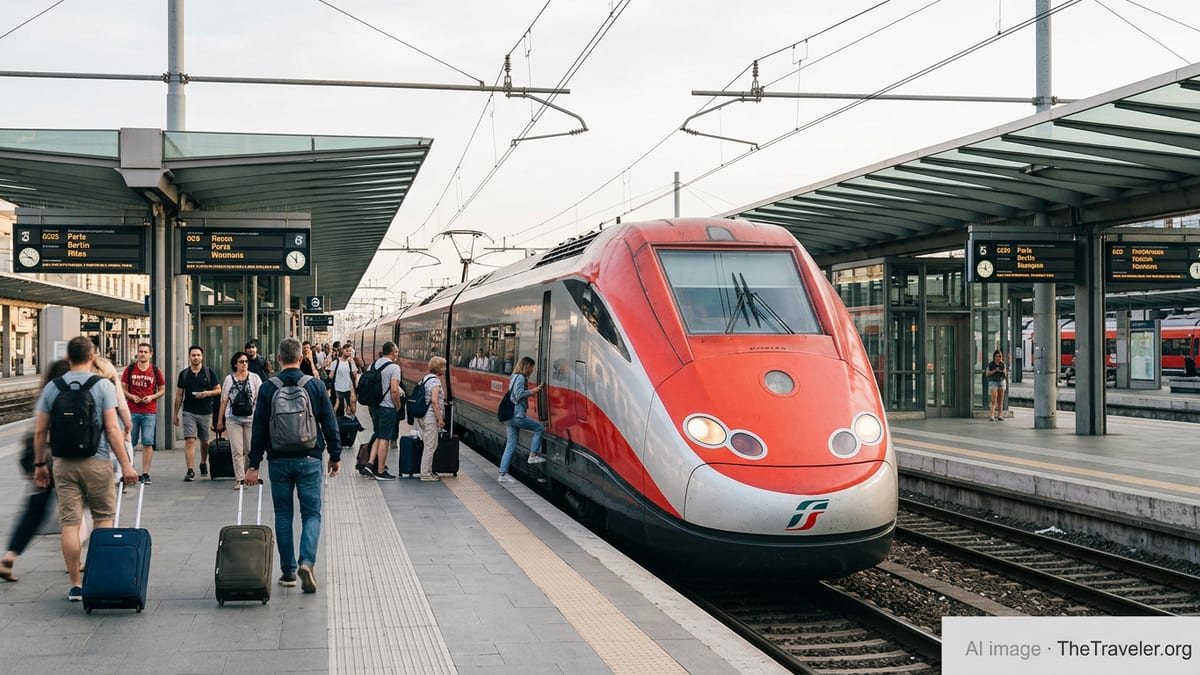
From Niche to Backbone of Low Carbon Travel
Passenger rail has become central to Europe’s climate ambitions, with policymakers viewing trains as a practical alternative to short haul flights and private cars. High speed links, night trains and cross border services are promoted as tools to cut transport emissions, but the experience on the ground can still feel fragmented for travelers. Timetables that do not line up, inconsistent onboard standards and complex pricing structures often undermine the environmental case with everyday inconvenience.
Industry discussions increasingly frame these shortcomings as a competitiveness problem rather than a niche technical issue. Analysts note that when rail is fast, frequent and easy to use, travelers switch from air and road in significant numbers. When journeys involve multiple bookings, confusing fare classes or uncertainty about connections, passengers often default back to the car or plane, even on routes where track capacity already exists.
Operators and regulators are therefore talking less about megaprojects and more about how to make existing rail options feel as seamless as a single click flight booking. That shift places ticketing, information and customer experience at the heart of Europe’s rail transition.
Ticketing Platforms Race to Simplify Cross Border Trips
One of the most visible efforts to make rail hassle free is unfolding in the ticketing space. A growing number of digital platforms now promise to search multiple national operators at once, combine legs across borders and issue a single mobile ticket for complex routes. These services aim to address long standing criticism that Europe’s rail network functions more like a patchwork of domestic systems than a coherent continent wide offer.
Developers of these platforms are lobbying for broader access to real time data on delays, cancellations and capacity so that apps can not only sell tickets but also manage disruptions. Publicly available information shows that the European Union is pushing in the same direction with rules designed to open rail data and encourage interoperable ticketing. The goal is that a traveler booking a journey from, for example, Brussels to a ski resort in the Alps should not need to understand the intricacies of each national operator involved.
While progress has been uneven, new tools are gradually reducing friction for passengers who were previously deterred by language barriers, unfamiliar websites or fears of getting stranded after a missed connection. Industry observers argue that the remaining challenge is political rather than technological, as incumbents balance commercial interests with demands for more open, customer friendly systems.
Stations, Apps and Real Time Information Go Digital
Beyond ticketing, operators are investing in digital services designed to smooth the journey from door to door. Recent initiatives in Europe and South Asia, such as integrated “super apps” combining ticket booking, live train tracking and on board services, illustrate how rail companies are repositioning themselves as full service mobility providers rather than simply selling seats on trains.
These apps seek to address some of the most common pain points reported by passengers, from uncertainty about platform changes to difficulty finding food options during delays. By aggregating services such as last mile transport, station navigation and at seat catering, rail managers hope to keep travelers within a single digital ecosystem throughout the trip, reducing anxiety and perceived complexity.
At major hubs, investments in clearer wayfinding, barrier free access and real time displays are intended to complement the digital upgrades. Transport commentators note that passengers judge a journey not only by punctuality, but also by whether they can move between modes without confusion. The ambition is that changing from a regional train to a tram or airport express should feel intuitive, even for first time visitors.
Reliability and Capacity Remain the Binding Constraint
Despite advances in user facing technology, reliability continues to be the defining factor in whether rail feels hassle free. Public debates in several European countries highlight passenger frustration with overcrowding, short notice cancellations and aging rolling stock on busy corridors, particularly during peak commuting hours and holiday periods.
Infrastructure managers point to decades of underinvestment, maintenance backlogs and the difficulty of upgrading heavily used lines without causing further disruption. In response, governments have announced funding packages for new signaling systems, track renewals and additional passing loops intended to unlock capacity and improve punctuality statistics.
Observers stress that digital tools cannot compensate if the underlying network cannot support dependable operations. As one recurring argument in policy papers puts it, attractive booking apps are of limited value if passengers still feel compelled to build in long buffers for missed connections or fear being stranded late at night. For many travelers, hassle free rail ultimately means being able to trust that trains will run roughly as advertised.
Balancing Ambition, Affordability and Public Trust
Efforts to streamline rail travel are unfolding against a backdrop of cost pressures and debates over who should pay for modernisation. Inflation in construction and energy, coupled with competition from low cost airlines and long distance buses, has left operators and governments searching for sustainable funding models that keep fares reasonable while supporting investment.
Some countries are experimenting with flat rate or discounted season tickets to entice drivers onto trains, while others focus on targeted fare reductions for young people and frequent commuters. According to published coverage, early evidence suggests that clear, simple pricing can draw new riders, but only when service quality meets expectations. Complex discount schemes that are hard to navigate risk reinforcing the perception that rail is confusing rather than convenient.
Consumer groups emphasise that rebuilding trust is as important as launching new products. Consistent communication during disruptions, transparent refund policies and visible improvements on the ground all contribute to a perception that rail is responsive to passenger needs. As climate targets tighten and cities seek to cut congestion, whether rail can convincingly present itself as the hassle free backbone of everyday travel will help determine how quickly travelers shift their habits in the years ahead.