


More news on this day
Air travel across key Asian and Middle Eastern hubs faced fresh turmoil this weekend, as 369 flights were cancelled and more than five thousand services delayed amid a mix of regional conflict, airspace restrictions and operational strains.
Get the latest news straight to your inbox!
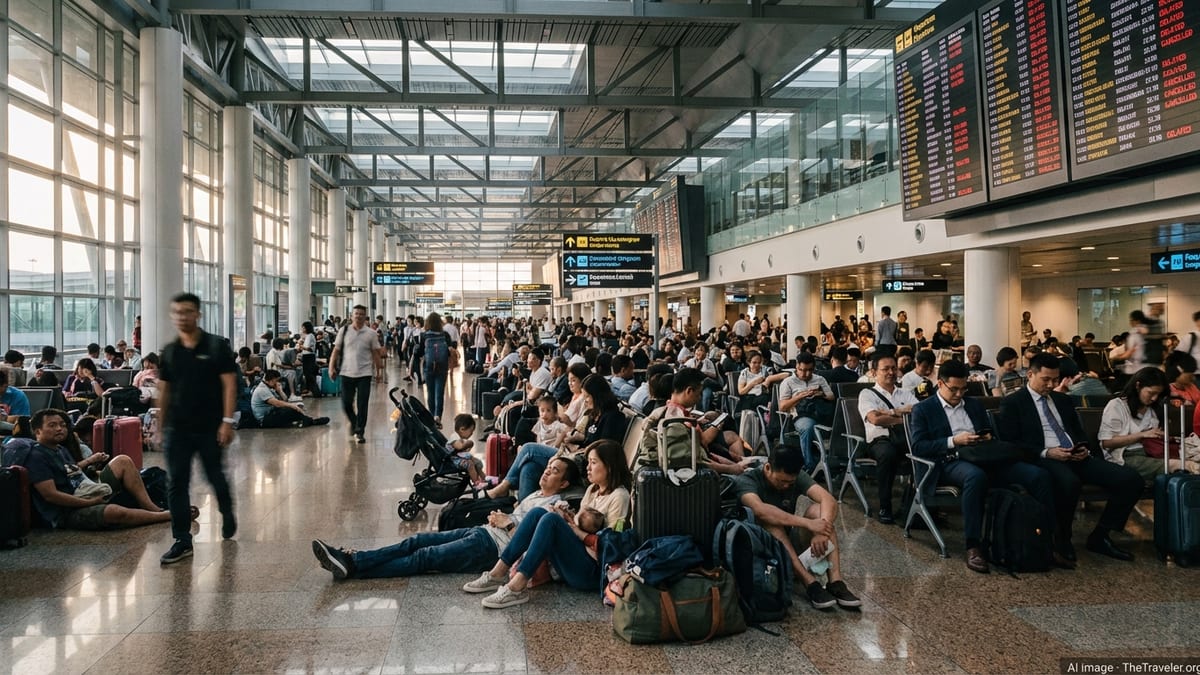
Major Hubs From Dubai to Singapore Feel the Strain
The latest disruption has concentrated around some of the world’s busiest transit hubs, including Dubai, Doha, Riyadh, Kuwait City, Singapore and major Indian gateways. Publicly available flight-tracking data and regional media reports indicate that these airports recorded the bulk of the 369 outright cancellations, alongside thousands of late departures and arrivals within a single 24 hour period.
In the Gulf, Dubai International and Hamad International in Doha continue to operate high passenger volumes while managing rolling schedule changes. Airlines serving these hubs have been forced to re-time services, substitute aircraft and thin out frequencies on selected routes, particularly overnight rotations that are more exposed to airspace curfews and crew duty limits.
Across Asia, large switch-point airports such as Singapore Changi, Bangkok Suvarnabhumi and key Chinese and Indian hubs have reported elevated delay levels as knock-on effects from Middle Eastern airspace constraints ripple through long-haul operations between Europe, Asia and Australia. Industry analytics show that, even with generally strong on-time performance in Southeast Asia over recent months, cancellation rates across the wider Asia Pacific region have surged compared with earlier in the year.
Secondary airports have not been spared. Regional facilities in Saudi Arabia and the wider Gulf, as well as mid-sized South Asian airports used by labor and religious traffic, have seen clusters of cancellations where carriers have consolidated multiple lightly loaded flights into a single operation.
Conflict, Closed Skies and Fuel Costs Drive Disruption
The continuing conflict involving Iran and its neighbors remains a central factor behind the latest wave of disruption. Since early March, successive restrictions on overflight rights across parts of Iran, Iraq, Syria, Israel and segments of Gulf airspace have repeatedly forced airlines to redraw long-haul routings, extend block times and in some cases suspend services entirely.
These detours have collided with a sharp rise in jet fuel prices triggered by the broader regional crisis. Aviation industry reports describe carriers selectively cutting frequencies, trimming capacity and deferring route resumptions in response to higher operating costs. Some Asian and European airlines have reduced or postponed planned services to Dubai, Doha, Riyadh and other Gulf destinations, while others have opted to overfly alternative corridors through Central Asia or the Indian Ocean, further complicating scheduling.
Several Middle Eastern and Asian airlines had begun cautiously restoring parts of their networks earlier in the summer, only to slow or reverse these plans as the security picture deteriorated again in July. Updated route advisories from multiple carriers show extended suspensions on selected Middle Eastern routes, as well as delayed resumptions of services that were originally due to return in September.
The cumulative effect is visible in the latest daily figures, where cancellations associated with closed or restricted airspace combine with routine technical and operational issues to create sizable pockets of disruption at key connection banks. For travelers, this translates into missed onward connections, last-minute rerouting and, in some cases, overnight stays far from their intended destination.
Asian and Gulf Carriers Adjust Networks on the Fly
Amid the turbulence, airlines based in Asia and the Middle East are continuously reshaping their networks to keep aircraft and crew productive. Gulf super-connectors have rebalanced capacity away from the most affected corridors while maintaining strong frequencies on alternative markets to South Asia, Southeast Asia and Africa. Low cost and hybrid carriers across the region are also tactically moving aircraft between bases to support routes with the strongest demand and least exposure to contested airspace.
Full service Asian airlines show a similar pattern. Some have extended the suspension of routes into the Gulf and Israel, while simultaneously adding flights on intra-Asian services where demand remains robust and routing is simpler. Others are upgauging aircraft on select flights to consolidate disrupted passengers from multiple cancellations into a smaller number of departures.
Public statements and schedule filings suggest that network planners are working to strike a balance between maintaining critical connectivity and avoiding frequent last-minute schedule changes that frustrate customers. Where possible, affected flights are being cancelled several days in advance rather than on the day of departure, allowing more time for rebooking and minimizing airport congestion.
Yet the fluid situation in regional skies means that airlines are keeping contingency plans active. Sudden changes in airspace permissions, shifting security assessments and volatile input costs can all trigger new rounds of schedule revisions, often at short notice, prolonging uncertainty for both operators and passengers.
Passengers Face Missed Connections and Longer Journeys
For travelers, the headline numbers of 369 cancellations and thousands of delays translate into very personal setbacks: missed weddings and business meetings, interrupted vacations and extended airport waits. Social media posts and traveler forums from across the region are filled with accounts of overnight layovers, multi-stop reroutes through unfamiliar hubs and difficulty securing timely customer support during peak disruption periods.
Flights connecting Europe, Asia and Australasia have been particularly vulnerable to missed onward connections when a single delayed sector breaks a carefully timed transfer window at a Gulf or Southeast Asian hub. In some cases, travelers have been offered alternative routings that add many hours and extra stops to their journey, as airlines work around constrained airspace and limited spare capacity.
Passengers on religious and labor routes, including services to Saudi Arabia and the Gulf from South and Southeast Asia, have also been heavily affected. Where flights are consolidated or cancelled outright, large groups can find themselves competing for a limited pool of remaining seats, especially during peak travel seasons and holiday periods.
Travel advisories from airports and tourism bodies across the region are emphasizing the importance of checking flight status before departure, ensuring contact details are up to date with airlines and allowing extra time at the airport. Many carriers are encouraging customers to use mobile apps and self-service tools for rebooking and notifications when disruption cascades.
What the Latest Disruptions Signal for Peak-Season Travel
The scale of the latest cancellations and delays is raising questions about how resilient regional aviation will be during the remainder of the northern summer travel season. With demand for international travel still strong after years of pandemic-related constraints, airlines are operating close to the limits of their available fleets and crews, leaving less room to absorb shocks from conflict-driven airspace changes.
Industry data points to a widening gap between relatively solid on-time performance within certain subregions, such as Southeast Asia, and elevated cancellation rates across the broader Asia Pacific and Middle East markets. This divergence suggests that hubs least exposed to restricted airspace may continue to perform comparatively well, even as long-haul flows that depend on Gulf and Levantine corridors remain vulnerable.
Analysts note that future disruption levels will hinge on the trajectory of the regional security situation, as well as the stability of energy markets and airline finances. Any further escalation that prompts additional airspace closures or spikes in fuel prices could force carriers into deeper capacity cuts and trigger more widespread operational challenges.
For travelers planning itineraries through Asian and Middle Eastern hubs in the coming weeks, the latest disruption serves as a reminder to build in buffer time, consider more flexible booking options and stay alert to schedule changes that may occur well after tickets are purchased.