


More news on this day
Delta Air Lines flight 2279 operating between Philadelphia and Atlanta diverted to Charlotte Douglas International Airport on Saturday, with publicly available data indicating unspecified operational issues on the route.
Get the latest news straight to your inbox!
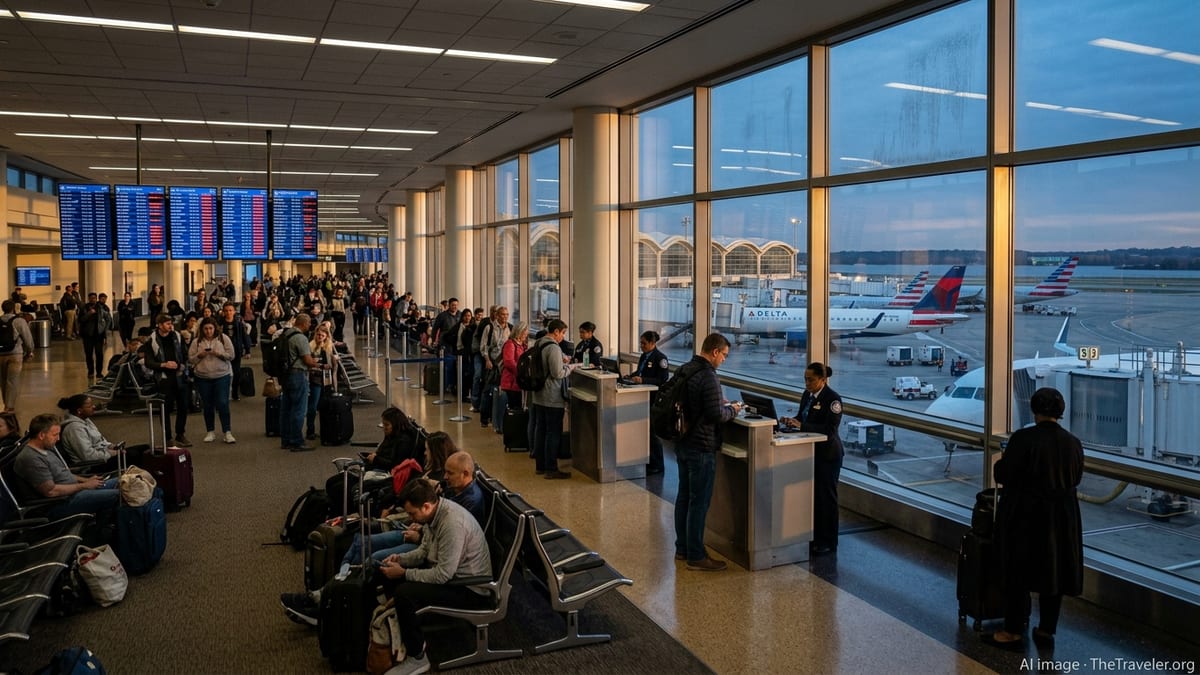
Midroute Diversion on Busy Northeast–Southeast Corridor
Delta flight 2279 is a regularly scheduled service linking Philadelphia International Airport and Hartsfield Jackson Atlanta International Airport, a corridor that typically sees heavy business and leisure traffic. On the latest operating date, routine tracking for the flight showed a deviation from its planned path and an unplanned arrival at Charlotte Douglas International Airport in North Carolina.
Publicly accessible flight information indicates that the aircraft departed Philadelphia as scheduled before changing course en route and landing in Charlotte instead of continuing to Atlanta. The diversion occurred without any publicly detailed emergency declaration, and no abnormal altitude profile or prolonged holding pattern was visible in commonly used flight-tracking summaries at the time of the event.
Available information has not specified the exact nature of the operational issue. In airline operations, the term typically covers a broad range of non routine situations that can include maintenance checks required by cockpit indications, crew duty time limits, airport or airspace constraints, and other performance or dispatch concerns that do not necessarily involve an in flight safety emergency.
The diversion placed the aircraft at one of the Southeast region’s major connecting hubs, where multiple carriers, including Delta and its partners, operate frequent services to Atlanta. This positioning generally helps facilitate onward travel for affected passengers once the aircraft is released to continue or alternative flights are arranged.
What “Operational Issues” Can Mean for Passengers
Operational issues in airline terminology are often grouped under a single umbrella label for customer facing communications, even though the underlying reasons can vary significantly. Published policies from major U.S. carriers, including Delta, show that non weather related disruptions may stem from maintenance findings, aircraft routing changes, crew scheduling complications, or congestion at destination airports.
When a flight diverts, the aircraft may be repositioned to an airport where technical inspections, crew changes, or refueling can be performed more efficiently than at a smaller field along the route. Charlotte Douglas International Airport functions as a major maintenance and connecting hub in the region, which can make it a practical choice for handling a midroute disruption for a flight headed toward Atlanta.
For travelers on board, a diversion typically results in extended travel times and the possibility of missed connections, particularly on a route like Philadelphia to Atlanta that often serves as a feeder for additional domestic and international flights. Airline customer service channels and mobile applications generally provide rebooking options and updated departure times once a new plan is confirmed for the aircraft and crew.
Delta’s publicly posted guidance on delays and cancellations outlines that passengers affected by significant schedule changes may be rebooked, and in some circumstances may request refunds or expense reimbursements when disruptions fall within the airline’s control. Whether a specific diversion qualifies for these measures depends on the eventual classification of the cause under the company’s internal criteria.
Weather, Congestion and Network Pressures in the Eastern U.S.
The diversion occurred against a backdrop of summer operational pressures in the eastern United States, where thunderstorms, air traffic control initiatives and high seasonal demand often combine to complicate airline scheduling. Federal aviation system advisories issued in recent weeks have repeatedly highlighted convective weather and volume constraints around both Atlanta and Philadelphia, two of the busiest nodes in Delta’s domestic network.
Operational plans circulated by the national air traffic coordination system in early July described thunderstorms affecting Atlanta and noted various ground stops and flow programs that can ripple through airline schedules. Separate advisories have pointed to gate and departure constraints at Philadelphia, particularly during periods of heavy traffic and inclement weather in the Northeast corridor.
In such conditions, a single aircraft delay, maintenance finding or routing change can quickly affect downstream flights sharing the same aircraft or crew. A midroute diversion to a large alternate airport like Charlotte can be used to reposition an aircraft around weather cells, alleviate congestion at the planned destination, or align the flight with a revised traffic management initiative, even when the airline does not publicly attribute the change to a specific factor.
Weather related constraints also interact with crew duty limits and maintenance rules, sometimes forcing airlines to choose between holding an aircraft in the air, diverting to refuel and wait, or landing at an alternate to reset the schedule from a more flexible location. Each of these choices carries different implications for arrival times and passenger connections.
Passenger Rights and Rebooking Options After a Diversion
When a domestic U.S. flight diverts to an alternate airport, passengers typically remain under the original ticketing for their journey, even if they temporarily find themselves far from their intended destination. Airlines then decide whether to continue the same aircraft to the destination once the issue is resolved, or to move passengers to other flights that can complete the trip sooner.
Delta’s customer information pages state that the carrier attempts to automatically rebook travelers after cancellations or significant delays, with updated itineraries usually visible in the airline’s mobile app or at self service kiosks. For diversions, additional steps can involve arranging a so called rescue flight, repositioning the original aircraft, or placing passengers on other departures from the diversion airport.
In some cases, when a diverted airport is within driving distance of the original destination, publicly available conditions of carriage note that carriers may provide ground transportation as an alternative to waiting for another flight. That practice is more often seen when diversions result in overnight delays or when limited remaining departures make same day air transport unlikely.
Travelers seeking compensation or reimbursement for meals and lodging are generally advised in consumer guidance materials to keep receipts and document the timeline of events, as eligibility can depend on whether the airline ultimately categorizes the disruption as within its control. Diversions tied to air traffic control directives or severe weather are usually treated differently from those prompted by mechanical or staffing problems.
Ongoing Scrutiny of Airline Reliability
While the diversion of Delta flight 2279 appears to have been handled without any publicly reported safety concerns, it adds to a pattern of high visibility disruptions that draw attention to airline reliability during peak travel periods. Government consumer reports released over the past year have highlighted diversion statistics, tarmac delays and cancellation rates among major U.S. carriers, offering a broader picture of how frequently flights deviate from their planned paths.
Delta, like other large network airlines, operates thousands of daily flights, and even a small percentage of diversions can affect significant numbers of passengers, particularly at hub airports such as Atlanta. The combination of intricate hub schedules, tight aircraft utilization and weather prone regions means that unplanned changes on one leg can cascade throughout the system.
Industry observers note that carriers have been updating internal procedures and investing in technology intended to anticipate disruptions earlier and provide more real time information to travelers. Mobile applications, text alerts and expanded digital rebooking tools are among the measures designed to reduce uncertainty when a flight diverts or is substantially delayed.
For passengers on flights like the diverted Philadelphia to Atlanta service, the practical impact of those efforts is measured in how quickly new itineraries are confirmed, how clearly options are communicated, and whether accommodations are provided when overnight delays occur. As summer travel continues across the United States, each individual disruption contributes to the broader debate over airline accountability, passenger rights and the resilience of the national air transport system.