


More news on this day
Air Canada has extended its suspension of passenger flights between Canada and Dubai until late October 2026, as continuing regional instability and updated federal travel advisories reshape long haul travel plans for thousands of passengers.
Get the latest news straight to your inbox!
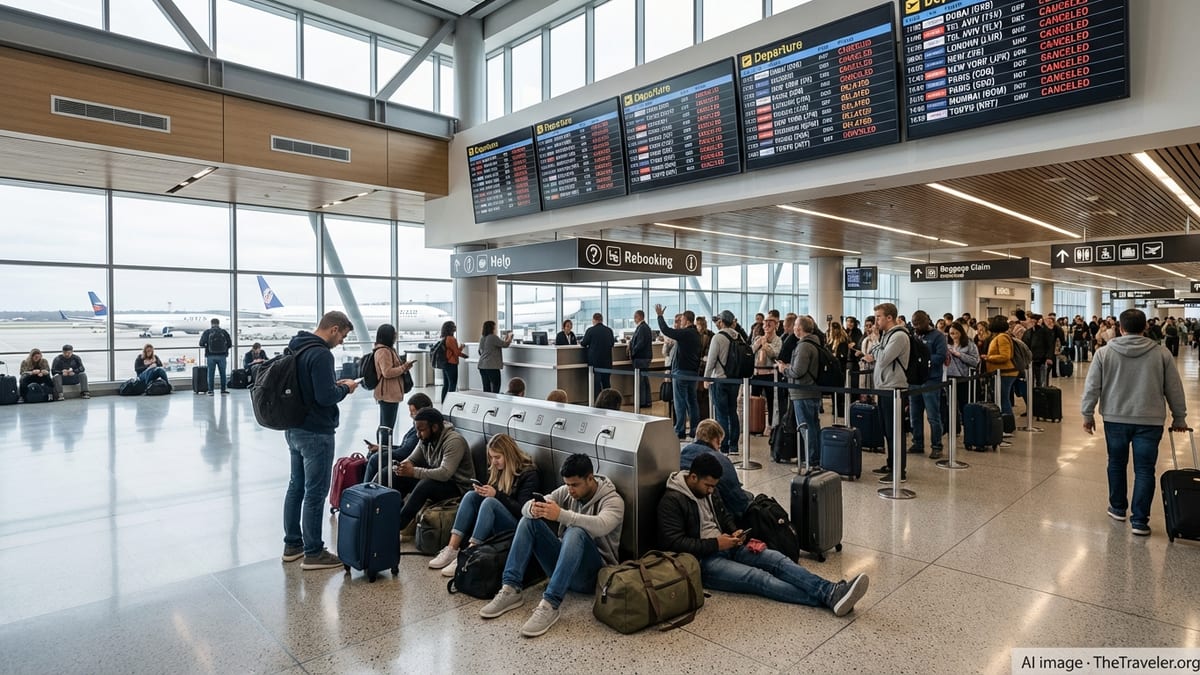
Suspension Now Covers Late October Travel Window
Publicly available information on Air Canada’s travel alerts page indicates that all passenger services to and from Dubai remain halted through at least October 24, 2026, inclusive. The extension pushes the suspension deeper into the busy autumn period, affecting Canadians planning business trips, family visits and onward connections across the Middle East, Africa and South Asia.
The Dubai route, historically operated from Toronto and sometimes seasonally from other Canadian hubs, has been off the schedule since airspace closures and security concerns intensified earlier in 2026. With the new dates, bookings for Dubai on Air Canada metal through late October are either unavailable or flagged as disrupted, and customers holding tickets during the affected period are being directed to flexible rebooking or refund options.
Industry coverage from Canadian trade publications notes that the extended halt applies not only to Dubai but also to Tel Aviv, reflecting a wider reassessment of the carrier’s exposure to conflict zones in the region. While the suspensions are formally described as temporary, the latest timeline suggests that any meaningful restart will not occur before the onset of the 2026 to 2027 winter travel season.
Federal Travel Advisories Drive Airline Risk Calculus
The decision to prolong the Dubai suspension follows successive updates to federal travel advisories covering the United Arab Emirates and neighbouring states. Government of Canada advisories for the UAE now highlight heightened security risks, potential spillover from regional conflict and shifting airspace restrictions, urging travellers to reconsider non essential trips and to remain prepared for rapid changes to flight operations.
In parallel, foreign aviation and security authorities, including the United States Federal Aviation Administration, have issued notices urging carriers to exercise extreme caution in portions of Middle Eastern airspace. These advisories, while not outright bans, significantly influence airline risk models, crew scheduling and insurance coverage calculations, and have already prompted a range of carriers to reroute or suspend services.
Analysts note that Air Canada’s latest extension aligns with the current advisory horizon, which projects elevated risk conditions well into the latter part of 2026. By publicly anchoring the suspension to inclusive dates in late October, the airline appears to be building in a buffer for both regulatory reviews and any additional security assessments required before flights could resume.
Passenger Options: Rebooking, Refunds and Alternative Gateways
According to information posted on Air Canada’s disruption and waiver pages, affected Dubai passengers are generally being offered three main options: rebooking to alternative Air Canada destinations in Europe, the United Kingdom, India or Africa, travel credits for future use, or refunds in the original form of payment, depending on fare type and itinerary. The carrier’s guidance urges customers not to travel to the airport unless they hold confirmed seats on an operating flight with a functioning route.
For many travellers whose journeys involved onward connections via Dubai to South Asia or East Africa, the new policy effectively pushes them toward secondary routings through European or Indian hubs. Travel agents report a noticeable shift to partner and alliance airlines, as well as to competitors in the Gulf region whose operations are less constrained or have been restored more quickly on certain corridors.
Consumer advocacy groups in Canada point to the importance of understanding passenger rights under the country’s air transport regulations, particularly where cancellations are prolonged and rooted in safety or security advisories. While airlines may be exempt from some compensation obligations in the case of external security disruptions, travellers remain entitled to clear information, prompt refunds where chosen, and support in managing complex rebookings.
Broader Pattern of Route Cuts Amid Conflict and Fuel Costs
The sustained pause of Air Canada’s Dubai services forms part of a broader pattern of network retrenchment in 2026 as the carrier grapples with both geopolitical risk and elevated jet fuel prices. Coverage from Canadian and international outlets has documented a series of route suspensions and early seasonal cuts on transborder links to the United States and selected sun destinations, often framed as temporary measures until market conditions stabilize.
In the Middle East, multiple airlines have reduced frequencies, rerouted flights around contested airspace or suspended services entirely in response to the regional conflict and resulting airspace closures. Reports from aviation industry trackers show that carriers serving Dubai and nearby hubs have implemented various timelines for resumption, many now stretching into October or beyond.
For Air Canada specifically, the combination of security considerations, regulatory advisories and fuel economics makes any near term relaunch to Dubai difficult. The route’s reliance on widebody aircraft, long sector length and intricate onward connectivity means that even modest risk premiums and additional operating costs can render the service unviable until conditions improve.
Implications for Tourism, Trade and Future Capacity
The prolonged absence of direct Air Canada flights to Dubai has implications that reach beyond individual travel plans. Dubai has served as a critical gateway for Canadian exporters, tourism operators and diaspora communities connecting to markets across the Gulf, the Indian subcontinent and East Africa. With direct services off the table through late October 2026, businesses face higher reliance on indirect routings and potentially longer transit times.
Tourism observers note that the disruption coincides with what is typically an important planning window for winter 2026 to 2027 travel. Tour operators and conference organizers looking to secure capacity for events in Dubai and the wider region must now hedge their plans, often by locking in inventory on non Canadian carriers or by shifting events to alternative hubs.
Aviation analysts suggest that once federal travel advisories ease and airspace conditions stabilize, competition for slots and market share to Dubai could intensify. Air Canada may seek to re enter with a recalibrated schedule, possibly timed to coincide with the start of the northern winter season, but that will depend on security assessments, fleet availability and the evolution of fuel and demand trends. Until then, the extension of the suspension to late October 2026 signals that Canadian travellers and businesses should prepare for a prolonged period without nonstop Air Canada service on the Dubai corridor.