


More news on this day
Escalating conflict involving Iran is triggering fresh turbulence for the Gulf’s aviation and tourism sectors, as the United Arab Emirates, Saudi Arabia, Bahrain, Qatar and Kuwait confront rolling airspace restrictions, fragile ceasefires and mounting economic fallout that directly affects travelers.
Get the latest news straight to your inbox!
Airspace Closures, Drone Strikes And A Fragmented Sky
The latest phase of the Iran conflict has turned Gulf skies into a patchwork of restricted corridors and temporary shutdowns, with direct implications for passengers using the region’s major hubs. Regional coverage indicates that the crisis escalated sharply from late February 2026, when coordinated US and Israeli strikes on Iran were followed by Iranian missile and drone attacks on Gulf targets, including aviation and logistics infrastructure.
Publicly available reporting shows that Kuwait International Airport and Dubai International Airport both experienced drone or missile incidents that temporarily suspended flights and damaged facilities, reinforcing risk perceptions around key transit points. Iranian attacks have also targeted areas around Bahrain, which hosts the US Fifth Fleet, and military-linked infrastructure in Qatar and Saudi Arabia, prompting rapid changes to air-traffic patterns.
Specialist aviation trackers and regional media describe a cascading effect across Gulf flight information regions, with Iran’s airspace under total closure, partial restrictions in Iraq and Kuwait, and intermittent constraints in Bahrain and Saudi Arabia. Airlines that previously relied on direct corridors across Iran, Iraq and the upper Gulf are now diverting around conflict zones, adding distance, fuel burn and complexity to long-haul services between Europe, Asia and Oceania.
Although some airspace, particularly over Qatar and parts of Saudi Arabia, has moved from full closure to tightly managed operations, authorities continue to adjust routings in response to ongoing security assessments. For travelers, this means schedules that appear restored on paper can still be subject to last-minute cancellations, extended flight times and unplanned overnight stops.
Gulf Mega-Hubs Under Strain As Airlines Trim Schedules
The Gulf’s leading hubs in Dubai, Abu Dhabi and Doha were built on seamless long-haul connectivity, but the Iran conflict has exposed the vulnerability of this model. Aviation-focused publications report that Emirates, Etihad Airways and Qatar Airways have all operated reduced schedules or temporary groundings at various points since late February, particularly when local airspace closures coincided with heightened missile and drone activity.
Analysis of schedule data and airline statements shows that Dubai’s main airports endured hours-long shutdowns during peak attack periods, forcing carriers to divert or cancel dozens of flights in a single day. In Qatar, Hamad International Airport saw a full operational halt when Qatari airspace was initially closed, with a subsequent phased reopening that still involves strict traffic management and regulated operating windows.
International carriers transiting the region have layered additional cuts on top of Gulf-based reductions. European airlines such as British Airways have suspended routes to Dubai and Abu Dhabi for extended periods, citing regional security conditions and airspace constraints. Other global carriers have opted to reroute via alternative hubs in Istanbul, Central Asia or southern Europe, diminishing the centrality of Gulf stopovers for some long-haul journeys.
Industry analysis suggests that even where airports are physically intact, the combination of rerouting, crew duty limitations and insurance requirements is reshaping network planning. Airline networks that once funneled large volumes of Asia–Europe and Asia–Americas traffic through the Gulf are temporarily more fragmented, with implications for connection options, pricing and reliability.
Tourism And Business Travel Hit By Prolonged Uncertainty
The ripple effects for tourism in the UAE, Saudi Arabia, Bahrain, Qatar and Kuwait are becoming clearer as the conflict drags on. Financial-sector reports from Gulf-based research houses indicate that hotel and airline bookings across the region fell sharply in March, particularly for discretionary leisure trips and high-yield corporate travel linked to large events and conferences.
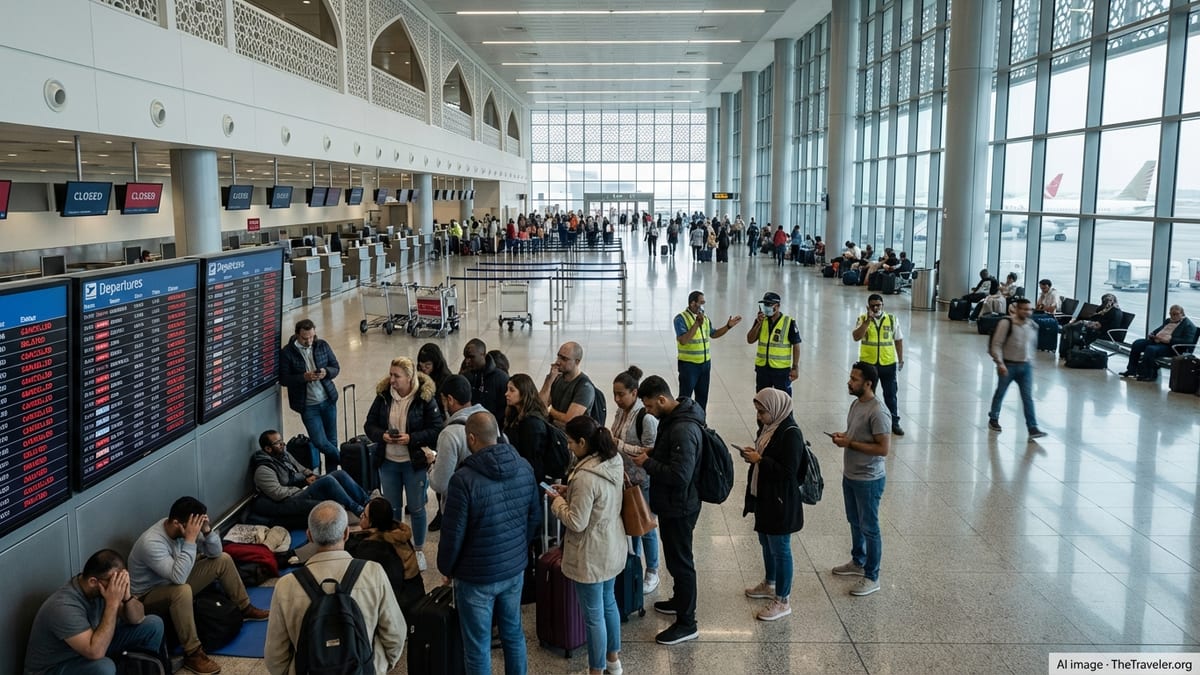
Travel-intelligence briefings describe tens of thousands of transit passengers stranded at Gulf airports during the initial round of airspace closures, including significant numbers of Europeans, Australians and Asians who rely on Gulf carriers to connect long-haul journeys. With some airspace reopened and limited services restored, backlogs have eased but not fully disappeared, especially for travelers seeking rebookings in peak periods.
According to industry commentary, travel insurers have increasingly invoked war and conflict exclusions, leaving some passengers to absorb the cost of extended stays or complex rerouting. Corporate travel managers in sectors such as energy, construction and professional services are shifting short-notice trips away from the Gulf or replacing them with virtual meetings, adding to the pressure on premium-cabin demand.
At the same time, tourism boards in relatively less affected Gulf destinations are attempting to reassure visitors with messaging around enhanced security and the resumption of key attractions. However, analysts caution that recovery in international arrivals is likely to lag any eventual ceasefire, as travelers and companies typically wait for a sustained period of stability before fully restoring pre-crisis travel patterns.
Economic Strain As Oil, Shipping And Aviation Intertwine
The aviation turmoil is tightly linked to broader economic stress across the Gulf. The conflict has coincided with a major disruption in maritime traffic through the Strait of Hormuz, where reports from maritime and logistics specialists show hundreds of vessels, including oil tankers, still facing delays or diversions. The uncertainty has contributed to volatile oil prices, with pronounced swings as markets react to developments in negotiations over reopening the strait.
Research on the 2026 fuel crisis highlights that the combination of restricted Iranian exports, disrupted Gulf shipping and rerouted aviation has fed into higher fuel costs worldwide. For Gulf carriers and airports, jet fuel price spikes add to the financial pressure of operating longer routings and running irregular schedules, squeezing margins just as they had been rebuilding post-pandemic.
Regional stock-market updates from the Gulf point to a mixed picture. Energy-linked revenues have benefited at times from elevated oil prices, but tourism, hospitality and aviation stocks have come under sustained pressure. Analysts note that the United Arab Emirates and Saudi Arabia, in particular, are grappling with the challenge of protecting ambitious diversification and tourism strategies while being drawn into the economic crossfire of a conflict next door.
Bahrain, Qatar and Kuwait are also navigating the dual role of being both frontline states, exposed to missile and drone risks, and global transit nodes for passengers and goods. Prolonged uncertainty over airspace, port operations and infrastructure security risks complicating investment decisions in aviation, tourism and related service sectors across the Gulf Cooperation Council as a whole.
What Travelers Should Expect In The Coming Weeks
For travelers planning to transit or visit the UAE, Saudi Arabia, Bahrain, Qatar or Kuwait, publicly available advisories and airline updates point to a period of continued volatility rather than a quick return to normal. Many Gulf and international carriers are operating on reduced or heavily reconfigured schedules, and several have signaled that capacity will be rebuilt cautiously, aligned with security assessments and regulatory approvals.
Specialist airspace trackers indicate that while some corridors around the Gulf are open, flights continue to avoid Iranian airspace entirely and remain subject to sudden rerouting if tensions flare. This adds time and complexity to journeys between Europe and Asia or between the Americas and South Asia, and can translate into higher fares as airlines seek to cover fuel and insurance costs.
Travel and risk consultancies recommend that passengers build additional flexibility into plans, allow generous connection times and monitor airline communications closely in the days before departure. Given the prevalence of war-related exclusions, travelers are also advised to scrutinize insurance coverage, particularly for trips involving multiple Gulf stopovers or high-risk destinations further afield.
Despite the challenges, analysts emphasize that the Gulf’s aviation and tourism sectors have shown resilience during past crises and retain significant structural advantages, including modern infrastructure and geographic positioning. However, with the Iran conflict still unresolved and key airspace and maritime chokepoints only partially normalized, travelers using Gulf gateways should be prepared for a drawn-out period of disruption, elevated costs and rapidly shifting itineraries.