


More news on this day
Airlines across the Gulf are bracing for another wave of disruption as renewed Houthi attacks and a declared maritime blockade in the Red Sea prompt longer routings, rising insurance costs and fresh delays on key east–west corridors.
Get the latest news straight to your inbox!
Red Sea security flare-up ripples into Gulf skies
The latest escalation around the Bab el Mandeb Strait has swiftly moved from sea lanes to flight plans. In recent days, Yemen’s Houthi movement has claimed missile and drone strikes on Saudi-linked tankers and announced a maritime embargo on Saudi Arabia, targeting oil shipments and commercial vessels along the kingdom’s Red Sea coast. Published coverage indicates that ship traffic through Bab el Mandeb has already fallen, with several tankers reversing course rather than risk transiting the narrow chokepoint.
While the immediate focus is on disrupted tanker traffic, aviation analysts note that security crises around key waterways often spill into the air domain. Previous rounds of Houthi attacks on Red Sea shipping, during the 2023 and 2024 Gaza-related flare-ups, saw airlines quietly redraw flight paths, adding time and cost to journeys that traditionally overfly or parallel the Red Sea corridor between the Gulf, Africa and Europe.
This time the renewed tension comes on top of an already fragile regional aviation system. Since early 2026, repeated strikes and threats involving Iran, the Strait of Hormuz and major Gulf airports have left carriers managing a patchwork of temporary routings, airspace warnings and airport capacity constraints. The Red Sea spike is emerging as a second pressure point on an already stretched network.
Rerouted corridors and lengthening flight times
Publicly available flight-tracking data and airline schedule changes suggest that a growing number of services between the Gulf and key destinations in North Africa and southern Europe are being pushed further west to avoid airspace near the Red Sea and parts of Yemen. That adds distance to routes that were already elongated by restrictions around the Strait of Hormuz, effectively squeezing Gulf carriers between two high-risk zones.
Logistics bulletins for shippers indicate that some operators are factoring in longer transit times of several hours on multi-leg routings that connect via Gulf hubs. Cargo-focused updates from international freight firms in June had already warned of extended flight times across the Middle East due to complex airspace restrictions, and the latest Red Sea insecurity is expected to reinforce that trend.
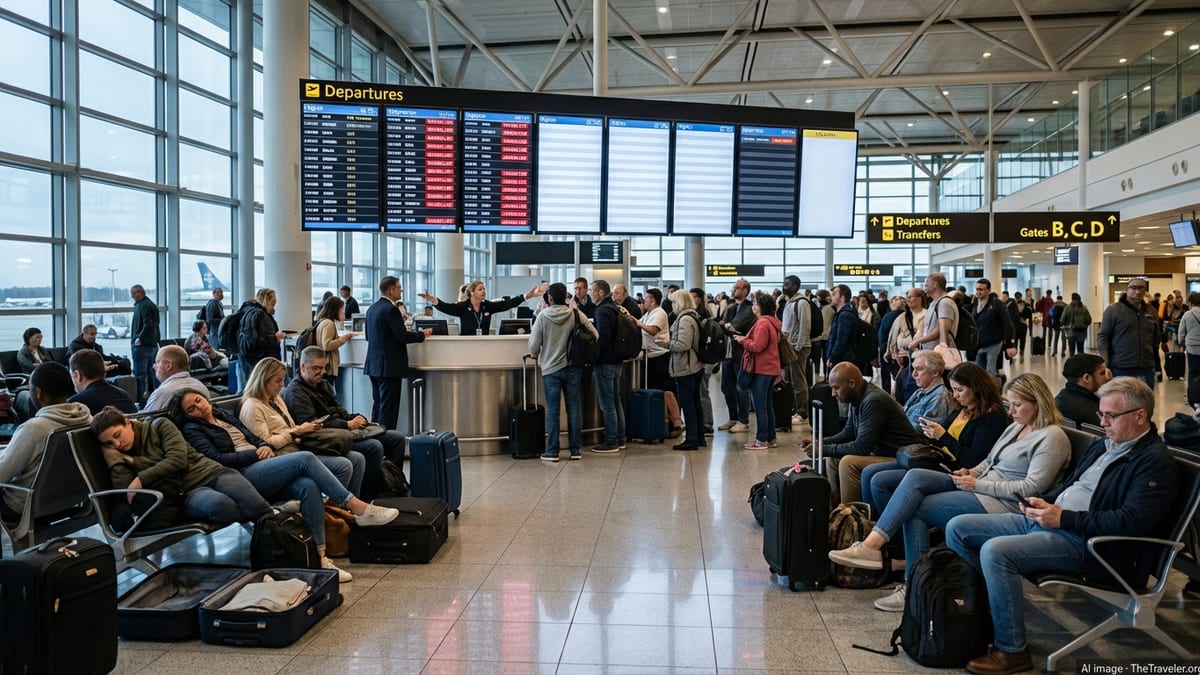
For passengers, the impact is emerging in the form of rolling delays and tighter connection windows at major hubs. Even when airlines avoid cancelling services, the combination of longer routings, congested alternative air corridors and turnaround constraints can create knock-on delays that filter through daily schedules. Regional observers say these effects are most pronounced on overnight services linking the Gulf with Europe and on daylight flights to East Africa that would normally overfly or track close to the Red Sea.
Hub airports juggle capacity, safety and connectivity
Major Gulf hubs in the United Arab Emirates, Qatar and Saudi Arabia are working within a narrower operational envelope as they try to maintain connectivity. Government travel advisories now highlight an elevated threat from attacks on Saudi infrastructure, including airports along the Red Sea coast and in the southwest of the kingdom. Those alerts note recent strikes and attempted strikes against regional airports and critical infrastructure, underlining the sensitivity of air operations in affected provinces.
At the same time, hub airports on the Arabian Gulf are managing the cumulative impact of the broader 2026 crisis, from disruptions around the Strait of Hormuz to earlier attacks on airports elsewhere in the region. Aviation planners stress that the Gulf’s role as a global connector means that even localized flare-ups can have outsized effects on transit traffic, as airlines adjust wave patterns of arrivals and departures to keep minimum connection times viable.
Industry publications point out that Gulf hubs are attempting to spread risk by staggering departures across a wider range of routings, including more northerly and southerly tracks that bypass both the Red Sea and the most sensitive parts of Gulf airspace. That strategy helps preserve network integrity but can limit the number of flights that can be handled within peak bank periods, translating into schedule tweaks and occasional last-minute retiming.
Costs rise for airlines as war-risk premiums climb again
The renewed Red Sea threat is also feeding into the economics of flying. Maritime data firms have already reported higher war-risk insurance premiums for tankers and container ships operating near Bab el Mandeb, and market analysts expect a similar pattern in aviation insurance pricing for routes deemed at greater risk. In previous episodes of regional tension, airlines transiting adjacent airspace have faced additional insurance charges that ultimately feed into ticket prices or force capacity reductions.
With some shipowners now rerouting around the Cape of Good Hope to avoid both the Red Sea and the Strait of Hormuz, logistics providers anticipate more cargo shifting to air on certain high-value lanes. That would normally be positive for Gulf carriers’ bellyhold and freighter operations, but any surge in demand is being tempered by the need to detour around risk zones, burning more fuel and tying up aircraft and crew for longer duty periods.
Financial analysts following listed Gulf airlines describe a delicate balance: carriers want to preserve their role as reliable connectors between Asia, Europe and Africa, but each additional constraint on routing and insurance cuts into margins. Some are expected to prioritize yield over volume by trimming frequencies on the most complex sectors, while maintaining at least a skeleton service to key markets to protect market share.
Travelers face renewed uncertainty on Middle East routes
For travelers planning to transit Gulf hubs, the latest Red Sea escalation adds a fresh layer of uncertainty to an already volatile travel map. Travel advisories from several governments now emphasize that security conditions can change at short notice, affecting both overflight permissions and airport operations. Passengers are being encouraged by airlines and consular guidance to monitor booking updates closely and allow extra time for connections, particularly on itineraries that rely on a single daily service.
Tourism boards across the region are keen to stress that major city hubs remain open and that most flights continue to operate, albeit on modified routings. However, travel industry reports acknowledge that perceptions of risk in the wider Middle East can weigh on demand even for destinations far from immediate conflict zones. In previous Red Sea crises, some leisure travelers opted to reroute via European or Asian hubs to avoid transiting the Gulf, while corporate travel managers introduced additional approval steps for staff flying through affected corridors.
With the northern summer travel season under way, airlines, airports and tour operators are working to reassure passengers that contingency plans are in place. Yet the combination of a Red Sea blockade, constrained Hormuz traffic and ongoing regional tensions means that Gulf aviation is likely to operate with limited slack for the foreseeable future. Even minor incidents or airspace changes could quickly translate into another round of flight delays for travelers heading across one of the world’s busiest crossroads.