


More news on this day
The Airbus H160 has begun active service in Europe’s offshore energy sector, marking a new phase in how oil, gas and wind operators move workers and equipment across the North and Baltic seas.
Get the latest news straight to your inbox!
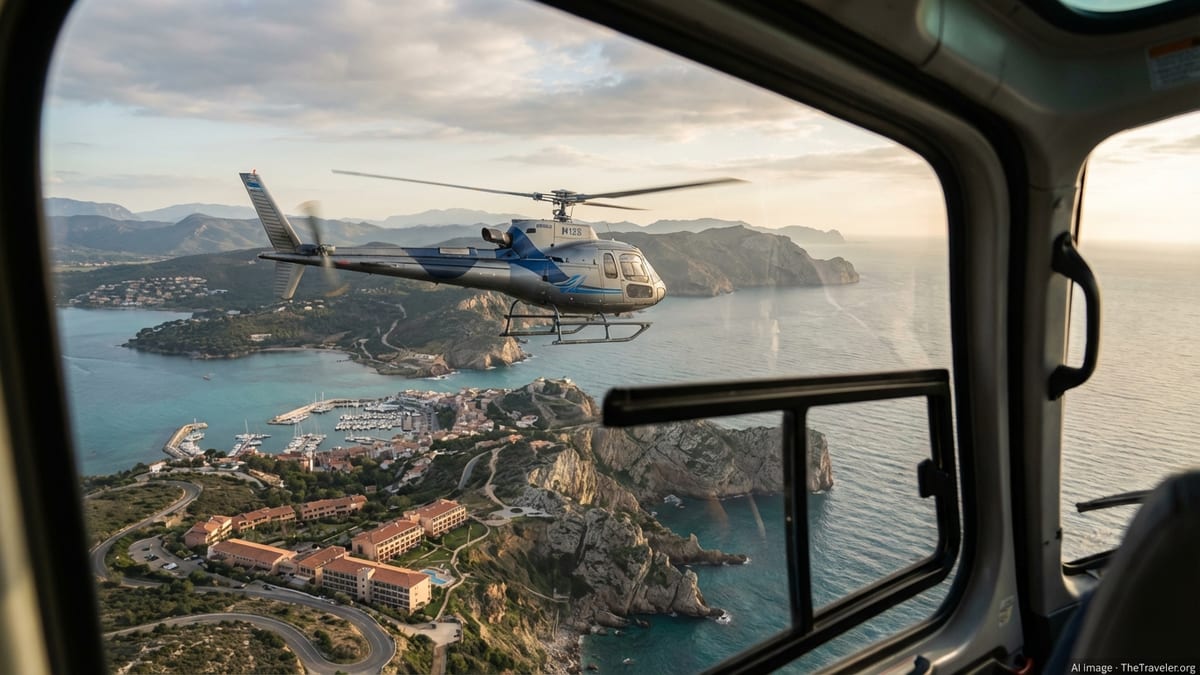
NHV Leads First European Offshore Deployments
Belgium-based operator NHV Group is among the first to introduce factory-new Airbus H160 helicopters into regular offshore energy missions in Europe. Publicly available information shows that the company is preparing the aircraft for operations from Den Helder in the Netherlands, with flexibility to position them across bases in Denmark, Germany, Poland, Belgium and the United Kingdom as demand grows.
Reports indicate that the new helicopters will primarily support crew changes and logistics for offshore platforms and wind farms in the North Sea and Baltic Sea. These are some of the world’s busiest offshore energy regions, hosting mature oil and gas infrastructure alongside rapidly expanding offshore wind capacity. The H160 is positioned as a multi-role workhorse suited to both segments.
Industry coverage notes that NHV, long established as a specialist in offshore transport, is integrating the H160 into a fleet that already serves oil, gas and renewables clients across Northern Europe and Africa. The new type is expected to complement existing medium and heavy helicopters, offering operators a more efficient option on routes where capacity and range requirements align with the H160’s capabilities.
The introduction of the type into European offshore work follows earlier deployments in North and South America and Asia. Observers describe the move as a milestone that brings the aircraft’s advanced design fully into the mainstream of day-to-day offshore energy operations in Europe.
Designed Around Offshore Safety and Performance
According to technical information released by Airbus, the H160 was developed to meet demanding offshore safety and performance criteria, including the latest European certification standards and guidelines from the International Association of Oil and Gas Producers. The helicopter sits in the medium twin-engine category and is typically configured to carry around a dozen passengers for offshore crew transport.
The aircraft incorporates several aerodynamic features aimed at improving stability and ride quality in harsh maritime conditions. Its distinctive canted Fenestron tail rotor and Blue Edge main rotor blades are intended to reduce noise and vibration, supporting both passenger comfort and pilot situational awareness on long over-water legs.
Performance data published by the manufacturer highlights the type’s range and payload for offshore missions, with a focus on efficient cruise speeds and fuel consumption. The helicopter’s avionics suite, including advanced automation and flight management tools, is designed to support operations in poor visibility, at night and in the tightly controlled airspace that surrounds many offshore installations.
Analysts note that these characteristics are particularly relevant in the North Sea, where low cloud, strong winds and frequent storms are common. By pairing performance margins with modern cockpit systems, the H160 is being presented as a platform that aligns with the industry’s long-term push to reduce risk in helicopter transport.
Supporting Europe’s Shift to Offshore Wind
As the H160 transitions into European offshore service, the regional energy landscape is rapidly evolving. Publicly available data on European energy policy shows a strong emphasis on offshore wind development, with capacity expansion targets stretching well into the 2030s. Many of the new wind projects are located far from shore, beyond the reach of conventional crew transfer vessels during severe weather.
Helicopters already play a key role in maintaining remote wind farms by transporting technicians and spare parts directly to turbines. Coverage of the sector indicates that operators are now looking to newer airframes such as the H160 to deliver more efficient and flexible support, especially for large projects that require frequent crew rotations and rapid response to maintenance needs.
NHV and other operators plan to use the H160 across both oil and gas fields and offshore wind assets, reflecting the increasingly integrated nature of European offshore operations. In practice, this means the same aircraft may shuttle workers to a gas platform one day and to a high-voltage substation or turbine array the next.
Industry observers view this flexibility as important for meeting contractual service levels as offshore wind portfolios grow and legacy hydrocarbon infrastructure remains in production. The H160’s cabin layout, range and ability to operate efficiently from coastal bases are seen as well matched to this mixed mission profile.
Efficiency and Emissions in Focus
The offshore sector’s adoption of the H160 also aligns with efforts to cut emissions from support operations. Manufacturer data indicates that the helicopter’s engines deliver a significant reduction in fuel consumption compared with previous-generation types in the same class. The airframe is also cleared to operate on blends of sustainable aviation fuel, which can further reduce lifecycle carbon emissions when available.
Energy companies and offshore logistics providers have been under rising pressure to demonstrate progress on climate goals, not only at the level of power generation but also across their supply chains. Upgrading helicopter fleets to more efficient models is one of several levers available as part of broader decarbonisation strategies.
Analysts caution that the overall emissions footprint of offshore helicopter activity remains modest compared with the carbon profile of oil and gas production itself. Even so, they note that public reporting on environmental performance increasingly includes transport and logistics, encouraging operators to seek incremental gains in every part of the value chain.
Within this context, the H160 is being positioned as a step toward lower-impact aviation support for offshore energy. Its introduction in Europe gives operators a chance to gather real-world data on fuel burn, maintenance cycles and sustainable fuel usage under North Sea and Baltic operating conditions.
A Growing Global Footprint for the H160
The start of European offshore energy missions comes as the H160’s global footprint widens across multiple sectors. Reports from North America, Asia and the Middle East show the type flying in roles ranging from emergency medical services and law enforcement to corporate transport and public service operations.
In the energy sector, the helicopter has already been used for offshore support in regions such as the Gulf of Mexico and off the coast of Brazil. These early deployments have provided a proving ground for the type in demanding maritime environments, experience that is now feeding into planning for European routes.
Industry coverage suggests that leasing companies have played a central role in accelerating the H160’s entry into offshore work, allowing operators to introduce the type without committing to large up-front purchases. This model has been particularly relevant in Europe’s fragmented offshore services market, where fleet flexibility is critical to matching aircraft capacity with fluctuating contract requirements.
As more airframes are delivered and configured for offshore missions, the H160 is expected to become a more common sight at heliports along the North Sea coast. For energy producers and service providers, its arrival signals a gradual renewal of the medium helicopter fleet that underpins Europe’s offshore oil, gas and wind operations.