


Few travel dilemmas feel as high stakes as choosing between Norway and Iceland. Both promise wild landscapes, northern lights, and cool, design-forward cities. Yet the experiences on the ground are surprisingly different, from costs and driving conditions to how easy it is to reach postcard scenery in a short trip. For 2026, with aurora activity still near a solar peak and tourism changing fast, it is worth looking closely at what each country actually delivers before you lock in those expensive flights.
Get the latest updates straight to your inbox!
Big Picture: How Norway and Iceland Feel on the Ground
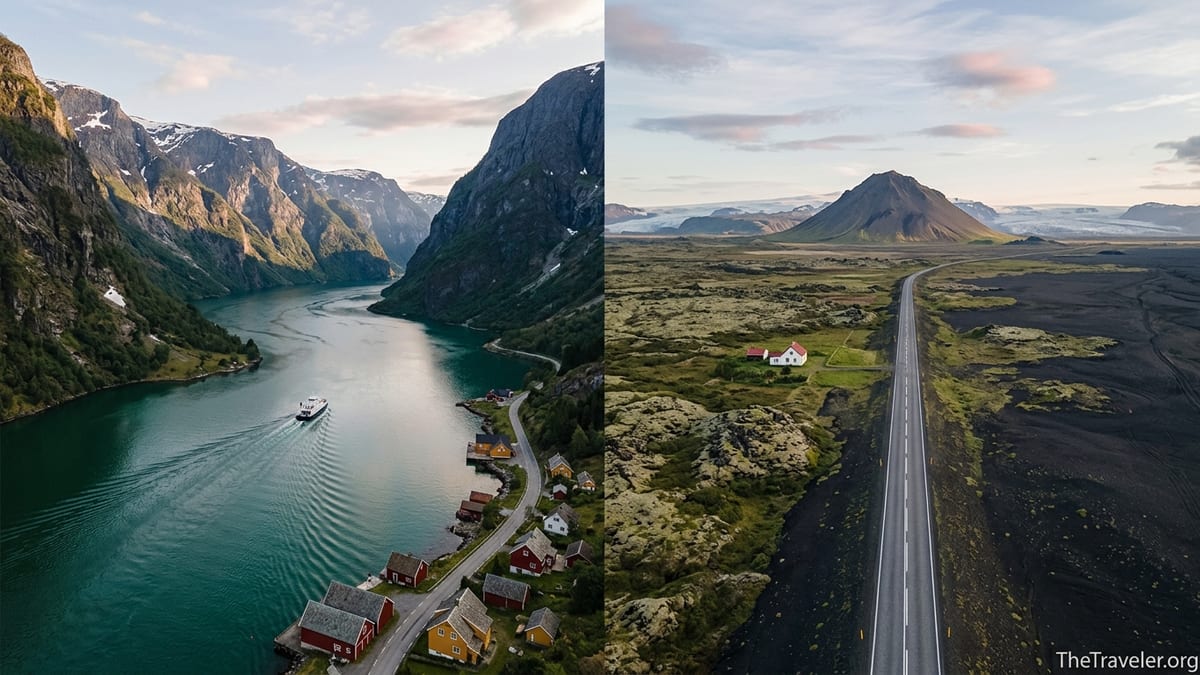
Norway feels like a long, stretched-out country of dramatic coastlines, deep fjords, and scattered cities tied together by efficient trains, buses, and ferries. You can spend a week based in places like Oslo, Bergen, or Tromsø and day trip to serious scenery without ever renting a car. Fjord cruises from Bergen into the Nærøyfjord and Aurlandsfjord, or day trips up to viewpoints like Stegastein, bring you into landscapes that look almost unreal yet are easy to reach with public transport and organized tours.
Iceland, by contrast, is built around the idea of a road trip. Most visitors fly into Keflavík, pick up a rental car, and then either circle the island on the Ring Road or focus on the Golden Circle and South Coast. Even if you only have four or five days, it is normal to drive yourself to waterfalls like Seljalandsfoss and Skógafoss, black sand beaches near Vík, geothermal hot springs, and glacier lagoons. Reykjavík works as a base, but the true Iceland experience happens once you leave the capital and commit to driving.
Crowds feel different too. Norway’s most famous fjords such as Geirangerfjord and Nærøyfjord are absolutely busy in July and August, with cruise ships and packed sightseeing boats, but you can still find quiet hiking routes and small villages by shifting slightly off the classic itineraries. In Iceland, visitor numbers are more concentrated into fewer headline stops. On a summer afternoon at popular spots on the Golden Circle it can feel like every tour bus in the country has arrived at once, while less famous peninsulas or the Eastfjords remain comparatively calm.
For many travelers, the choice comes down to this: Norway delivers more varied culture, cities, and infrastructure surrounding its nature; Iceland delivers a more raw, road-trip style adventure where the landscape is the main event and almost everything else feels secondary.
Costs, Logistics, and How Far Your Money Goes
Both Norway and Iceland are expensive by global standards, and you should plan accordingly. In Norway, recent tourism and government figures put the average hotel room around the equivalent of 1,700 to 1,800 Norwegian kroner per night, often roughly 150 to 170 euros for a standard double in a midrange city hotel. In places like Bergen or Tromsø in high season, central hotels can run higher, while simple guesthouses in smaller fjord towns might come in slightly below that, especially if you book early or stay outside July and early August.
Iceland’s costs add up differently. Accommodation can range from compact Reykjavík design hotels priced similarly to Norwegian city stays to family-run guesthouses along the Ring Road where a double room with shared facilities might save you a noticeable amount. The real budget shock often comes from car rental and fuel. For summer 2026, local rental guides suggest that a small two-wheel-drive car suitable for the paved Ring Road in high season can easily cost hundreds of euros per week before insurance, and most visitors are strongly advised to add gravel and sand damage coverage due to Iceland’s notorious wind and road conditions.
Transport choices also affect your bottom line. In Norway, you can combine long-distance trains, buses, and ferries. For example, the classic “Norway in a Nutshell” style route between Oslo and Bergen uses regular trains, a fjord cruise through Nærøyfjord, and a steep mountain railway to Flåm. You pay for the experience, but you can do it without renting a car. In Iceland, outside of a handful of day tours from Reykjavík and the airport shuttle, public transport is limited for tourists. After two or three guided day trips to the Golden Circle, South Coast, and a lava tunnel, many people realize they could have rented a car instead and had more freedom for roughly similar overall cost.
Tour experiences carry a premium in both countries. A summertime fjord sightseeing trip in Geiranger, for example, is priced around several hundred Norwegian kroner for a 75 to 90 minute cruise along waterfalls and sheer cliffs, while full multi-day coastal voyages with companies like Hurtigruten climb into the thousands of euros per person. In Iceland, glacier hikes, ice cave tours, and northern lights excursions routinely cost a similar amount per day as a quality fjord day tour, and multi-day guided Ring Road packages can quickly exceed a self-drive budget, especially once accommodation and meals are bundled in.
Landscapes and Signature Experiences
Norway’s signature is the fjord. Places like Geirangerfjord and Nærøyfjord, both part of a West Norwegian fjords UNESCO World Heritage listing, deliver classic images of narrow, deep waterways hemmed in by vertical rock walls and hanging farms. A typical day might involve boarding a modern sightseeing boat in the village of Geiranger, sailing past waterfalls with names like the Seven Sisters, and stepping off for a short bus ride up to a viewpoint such as Flydalsjuvet for aerial views down the fjord. In winter, that same coastline extends into the Arctic, where stovepipe fishing villages like Henningsvær in Lofoten and pastel harbor towns in North Norway glow under low, blue light.
Iceland’s landscapes feel younger and more volcanic. Even a short stay can include views of conical volcanoes, fresh-looking lava fields, geothermal valleys with steaming vents, and milky blue hot springs. Driving the Ring Road you might stop at Lake Mývatn to walk among pseudo craters and mud pools, then warm up in a geothermal lagoon that has views across the lava. Elsewhere, the South Coast offers the famous pairing of a black sand beach at Reynisfjara and a cracked ice lagoon near Vatnajökull where small icebergs drift toward the sea.
Both countries offer glaciers and hiking, but the way you access them differs. In Norway, guided hikes often begin from established mountain lodges or cable car stations close to mid-sized towns. You might spend a night in Odda and take a full-day guided trek up to Trolltunga’s cliff edge, then return to a proper bed and a restaurant meal. In Iceland, glacier walks usually start from roadside parking areas where tour operators park their minibuses at the end of rough tracks. After walking on crampons and peering into crevasses on an outlet glacier, you are back in your rental car within minutes and driving on to the next waterfall.
On pure scenery, there is no clear winner. Norway tends to feel more layered and green, with forests, farming valleys, and broad coastal views in addition to its fjords. Iceland feels more stark and elemental, like one giant outdoor geology lesson. If you want to feel like you are traveling through a living volcanic island, Iceland has the edge. If your mental image of the Nordics is narrow fjords with villages and steep pastures, Norway is hard to beat.
Northern Lights, Seasons, and When to Go
For northern lights seekers, 2025 and 2026 remain especially good years to travel because the current solar cycle reached a strong peak in 2024 and aurora activity should stay relatively high for a couple of winters. In practice, this means both Norway and Iceland have above-average chances of strong displays, provided you travel in the dark season and avoid cloud cover. The best windows in either country usually run from about late September to late March, with a particular uptick around the equinox periods in late September and late March.
Norway’s advantage is its long stretch inside the Arctic Circle. Base towns like Tromsø, Alta, and smaller villages in the Lofoten Islands give you a good combination of infrastructure and reliably dark skies. A typical winter itinerary in Tromsø might include dog sledding on a snow plateau by day, then joining a small-group minibus tour at night that chases clearer skies inland if the coast is cloudy. Because these areas are quite far north, you can often see aurora even when solar activity is moderate, and on active nights the lights can streak right across town above the harbor.
Iceland, however, benefits from strong solar activity in a different way. Because the island sits slightly farther south, it normally needs stronger geomagnetic conditions for really impressive displays. During an active solar maximum, those stronger conditions happen more often, which widens the area and frequency of visible aurora. That means that in 2025 and 2026, visitors have a decent shot at seeing lights from familiar spots such as the Snæfellsnes Peninsula, South Coast, and even Reykjavík suburbs when the forecast cooperates. Many hotels on the south and in East Iceland offer optional wake-up calls if the lights appear, which can be a gentler experience than standing in a frozen field until 2 a.m.
Summer tells a different story. If you want midnight sun and nearly endless daylight for hiking, scenic drives, and photography, both countries deliver from roughly late May into July at higher latitudes. In Norway, the combination of midnight sun and mild coastal temperatures makes the Lofoten Islands and far north ideal for road trips where you might be photographing white sand beaches and jagged peaks at 1 a.m. without a tripod. In Iceland, summer means accessible highland tracks, verdant mossy landscapes, and easier driving conditions on the Ring Road. The trade off in both cases is zero chance of northern lights and significantly higher prices for accommodation and tours.
Driving, Weather, and Ease of Independent Travel
Norway’s driving experience feels familiar to most North American and European visitors. Major roads between Oslo, Bergen, and Trondheim are well maintained, and coastal routes through fjord country combine tunnels, bridges, and short car ferries. Winter does bring snow and darkness, especially in the interior and north, but roads are generally well plowed and closures are less dramatic than in Iceland. If you prefer to avoid winter driving altogether, you can still see a lot using trains and ferries, which is a major point in Norway’s favor for cautious travelers.
Iceland rewards confident drivers with enormous flexibility but can punish the unprepared. Even in late spring or autumn, you can encounter gale force winds across flat lava plains, sudden snow squalls, and gravel stretches that demand slower speeds. Local guides often talk about wind ripping car doors out of people’s hands or gravel chips cracking windshields, which is why full insurance coverage geared to Iceland’s conditions is strongly recommended. In high summer, the Ring Road is usually straightforward, but side roads into the interior and some coastal areas can still require four-wheel drive and careful monitoring of weather and road closures.
The style of independent travel differs too. In Norway’s fjord region, it is common to base yourself for two or three nights in a town like Ålesund or Bergen and then book day trips: a fjord cruise on one day, a scenic railway or cable car ride another day, and perhaps a guided hike. You return to the same comfortable hotel each night. In Iceland, the standard Ring Road circuit involves changing accommodation almost every night, moving steadily around the island. Over nine or ten days, you might stay in a Reykjavík guesthouse, then progressively smaller family-run hotels in places like Höfn, Egilsstaðir, and Akureyri, before looping back.
For first-time solo travelers or those nervous about winter driving, Norway is generally kinder. For couples or friends who are excited by the idea of an all-in road trip where the landscape changes each hour, Iceland often feels more rewarding, provided they respect local conditions and build in contingency time for weather disruptions.
Culture, Cities, and Everyday Travel Moments
Norway provides more depth when it comes to cities, museums, and cultural experiences. Oslo’s modern waterfront, with its angled national opera house and new national museum, offers an easy first day of walking, café hopping, and gallery browsing before you strike out toward the fjords. Bergen, with its old wooden merchants’ quarter and steep tram up to Mount Fløyen, feels like a compact, atmospheric base where you can alternate between strolls through cobbled lanes and boat trips deep into the fjords.
Beyond the cities, Norway’s coastal towns and fishing villages still feel very lived in. In Tromsø, for example, you might spend an afternoon at a polar museum learning about Arctic exploration, then join locals in a café that serves cinnamon buns and strong coffee before your evening aurora tour. In the Lofoten Islands, staying in a converted fisherman’s cabin on stilts above the water gives you a close-up view of small-boat life, with racks of drying cod lining the harbor in winter and early spring.
Iceland’s urban experience is almost entirely focused on Reykjavík, a small capital where you can walk from a harbor-front whale watching pier to a modern concert hall and then up to a concrete church tower that overlooks colorful tin-roofed houses. The city has an energetic restaurant and bar scene, especially on weekends, and you can easily fill two days with food, music, and design shopping before or after a Ring Road drive. Outside Reykjavík, most towns are functional service centers for their regions, with a few exceptions like Akureyri in the north, which has a small but pleasant downtown core and a botanical garden that feels improbable so close to the Arctic Circle.
Everyday travel moments reflect these differences. In Norway, you might find yourself sipping coffee and eating a shrimp sandwich in a ferry cafeteria as you glide through a misty fjord, listening to conversations in Norwegian and Sami. In Iceland, a typical stop could be a self-serve café inside a converted community center where you pour your own coffee, eat homemade lamb soup, and then fill your water bottle from a tap that smells faintly of sulfur because the hot water comes directly from the geothermal plant.
Who Should Choose Norway, Who Should Choose Iceland?
Norway is usually the better choice for travelers who want a balance of landscape and culture and who prefer not to drive the entire trip. If your ideal vacation includes wandering through museums, enjoying well-developed café culture, and then dipping into big landscapes on carefully planned day trips, Norway fits naturally. It is also excellent for travelers with varying energy levels, since many viewpoints and fjord experiences are accessible with short walks and comfortable transport. Multigenerational families, older travelers, and those who prefer smoother logistics often find Norway more relaxing.
Iceland excels for hands-on adventurers. If you are excited about driving yourself through wide open scenery, are happy to stay in simple guesthouses, and want to stack active experiences like glacier hikes, whale watching, and hot spring soaks into a single week, Iceland is hard to beat. Photographers in particular tend to appreciate Iceland’s compact variety: in two or three days on the South Coast you can photograph waterfalls from behind the curtain, walk among basalt sea stacks, and shoot blue ice on a black sand beach.
Budget factors into the decision as well. While both destinations are costly, small groups who share a rental car in Iceland and opt for self-catering apartments or guesthouses can sometimes make their money go farther day to day. In Norway, the reliance on individual tickets for trains, fjord cruises, and paid attractions can add up quickly for families. On the other hand, solo travelers or couples who do not want to drive may find Norway more economical than booking multiple guided tours out of Reykjavík just to reach Iceland’s main sights.
Ultimately, there is no universal “better” choice. The right answer depends on how you like to travel. If you dream of deep fjords, charming coastal towns, and a mix of culture and nature, Norway usually comes first. If your mental picture is black sand, lava, and steaming earth, Iceland deserves your initial trip, with Norway saved for a later journey when you want more variety and infrastructure.
FAQ
Q1. Which country is better for a first-time Nordic trip, Norway or Iceland?
For most first-time Nordic visitors who want a mix of cities, culture, and easy access to big scenery, Norway has a slight edge. You can combine Oslo or Bergen with fjord cruises and scenic railways without renting a car. If you are primarily excited about wild volcanic landscapes and do not mind driving, Iceland is equally compelling as a first choice.
Q2. Is Norway or Iceland cheaper for a one-week vacation?
Neither country is cheap, but costs are structured differently. Norway often has slightly higher hotel and restaurant prices, especially in major fjord hubs. Iceland’s accommodation can be comparable or a bit lower in rural areas, but car rental, fuel, and activity costs like glacier tours can quickly raise your overall budget. For couples sharing a car and staying in guesthouses, Iceland can work out similarly to or slightly cheaper than a fjord-focused Norway trip, while solo travelers may find Norway’s public transport more economical.
Q3. Where are my chances better to see the northern lights in 2025–2026?
Both countries benefit from high aurora activity in 2025 and 2026. Norway’s Arctic region around Tromsø and the Lofoten Islands gives you very reliable dark skies and infrastructure, which often translates into more flexible aurora chasing. Iceland can see spectacular displays too, especially in the north and on clear nights along the coasts, and strong solar activity helps offset its frequent cloud cover. Your success in either place will depend heavily on weather and how many nights you devote to the chase.
Q4. Which destination is better if I do not want to drive?
Norway is generally better for non-drivers. You can travel between Oslo, Bergen, and the fjord region using trains, buses, and ferries, then add organized excursions as needed. In Iceland, you can base yourself in Reykjavík and join day tours to the Golden Circle, South Coast, or a glacier, but reaching quieter regions and completing a full Ring Road circuit is much easier with a rental car.
Q5. How much time do I need in each country for a good trip?
In Norway, five to seven days is enough for a satisfying introduction that might include Oslo, Bergen, and a classic fjord route. In Iceland, four or five days lets you see Reykjavík plus the Golden Circle and South Coast, while a full Ring Road circuit usually requires at least eight to ten days to avoid rushing. If you have two weeks or more, you can add the Lofoten Islands or North Norway to a fjord itinerary, or combine Iceland’s Ring Road with a deeper exploration of one region.
Q6. Which is easier with kids, Norway or Iceland?
Norway typically feels easier with younger children. Distances between major sights on classic fjord routes are shorter, many viewpoints require minimal walking, and you can base in one or two towns rather than moving every night. Iceland can be fantastic for families who enjoy road trips and outdoor time, but long driving days, changeable weather, and frequent hotel changes can be tiring for smaller kids.
Q7. Is summer or winter better in Norway and Iceland?
Summer brings long days, mild temperatures, and easier driving in both countries, which suits most first-time visitors. It is ideal for fjord cruises, hiking, and Iceland’s Ring Road. Winter is best if northern lights are your priority and you are comfortable with cold, snow, and short days. Spring and autumn shoulder seasons can provide a balance of lower prices, fewer crowds, and a chance at both good hiking and aurora viewing, though weather is more unpredictable.
Q8. Which country offers more variety in activities beyond sightseeing?
Norway offers a wide mix of activities: city culture, fjord cruises, scenic railways, coastal voyages, hiking, skiing, dog sledding, and Sami cultural experiences in the north. Iceland focuses more tightly on nature-based activities like glacier walks, ice cave tours, whale watching, and hot spring bathing, plus some adventure sports. If you want a broad portfolio of things to do that are not strictly landscape-focused, Norway generally delivers more variety.
Q9. How far in advance should I book for 2026 trips to Norway or Iceland?
For peak summer or popular winter aurora periods in both countries, aim to book flights and key accommodations six to twelve months in advance. In small fjord villages in Norway and along Iceland’s Ring Road, the best guesthouses and family rooms can sell out early for July, August, and school holiday weeks. Tours with limited capacity, such as glacier hikes, ice cave trips, and famous scenic rail journeys, are also worth reserving ahead once you fix your dates.
Q10. If I want to visit both Norway and Iceland, how should I plan it?
If your budget and time allow, a combined trip of about two to three weeks works well. One approach is to spend a week in Iceland focused on Reykjavík, the Golden Circle, and the South Coast or a shortened Ring Road, then fly on to Bergen or Oslo for a week of fjords and cities in Norway. This lets you experience Iceland’s volcanic intensity and Norway’s fjord and cultural diversity in a single journey, though you should be prepared for a high overall budget.