

More news on this day
Hamburg Airport in northern Germany temporarily suspended all departures and evacuated part of its terminal on Friday after an unauthorized entry into a secure area triggered a major security response, disrupting travel plans for hundreds of passengers.
Get the latest news straight to your inbox!
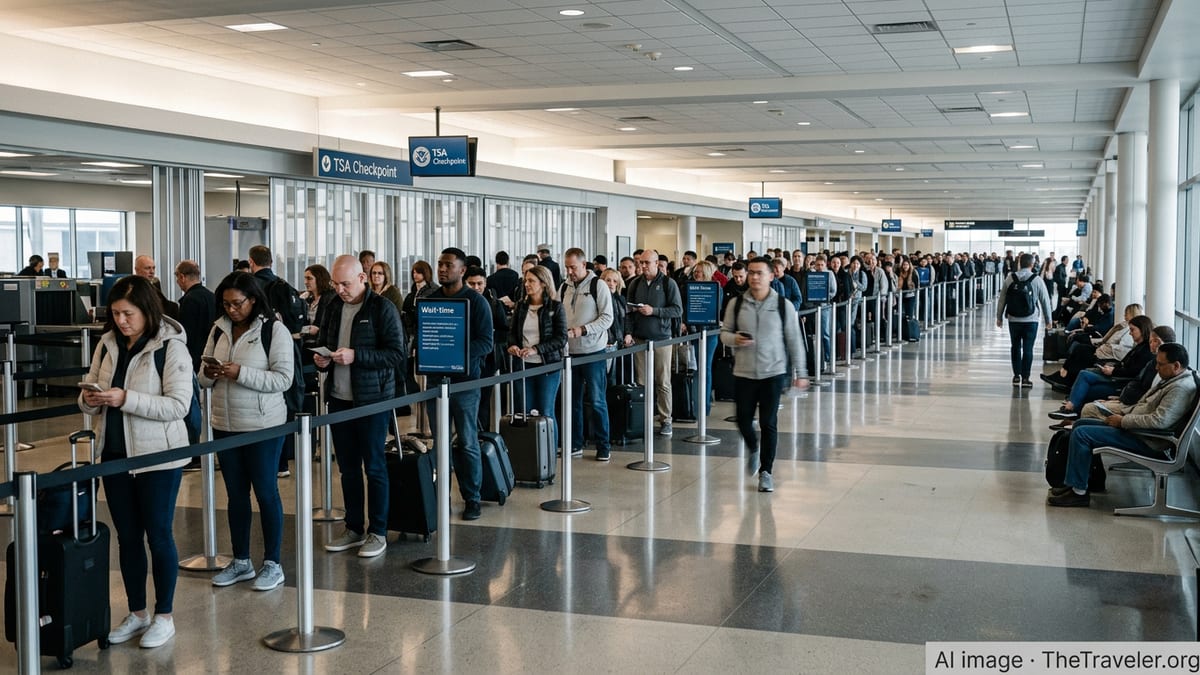
Unauthorized entry prompts evacuation and flight stoppages
According to published coverage from German and international outlets, the incident began late on Friday morning, 12 June 2026, when a male traveler in Terminal 2 reportedly pressed an emergency door button and gained access to a restricted security zone without proper screening. The triggering of the alarm led security staff and federal police to classify the situation as a security incident and initiate an immediate shutdown of the affected area.
Publicly available information indicates that the breach occurred in the post-security area used by departing passengers. As a precaution, all individuals who had already cleared security were ordered to leave the secure zone, and aircraft that were in the process of boarding were held at the gate.
Reports from local media describe a full evacuation of the secure section of the terminal, while other public areas of the airport remained accessible. The operation focused on ensuring that no unchecked passengers or suspicious items remained inside the controlled zone.
News reports from German broadcasters and agencies note that the individual involved was quickly detained on airport grounds and transferred to a police facility within the complex. Early indications describe the emergency door activation as an apparent mistake rather than a deliberate attempt to bypass controls, but a full assessment is still being carried out by the relevant services.
All departures temporarily canceled as security sweep unfolds
In the immediate aftermath of the breach, Hamburg Airport halted all departures while security teams conducted a systematic search of the restricted area. Departing passengers who had already boarded their flights were instructed to disembark and return to the terminal, adding to congestion around the gate areas and check in halls.
Information screens inside the terminal and on airline channels showed widespread disruptions, with published reports citing delays of up to three hours and a series of cancellations as operations were paused. While arrivals were initially able to continue, departing flights faced the most severe impact, and aircraft scheduled to leave Hamburg were held on the ground until the search was completed.
Coverage from regional outlets indicates that federal police units, airport security teams, customs personnel and emergency services were all involved in the operation. The search focused on ensuring that the sterile zone behind the checkpoints was fully cleared and could be safely reopened for normal passenger processing.
Travelers already inside the building were directed out of the secure area and in some cases outside the terminal itself, leading to long queues as they waited for further instructions and updated departure information.
Operations gradually resume after several hours of disruption
By early afternoon local time, publicly available updates from news organizations reported that the federal police operation at Hamburg Airport had been brought to a close and the security area was in the process of reopening. Reports indicate that screening checkpoints resumed activity roughly two and a half to three hours after the initial shutdown.
As operations restarted, departing flights began to leave again, but the backlog of delayed aircraft and displaced passengers meant that disruption continued into the afternoon. Airlines faced the logistical challenge of rebooking travelers whose flights had been canceled and slotting delayed services into an already busy schedule.
Some media accounts note that at least one passenger sought medical assistance after feeling unwell during the evacuation, highlighting the strain that sudden security incidents can place on travelers, particularly those with limited mobility or underlying health conditions.
While the immediate security search has concluded, passengers with later departures from Hamburg were advised through public channels and media coverage to expect residual delays, longer waits at security and potential gate changes as the airport worked to normalize traffic flows.
Impact on travelers and guidance for upcoming flights
The incident caught many travelers during the peak of the late morning departure wave, a time when Hamburg Airport typically handles a mix of European business routes, leisure services and domestic connections. With the entire secure departure zone affected, disruptions rippled across airlines and destinations, including connecting itineraries through major European hubs.
Travel reports from the scene described crowded check in halls, with passengers seeking clarification on whether their flights would depart and how re screening would be managed. Because everyone who had passed through security was required to leave the area, all travelers needed to undergo checks again once the zone reopened, further extending wait times.
Publicly accessible flight information and media summaries suggest that travelers scheduled to fly from Hamburg on Friday were encouraged to monitor airline notifications closely, arrive early for rebooked departures and be prepared for changes to boarding times. Those with tight onward connections at other European airports were especially vulnerable to missed links and overnight stays.
For passengers with flights in the days following the incident, there were no indications in public reporting of long term closures. However, standard guidance in similar situations is to allow extra time at the airport in case of elevated security postures, additional checks or lingering schedule adjustments.
Heightened focus on airport security procedures in Germany
The Hamburg disruption follows a series of security related interruptions at major European airports in recent years, ranging from unattended luggage alerts and drone sightings to cyber incidents affecting operational systems. While many of these situations turn out to be false alarms or accidental breaches, they frequently lead to temporary shutdowns of key infrastructure as a precaution.
Documents and guidance published by Hamburg Airport in previous years emphasize the sensitivity of emergency exits and alarm systems within the passenger terminal, noting that emergency stop buttons and secure doors play a critical role in separating publicly accessible zones from strictly controlled airside areas. Accidental activations, while rare, can therefore trigger large scale responses when combined with uncertain circumstances.
Industry observers point out that Germany’s airports operate within a stringent regulatory environment that prioritizes rapid reaction to any anomaly in the security chain. The Hamburg incident illustrates how a seemingly minor action at a single door can halt departures across an entire terminal while checks are carried out.
As Hamburg Airport returns to normal operations, attention is likely to focus on whether procedural or technical adjustments could reduce the likelihood of similar events in the future, such as clearer labeling of emergency controls, additional physical barriers around sensitive doors or refined protocols for quickly verifying accidental activations without compromising safety.