

More news on this day
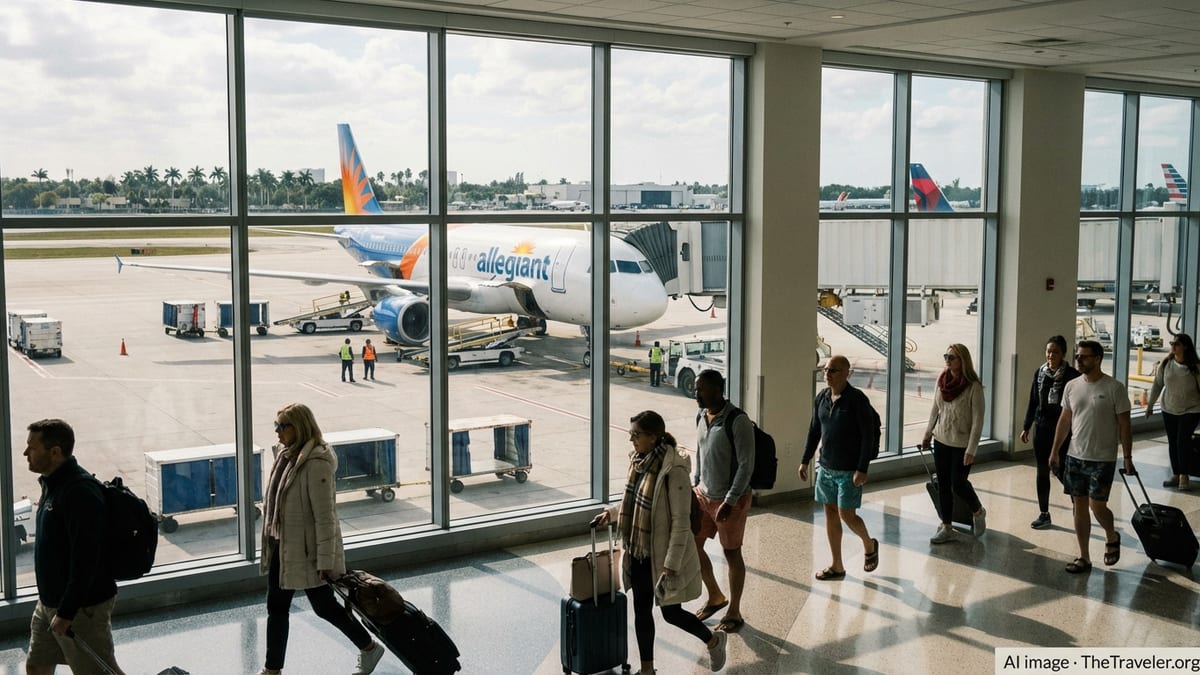
Travelers moving through Fort Lauderdale Hollywood International Airport on June 12 faced a fresh bout of disruption as 10 flight cancellations and 61 delays rippled across the domestic network, affecting services operated by Allegiant, JetBlue, United, American and Southwest to major hubs and leisure destinations.
Get the latest news straight to your inbox!
Broad Impact Across Major U.S. Hubs
The latest day of disruptions at Fort Lauderdale Hollywood International Airport hit a wide mix of routes, with schedules affected on services to Miami, Orlando, New York, Chicago and Dallas, as well as other U.S. cities. While Fort Lauderdale functions as a key South Florida gateway and a growing focus city for several carriers, its high volume of point to point traffic can leave travelers particularly exposed when operational issues arise.
Publicly available flight tracking data for June 12 show that delays at Fort Lauderdale were not confined to one carrier or route type. Short haul services within Florida and to nearby states experienced schedule slippage alongside longer domestic flights to major hubs. Travelers connecting through New York area airports and Chicago reported missed connections and extended time on the ground as departure times shifted throughout the day.
The pattern mirrors broader congestion seen periodically across the U.S. network, where localized weather, crew availability and air traffic management constraints can combine to disrupt traffic flows. Because Fort Lauderdale sits within one of the nation’s busiest air corridors, even modest interruptions elsewhere in the system can quickly translate into rolling delays for outbound and inbound flights.
The turbulence is particularly acute given the airport’s role as a low cost and hybrid carrier stronghold serving both leisure travelers and budget conscious business passengers. When flights stack up at the gate or are removed from the schedule at short notice, those customers often have fewer rebooking options compared with travelers using larger legacy airline hubs.
Allegiant, JetBlue, United, American and Southwest Affected
Operational data and carrier schedules indicate that Allegiant, JetBlue, United, American and Southwest all experienced some level of disruption at Fort Lauderdale on June 12. Although the total of 10 cancellations and 61 delays represents a small fraction of the day’s departures and arrivals, the impact on individual passengers can be significant, particularly for those headed to time sensitive events or cruises.
JetBlue, one of Fort Lauderdale’s largest operators by passenger volume, has been expanding its presence with new and resumed routes to domestic and Latin American destinations. That growth, reflected in recent airport traffic statistics showing a double digit increase in JetBlue’s year on year passenger numbers, means even a limited number of delayed flights can affect hundreds of travelers in a single day.
United and American, which use Fort Lauderdale as a spoke into their national hub networks, also featured among the delayed and canceled services. Disruptions on those flights can have knock on effects for passengers with onward connections through cities such as Chicago, Houston, Dallas Fort Worth and Charlotte, magnifying the reach of what begins as a local schedule hiccup.
Allegiant and Southwest, both of which emphasize point to point leisure routes, saw selected services interrupted as well. Because many of their flights operate less than daily on particular city pairs, a single cancellation can leave travelers with limited same day alternatives and may require overnight stays or rerouting through other Florida airports.
Routes to Leisure Destinations and Business Centers Hit
The day’s 71 combined cancellations and delays spanned flights to both classic vacation spots and key business centers. Services linking Fort Lauderdale with Orlando and Miami, central nodes in Florida’s tourism economy, experienced schedule pressure alongside long haul domestic flights to New York, Chicago and Dallas. For vacationers starting or ending cruises or resort stays, even short delays can create stressful scrambles for ground transportation and hotel check ins.
Connections to New York area airports, including John F. Kennedy, LaGuardia and Newark, were among the most affected, according to flight status boards and traveler reports. These routes are essential not only for South Florida residents but also for international visitors using New York as a gateway. Delays on those services can ripple outward, disrupting itineraries that span multiple continents.
Chicago and Dallas routes, which serve as business and connecting hubs for United and American respectively, also faced interruptions. When flights between Fort Lauderdale and those cities depart late, passengers may miss tightly timed connections to secondary Midwestern and Western markets, forcing airlines to rebook onto later departures or different routings entirely.
Even within Florida, delays between Fort Lauderdale and Orlando can pose issues, particularly during peak school holiday periods when both airports see surging demand. Road alternatives exist, but they require several hours of driving, leaving many travelers reliant on airlines to manage disruptions swiftly and provide clear, timely information.
Underlying Strains on a Growing Airport
Recent traffic data from Broward County show that Fort Lauderdale Hollywood International Airport has continued to add passengers in early 2026, with overall volumes climbing compared with the previous year and several major carriers increasing capacity. JetBlue, American, United and Allegiant have all grown their presence, while Southwest maintains a substantial share of the market alongside Spirit and Delta.
That growth underscores why even a single day’s disruptions can reverberate so widely. With terminals and runways operating near capacity during peak hours, airlines have limited margin to absorb irregular operations. When weather or congestion elsewhere in the national airspace system disrupts aircraft and crew positioning, Fort Lauderdale’s tight schedule can translate into compounding delays.
Industry observers note that low cost and hybrid carriers dominate the airport’s mix, and their business models typically rely on high aircraft utilization and quick turn times. Any disruption that slows those turns or strands aircraft at outstations can lead to knock on effects across multiple flights, particularly when spare aircraft and crew are not immediately available.
The airport and its airline tenants have invested in infrastructure and technology upgrades in recent years, but continued passenger growth means operational resilience remains a central concern. Travelers are increasingly advised by consumer advocates to monitor flight status closely, build longer connection times into itineraries and consider early morning departures, which are statistically less likely to be affected by system wide delays.
What Travelers Can Expect Next
While the June 12 disruptions at Fort Lauderdale represent a snapshot in time, they align with broader national patterns showing that even as overall airline cancellation rates have improved compared with previous years, delays remain a persistent challenge. Recent federal transportation data indicate that several carriers operating at Fort Lauderdale, including JetBlue, Allegiant and Southwest, have posted relatively low cancellation rates in recent months, even as they occasionally contend with weather and congestion related slowdowns.
Publicly available forecasts suggest that airlines will continue to adjust schedules and capacity at Fort Lauderdale through the remainder of 2026, with new routes launching and frequencies shifting in response to demand. Those changes can help distribute traffic more evenly across the day, potentially easing pressure during peak periods, but they also introduce additional complexity into daily operations.
For travelers, the latest turbulence at Fort Lauderdale reinforces enduring advice: check flight status repeatedly on the day of travel, sign up for carrier notifications and allow extra time for connections, especially when traveling through busy hubs such as New York, Chicago and Dallas. Passengers whose flights are significantly delayed or canceled may be eligible for rebooking and, in some cases, compensation or vouchers, depending on carrier policies and the cause of the disruption.
With summer and holiday travel peaks ahead, Fort Lauderdale Hollywood International Airport is likely to remain under close watch by airlines, regulators and consumer groups. The June 12 pattern of 10 cancellations and 61 delays serves as a reminder of how quickly conditions can shift in a crowded airspace system and how even modest schedule changes can reshape travel plans across the United States.