


Landing at Hanoi’s Noi Bai International Airport and heading straight to Sapa is one of the classic long-distance transfers in northern Vietnam. The journey is around 280 to 320 kilometers depending on the route, and you can choose between direct airport buses, Hanoi city connections, sleeper buses, private cars and the night train via Lao Cai. This guide focuses on what matters when you step out of the arrivals hall: how to get from the airport to the mountains as smoothly, safely and comfortably as possible.
Get the latest updates straight to your inbox!
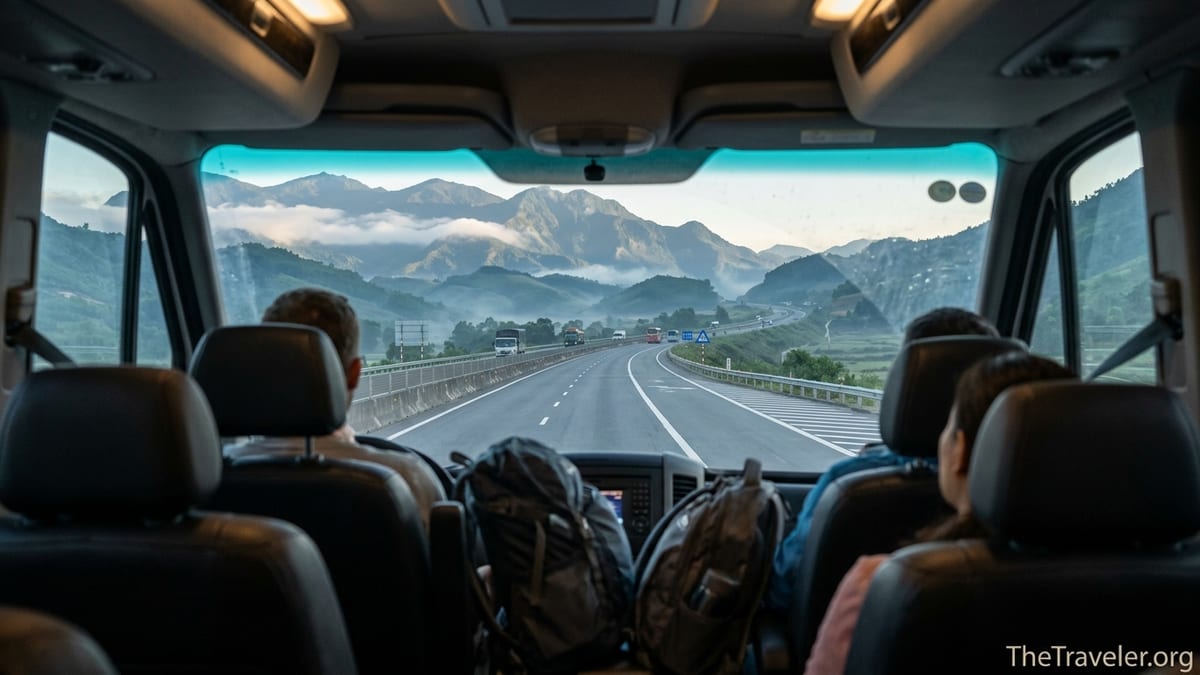
Understanding the Route from Noi Bai Airport to Sapa
Noi Bai International Airport sits about 27 kilometers north of central Hanoi, while Sapa lies high in the Hoang Lien Son mountains close to the Chinese border. In practice, almost every route from the airport to Sapa uses the modern Noi Bai – Lao Cai expressway for most of the distance, then climbs the final 30 or so kilometers up the mountain road to Sapa town. Travel time is usually between 5 and 7 hours by road, or 8 to 10 hours if you combine train and bus.
There is currently no train station at Noi Bai and no airport rail link heading north, so travelers either connect by road directly from the airport to Sapa, or first travel into Hanoi city and then continue by bus, limousine or train from there. For example, a common pattern is an early morning landing at Noi Bai, a 45-minute ride into Hanoi’s Old Quarter, a few hours’ rest and lunch, then a mid-afternoon limousine bus departure to Sapa arriving early evening.
Road quality is generally good, especially on the expressway, but the final section from Lao Cai up to Sapa is winding with frequent curves and changes in elevation. If you are prone to motion sickness, the type of vehicle you choose and where you sit can make a significant difference, especially at night. Many travelers report that smaller limousine vans feel more stable and less claustrophobic than the tallest double-decker sleeper buses on the mountain segment.
Costs vary widely depending on comfort level. Direct airport-to-Sapa seats on shared buses and vans often start around the equivalent of 15 to 25 US dollars per person, while private cars from Noi Bai to Sapa for up to three passengers usually cost in the region of 160 to 220 US dollars for the entire vehicle. Train plus shuttle combinations tend to sit somewhere in between, especially if you book a four-berth soft sleeper cabin with a private operator on top of the base railway fare.
Direct Airport-to-Sapa Buses and Limousine Vans
Several northern Vietnam operators now run direct services that pick up at or near Noi Bai’s terminals and continue to Sapa without requiring passengers to detour into central Hanoi. Companies such as HK Busline and other limousine providers typically schedule one or two daytime departures, often around mid-morning or early afternoon, planned to catch international arrivals that land between about 6:00 and 10:00 in the morning. These services usually use 16 to 20 seat “limousine” vans configured with large reclining seats, USB charging points and bottled water.
In practice, even “direct” airport buses sometimes involve a short transfer by minivan from the terminal to a nearby highway stop where the main bus or larger sleeper coach is waiting. Recent traveler reports mention being collected from Noi Bai’s Terminal 2 by a van, driven 20 to 30 minutes to a roadside depot near the expressway, then boarding the main sleeper bus to Sapa. The entire process can take an extra hour beyond the stated departure time, so if you are connecting from a tight flight schedule, it is safer to allow at least two to three hours between scheduled landing and bus departure.
Ticket prices for these direct services are usually higher than departures starting in central Hanoi because the operator has to factor in the airport pick-up logistics. As an example, in mid 2026 many airport–Sapa limousine vans advertise fares in the ballpark of 450,000 to 650,000 Vietnamese dong per person. That typically includes a bottle of water, limited luggage handling and drop-off near Sapa town center. You generally pay a small premium for front seats or single “VIP” seats in the center of the vehicle where motion is gentlest.
Direct airport buses work best if your flight lands in the morning or early afternoon and you are comfortable boarding a road vehicle after a long-haul journey. For families with children, or anyone carrying several large suitcases, the main drawback is that space inside small vans is limited. If you are travelling with oversized trekking backpacks plus roller suitcases, a larger sleeper bus or private car might feel less cramped, especially over six hours of driving.
Connecting via Hanoi: Sleeper Buses, Limousines and Sapa Express
Because Noi Bai is relatively close to Hanoi’s Old Quarter, many travelers prefer to transfer to the city first, then choose from the dense network of Sapa buses and limousines that depart from central Hanoi. A taxi or ride-hailing trip from the airport to the Old Quarter usually takes 35 to 50 minutes in light traffic. Public airport buses also connect Noi Bai with central districts, but if you have luggage and are watching the clock, ride-hailing cars and airport taxis are usually the more practical option.
From Hanoi, you can pick between standard sleeper buses, higher-end “cabin sleeper” services and compact limousine vans. Well-known brands on the Hanoi–Sapa route include Sapa Express, Inter Bus Lines, Sao Viet and various cabin-sleeper specialist operators. As of mid 2026, typical daytime sleeper bus fares run from around 230,000 to 320,000 dong per person, while premium limousine or cabin sleeper services often range from 350,000 to 550,000 dong depending on season and departure time.
Daytime buses normally leave Hanoi between about 6:00 and 15:00, taking roughly 5.5 to 6.5 hours to Sapa. Travelers who have just arrived at Noi Bai around midday often book a 15:00 or 16:00 departure to give themselves time to clear immigration, collect bags, reach the Old Quarter, shower and grab a meal. For example, a common itinerary is landing at 11:00, arriving in the Old Quarter by 12:30, checking into a hotel, then boarding a 15:30 limousine that arrives in Sapa around 21:00.
Night buses leave Hanoi in the late evening, typically between 21:00 and 23:30, with arrival in Sapa just before or shortly after sunrise. Many cabin sleeper buses offer private or semi-private pods with curtains and personal lighting, which can be a good compromise if you want to sleep horizontally without paying for a private car. However, the mountain section still involves curves and occasional braking, so very light sleepers or those sensitive to motion may find the experience more restless than a night in a hotel and a daytime drive the next day.
Private Transfers from Noi Bai to Sapa
For groups, travelers with heavy luggage or those arriving late at night, arranging a private transfer from Noi Bai to Sapa can be the simplest option. Hanoi travel agencies and hotels frequently quote fixed prices for an airport-to-Sapa car with an English-speaking driver, using vehicles such as Toyota Fortuner SUVs, seven-seat MPVs or larger vans for groups. The key advantage is flexibility: the driver meets you at the arrivals gate with a sign, you depart as soon as you are ready, and you can stop as needed for restrooms, meals or photos along the way.
As of 2026, a typical one-way rate for a private four-seat or seven-seat vehicle from Noi Bai to Sapa falls somewhere around the equivalent of 160 to 220 US dollars per car, depending on vehicle type, booking channel and exact inclusions such as expressway tolls. For a family of four or a small group of friends, that can be competitive with four individual tickets on a higher-end limousine bus, especially once you factor in the time and taxi fares needed to detour through Hanoi city.
Private transfers are particularly attractive on very late or very early arrivals when scheduled buses are limited. For example, if your international flight lands at 23:30, there may be no realistic same-night bus to Sapa, and you may not wish to pay for a city hotel just to sleep a few hours. A pre-booked private car can pick you up around midnight and have you in Sapa just after sunrise. That said, driving the mountain road in the small hours can be tiring for everyone, so it is important to book with an established operator that uses rested drivers and complies with Vietnam’s road safety regulations.
Another advantage of a private car is luggage capacity. Hikers often arrive with trekking poles, bulky boots and large backpacks, while photographers bring hard cases of equipment. In a private SUV or van, you can usually lay out gear more comfortably and avoid the narrow under-floor or overhead spaces of a crowded bus. Parents with toddlers may also prefer the ability to install child seats and control the air conditioning and music volume, which are shared decisions on public buses.
Night Train via Hanoi and Lao Cai: Romantic or Impractical?
The classic alternative to the highway is the overnight train from Hanoi to Lao Cai, the provincial city at the foot of the mountains. From there, passengers continue by bus, shared minivan or taxi for the last hour up to Sapa. Vietnam Railways runs nightly departures on the Hanoi–Lao Cai line, usually leaving between around 20:30 and 22:30 and arriving near dawn. Several private companies operate branded carriages attached to these trains, offering upgraded bedding, snacks and sometimes private two-berth cabins aimed at tourists.
To take the train when you land at Noi Bai, you first need to get into central Hanoi. A typical pattern is an afternoon arrival, transfer to a hotel near Hanoi Railway Station or the Old Quarter, dinner in the city, then boarding a 21:30 or 22:00 train. If your flight lands very early in the morning, you can also spend the full day in Hanoi and still catch the evening train, effectively combining a short city visit with your long-distance transfer. This approach works well for travelers interested in Hanoi’s food and culture who do not want to give up a daytime for the bus ride.
In terms of cost, basic four-berth soft sleeper tickets on Vietnam Railways usually start in the range of 20 to 30 US dollars per person, while private tourist carriages can cost significantly more, especially if you book an entire two-berth or four-berth cabin. Once you arrive in Lao Cai around 5:00 or 6:00 in the morning, you can join one of the many Sapa-bound minibuses waiting at the station, often for an additional fee equivalent to about 5 to 10 US dollars per person. Most hotels in Sapa are familiar with the train schedule and will either allow early check-in if rooms are available or offer a place to store luggage and freshen up until standard check-in time.
Whether the train is practical compared with bus or car depends on your priorities. If you enjoy traditional rail travel, value the ability to walk around a little at night and are willing to pay for a comfortable berth, the train plus shuttle can be a memorable way to arrive in the mountains. However, in pure time terms, the train usually takes several hours longer door to door than a direct highway bus from Hanoi or Noi Bai. The scenery along the line is mostly invisible at night, so you are trading extra hours for what is essentially a moving hotel room rather than a daytime sightseeing experience.
Managing Luggage, Comfort and Motion Sickness
Regardless of which route you choose, the combination of a long-haul flight and a multi-hour ground transfer makes luggage management and comfort key. Buses and limousine vans on the Hanoi–Sapa route expect at least one large suitcase or backpack plus a small carry-on per passenger. Large hard-shell suitcases are typically stored in under-floor compartments on big buses or behind the rear row in smaller vans. If you are traveling with unusually bulky items like camping gear, drones in hard cases or musical instruments, it is wise to confirm space with the operator in advance.
Inside the vehicle, lightweight layers, a neck pillow and earplugs can make a significant difference to how rested you feel on arrival. Air conditioning on Vietnamese buses is often strong, and temperatures can change as you climb from the lowland humidity around Hanoi to the cooler air of Sapa’s 1,500-meter elevation. Many travelers land in Noi Bai in tropical heat wearing T-shirts, then appreciate having a light fleece or sweater to hand when the bus reaches Sapa in the early morning or late evening.
Motion sickness is a concern for some passengers on the final segment from Lao Cai to Sapa, where the road twists through the hills. If you are prone to nausea, book a lower berth in a sleeper bus or a forward-facing seat in a limousine van, and avoid the very back row where movement is exaggerated. Simple preparations like having motion sickness tablets in your carry-on, keeping your eyes on the horizon when possible and avoiding heavy meals just before the climb can reduce discomfort. Parents traveling with children should pack familiar snacks, water and wipes in a small day bag instead of burying everything in checked luggage.
On night buses in particular, it is sensible to keep essential valuables like passports, phones, wallets and cameras either on your person or in a small backpack you can use as a pillow. Larger suitcases stored in the luggage compartment are normally secure, but you will not have access to them during most of the ride. Consider also bringing a light travel blanket or scarf, as bus blankets are sometimes thin or not individually wrapped.
Night Arrivals: Should You Travel Straight to Sapa?
One of the most common dilemmas for travelers is what to do with a late-night arrival at Noi Bai. If your flight lands after 20:00, same-evening shared buses to Sapa become scarce, and even when a schedule exists, you run a real risk of missing it due to delays at immigration or baggage claim. In these situations, most visitors choose between two strategies: an immediate private transfer or an overnight stay in Hanoi followed by a daytime transfer the next day.
Booking a private driver to meet a 23:00 or 00:00 arrival and drive through the night to Sapa is technically possible and not unusual, especially for small groups on tight itineraries. You gain a full extra day in Sapa at the cost of a short night’s sleep on the road. However, this choice concentrates fatigue for both the travelers and the driver, and you will arrive in Sapa while it is still dark or just getting light, with most hotel rooms not yet vacated. If you take this route, plan ahead with your accommodation to arrange early check-in or at least access to a shower and breakfast on arrival.
The more relaxed alternative is to spend the first night in Hanoi. In practice, this might mean landing at 22:30, checking into an airport hotel 5 to 10 minutes from Noi Bai for a proper sleep, then catching a mid-morning direct airport-to-Sapa bus or a taxi into Hanoi city for a lunchtime departure. Another version is to go straight from the airport to a hotel in the Old Quarter, enjoy a late breakfast and some sightseeing, then catch an afternoon limousine bus or the night train to Lao Cai. For travelers with jet lag from Europe or North America, this break often makes the rest of the trip feel far more enjoyable.
Your decision also depends on your onward schedule. For example, if you have only two full days in Sapa before moving on to Ha Long Bay or central Vietnam, an immediate night transfer from the airport can preserve valuable mountain time. On the other hand, if your itinerary is more flexible, banking a good night’s sleep in Hanoi and arriving in Sapa fresh the next afternoon usually leads to a better first impression of the region’s terraces and valleys.
Is It Better to Stay in Hanoi First or Head Straight to Sapa?
Whether you should stay in Hanoi first or go directly from Noi Bai to Sapa is ultimately a question of energy, interests and timing. Travelers focused on trekking, homestays and cool mountain air often want to reach Sapa as soon as possible, while those drawn to street food, temples and city life prefer to spend at least a night or two in Hanoi before heading north. A balanced itinerary for a first-time visitor to Vietnam might include two nights in Hanoi, two or three in Sapa and then additional days in other regions.
If you are landing in the morning after a reasonable night’s sleep on the plane or on a shorter regional flight, going straight to Sapa via a midday limousine bus or private car can be efficient. You arrive by early evening, have dinner and sleep, and wake up ready for trekking. This pattern works well for backpackers and repeat visitors who already know Hanoi or are planning time in the city later in their trip. It can also suit digital nomads or long-stay travelers who are less concerned about squeezing every sight into a limited number of days.
On the other hand, if you land in the late afternoon or evening, or you have come off a long intercontinental flight, a night in Hanoi is usually the wiser move. It gives you time to adjust to the climate, exchange currency, buy a local SIM card and pick up any last-minute gear like rain ponchos or hiking socks. You can then travel to Sapa the next day in daylight hours, when the scenery is more visible and roadside rest stops are fully open. For families with young children or older travelers, this route often reduces stress considerably.
One practical compromise many travelers adopt is to “bookend” their Sapa trip with Hanoi stays. For example, you might arrive in Hanoi, spend one night in the Old Quarter, take a morning limousine bus to Sapa for two nights of trekking, then return to Hanoi by late afternoon bus for an additional night or two before flying onward. This structure keeps individual travel days manageable, spreads out the long distances and provides several opportunities to enjoy Hanoi’s food and culture.
FAQ
Q1. How long does it take to travel from Noi Bai Airport to Sapa?
The total journey usually takes 5 to 7 hours by direct bus, limousine or private car, and around 8 to 10 hours if you go via Hanoi and take the night train to Lao Cai plus a shuttle up to Sapa.
Q2. Are there direct buses from Noi Bai Airport to Sapa, or do I have to go into Hanoi first?
Several operators run direct or semi-direct airport-to-Sapa services that pick up at or near Noi Bai, but many travelers still choose to go into Hanoi first because there are more bus, limousine and train options from the city itself.
Q3. What is the most comfortable way to get from Hanoi to Sapa after arriving at Noi Bai?
For most travelers, a high-quality limousine van or cabin sleeper bus from central Hanoi offers the best balance of comfort and price, while a private car from the airport is the most comfortable but also the most expensive per person.
Q4. Is the night train from Hanoi to Lao Cai a good option if I land at Noi Bai in the afternoon?
Yes, if your flight arrives by mid-afternoon, you can transfer into Hanoi, have dinner and then board a night train to Lao Cai, arriving near dawn and continuing by shuttle to Sapa, effectively combining a short Hanoi visit with your long-distance transfer.
Q5. What should I do if my flight lands at Noi Bai late at night?
If you land very late, your realistic choices are a pre-booked private transfer that drives through the night to Sapa, or staying at an airport or Hanoi hotel and traveling to Sapa by bus, limousine or train the following day.
Q6. How much does it cost to go from Noi Bai Airport to Sapa?
As a rough guide, shared buses and limousines from the airport or central Hanoi typically cost the equivalent of 10 to 25 US dollars per person, while private cars from Noi Bai to Sapa often range around 160 to 220 US dollars per vehicle.
Q7. Is there a luggage limit on buses and limousines to Sapa?
Most operators allow at least one large suitcase or backpack plus a small carry-on per passenger, but space in limousine vans is limited, so it is sensible to confirm in advance if you are traveling with extra or oversized luggage.
Q8. I get motion sickness. Which option is best for the last part of the journey to Sapa?
If you are prone to motion sickness, choose a forward-facing seat in a limousine van or a lower berth on a sleeper bus, sit near the middle of the vehicle, and consider day travel when the road is easier to anticipate.
Q9. Should I stay in Hanoi first or go directly to Sapa after landing?
If you land in the morning and feel rested, going straight to Sapa can be efficient, but if you arrive in the late afternoon or evening or are jet-lagged, spending the first night in Hanoi usually leads to a more comfortable overall trip.
Q10. Can I book my Hanoi or Sapa transport on arrival at Noi Bai, or should I reserve in advance?
Outside of major holidays you can sometimes book on arrival, but for peace of mind, especially in peak seasons or if you have a fixed schedule, it is safer to reserve your bus, limousine, train berth or private car at least a few days ahead.