


Winter is quietly becoming one of the most interesting times to visit Hanoi. Search data from Google Destination Insights and Vietnam tourism reports shows that international interest in Vietnam, including Hanoi, now rises notably from late November through January, helped by more flexible visas and long haul travelers looking for cooler city breaks instead of peak season beaches. For visitors, that translates into mild to chilly weather, cheaper rooms than over Lunar New Year, and a capital city that feels both festive and manageable.
Get the latest updates straight to your inbox!
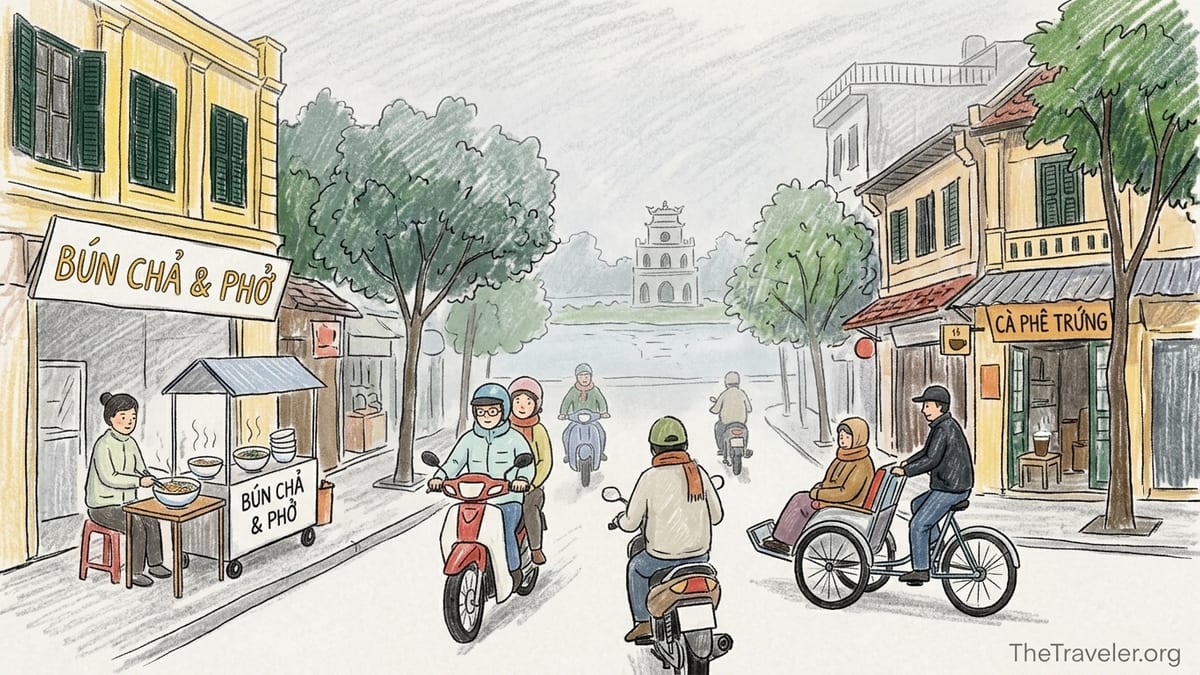
Winter weather in Hanoi: what December and January really feel like
Hanoi sits in northern Vietnam and has a true winter season compared with the tropical south. Long term climate records for the city show that average daytime highs in December reach around 21 degrees Celsius, with nights near 15 degrees. January is the coolest month of the year and averages closer to 17 degrees overall, so evenings can feel surprisingly cold if you arrive straight from the tropics. Humidity remains relatively high, so the chill can feel deeper than the numbers suggest, especially in the shade or after rain.
Rainfall is much lower in winter than in the monsoon months. Climate summaries indicate that December usually sees around 30 to 60 millimetres of rain for the month, compared with several hundred millimetres in peak wet season. Many days are dry or just misty, with a grey sky known locally as “mùa nồm” conditions. You are more likely to encounter a fine drizzle or light showers than heavy tropical downpours, which makes city walking and motorbike taxis easier to manage.
It is important to prepare for short cold snaps. Historical data for Hanoi records rare lows in the single digits Celsius and a famous cold wave in January 2016 when nearby Ba Vi mountain briefly saw snow and freezing temperatures. Those extremes are unusual, but cold waves with daytime temperatures around 12 to 14 degrees can occur once or twice in a winter. Many buildings in Hanoi, including mid range hotels and cafes, do not use central heating, so a light fleece, a packable down jacket, and warm socks are more useful than you might expect in Southeast Asia.
Air quality is another consideration in winter. During still, cool days, haze from traffic and regional pollution can linger over the city more than in windy months. Government monitoring and independent apps sometimes register higher particulate readings between December and March, especially in rush hours. Travelers sensitive to air quality often pack simple disposable masks and schedule more indoor activities, such as museums and cafes, on hazier days while saving temple courtyards and lakeside loops for clearer mornings after rain.
Travel demand, crowds and holiday search trends
Vietnamese and international data suggest that interest in Hanoi builds steadily into the winter season. Reports drawing on Google Destination Insights noted that searches for travel to Vietnam from foreign markets increased by roughly a quarter between late November and late January in a recent year, with Hanoi consistently ranking among the most searched destinations alongside Ho Chi Minh City and Da Nang. This growth reflects easier e visa rules, more long haul connections, and a growing number of travelers who want a culture heavy city break combined with cooler trekking and bayside scenery.
On the ground, this demand pattern means that December in Hanoi feels active but not overwhelmed. The domestic high season tilts toward the coastal resorts and southern islands for year end holidays, so the capital often escapes the worst of the New Year price spikes. Boutique hotels in the Old Quarter report stronger occupancy on weekends and in the week around Christmas and Western New Year, but many still post promotional rates compared with the crowds that arrive for the Lunar New Year holiday, known as Tet, which typically falls in late January or February.
January is more complicated. In early and mid January, hotel searches and bookings remain steady, with digital rental platforms reporting only a modest difference between December and January average nightly prices for private apartments in Hanoi. As Tet approaches, however, domestic travel surges. Official tourism bulletins describe record visitor numbers in the city during the recent Lunar New Year period, with millions of entries to attractions and heavy intercity bus and train traffic. If your visit coincides with Tet dates, expect higher prices on some routes, limited availability on overnight trains, and closures of smaller shops and family restaurants for several days.
From a planning perspective, travelers who prefer more open restaurants and normal business hours often target early December or the first half of January for a winter visit. Those who want to experience Tet accept that they will need to reserve long distance transport and preferred hotels weeks in advance and may pay more for flights in and out of Vietnam during the main holiday window.
Where to stay: winter hotel prices and neighborhoods
Even with growing interest, winter in Hanoi still brings relatively affordable room rates by global standards. Large scale hotel price trackers that scan hundreds of properties show that in December 2026, some three star hotels in the Old Quarter list median rates in the range of 30 to 50 US dollars per night for standard double rooms, while certain four star properties cluster around 70 to 120 dollars when booked close to travel dates. On a specific shopping date near Christmas, a well rated four star hotel in the Old Quarter was advertising a mid range standard room for the equivalent of about 50 to 60 dollars, while more design heavy boutique addresses quoted well into three figures.
Travel analytics sites that monitor seasonal patterns suggest that December can even appear among the cheaper months for hotel bookings in Hanoi, with sample data indicating lowest recorded December nightly averages just below 30 dollars in some years for basic double rooms. At the higher end, price tracking for central four star hotels shows December nightly rates around 100 dollars for popular spa and boutique properties, especially those facing Hoan Kiem Lake or located on quieter Old Quarter side streets. These figures usually include breakfast but exclude Vietnam’s 8 percent value added tax and a small service charge, both of which are added to the bill on checkout.
In terms of areas, most first time visitors still choose the Old Quarter and the streets around Hoan Kiem Lake. Local hotel and tourism guides describe this zone as a compact grid where you can walk out of your lobby directly into the night market, egg coffee cafes, bun cha stalls, and souvenir shops, while the lake offers a calmer loop for morning walks. Just south of here, the French Quarter provides wider boulevards, the Hanoi Opera House, and more international chain hotels with larger rooms and higher service levels at prices that often start around 90 to 150 dollars per night in winter.
For longer winter stays, many travelers now base themselves in Tay Ho around West Lake, about fifteen to twenty minutes by ride hailing car from the Old Quarter. The shoreline is lined with serviced apartments and mid range hotels, often priced around 70 to 100 dollars for one bedroom units with kitchenettes, and views over the water. Ba Dinh, near the Ho Chi Minh Mausoleum and several embassies, offers quieter residential streets with a mix of traditional guesthouses and newer mid range hotels, frequently a little cheaper than the Old Quarter while still a short taxi ride from the main sights.
What to pack and how to get around in winter conditions
Because December and January sit firmly in Hanoi’s cool season, packing needs differ from a summer visit. Locals often wear light padded jackets, scarves, and hats on the coldest days, and travelers who arrive in only tropical clothing often end up shopping for extra layers in the Old Quarter’s clothing shops. A practical winter packing list includes a thin insulated jacket or fleece, a compact umbrella, a light rain shell, long trousers or jeans, and at least one set of warmer sleepwear to handle unheated hotel rooms or heritage homestays with weak air conditioning used in heating mode.
Footwear matters more than many visitors expect. Street surfaces in the Old Quarter can be slick in mist or drizzle, and sidewalks are often broken or blocked by parked motorbikes. Closed walking shoes with some grip make it easier to navigate narrow lanes and temple courtyards. If you plan side trips to places like Ninh Binh or Sapa, add sturdier hiking shoes and a warmer mid layer, as those destinations often run a few degrees cooler than central Hanoi in winter, especially at night.
Getting around the city in winter is straightforward. Ride hailing apps used widely in Vietnam connect visitors with cars and motorbikes within minutes in the central districts, and winter temperatures make open air motorbike rides more comfortable than in the peak heat. However, on the coldest nights, many travelers prefer cars to avoid wind chill on longer journeys. Public buses, including the numbered city routes and the shuttle linking Noi Bai International Airport with the center, operate year round, with airport bus fares kept low by city transport authorities and advertised on official timetables.
Traffic congestion remains a reality, particularly in the late afternoon and early evening. The cool, dry weather encourages more people to be out on the streets, which can slow taxi and ride hail journeys in the Old Quarter and around key intersections in Ba Dinh and the French Quarter. Allow extra time to reach the train station or coach terminals, especially before weekend departures or around Tet, when interprovincial travel peaks and roads into Hanoi back up for kilometres.
Food and drink: warming bowls, winter specialties and cafe culture
Hanoi’s food culture comes into its own in winter. Cooler temperatures make steaming bowls and hot grills appealing, and locals lean into dishes that feel too heavy on muggy summer days. Pho bo, the city’s signature beef noodle soup, tastes especially right at a curbside stall on a misty December morning, while bun cha, with its charcoal grilled pork and warm broth served over rice noodles and herbs, is often a lunchtime staple. Popular street side stalls around the Old Quarter and Ba Dinh stay busy into the evening, with prices for a substantial bowl or set meal generally in the low single digits in US dollars.
Several Hanoi specialties feel tailor made for cold weather. Cha ca la vong, turmeric spiced grilled fish cooked tableside with dill and spring onions, is traditionally enjoyed with hot rice noodles and peanuts and pairs well with a warming cup of local rice wine. In winter, many restaurants serving cha ca keep the pans sizzling longer so diners linger against the heat of the tabletop burners. Hotpots, called lau, become particularly popular from December through February. Groups of friends gather around bubbling pots of sour fish stew, mushroom broths, or spicy beef base at casual restaurants in districts like Cau Giay and Hai Ba Trung, with per person prices still moderate compared with East Asian capitals.
Cafe culture also intensifies in winter. Hanoi is famous for its egg coffee, a rich combination of strong robusta coffee topped with a silky egg yolk foam. In December and January, cafes introduce more hot versions of specialties, including coconut coffee served warm and cinnamon spiced lattes at third wave shops. Small independent cafes around Hoan Kiem and West Lake frequently run evening specials on hot drinks to draw in both locals and visitors escaping the chill outside, and you will often find blankets or space heaters on terraces at night.
For travelers seeking lighter or vegetarian options, winter menus still offer fresh herb salads, rice paper rolls, and stir fried vegetables, though some seasonal greens are less abundant compared with the harvest rich autumn months. Many contemporary restaurants in Tay Ho and the French Quarter list plant based pho, tofu with lemongrass and chili, and fusion dishes like pumpkin soup with local spices that feel comfortingly warm without being overly heavy.
Suggested winter itineraries: two to five days in and around Hanoi
A compact two day winter stay works well for travelers pairing Hanoi with other parts of Vietnam. On the first day, many visitors start with an early walk around Hoan Kiem Lake to watch morning tai chi and badminton before circling into the Old Quarter for breakfast pho and egg coffee. Midday can be spent at the Temple of Literature and the Vietnam Fine Arts Museum or the Women’s Museum, both largely indoors and ideal for cooler or drizzly afternoons. The evening might involve a water puppet performance near the lake followed by bun cha at a local spot and a stroll through the weekend night market if your timing aligns.
With three days, there is room to add more modern history and local neighbourhood life. One morning can be devoted to the Ho Chi Minh Mausoleum complex and the nearby Presidential Palace grounds, combined with a visit to One Pillar Pagoda. A winter visit to the mausoleum often means queuing in crisp, cool air rather than summer heat. In the afternoon, you could explore the French Quarter’s colonial architecture, stopping at the Opera House and bookshops along Trang Tien. Dinner might focus on cha ca at a specialist restaurant, followed by a nightcap at a rooftop bar that offers views across the lake and the layered rooftops of the Old Quarter.
Travelers with four or five days in December or January can comfortably weave in a full day trip. One popular choice is Ninh Binh, sometimes called “Halong Bay on land,” where limestone karsts rise from rice fields and rivers. Winter here is cooler than in Hanoi and often cloaked in atmospheric mist. Many operators offer day tours leaving central Hanoi early in the morning, including rowboat journeys at Trang An or Tam Coc and short hikes up view points like Hang Mua. Another option is an overnight or two day cruise in Halong Bay or the adjacent Lan Ha Bay, where winter brings cooler air and a moody light on the limestone islands, though sea fog can occasionally disrupt views in January.
When planning these itineraries, consider arranging indoor heavy days to coincide with any forecast cold wave or persistent drizzle and saving temple courtyards, walking street evenings, and day trips for clearer spells. Local weather forecasts available a few days out are generally accurate enough to swap activities around. Because daylight in winter is shorter, with early nightfall around 5:30 to 6:00 pm, starting your sightseeing days soon after breakfast lets you fit in more outdoor sights before dusk.
Winter friendly excursions near Hanoi
Beyond Ninh Binh and Halong Bay, winter opens up several rewarding excursions within a few hours of Hanoi. Mountainous areas like Mai Chau, Pu Luong, and Sapa offer terraced valleys and ethnic minority villages that feel crisp and quiet in December and January. Daytime temperatures there are commonly several degrees cooler than Hanoi, and nights can drop close to freezing in the highest settlements, which adds a sense of alpine chill when you wake up to mist over the rice paddies. Simple stilt house homestays usually provide extra blankets and sometimes electric heaters, but packing a warm layer is essential.
Closer to the capital, visitors often spend a cool season day exploring the Perfume Pagoda complex, reached by a combination of river boat and cable car or hike. Winter pilgrim traffic grows as the Lunar New Year period approaches, so December visits feel calmer, while January outings, especially on weekends, bring larger crowds of domestic pilgrims. The misty river ride and stone steps up through the limestone studded landscape can be particularly atmospheric under a grey sky, though they are more challenging if the drizzle turns the steps slick.
Villages known for traditional crafts make relaxed winter outings as well. Bat Trang, the centuries old ceramics village southeast of Hanoi, is accessible by taxi or public bus and offers studio visits, pottery workshops, and small galleries. The cooler air makes it easier to wander the alleys and browse kilns without overheating. To the west, Duong Lam ancient village has preserved brick lanes and centuries old houses where hosts serve simple country lunches and hot tea in courtyards that are more comfortable in the clear winter light than in mid summer humidity.
Many of these excursions are available as small group or private tours booked through Hanoi based agencies or hotel desks. Winter schedules typically run daily, although services may pause or reduce frequency on the main days of the Tet holiday. Prices for day tours vary depending on group size and inclusions but are often quoted in US dollars and Vietnamese dong together, making it straightforward to compare options. Travelers who prefer independent trips can also reach many of these sites by rented motorbike or interprovincial bus, though in winter it is wise to check route conditions and return times to avoid riding in the dark on cold rural roads.
Practical tips, visas and a winter friendly conclusion
Vietnam has updated its visa policies in recent years in ways that benefit winter visitors. Government resolutions that took effect from August 2023 extended the permitted stay for some unilaterally visa exempt nationalities and broadened eligibility for e visas, making it easier for travelers from Europe, parts of Asia, and other regions to plan last minute city breaks in Hanoi. Official tourism and government summaries credit these changes, along with promotional campaigns, with driving the rise in search interest and arrivals recorded over recent winter seasons.
From a budget standpoint, visiting Hanoi in December and early January can be cost effective compared with peak periods. Hotel price analytics for late 2026 list starting rates for basic but centrally located double rooms from the mid 20s to low 30s in US dollars when booked outside of holidays, while comfortable boutique and four star stays often sit between 60 and 120 dollars. Food, local transport, and entrance fees to most attractions remain modest by global city standards, which allows many travelers to allocate more budget to side trips, upgraded bay cruises, or longer stays.
At the same time, there are trade offs. Cool, sometimes gloomy skies mean you may not return with bright blue sky photos, and air quality can occasionally be an issue on still days. Some smaller businesses will close for several days around Tet. Nightlife that relies on outdoor seating can feel quieter on the coldest evenings, and you may find yourself reaching for a scarf more often than you imagined for a Southeast Asian holiday. Being prepared for these realities, both in your packing and in your expectations, makes them part of the charm instead of a frustration.
For many travelers, though, Hanoi in December and January offers a rare combination: a Southeast Asian capital that feels comfortably cool, culturally dense, and increasingly accessible just as search interest and flight options grow. Whether you come for steaming street food, misty lakeside walks, or a base for crisp mountain and bay excursions, winter Hanoi rewards those who bring an extra layer and an open itinerary.