


Guatemala City is emerging as a smart winter getaway for travelers who want culture, food, and nightlife coupled with easy access to the colonial charm of nearby Antigua. As search interest in Guatemala rises each holiday season, more visitors are discovering that the capital is not just a transit stop but a destination in its own right, especially between November and February when the weather is cooler and drier. This guide focuses on practical arrival logistics, neighborhood choices, and concrete options for getting between Guatemala City and Antigua over the busy winter holiday period.
Get the latest updates straight to your inbox!
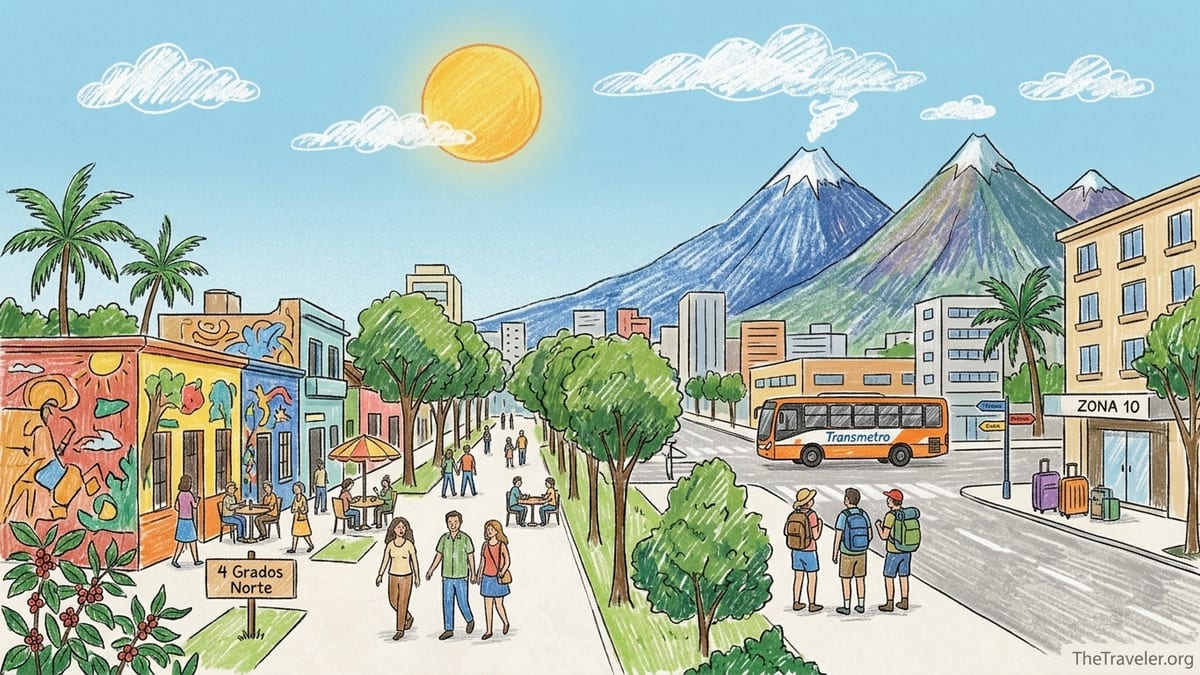
Winter in Guatemala City: What to Expect
Guatemala’s dry season runs roughly from November through April, which aligns with the North American and European winter holidays. During these months, Guatemala City typically enjoys clear mornings, mild afternoons around the low to mid 70s Fahrenheit, and cooler evenings. This makes December and January particularly comfortable for walking neighborhoods like Zona 4’s Cuatro Grados Norte or the historic center without the heavy rain that characterizes the May to October wet season.
Winter is also one of the busiest travel windows. Flights from cities like Miami, Houston, Los Angeles, and Mexico City into La Aurora International Airport see heavier demand around Christmas and New Year, and fares rise accordingly. As a result, accommodation in sought after areas such as Zona 10 and Zona 4 can book out weeks ahead, especially at business hotels that also target holiday visitors. Travelers who treat Guatemala City as more than a quick overnight tend to plan at least two or three nights in the capital before or after continuing on to Antigua or Lake Atitlán.
Because Guatemala City sits at an elevation of around 1,500 meters, evenings in December and January can feel surprisingly cool once the sun goes down. Heating is rare in hotels and apartments, so packing a light sweater or fleece, plus a jacket for evening rooftop bars or outdoor dining, is a simple but important comfort measure. The cooler air also affects how locals dress: you will see people in jackets and scarves at night, even if daytime temperatures still feel warm to visitors from colder climates.
Winter also coincides with local holidays that influence transport. Around Christmas, New Year, and the first week of January, some shuttle services between Guatemala City and Antigua adjust schedules or sell out early as Guatemalans travel internally. Visitors landing on peak days should expect heavier traffic on the main road to Antigua and may face longer transfer times, especially in the late afternoon.
Arriving at La Aurora International Airport
La Aurora International Airport sits in Zone 13 of Guatemala City, only a few kilometers from major hotel districts such as Zona 10 and Zona 4. The compact terminal is straightforward to navigate: after immigration and baggage claim, you exit into a public arrivals hall that contains ATM machines, currency exchange counters, mobile phone booths, and an information desk from the national tourism authority. As of late 2026, mobile operators such as Claro and Tigo offer prepaid SIMs, with starter packages often costing the equivalent of a few US dollars plus an initial recharge, which is useful if you plan to rely on ride hailing.
For many travelers, arranging a safe and predictable ride into the city is the first priority. Authorized airport taxis operate from a counter inside the arrivals area. You tell staff your destination zone, pay at the desk, and receive a voucher that assigns you to a licensed driver. Recent guidance compiled from airport transfer resources indicates that rides to Zona 10 or nearby business districts usually cost the equivalent of roughly 10 to 15 US dollars, with the exact amount quoted at the counter based on zone rather than time of day. The trip into Zona 10 or Zona 9 typically takes 20 to 35 minutes in normal traffic.
Ride hailing services such as Uber are active in Guatemala City and serve La Aurora airport. Transport guides that track local fares suggest that recent Uber rides from the airport to Zona 10 often fall in the range of about 25 to 40 quetzales, or roughly 3 to 5 US dollars, when traffic is moderate. At very busy evening hours or during holidays, surge pricing can increase that figure. Many travelers order their Uber once they are at the curb outside arrivals while remaining inside the airport perimeter for security and ease of pickup.
For visitors going directly to Antigua, several shuttle companies maintain desks or representatives in the arrivals area, but the most reliable approach in winter is to reserve ahead of time. Shared tourist shuttles running between the airport, central Guatemala City hotels, and Antigua typically quote prices around 18 to 20 US dollars per person. Schedules vary by operator, but current listings show multiple daily departures, frequently including early morning runs around 6:00 or 7:00 and later departures in the mid afternoon and early evening. If your winter flight lands late at night, you may find fewer shared options and need to prebook a private transfer instead.
Choosing Your Guatemala City Base: Key Neighborhoods
Guatemala City is divided into more than 20 numbered zones, and a handful of them stand out for winter visitors. Zona 10, often called Zona Viva, is a long time favorite for its cluster of business class hotels, modern shopping centers, and restaurants. International chains like Marriott, InterContinental, and Hilton are present here, alongside local business hotels and boutique options. A December stay in a midrange hotel in Zona 10 often falls somewhere between 80 and 140 US dollars per night, though exact rates vary with demand around Christmas and New Year.
In recent years, Zona 4 and its Cuatro Grados Norte district have drawn travelers looking for a more creative atmosphere. This area, set between the traditional business core and the historic center, has been redeveloped into a pedestrian friendly cultural zone with cafes, street art, coworking spaces, and small design studios. Current city descriptions emphasize Cuatro Grados Norte as one of Guatemala City’s main cultural and gastronomic hubs, making it a good choice for visitors who want to experience a younger, more local scene. Boutique hotels and serviced apartments here can be slightly less expensive than in Zona 10, while still providing easy access to the rest of the city.
Zona 1, the historic center, offers the most atmospheric architecture, including the main Plaza de la Constitución, the National Palace, and the Metropolitan Cathedral. Several guesthouses and budget hotels operate within walking distance of the plaza, appealing to travelers who prefer historic surroundings and lower prices. However, the area is busier and more chaotic, especially at night, and some streets feel less secure compared with the modern hotel clusters in Zona 10 and Zona 4. For first time visitors arriving in Guatemala City late at night, many embassies and travel advisories still suggest staying in a better lit, hotel oriented zone and visiting the historic center by day.
Other zones, such as Zona 14 and parts of Zona 9, also host hotels and residential neighborhoods used by business travelers and wealthier locals. These areas tend to be quieter and more residential, with a handful of upscale restaurants and bars. They make sense if you are staying with friends or using a specific hotel’s loyalty program, but most winter holiday travelers gravitate toward Zona 10, Zona 4, or a day trip into Zona 1 for sightseeing.
Getting Around the City in Winter
Guatemala City’s size and traffic can surprise visitors who arrive expecting a small capital. Winter does not bring snow or ice, but December shopping rush and pre holiday events add pressure to the roads. Public transport exists in the form of Transmetro bus rapid transit lines and other bus routes, but most short term visitors rely on a mix of official taxis, ride hailing, and prearranged hotel cars for safety and convenience. From a Zona 10 hotel, a daytime Uber ride to Cuatro Grados Norte often costs only a few US dollars, depending on traffic and time of day.
Walking within a single neighborhood is realistic in daylight. Visitors commonly stroll between cafes and galleries in Cuatro Grados Norte, or explore a few blocks around hotels in Zona 10. However, distances between zones are large, and pedestrian infrastructure can be inconsistent. After dark, most locals and expatriates prefer using cars rather than walking long distances, especially across major intersections and commercial corridors that are not set up for foot traffic.
Car rental remains an option for confident drivers, particularly those planning day trips beyond the capital. Travel resources that track rental prices in Guatemala indicate that compact car rentals in Guatemala City or Antigua often start somewhere around 35 to 60 US dollars per day in 2026, before insurance and fuel. While this can be economical for small groups visiting destinations like Lake Atitlán or Pacific coast beaches, driving in the capital itself demands patience with aggressive traffic, winding flyovers, and frequent congestion on major arteries at rush hour.
For winter visitors staying only a few nights in the city and then heading to Antigua, the most practical combination is often a ride hailing trip from the airport to a hotel in Zona 10 or Zona 4, short Uber rides within those neighborhoods, and an organized shuttle or private transfer for inter city travel. This approach keeps logistics predictable during a season when services are busy and daylight hours are relatively short.
Planning Your Connection from Guatemala City to Antigua
Antigua sits roughly 40 kilometers west of Guatemala City, but the curving, often crowded highway means journey times can vary from about one hour in light traffic to two hours or more during holiday peaks. The route climbs into the hills and can be affected by roadworks or landslides in the wetter months, though conditions during winter are generally more stable. For most visitors, the central decision is whether to use a shared shuttle, a prebooked private transfer, or a ride hailing option such as Uber for this leg.
Shared tourist shuttles operate throughout the day between La Aurora airport, central Guatemala City hotels, and Antigua. Up to date listings from multiple operators show frequent daily departures, with some companies offering runs as early as 6:00 in the morning and others leaving mid morning, early afternoon, late afternoon, and sometimes evening. Prices in late 2026 commonly fall between 18 and 20 US dollars per person, with a few services quoting around 130 quetzales for the same route. These shuttles usually use modern minibuses with space for luggage and drop travelers at or near central hotels in Antigua.
Private transfers provide more flexibility, particularly for families, late night arrivals, or travelers carrying sports equipment. Several Antigua based agencies and Guatemala City transport companies quote fixed prices for a private car or van from the airport or a city hotel to Antigua, often starting around 60 to 80 US dollars for one or two passengers and increasing with vehicle size. Booking directly with your Antigua hotel or a reputable agency can be worthwhile in winter, when demand rises and some operators stop late night shared services. If your flight is scheduled to land after 9:00 p.m., checking in advance whether shared shuttles still run that night is essential.
Ride hailing remains a gray area between the two. Some travelers report paying around 50 US dollars for an Uber from Guatemala City to Antigua, though exact fares vary with surge pricing, time of day, and pickup location. Unlike shuttles, Uber drivers are not obligated to accept a long highway run, and service availability late at night or on busy holiday evenings cannot be guaranteed. For this reason, many winter visitors treat Uber as a backup rather than their primary plan, using shared or private shuttles for peace of mind.
Whichever option you choose, consider how it fits with your arrival time and winter daylight. In December, darkness falls early in Guatemala, often around 6:00 p.m. If you are uncomfortable with night driving on mountain highways, you might choose to spend your first night in Guatemala City, then take a mid morning shuttle to Antigua the following day when traffic is slightly lighter and the views are more enjoyable.
Antigua as a Winter Holiday Base
While this guide focuses on Guatemala City and logistics, Antigua deserves mention because it is the reason many travelers land in the capital in the first place. The cobbled streets, pastel facades, and volcano views provide a very different atmosphere from the modern capital, and winter months bring clear skies and cool, sunny days that are ideal for walking between plazas, churches, and markets. December and early January are particularly popular with international visitors and Guatemalan families taking domestic holidays.
Accommodation in Antigua fills quickly over Christmas and New Year. Midrange boutique hotels within walking distance of the central plaza often sell out weeks ahead, and their rates climb in line with demand. It is common for Antigua properties to set minimum stay requirements over peak holiday nights, such as a three night minimum around December 31. Travelers planning to stay in Guatemala City for a few days and then move on to Antigua should therefore secure their Antigua booking before finalizing domestic logistics, especially if traveling between December 20 and the first week of January.
Connections between Guatemala City and Antigua also enable easy onward travel. Many shuttles that start or end in the capital continue to other destinations, such as Panajachel on Lake Atitlán, Cobán in the Alta Verapaz region, or the Pacific surf beaches. For example, some operators advertise Guatemala City to Panajachel routes that transit through Antigua to pick up additional passengers. This means you can often arrange a single booking that ties together an airport pickup, a night or two in the capital, a transfer to Antigua, and then another shuttle onward after your stay there.
Because shuttles and tour agencies coordinate closely between Guatemala City and Antigua, it is also relatively simple to slot in winter activities such as volcano hikes or coffee tours. Many visitors book an overnight in Guatemala City after a late arrival, transfer to Antigua the next morning, and by the following day join a guided hike on nearby Pacaya volcano or a coffee farm tour, taking advantage of the clear winter weather.
Practical Tips for a Smooth Winter Holiday
A bit of planning goes a long way in Guatemala during the winter tourism peak. One practical step is to organize your first night’s accommodation and airport transfer before you land. If you book a hotel in Zona 10 or Zona 4, ask whether they can arrange a pickup from La Aurora at a fixed price. Some properties bundle transfers into winter promotions, while others work with trusted taxi partners who wait in the arrivals hall with a sign.
Money handling also benefits from preparation. There are ATMs both inside La Aurora airport and in hotel districts, but machines can occasionally be out of service. Many travelers withdraw an initial amount of quetzales on arrival to cover taxi or shuttle costs, then use ATMs near banks or shopping centers in Zona 10 or Antigua’s central area for larger withdrawals. Credit cards are widely accepted at midrange and high end hotels, restaurants, and tour agencies in Guatemala City and Antigua, while small shops, markets, and roadside food stalls remain cash oriented.
Security awareness is part of any Guatemala itinerary, and winter visitors should approach it with clear but balanced expectations. Government and embassy advisories advise against walking with visible valuables, using unregistered street taxis, or carrying large sums of cash. Sticking to reputable hotel areas, authorized airport taxis, ride hailing for short hops, and prebooked shuttles or private cars for intercity roads significantly reduces risk. Many travelers report trouble free stays by following these ordinary precautions and staying informed about local conditions through their hotel staff or tour operators.
Finally, remember that Guatemala City is not just a gateway, even if Antigua is your primary goal. Allowing at least one full day to explore the capital’s museums, restaurants, and cultural districts can enrich a winter trip. You might spend a morning visiting a museum of archaeology or ethnology, have lunch in a Zona 4 cafe, and finish with dinner in a Zona 10 restaurant before heading to Antigua the next morning. With reliable transfers and a bit of planning, Guatemala City and Antigua together make a compelling winter holiday pair.
Conclusion: Linking the Capital and the Colonial Gem
Guatemala City and Antigua form a natural partnership for winter travelers. The capital offers direct international air links, modern hotels, and lively neighborhoods, while Antigua provides the historic streets and volcano vistas that feature in most images of Guatemala. Efficient ground transport between the two, from shared shuttles priced around 18 to 20 US dollars to flexible private transfers, makes it easy to connect them into a single itinerary.
By understanding how La Aurora airport works, choosing a neighborhood that matches your style, and booking shuttles around your flight times and winter daylight, you can turn what might have been a rushed transfer into an enjoyable part of the journey. As interest in Guatemala grows each holiday season, travelers who give both Guatemala City and Antigua time in their itinerary will find a richer, more varied winter experience than either destination could offer alone.