


More news on this day
Heathrow Airport, Europe’s busiest international hub, is being pushed into a pivotal and precarious role as the escalating conflict in the Middle East disrupts flight corridors, drives up fuel costs and reshapes the long-term future of UK travel.
Get the latest news straight to your inbox!
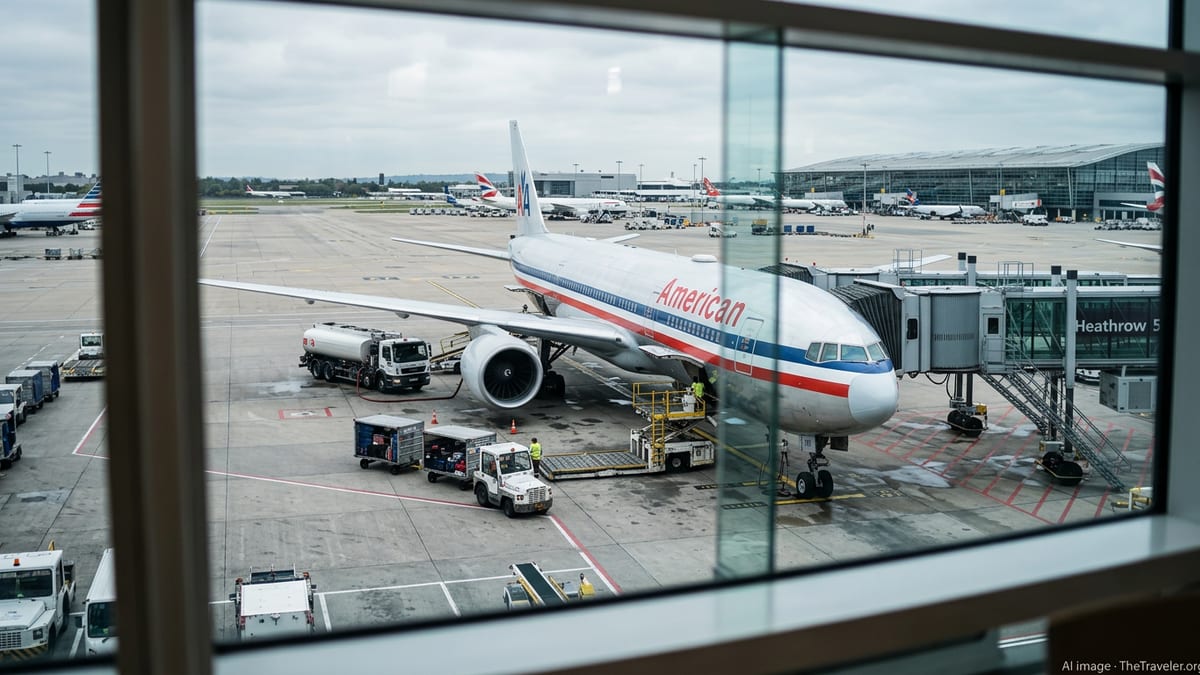
A Hub Under Strain as Routes Vanish and Traffic Shifts
Airspace closures over Iran, Iraq and parts of the Gulf, introduced in response to intensifying conflict and missile incidents, have effectively removed one of the world’s main flight corridors linking Europe with Asia and East Africa. Airlines serving London are rerouting or suspending services that once stitched Heathrow directly to Middle Eastern hubs, cutting a vital artery in the airport’s long-haul network.
Published coverage indicates that Heathrow’s direct traffic to major Gulf and Levant destinations has fallen sharply in recent weeks, with data from aviation analytics firms showing that on some days nearly half of scheduled departures between Heathrow and the wider Middle East did not operate. A growing number of carriers have either cancelled flights entirely or restructured schedules to avoid airspace now considered high risk.
Despite the collapse in point to point demand to the region, Heathrow’s overall passenger volumes have continued to rise. The airport reported handling around 6.6 million passengers in March, with a double digit increase in transfer traffic as long haul itineraries are re-planned through London rather than traditional Gulf super-hubs. The result is a paradoxical picture in which Heathrow’s role as a global connector is intensifying even as one of its core regional markets contracts.
This surge in connecting travellers is changing the airport’s daily rhythms. Terminals are seeing heavier waves of transit passengers at times that previously aligned with Middle Eastern banked departures, while ground handlers and security teams adjust to more complex flows of time-sensitive long haul connections across Europe, North America and Asia.
Rerouting, Longer Flights and the Cost Shock Hitting UK Travelers
The sudden closure or restriction of Middle Eastern airspace has forced airlines into extended routings that bend far north over Central Asia or south across Africa and the Indian Ocean. Industry briefings suggest these diversions can add between 300 and 800 nautical miles to a single long haul sector, stretching journey times by up to two hours on some itineraries touching the UK.
For carriers operating at thin margins, the consequences are severe. Analysts tracking the 2026 Iran war and the associated fuel crisis report that Brent crude has surged beyond 120 dollars a barrel after the partial shutdown of exports via the Strait of Hormuz. Jet fuel, already one of the largest line items in an airline’s budget, has become dramatically more expensive, just as detours demand extra fuel burn on every affected flight.
Aviation and insurance specialists note that war risk premiums have risen steeply for operations anywhere near the conflict zone, compounding the pressure. The combination of longer routes, higher fuel prices and elevated insurance costs is feeding through to booking systems and revenue models, setting the stage for higher fares across many of Heathrow’s long haul markets into late 2026.
Travel analysis platforms aimed at consumers are already warning UK passengers to expect more expensive tickets, fewer nonstops and tighter capacity on routes that previously threaded efficiently through the Middle East. Leisure travellers heading from Britain to destinations in Southeast Asia, Australia and East Africa are particularly exposed, as itineraries that once relied on fast one stop connections via Dubai, Doha or Abu Dhabi are replanned around European or African hubs, often with longer total travel times.
Ripple Effects on UK Tourism, Business Travel and Cargo
The turbulence in air connectivity is beginning to filter through to wider segments of the UK economy. Tourism bodies tracking inbound and outbound flows report an emerging shift, with a decline in UK holiday demand for destinations in the eastern Mediterranean and Gulf, and a parallel softening of visitor numbers from Middle Eastern markets that previously relied on direct or one stop links through Heathrow.
Business travel is experiencing a more complex adjustment. Corporate itineraries between London, energy producing states and fast growing markets in the Middle East have been heavily disrupted, but there is evidence of substitution rather than collapse. Some firms are redirecting meetings and conferences to European cities with alternative routings, while others are turning to virtual formats until flight patterns stabilize.
The impact on air cargo is potentially even more far reaching. Freight specialists highlight that the Middle East sits at the intersection of trade between Europe, Asia and Africa, and that rerouting around closed airspace has added time and cost to shipments that once crossed the region directly. Heathrow’s bellyhold freight capacity, carried in the holds of passenger aircraft, has become strategically important for high value sectors such as pharmaceuticals, electronics and automotive components moving to and from the UK.
Logistics consultancies monitoring the crisis suggest that some exporters are shifting urgent consignments from disrupted sea lanes through the Suez region into air freight routed via Heathrow and other European hubs. While this reinforces London’s role as a critical node in global supply chains, it also leaves UK businesses acutely exposed to any further deterioration in regional security or fuel availability.
Passenger Rights, Travel Advice and a New Era of Uncertainty
As disruption has intensified since late February, passenger experience at Heathrow has come under strain. Reports compiled by travel insurers and industry media describe days when dozens of flights connected to the Middle East were cancelled or delayed, leaving travellers in terminals for extended periods or marooned mid-journey as onward connections disappeared.
In response, publicly available guidance from the UK Civil Aviation Authority has reiterated existing protections for passengers affected by cancellations and long delays, including rights to rerouting, refunds and care in many circumstances. Advisory notices encourage travellers to monitor airline communications closely, avoid heading to the airport without a confirmed rebooking, and keep records of expenses that may be eligible for reimbursement.
Security consultancies and risk advisers have also updated travel advisories for the region, pointing to the possibility of sudden airspace closures, temporary airport shutdowns and restrictions on night operations. While Heathrow itself continues to operate normally, experts caution that the knock on effects of regional developments can cascade rapidly into UK schedules given the interconnected nature of modern aviation.
For British travellers, this means planning with greater margin for disruption, particularly on complex itineraries that once relied on tight connections via Middle Eastern hubs. Suggestions include choosing longer connection windows, considering alternative routings via Europe or North America, and ensuring that travel insurance specifically covers war-related disruption and extended delays.
Heathrow’s Strategic Crossroads and the Future of UK Connectivity
The present crisis is sharpening long running debates about the resilience of the UK’s air transport system. Industry analysis points out that Heathrow’s status as a single dominant hub leaves the country highly sensitive to shocks that reroute global traffic through or away from its runways. The current surge in transfer passengers demonstrates the airport’s ability to absorb redirected flows, but also exposes operational and environmental constraints as it runs close to capacity.
Policy discussions revived in light of the Middle East turmoil touch on issues ranging from future runway capacity to the balance between Heathrow and regional airports in Manchester, Birmingham, Edinburgh and beyond. Some aviation strategists argue that the UK needs a more distributed network of long haul gateways to cushion the impact of geopolitical crises on any one facility.
Others note that the crisis may accelerate broader industry shifts already under way. Airlines are reassessing network structures, exploring alternative hubs and investing in aircraft capable of ultra long range nonstop flights that bypass traditional connection points entirely. For Heathrow, this could mean both opportunity and risk: the chance to consolidate its role as a transatlantic and Euro-Asian bridge, but also the possibility that some carriers choose routings that avoid congested European hubs altogether.
What is clear is that the Middle East conflict has moved questions of aviation resilience from the realm of long term planning into immediate strategic necessity. As airspace maps redraw almost weekly and fuel markets remain volatile, Heathrow stands at the center of a global realignment that will shape how, where and at what cost UK passengers travel in the years ahead.