


More news on this day
A Houston Fire Department vehicle struck a MetroRail train in Houston’s Museum District on Friday afternoon, injuring three passengers and briefly disrupting light rail service along one of the city’s busiest transit corridors.
Get the latest news straight to your inbox!
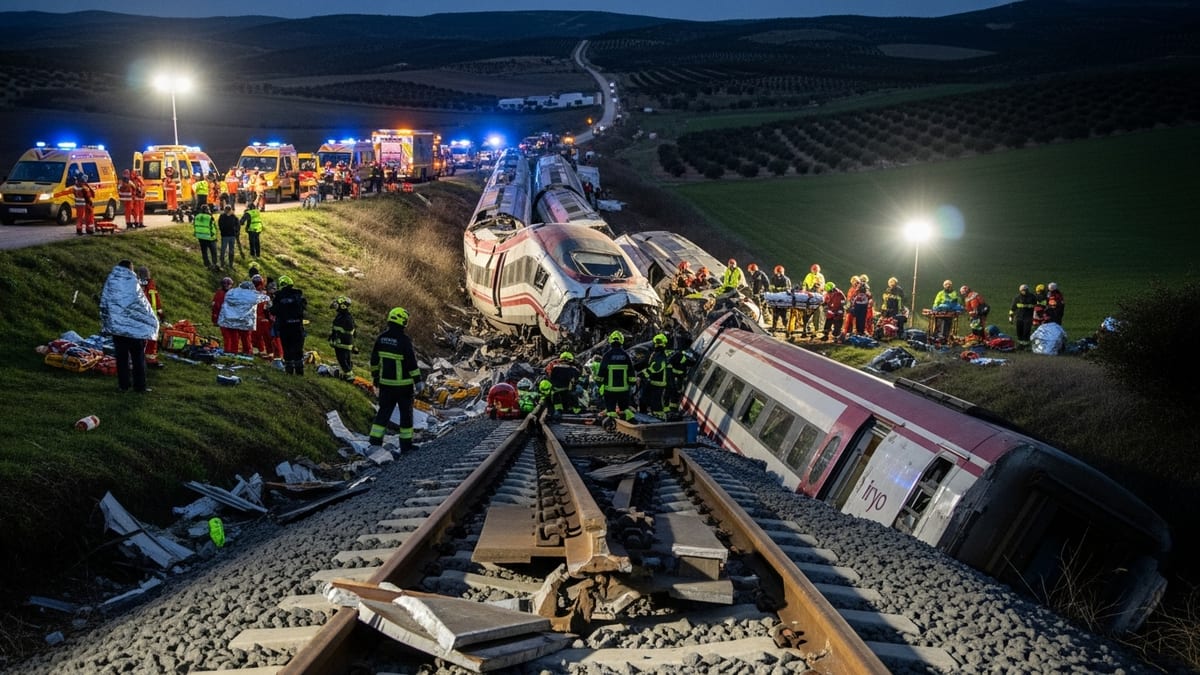
Collision near key Museum District intersection
Published coverage indicates the crash happened around midday Friday near the intersection of Fannin Street and San Jacinto Street, along the Red Line corridor that threads between museums, parks and the Texas Medical Center. Reports describe a Houston Fire Department unit traveling through the area when it collided with a MetroRail train moving through the intersection.
According to news reports, three people riding on the train were transported to a nearby hospital with injuries described as non life threatening. Early details suggest no fatalities and no serious injuries to personnel in the Houston Fire Department vehicle, though a full accounting of those evaluated at the scene has not yet been made public.
The impact reportedly left the train stopped in the intersection as police and transit personnel secured the scene. Images shared in local coverage show a MetroRail train surrounded by emergency vehicles in the Museum District, a hub that typically sees a steady flow of visitors heading to cultural institutions and Hermann Park.
Transit police records cited in news reports indicate that the Metro Police Department is serving as the lead agency for the investigation, a standard practice for incidents involving the region’s light rail system.
Investigation focuses on circumstances of impact
Publicly available information shows that investigators are working to determine how the paths of the Houston Fire Department vehicle and the MetroRail train came to intersect in the Museum District right of way. Preliminary descriptions in local media state that the train was struck by the fire department vehicle, though more detailed narratives about vehicle movements and signal status have not been released.
Analysts familiar with light rail operations note that crash reviews typically examine signal timing, operator actions, speed, sightlines and any use of emergency lights or sirens if a public safety vehicle is involved. Data from the train’s onboard systems, traffic cameras in the corridor and witness accounts are also commonly used to reconstruct the sequence of events.
Houston’s MetroRail Red Line operates at street level through much of the central city, sharing space with regular traffic. In the Museum District, northbound trains use San Jacinto Street while southbound trains run along Fannin Street, passing within steps of major museums and park entrances. That configuration places a premium on adherence to traffic controls by both train operators and motorists.
Published guidance from the Houston Fire Department regarding vehicle crashes underscores that any collision involving department apparatus triggers internal reviews alongside investigations by outside agencies. Those processes typically assess driving practices, compliance with departmental policies and potential training implications.
Service disruption along busy Red Line corridor
The collision occurred on a segment of track that carries riders between downtown, the Museum District and the Texas Medical Center, some of the most heavily traveled destinations in the MetroRail network. Local coverage indicates that trains were halted in the immediate area while crews assessed the condition of the rail vehicle and cleared the intersection.
Short term disruptions on the Red Line can ripple across the system, particularly during midday periods when workers, patients and visitors rely on the line for trips to hospitals and museums. Riders in the Museum District area typically connect to stations serving Hermann Park, the Houston Zoo and several major art and science institutions, making reliability in this corridor especially significant.
Transit agencies managing similar incidents often resort to single tracking or bus shuttles around a crash site while inspections are completed. In this case, published reports suggest the interruption was confined to the afternoon, with rail service expected to resume once the damaged equipment was moved and the track and overhead power systems were inspected.
The Museum District has been promoted as one of the most transit accessible parts of car oriented Houston, with the Red Line, bus routes and bicycle infrastructure all converging near Fannin and San Jacinto. Any extended disruption in that area can quickly highlight how dependent key civic destinations have become on regular MetroRail operations.
Second HFD–MetroRail crash reported this month
According to television news coverage, the Museum District crash marked the second reported incident this month involving a Houston Fire Department vehicle and a MetroRail train. A separate collision earlier in July, described in broadcasts as occurring closer to downtown and the Texas Medical Center, has already drawn attention to interactions between emergency vehicles and the light rail system.
Observers note that multiple similar crashes in a short period often prompt agencies to look beyond the specifics of any one event to examine broader patterns. Those reviews can encompass routing protocols for emergency responses, communication procedures between fire dispatch and transit control centers, and whether additional training is needed for both first responders and train operators.
MetroRail has previously drawn scrutiny for the frequency of vehicle collisions along some segments of its at grade tracks. Historical discussions of the system have pointed to a mix of driver behavior, complex downtown intersections and the challenges of integrating light rail into existing traffic grids as contributing factors.
With a second crash now involving a fire department vehicle, transportation analysts suggest that collaboration between the transit agency and public safety departments will be central to addressing any shared safety concerns that emerge from the investigations.
Ongoing questions about rail safety in the Museum District
The Museum District sits at a critical junction of Houston’s transportation network, where major arterial roads, neighborhood streets and the Red Line all intersect near dense clusters of cultural venues. Urban planning research focused on Houston has previously identified several intersections in the broader area as complex environments for pedestrians, cyclists and drivers.
Light rail advocates point out that despite periodic high profile incidents, the system moves thousands of riders daily and offers an alternative to car travel in a part of the city once dominated almost entirely by personal vehicles. They argue that continued investment in safety improvements, enforcement and driver education can reduce collision risks without undermining the benefits of rail transit.
Critics, however, have long raised concerns about the visibility of trains at certain crossings, the behavior of motorists navigating unfamiliar track layouts and the potential for conflicts with emergency vehicles that must make rapid decisions while responding to calls. Episodes such as the latest Museum District crash are likely to renew those debates.
As investigators continue their work, residents and visitors traveling through the Museum District may see a heightened presence of transit police and first responders along the Red Line, as well as temporary operational adjustments. How agencies choose to respond to the findings from this crash and the earlier incident will help shape the future of safety practices at the busy intersection of Houston’s light rail system and its public safety fleet.