


Dubai International Airport is a major global hub, but what many travelers do not realize until too late is how quickly small, often overlooked charges can add up. From higher-than-expected taxi fares and pricey food courts to confusing VAT refunds and premium lounges, there are several hidden costs that can quietly inflate the real price of flying through DXB. Understanding them in advance can help you budget realistically and avoid unpleasant surprises at the start or end of your trip.
Get the latest updates straight to your inbox!
Ground Transport: Meter Extras, Tolls and Premium Rides
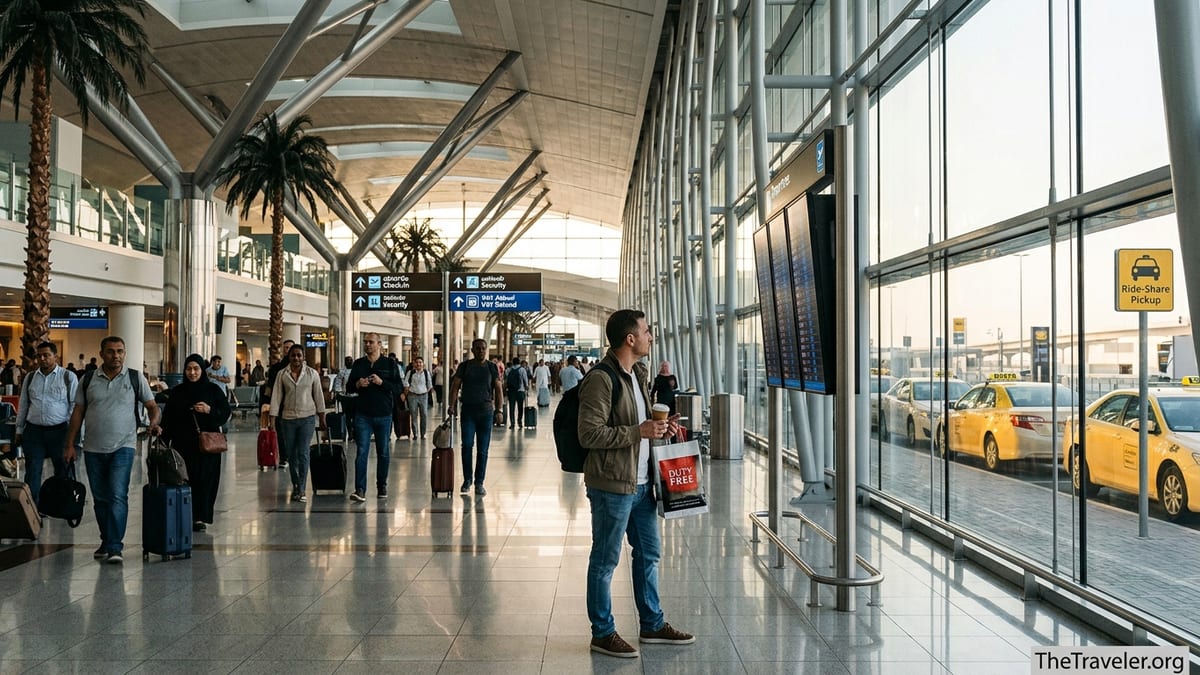
Most visitors first encounter unexpected costs the moment they leave the terminal. Official Dubai taxis are regulated and generally reliable, but journeys that begin at Dubai International Airport carry a significantly higher starting fare than rides hailed in the city. In 2026, the typical flagfall for city journeys is around AED 5, while taxis that begin at DXB start closer to AED 25 before the meter even begins to count distance. That means a short hop to a nearby hotel in Deira that might cost AED 18 from the street could be closer to AED 40 when starting from the airport.
Longer transfers magnify the difference. A standard taxi ride from DXB to Downtown Dubai often lands in the AED 55 to AED 80 range in light traffic, while a trip to Dubai Marina or Jumeirah Beach Residence can run from roughly AED 90 to well over AED 140, depending on the time of day and congestion. Because these journeys frequently pass through Salik toll gates on major arteries such as Sheikh Zayed Road or near the Airport Tunnel, you may see small toll charges quietly added to the final meter reading. The individual toll amounts are modest, but one or two gates on each leg of a round trip can add up quickly for families or groups.
Ride hailing and private transfers can present their own surprises. Services that partner with government taxis sometimes apply dynamic pricing based on demand, so what appears as an affordable estimate when you land can climb by the time your driver arrives. Prebooked private transfers, so popular among first time visitors, often advertise fixed prices that look high compared to city taxis, but the premium is not always obvious until you realize the quote did not include overnight surcharges, meet and greet fees inside the terminal, or extra charges for child seats or additional luggage. For example, a sedan transfer to Dubai Marina might initially be priced around AED 160, then jump to over AED 200 once late night or oversized baggage surcharges are factored in.
Travelers connecting through Dubai with long layovers should also pay attention to the cost of returning to the airport. While the Metro can be the cheapest option, its operating hours and luggage policies do not suit every flight schedule. Arriving back by taxi during peak traffic can turn a seemingly short ride into a much higher final fare than the one you paid to leave the airport earlier in the day.
Food, Drinks and Everyday Purchases Inside the Terminals
Food courts and cafes in Dubai International Airport offer plenty of choice, from international coffee chains to burger outlets and casual dining brands. Prices, however, are one of the most common reasons travelers feel that their time in DXB cost more than expected. A simple breakfast of a coffee and pastry from a well known chain in Terminal 3 can easily reach AED 30 to AED 40, while a quick lunch of a burger meal or a salad with a drink can land around AED 50 to AED 80 per person. For a family of four waiting for a delayed connection, spontaneous snacks and drinks across a long layover can quietly climb into the hundreds of dirhams.
Bottled water is another small but persistent expense. While Dubai tap water meets safety standards, many visitors buy bottled water out of habit or comfort. Inside DXB, single small bottles often cost several dirhams, significantly more than at supermarkets in the city. Travelers who pass multiple hours moving between concourses frequently purchase several bottles without noticing the total until they review their card statement later. To keep costs down, some passengers bring an empty refillable bottle and use fountains in the terminal where available, though these are not as ubiquitous as in some other major hubs.
Everyday travel extras can also come with a premium. Pharmacies and convenience stores inside the terminals stock travel sized toiletries, pain relief tablets, phone chargers and neck pillows at prices noticeably above city stores. A simple adapter or charging cable bought in a concourse shop can cost two or three times what you would pay at an electronics store in a mall. This is particularly painful for travelers who assumed in flight power or airport charging points would be enough and only realize they need a new cable when their devices are already at low battery.
Finally, alcohol in airport bars and licensed restaurants is taxed and often priced at upscale hotel levels rather than casual city bar prices. A single glass of wine or a basic cocktail can sit around AED 45 to AED 70, turning a quick drink during a connection into a substantial extra cost if multiple people in a group indulge. For budget conscious travelers, planning to eat or drink before arriving at the airport, or keeping airport meals to a minimum, can noticeably lower the hidden cost of passing through DXB.
Baggage Rules, Handling Fees and Oversize Surprises
Dubai International Airport handles a huge volume of checked bags, and for most travelers baggage fees are tied to airline policies rather than the airport itself. That said, DXB’s role as a long haul hub makes it a place where many passengers first encounter the full financial impact of stricter baggage rules. Airlines operating through Terminal 3, particularly long haul carriers, often enforce weight and piece limits more rigorously on flights to Europe, North America and Australasia. A suitcase that was waved through on a short regional leg may attract an overweight fee of several hundred dirhams at check in for the onward flight.
Sports equipment and unusual luggage are particularly prone to unexpected charges. Surfboards headed to the Indian Ocean, golf bags destined for resort courses, or musical instruments being carried to gigs may incur oversize handling fees that are not always highlighted during ticket purchase. Travelers sometimes arrive at DXB expecting that an item counted as one standard checked bag on the outward journey will travel the same way on the return, only to discover that different routes or ticket classes use different baggage tables. This can lead to last minute repacking on the floor near check in or reluctantly paying to check an extra piece.
Hand luggage limits also deserve attention. Heavily trafficked routes from Dubai to European and Asian cities often see gate agents weighing cabin bags more strictly than at smaller airports. Carry on suitcases that looked acceptable on departure might be tagged and sent to the hold if they are over weight or bulging at the seams, sometimes with gate checked baggage fees attached. Travelers who filled their bags with last minute duty free purchases or shopping from the city can be caught off guard, especially if they did not leave a weight margin when packing.
Connecting passengers should remember that baggage allowances typically apply per direction, not for the entire multi city journey. Someone flying an economy leg to Dubai on a generous Middle Eastern carrier and then continuing to a low cost destination in South Asia may discover that the final segment allows fewer bags or a lower weight. DXB check in staff follow the rules for the onward carrier, so any mismatch between expectations and the fine print becomes a direct cost during your time in the airport.
Lounges, Sleep Pods and Paid Comfort
Dubai International Airport promotes itself as a comfortable place to spend a layover, and for many travelers this means upgrading their experience with paid lounges, short stay hotels or sleep pods. These services can be a pleasant way to recover from a red eye, but they come with prices that add significantly to the real cost of the journey. Independent lounges inside Terminals 1 and 3 often sell access to economy class travelers for a fixed number of hours, with fees frequently landing between AED 200 and AED 300 per adult, depending on the lounge and access provider. For a couple wanting showers, food and a quieter seat, that can mean adding the equivalent of a low cost flight to their travel bill.
In terminal hotels and transit hotels offer more privacy but at an even higher price point. A short day use room in a popular airside hotel can easily exceed AED 500 for a block of six to eight hours, and overnight stays can move into full city hotel territory. While this can be worthwhile for travelers facing very long layovers or those needing deep rest before a critical meeting, it is still a hidden cost for anyone who assumed the airport experience was already contained in the price of the ticket.
Sleep pods and nap cabins are marketed as a cheaper alternative to hotel rooms, but hourly pricing means costs accumulate quickly. Renting a compact pod for three or four hours to escape crowded waiting areas may seem reasonable at first glance, yet families or groups who book multiple pods can end up paying nearly as much as they would for a shared hotel room. Restrictions around luggage size and the need to vacate pods well before boarding times can further reduce the value if flights are delayed.
Even simple comfort upgrades carry a cost. Some gates and concourses feature massage chairs that accept payment by card, smartphone or small change, tempting exhausted travelers into paying for just a few minutes that often turn into longer sessions. Showers in certain areas may be bundled with lounge access or available separately for a fee, and premium seating zones with charging stations can be reserved through paid access programs. None of these are obligatory, but when fatigue and jet lag set in they are exactly the sort of small but cumulative expenses that travelers only remember later.
Duty Free Shopping and the Reality of VAT Refunds
The United Arab Emirates applies a 5 percent value added tax on most goods, and tourists are widely told they can reclaim this VAT on eligible purchases when they leave the country. The system is real, and Dubai International Airport hosts multiple validation kiosks and counters where travelers can process their claims. However, the way refunds are structured means tourists rarely receive the full 5 percent back. Government guidance notes that only a portion of the VAT is refunded to visitors after operator fees are deducted, so a traveler might effectively receive about 85 percent of the VAT paid rather than all of it.
Fees are not the only hidden cost. To qualify, purchases must be made at retailers that participate in the official tourist refund scheme, and there is a minimum spend threshold per invoice, often around AED 250. Many visitors discover at the end of their trip that items bought at popular high street brands or some electronics outlets in malls are not eligible because the store is not registered with the tax refund operator. Others find that online purchases delivered to their hotel, or goods consumed or used while in the UAE, do not qualify. At the airport, validation kiosks require time to scan receipts, passports and sometimes physical inspection of high value goods, so tight connections can make it difficult to process refunds without risking a missed flight.
Even when everything is in order, travelers choosing a cash refund face additional limitations. Cash payouts in dirhams are typically capped at a certain amount per traveler, with larger totals pushed toward card refunds instead. Card refunds avoid carrying extra cash but may take days to appear and can be slightly eroded by foreign exchange spreads or bank fees when converted into the traveler’s home currency. In practice, a visitor who spent several thousand dirhams on eligible shopping may recover less than expected once operator charges, caps and bank conversions filter through.
Duty free shops within DXB present a related set of expectations. Many passengers equate duty free with universal bargains, but prices are shaped by global brand policies and local competition. Fragrances, cosmetics and premium spirits sometimes match or slightly beat downtown mall prices, yet everyday electronics, headphones or certain fashion labels can be similar to, or even higher than, prices in a traveler’s home country. Since duty free goods are generally sold tax free rather than being eligible for an extra VAT refund on top, the savings over normal retail are often smaller than people assume when rushing to make last minute purchases before boarding.
Parking, Drop Offs and Short Stays for Friends and Family
Many travelers passing through DXB rely on friends, relatives or colleagues for airport runs, but the real costs for those drivers are often overlooked when budgeting a trip. Short term parking directly opposite the terminals is convenient but priced at a noticeable premium compared with city parking. Drivers who arrive early to greet someone, or who stay longer because of delayed flights or slow baggage delivery, can find that what was planned as a quick stop becomes a surprisingly expensive couple of hours.
Dubai’s broader road toll system, known for its gates on key highways and near the Airport Tunnel, adds another layer for those who live far from the airport. Each time a private car crosses certain toll points to pick up or drop off passengers, a small fee is collected from the driver’s electronic wallet. Over multiple runs, particularly for frequent business travelers or families dropping students at the airport several times a year, these tolls and parking fees combine into a tangible hidden cost of using DXB, even if the passenger never sees the charges directly.
Recent moves toward cashless and automated parking payments can also surprise occasional visitors. Instead of taking paper tickets, some airport parking areas rely on automatic number plate recognition that debits a linked payment account tied to the vehicle. A relative using a car that is not normally driven to the airport may inadvertently trigger charges that the owner only discovers when checking their statement later. Lack of clear awareness about these systems can lead to confusion and disputes within families or among friends sharing vehicles.
For travelers planning to rent a car in Dubai and drive themselves to the airport, it is worth checking in advance whether the rental company includes toll tags or preloaded balances, and how airport parking time is billed. A rental that seems cheap on paper can become far less attractive once additional hours of premium parking and repeated toll crossings are factored into the cost of a week long stay.
The Takeaway
Flying through Dubai International Airport can be a smooth and impressive experience, but it is rarely as financially straightforward as the ticket price alone suggests. Higher starting fares for taxis, premium pricing on food and everyday essentials, strict baggage enforcement, and the cost of lounges and sleep facilities all contribute to the real cost of passing through this major hub. Shopping and VAT refunds offer potential savings, yet operator fees, eligibility rules and time pressures can substantially reduce how much money actually makes it back into travelers’ pockets.
None of these costs are inherently unreasonable, and many reflect the high level of infrastructure and services that make DXB one of the world’s busiest international airports. The challenge for travelers is that they are often invisible during trip planning. By looking closely at local transport fares, allowing margin in baggage allowances, budgeting realistically for meals, and understanding how VAT refunds and duty free pricing truly work, passengers can turn hidden expenses into planned line items rather than unpleasant surprises.
For most visitors, a little preparation goes a long way. Checking taxi and Metro costs before arrival, deciding in advance whether a lounge pass is worth the price, leaving time for VAT validation, and coordinating parking or drop offs with drivers can all lower the financial friction of using DXB. In a city known for both luxury and efficiency, informed travelers are the ones most likely to step onto their flights feeling that they have enjoyed the experience without paying more than they intended.
FAQ
Q1. Are taxi fares from Dubai International Airport higher than in the city?
Yes. Journeys that start at DXB have a higher flagfall than rides hailed on city streets, so even short trips from the airport typically cost noticeably more.
Q2. Can I rely on getting a full 5 percent VAT refund on my Dubai shopping at the airport?
No. Tourists usually receive only a portion of the VAT back after operator fees and limits are deducted, so the refund is less than the full 5 percent paid.
Q3. Is food at Dubai International Airport much more expensive than in the city?
In most cases yes. Meals, snacks and drinks inside DXB are generally priced above supermarket and many mall food court levels, especially for international chains and alcohol.
Q4. Do all shops in Dubai qualify for the tourist VAT refund scheme?
No. Only retailers registered in the official scheme can issue tax free invoices, so purchases from nonparticipating shops and many online orders are not eligible for refunds.
Q5. Are baggage rules stricter when flying through Dubai compared with other airports?
Enforcement can feel stricter on certain long haul and busy routes. Overweight or extra bags that passed on earlier legs may attract fees at DXB check in or at the gate.
Q6. Is it worth paying for a lounge if I have a short layover at DXB?
It depends on your budget and needs. Lounge access can be costly, so for layovers under a few hours many travelers prefer to use free seating and public facilities instead.
Q7. Are duty free prices at Dubai airport always lower than in my home country?
Not always. Some fragrances and spirits can be good value, but electronics, fashion and everyday items may match or exceed prices in your local shops.
Q8. Do friends dropping me at Dubai airport face extra costs?
Yes. Short term parking near the terminals is relatively expensive, and drivers may also pay road tolls on routes to and from the airport, especially if making repeated trips.
Q9. Can I avoid hidden costs by using the Metro instead of taxis?
Using the Metro is usually cheaper than taking a taxi, but it operates on fixed hours and may not suit very late or very early flights, which can limit its usefulness for some travelers.
Q10. How can I best prepare for potential hidden costs when flying through DXB?
Review transport options and fares in advance, check baggage limits carefully, budget for airport meals, and learn how the VAT refund and duty free systems work before you travel.