


When you are staring down an eight hour connection on a multi-leg trip, the airport you choose can make the difference between arriving wrecked or reasonably refreshed. Dubai International Airport, or DXB, has built a reputation as a destination in its own right, packed with lounges, shopping, sleep pods and even indoor gardens. But is it genuinely worth choosing Dubai for a long layover, or is the hype bigger than the experience?
Get the latest updates straight to your inbox!
How Dubai Competes as a Global Transit Hub
Dubai International Airport has grown into one of the busiest transit hubs on the planet, handling tens of millions of international passengers every year and connecting Europe, Asia, Africa and the Americas through a single overnight-friendly hub. For many travelers booking with Emirates or connecting through the Gulf, a long layover in Dubai is now almost a default part of the itinerary. The question is less "Will I connect through DXB?" than "Should I deliberately pick DXB when I have options?"
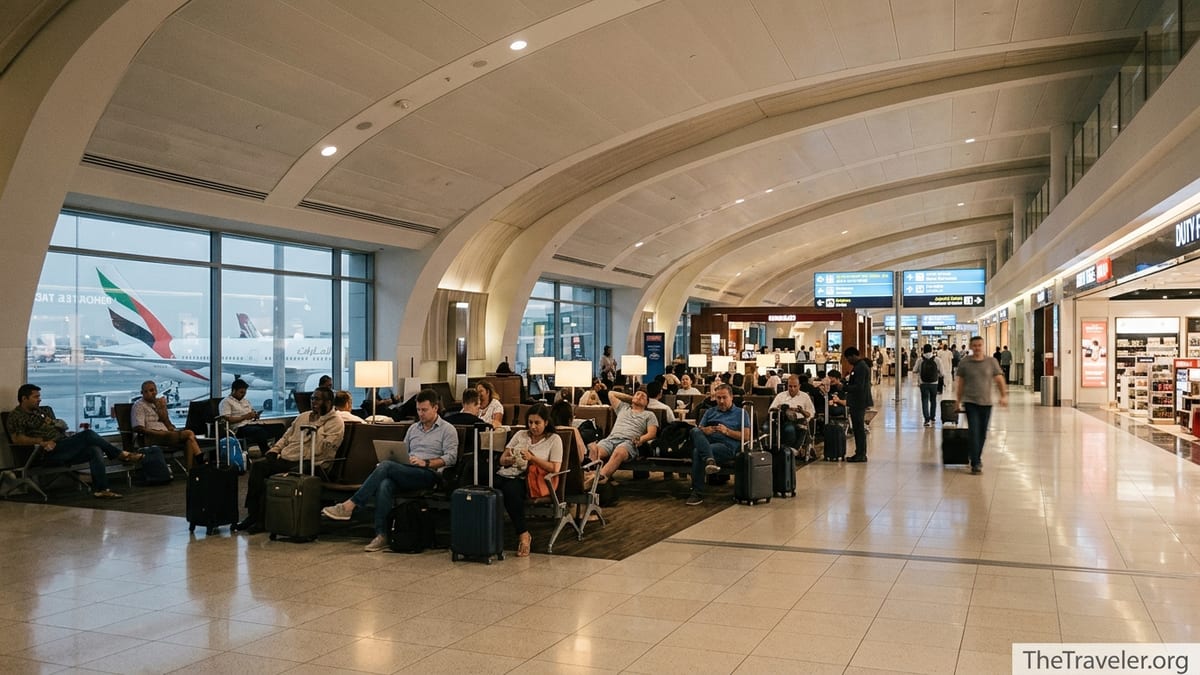
For long layovers, the key advantage of Dubai is scale. Terminal 3 alone, which handles Emirates and a handful of partner airlines, is among the largest airport terminals in the world, with its own internal train, three concourses and an airside hotel. That sheer size translates into variety: you can move from a gaming lounge to a quiet indoor garden, then on to a shower and a proper meal, all without ever stepping outside security. Travelers used to smaller hubs like Boston or Manchester often describe their first long DXB connection as feeling more like being inside a compact shopping mall and hotel complex than a traditional airport.
This scale does have a flip side. Walking distances between gates in Terminal 3 are long, and changing between Terminal 2 and Terminal 3 requires re-clearing immigration and security. On a tight connection, that is a drawback. On a long layover, however, distance is less a risk and more a way to stretch your legs between flights, provided you know roughly where you want to spend your time.
What a Long Layover at DXB Actually Feels Like
On a typical long layover in Terminal 3, a traveler arriving from Europe in the early morning and connecting to Asia in the late afternoon can expect a fairly seamless process. After disembarking, you follow the transit signs to security, clear the transfer checkpoint, and find yourself in a vast concourse where almost everything is open 24 hours. Even at 3 a.m., there are cafés serving espresso, fast-food counters flipping burgers, and duty-free shops selling perfume and electronics.
One common pattern is to spend the first hour or two simply regrouping. Many passengers will head straight to a lounge or one of the airport cafés to charge their devices, check onward boarding times and grab breakfast. In Terminal 3, that might mean sitting down at an international chain like Shake Shack or a more regionally flavored spot serving manakish and Arabic coffee. Prices are typical big-hub international: a basic burger meal often costs roughly what you would pay in a major European capital, while a simple takeaway coffee can easily approach what you might see at a high-street café.
Once the basics are handled, the middle section of a long layover is when DXB’s facilities matter. Some travelers book a block of time at the Dubai International Hotel, which sits airside in Concourse B and offers rooms by the hour. This option is particularly popular on itineraries such as Sydney to London via Dubai, where passengers may have already been in the air for fourteen hours before facing another seven. Being able to lie flat in a dark, quiet room with a private shower, even for four or five hours, changes the entire experience of a long layover from endurance test to reset.
Others prefer to stay in the public areas and treat the layover more like an extended break. In Terminal 3, you can wander through Dubai Duty Free’s long arcades of cosmetics, liquor and souvenirs, or sit in the Zen Gardens, a surprisingly calm indoor space in Concourse B with real trees, benches and the sort of soft lighting you do not usually associate with an airport. Add in a proper sit-down meal, and it is easy to turn six or seven hours into a series of manageable chunks that feel more like a string of short stops than one endless wait.
Sleep, Showers and Lounges: Comfort for the Long Haul
For many travelers, the single biggest factor in whether a long layover feels worth it is the ability to sleep and wash. On this score, Dubai performs well compared with many other major hubs. In Terminal 3, "sleep and fly" pods and small cabin-style rooms are available airside in multiple concourses. These pods are essentially compact private spaces with a flat or slightly reclined bed, charging points and storage for hand luggage. They are priced by the hour, so a traveler on an eight hour layover might, for example, book a four hour block in the middle of their stay to get some real rest while still leaving time at either end for food and a shower.
If you want something closer to a hotel room, the Dubai International Hotel inside Terminal 3 provides that. Rooms come in standard hotel configurations, and many travelers on long-haul itineraries book one simply to shower, change, and nap between flights. A passenger flying from New York to Johannesburg via Dubai might arrive late at night, head straight to a reserved room, take a shower, sleep for five hours and still have time for breakfast at a café in the terminal before boarding the next flight. While a room is not cheap, for an eighteen or twenty hour total travel day it can feel like money well spent.
Shower access without a room is also fairly straightforward. Most major lounges in Terminal 3, from the Emirates Business and First Class lounges to independent options like Marhaba and Plaza Premium, offer shower suites for guests. Travelers with lounge access via class of service or membership programs can take advantage of these at no extra cost. Someone transiting in economy might choose to buy a three or four hour lounge pass primarily for the shower and a hot meal, turning a groggy wait in plastic chairs into something much closer to a short stay at a mid-range hotel.
Outside lounges and the hotel, there are also more basic public showers in some areas of the airport, though many experienced travelers report that the private facilities in lounges and hotel rooms are far more comfortable and better maintained. If personal comfort is a priority and your budget allows it, paying for a lounge or room tends to be the more pleasant route on a long connection.
Food, Wi-Fi and Things To Do Between Flights
A long layover is not only about sleep. You also need to eat, stay connected and stay reasonably occupied. Dubai International offers free, time-unlimited Wi-Fi throughout the terminals, and in practice it is generally fast enough for streaming video, uploading photos or holding video calls, assuming you can find a quieter corner with decent signal. Many travelers use their layover to download content for the next leg of their trip, back up photos to the cloud, or catch up on work email without worrying about data roaming.
On the food side, DXB is more varied than many transit hubs. Terminal 3, in particular, hosts a mix of global brands and regional choices. You can grab a quick flat white and pastry from an international coffee chain, sit down for a sushi platter, or opt for Middle Eastern grilled meats with rice and mezze. Prices are not low, but the range makes it easier to match your mood and budget. A backpacker connecting from India to Europe might choose a simple curry or shawarma from a food court stall, while a business traveler might head to a brasserie-style restaurant or order an a la carte meal inside a lounge.
For entertainment, DXB has leaned into the idea that the airport itself can fill an extended wait. In Terminal 3, there are dedicated kids’ play areas where families can let children burn off energy before the next flight, and a gaming lounge with dozens of stations loaded with popular titles. A traveler with a six hour layover might spend an hour or two playing console games, then move to the Zen Gardens for a quieter break, and finally end up in a café near their gate to watch planes and people before boarding. Many passengers also factor in a wander through the duty-free section to pick up last-minute souvenirs, cosmetics or gadgets.
Wellness services round out the mix. Spa outlets inside the airport offer short massages, facials and grooming services like manicures. It is not uncommon to see passengers treating themselves to a twenty minute neck and shoulder massage between overnight flights, especially after sleeping upright in economy. While prices are closer to hotel spa rates than high-street ones, a quick treatment can make those final hours of travel feel significantly more manageable.
Leaving the Airport: When a Stopover Becomes a Mini Break
One advantage Dubai has over some remote hub airports is that the city itself is relatively close. For travelers with enough time and the right entry permissions, turning a long layover into a short city visit is a realistic possibility. The Metro’s Red Line has stations at the airport terminals, giving you a direct rail link into the city, and taxis are plentiful at all hours. Depending on traffic, you can be at downtown landmarks such as Dubai Mall or Dubai Fountain in roughly half an hour from the airport.
In practical terms, however, this only makes sense once your layover is long enough. Many experienced travelers use a rule of thumb that anything under six hours is best spent inside the airport, especially if your flights are on separate tickets or you need to change terminals. Between six and ten hours, leaving the airport becomes more viable if you are comfortable moving quickly and accepting some schedule risk. On an eight hour layover, for example, a traveler could clear immigration, take the Metro to the city, have a leisurely brunch with a view of the Burj Khalifa, stroll through a mall, and be back at the airport with time to re-clear security.
On very long layovers of ten hours or more, some airlines and booking packages encourage travelers to treat Dubai as a planned stopover rather than dead time. A common pattern is to book a day room or a single night in a hotel near the airport or in a central district, take a proper shower, rest in a real bed, then explore a neighborhood or two before heading back for the next day’s flight. A traveler flying from London to Sydney might, for instance, break the journey with an overnight in Dubai, visiting a beach in the morning and the old creekside areas in the afternoon before returning for an evening departure.
Whether this is worth it depends heavily on your interest in seeing Dubai, your budget, and your appetite for managing visas and logistics. Not every nationality can enter the United Arab Emirates without a visa, and not every traveler wants to juggle immigration formalities during what is, in the end, only a connection. If your main goal is pure rest and simplicity, staying airside in Terminal 3 and focusing on sleep and comfort may be the smarter choice.
Who Benefits Most from Choosing DXB for a Long Layover
Dubai International’s strengths for long layovers line up best with certain types of travelers and itineraries. Long-haul passengers on Emirates and partner airlines are the primary beneficiaries. The airport’s design, especially Terminal 3’s assortment of lounges, sleep options and dining, is clearly optimized for someone traveling, for example, from North America to South Asia or from Europe to Australasia with a single, extended stop in the Gulf. For these passengers, deliberately choosing an itinerary with a longer layover can make sense if it secures better departure times or cheaper fares.
Families with children often find Dubai preferable to older, more cramped hubs. The combination of well-equipped play areas, family-friendly dining and calm spaces like the Zen Gardens makes entertaining kids on a long connection far more manageable. Picture a family traveling from Johannesburg to Copenhagen: after an overnight flight to Dubai, they might spend a couple of hours in a play zone letting the children climb and explore, then sit down together for a substantial meal before the daytime flight north. Compared with waiting at a smaller regional airport with limited facilities, DXB can be a relief.
Solo travelers and digital nomads also tend to extract good value from the airport’s free Wi-Fi and varied seating. It is possible to treat a six hour layover like a mobile workspace: find a quiet corner with power outlets, connect to the network, and work through email or creative projects. Some choose to pay for lounge access specifically to guarantee a desk, quieter atmosphere and higher-end food, effectively using the layover as a focused work sprint while in transit.
On the other hand, budget travelers who are highly cost-sensitive may find that the temptations of paid lounges, spa treatments and premium food make a long layover in Dubai more expensive than in a simpler airport where there is simply less to buy. If your priority is spending the absolute minimum and you are comfortable with a basic seat, a snack from home and a book, a shorter connection through a smaller hub might serve you just as well.
The Downsides: Crowds, Distances and Cost
As polished as Dubai International can feel, it is not without drawbacks, especially on long layovers. Crowd levels are one of the most often mentioned issues. In peak travel seasons and during overnight waves of arrivals and departures, the main concourses can feel genuinely busy, with long lines at some restaurants and seating at a premium near popular gates. This can be jarring if you arrive tired from a previous flight and expected the tranquil, almost empty terminal shown in airline marketing images.
Walking distances are another real factor. Terminal 3’s concourses stretch for hundreds of meters, and while there are moving walkways and an internal train connecting some sections, you can still find yourself walking a kilometer or more between gate and lounge or hotel room. For travelers with mobility issues, young children, or heavy cabin baggage, this can be draining. It also means that when you plan your layover time, you should mentally allow an extra ten to twenty minutes just for getting from one part of the terminal to another.
Cost is perhaps the most practical downside. While Dubai offers many free comforts, including Wi-Fi and basic seating, many of the features that turn a long layover from tolerable to genuinely comfortable come at a price. Hourly hotel rooms, lounge passes, spa treatments, premium meals and even some sleep pods all add up. A traveler who pays for a four hour hotel stay, a lounge visit, two sit-down meals and a massage may easily spend more during a single long layover than on a night in a mid-range city hotel.
Finally, there is the simple fact that, no matter how many bells and whistles an airport offers, a long layover still means many hours in a controlled, indoor environment. Some travelers simply dislike that feeling, regardless of comfort level. For them, routing through an airport closer to their origin or destination, even with fewer amenities, may feel more psychologically bearable than a very long stop in a mega-hub.
The Takeaway
So, is Dubai International Airport worth choosing for a long layover? For many travelers, the answer is yes, with caveats. If you are flying routes that naturally connect through DXB, especially on Emirates, the airport’s combination of sleep options, showers, lounges, food and entertainment can turn an otherwise punishing wait into a manageable, even pleasant, break in the journey. Families, business travelers, and anyone who values the option of a real bed and shower between long-haul flights are particularly likely to benefit.
However, the experience is not automatically luxurious or cheap. Crowds, long walks and the cumulative cost of comfort all matter. Travelers who go in with realistic expectations, a rough plan for how they want to use their hours, and a clear budget tend to come away most satisfied. If you see a layover as a chance to reset, catch up on sleep, eat well and maybe glimpse a new city, Dubai is a strong contender. If your priority is simply minimizing time in transit and keeping costs down, you may want to focus instead on the shortest, most direct routing, regardless of where you connect.
FAQ
Q1. Is Dubai International Airport a good choice if I have an 8 to 10 hour layover?
For an 8 to 10 hour layover, Dubai International can work very well, especially in Terminal 3. You have time to shower, rest in a lounge or hotel room, enjoy a proper meal and perhaps explore facilities like the Zen Gardens or kids’ play areas without feeling rushed.
Q2. Can I sleep inside Dubai Airport without booking a hotel?
Yes. In Terminal 3 there are dedicated sleep pods and quiet seating areas where you can rest without booking a full hotel room. That said, the most comfortable rest with privacy and a shower usually comes from either the airside hotel or a lounge that offers reclining chairs and shower facilities.
Q3. Is the Wi-Fi at Dubai Airport reliable enough for work during a layover?
Dubai Airport offers free Wi-Fi that is generally stable and fast enough for typical work tasks such as email, document editing, and video calls. If you need a quieter environment and guaranteed power outlets, paying for lounge access can make it easier to work productively during a long layover.
Q4. Is it worth leaving the airport to see Dubai on a long layover?
Leaving the airport can be worthwhile if your layover is at least six to eight hours, you are eligible to enter the United Arab Emirates, and you are comfortable managing immigration and transport back in time for your next flight. With less time or more complex connections, staying airside and focusing on rest is usually the safer option.
Q5. How early should I be back at the gate if I leave DXB during a layover?
If you leave the airport, plan to be back at the terminal at least two to three hours before your next departure. This allows time for immigration, security screening, walking back to your concourse and any unforeseen delays such as traffic or queues at passport control.
Q6. Are there affordable food options at Dubai International Airport?
While Dubai Airport has many premium and mid-range restaurants, there are also more budget-friendly options such as food court outlets and fast-food chains. Prices are still airport-level, but a simple meal from a casual counter service spot will generally cost less than eating in a sit-down restaurant or lounge.
Q7. Is Dubai Airport suitable for families with young children on long layovers?
Yes. DXB is relatively family-friendly, with play areas, family restrooms and a variety of food options. Many parents find that a combination of time in the play zones, walks through the terminal and a sit-down meal helps children cope better with long waits between flights.
Q8. How crowded does Dubai Airport get during the night?
Dubai operates as a round-the-clock hub, and some of its busiest periods are actually late at night and very early in the morning, when many long-haul flights arrive and depart. Terminals, especially Terminal 3, can feel busy even at 2 or 3 a.m., so do not expect the terminal to be empty just because it is overnight.
Q9. Is it easy to move between terminals during a long layover at DXB?
Moving within Terminal 3 is straightforward but can involve long walks and, in some cases, an internal train. Changing between Terminal 2 and Terminal 3 is more complicated because it usually requires clearing immigration and security again. If your layover involves different terminals, allow extra time and avoid very short connections.
Q10. Should I choose a longer layover in Dubai if it makes my ticket cheaper?
Choosing a longer layover at DXB can be a smart trade-off if the fare difference is significant and you value the chance to rest, shower and eat between flights. However, if you prefer to reach your destination as quickly as possible or you are on a tight budget, a shorter connection through any hub, even with fewer amenities, might be the better choice.