


Dubai International Airport is one of the busiest hubs on the planet, and it often feels like it. Between peak-hour queues, long security lines, and limited last-minute award seats, many travelers are now actively looking for alternatives when flying to and from the United Arab Emirates. The good news is that the UAE has quietly built a network of modern, well-connected airports that can, in many cases, compete with or even beat Dubai International on comfort, price, or convenience. This guide walks you through the best real-world alternatives, how to use them, and when they genuinely make more sense than flying through DXB.
Get the latest updates straight to your inbox!
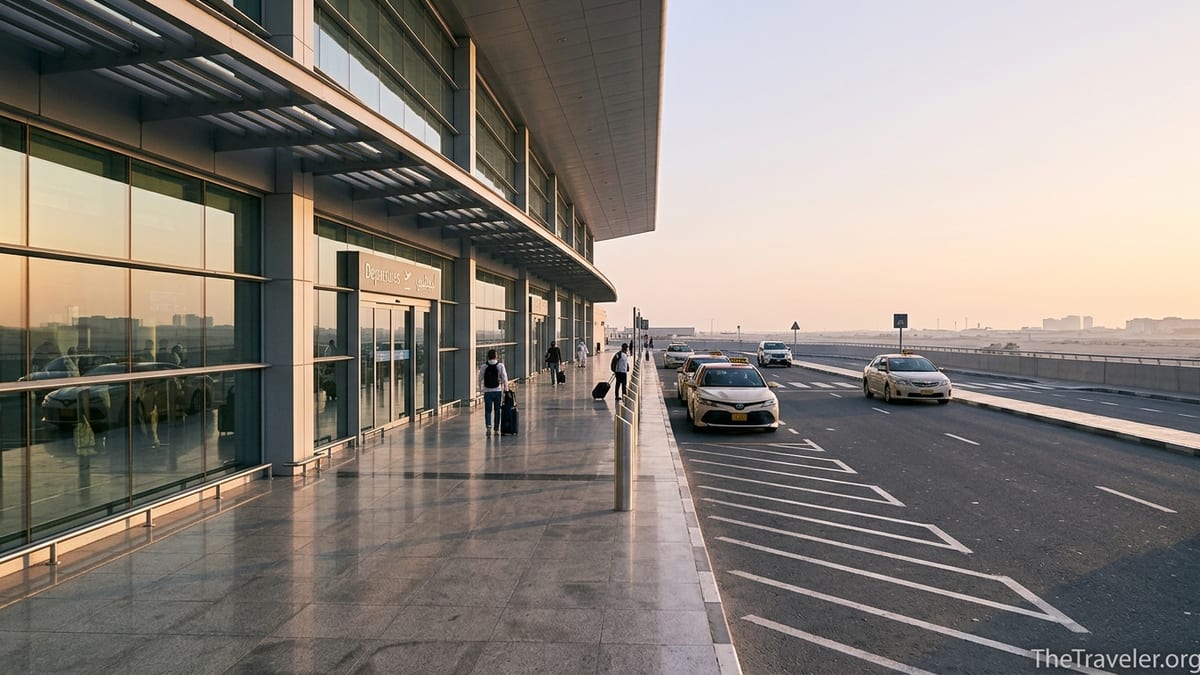
Why Look Beyond Dubai International Airport?
Dubai International Airport routinely ranks among the world’s busiest international hubs by passenger numbers. At peak times, that success translates into 40-minute taxi queues, security bottlenecks, and crowded gate areas. If you are landing during the early morning arrival wave from Europe or departing on an evening bank of flights to Asia, the experience can feel more like a major train station than a luxury gateway. While Dubai is investing heavily in its future Al Maktoum International Airport, most of that extra capacity will not arrive for years, which means DXB congestion is likely to remain part of the picture in the near term.
At the same time, low-cost carriers and regional airlines have expanded rapidly into secondary airports across the UAE. For example, Air Arabia has turned Sharjah into a major low-cost hub, while Wizz Air Abu Dhabi has helped push Abu Dhabi’s Zayed International Airport into the spotlight. Ras Al Khaimah has attracted budget-conscious sun-seekers from Europe, and niche airports such as Fujairah and Al Ain serve specific communities and routes. For travelers willing to be a bit flexible on where they land or depart, these airports can unlock lower fares, smoother ground handling, and often more relaxed terminal environments.
The key is to match your airport choice with your actual destination and travel style. Someone heading to a business meeting in Abu Dhabi’s financial district may waste hours commuting from DXB, while a family staying in Ras Al Khaimah’s beach resorts can save both time and money by flying directly into the emirate. This article focuses on the most practical alternatives for leisure and business travelers, explaining how they work in the real world, including taxi times, route examples, and typical traveler experiences.
Before you rebook anything, remember that schedules and routes can change rapidly. Treat the examples here as a starting point, then confirm current flight options and timings with airlines and booking sites when planning your trip.
Zayed International Airport (Abu Dhabi): A New-Generation Hub
Formerly known as Abu Dhabi International Airport, Zayed International Airport was officially renamed in early 2024 and now funnels almost all passenger traffic through its new Terminal A. This huge, light-filled facility sits between the two runways and has boosted capacity to tens of millions of passengers per year. For travelers, it feels like a generational leap compared with the older terminals: higher ceilings, wide circulation spaces, quieter gate areas, and a design that separates local and transfer flows more efficiently.
The main practical advantage of Zayed for visitors is its growing network of long-haul and regional connections anchored by Etihad Airways. Typical examples include nonstop flights from major European cities such as London, Paris, Frankfurt, and Milan, as well as services from North American gateways like New York and Chicago. On the regional side, Wizz Air Abu Dhabi and other carriers offer competitively priced routes from Central and Eastern Europe, Central Asia, and South Asia. Travelers who previously defaulted to Emirates via Dubai often find that Etihad or Wizz flights into Zayed can be cheaper by a noticeable margin, especially when booking several weeks to months in advance.
Ground access has also improved. By car, Zayed International Airport sits roughly 30 to 40 minutes from downtown Abu Dhabi in normal traffic. A typical metered taxi fare into the city might land in the range that many travelers would recognize from a medium-length urban ride in a major European city. For those bound for Dubai, the journey takes around 60 to 90 minutes depending on where in Dubai you are heading and the time of day. Some passengers arrange pre-booked cars or shared shuttles to Dubai’s Marina or Downtown districts; for a family of four, splitting the cost can make this a reasonable alternative to flying directly into DXB, especially when ticket prices at Zayed are significantly lower.
Inside the terminal, Zayed offers many of the comforts travelers expect from a premium Gulf hub: large duty-free stores, international dining brands, quiet prayer rooms, and multiple premium lounges. Importantly, the terminal is still ramping up, so it generally feels less crowded than Dubai at similar times of day. For business travelers connecting between Europe and Asia, routing via Abu Dhabi can offer a calmer experience, with shorter walking distances and less congested security queues, while still staying within a major airline alliance ecosystem for miles and status benefits.
Sharjah International Airport: Low-Cost Powerhouse Next Door to Dubai
Sharjah International Airport sits just northeast of Dubai and has evolved into a major base for Air Arabia, one of the Middle East’s pioneering low-cost carriers. Passenger numbers through Sharjah have grown into the tens of millions annually, and the airport now connects to more than 100 destinations spanning the Indian subcontinent, the Middle East, North Africa, Central Asia, and parts of Europe. For travelers targeting cities like Kochi, Cairo, Tbilisi, or Baku, Sharjah often offers nonstop or one-stop options that would otherwise require backtracking through Dubai or another hub.
The main draw here is price. Air Arabia and other carriers at Sharjah typically compete on cost, and it is common to find one-way regional fares that undercut full-service airlines into Dubai by a substantial percentage, particularly outside of peak school holidays. For example, travelers flying from South Asia to visit family in the northern Emirates frequently find that flying into Sharjah, then taking a taxi to Ajman or Ras Al Khaimah, is noticeably cheaper than flying into DXB. Many budget travelers also appreciate the straightforward, compact terminal layout, which makes navigating check-in, security, and boarding slightly less intimidating than Dubai’s huge concourses.
However, Sharjah’s proximity to Dubai comes with a caveat: road traffic. The corridor between Sharjah and Dubai is notorious for weekday congestion, especially between roughly 7:00 to 9:30 in the morning and 4:30 to 8:00 in the evening. Travelers staying in central Dubai but flying out of Sharjah should build generous buffers into their plans. A drive that takes 30 minutes late at night can easily stretch toward an hour or more at rush hour. Real-world accounts from residents often describe leaving two to three hours before flight check-in closes just to be safe, especially from areas like Deira, Bur Dubai, or Dubai Marina.
For those actually staying in Sharjah, Ajman, or the northern parts of Dubai, Sharjah International can be exceptionally convenient. Taxis to Sharjah’s Al Majaz or Al Qasimia districts are often short and inexpensive by international standards, and there are frequent intercity buses that link Sharjah to Dubai and other emirates at low cost. Inside the airport, facilities reflect its role as a budget hub: you will find essential services such as cafeterias, currency exchange, pharmacies, and children’s play areas, but fewer high-end boutiques and luxury lounges than in Dubai or Abu Dhabi. Travelers who prioritize a quick, affordable point-to-point journey over premium frills will feel very much at home here.
Al Maktoum International Airport (Dubai World Central): Dubai’s Future Giant in Slow Motion
Al Maktoum International Airport, often referred to as Dubai World Central or simply DWC, sits in the south of the emirate near the growing Dubai South district and the site of Expo City Dubai. Long-term plans call for this airport to become one of the largest in the world, eventually taking over much of the traffic currently funneled through DXB. Construction is ongoing and the full build-out is not expected for several years, but parts of the airport are already operational and worth considering in specific situations.
Today, DWC primarily handles cargo operations, charter flights, and a rotating mix of low-cost carriers and seasonal services. In certain travel seasons, airlines have shifted some flights here to relieve pressure on DXB, particularly routes serving budget-conscious holidaymakers from Russia, Eastern Europe, and parts of Asia. Because the passenger terminal is still relatively quiet compared with Dubai International, check-in, security, and baggage claim can be surprisingly swift. Passengers arriving very late at night or in the middle of the day often report moving from plane door to curb in a fraction of the time it might take at busy periods in DXB.
The flip side is ground connectivity. DWC lies significantly farther from central Dubai than DXB, and public transport links are more limited. There is no metro station directly inside the terminal, so most travelers rely on taxis, ride-hailing services, or dedicated shuttle buses that connect to metro stations and key districts like Dubai Marina or Downtown. A taxi from DWC to the Marina or Jumeirah Beach Residence can cost roughly what a medium-length city-to-airport ride would in a large European city, and the journey can take 30 to 45 minutes in light traffic. For those staying in Dubai South, near Expo City, or along the southern coastline around Jebel Ali, DWC can actually be closer and more convenient than DXB.
In practice, Al Maktoum is an airport worth choosing when your airline gives you the option and your accommodation is in the southern half of Dubai or down toward Abu Dhabi. Budget travelers booking package holidays that include transfers may not even notice the difference, other than shorter lines and an overall quieter terminal. Independent travelers, however, should check arrival and departure airports carefully when comparing fares out of Dubai, as a cheaper ticket to DWC may not be worth it if it adds an expensive, time-consuming taxi ride across the city at peak traffic hours.
Ras Al Khaimah International Airport: Gateway to the Northern Emirates
Ras Al Khaimah International Airport has grown from a relatively quiet regional facility into an emerging leisure gateway for the UAE’s northernmost emirate. Carriers such as Air Arabia and other regional airlines now operate a mix of scheduled and seasonal routes from RAK to cities across the Middle East, South Asia, and parts of Europe, particularly during the cooler winter months when northern Europeans flock to Ras Al Khaimah’s beaches and desert resorts.
For travelers whose primary destination is Ras Al Khaimah itself, flying directly into RKT can be a game changer. Many of the emirate’s popular resorts, such as those lining Al Marjan Island or the coastal strip toward Al Hamra, sit within a 30 to 40 minute drive of the airport. Some higher-end properties operate their own shuttle transfers, while standard airport taxis typically offer fixed or metered fares that are competitive with what you might pay for a similar distance in a Southern European resort town. This compares very favorably with the 90 minutes or more it can take to reach Ras Al Khaimah from DXB, especially when traffic builds up on the highway leaving Dubai.
Ras Al Khaimah airport’s low-cost focus also appeals to value-conscious travelers. Flights from certain European cities and from Central Asia are often packaged with all-inclusive resort stays, allowing visitors to pay a single bundled price that covers flights, transfers, and accommodation. On the regional side, expatriate workers and families from neighboring Gulf countries sometimes choose RAK when its fares undercut Dubai or Abu Dhabi by a meaningful margin. The smaller scale of the terminal means shorter walks, fewer queues, and a generally more relaxed feel, which can be especially welcome for families traveling with young children or older relatives.
One consideration is onward connectivity. While you can take taxis or hire cars from Ras Al Khaimah to locations such as Umm Al Quwain, Ajman, or even Dubai, the time and cost start to add up if your actual destination is far from the northern emirates. For example, a road transfer from RAK to central Dubai can easily stretch toward two hours depending on traffic and your exact destination. In those cases, any savings in airfare might be offset by longer ground travel and higher transfer costs. As a rule of thumb, Ras Al Khaimah International works best when your plans are centered on RAK itself or neighboring emirates along the northern coast.
Fujairah and Al Ain: Niche Options for Specific Routes
Beyond the big four alternatives, the UAE also has smaller airports at Fujairah and Al Ain, each serving more specialized roles in the country’s aviation network. These airports rarely appear on mainstream route maps for long-haul travelers, but they can be relevant in certain real-world scenarios, particularly for residents, regional workers, or travelers joining specific tours or cruises.
Fujairah International Airport lies on the UAE’s east coast, facing the Gulf of Oman. Its traffic is heavily weighted toward charter flights, cargo operations, and a modest number of scheduled services, often linked to labor routes or niche leisure markets. For example, there have been periods when charter flights brought package-holiday tourists directly to Fujairah’s beach hotels, cutting out the long road transfer from Dubai. The airport’s small size and straightforward layout can make arrivals and departures fast and low-stress, but flight options are limited, and schedules can shift from season to season.
Al Ain International Airport, located in the interior of the Abu Dhabi emirate near the border with Oman, plays a similarly focused role. It mainly serves regional destinations and certain labor and charter operations rather than acting as a full-scale alternative to DXB for global travelers. That said, if you are visiting Al Ain’s historic forts, oases, or Jebel Hafeet and you find a convenient direct flight, using Al Ain airport can save you the roughly 90-minute drive from Abu Dhabi or Dubai. Taxi fares from the airport into central Al Ain are typically modest given the short distance, more in line with a cross-town ride in a small city than with a major intercity transfer.
In both Fujairah and Al Ain, the critical limitation is connectivity. Direct long-haul flights are rare to non-existent, and you will generally need to connect through another regional hub if you want to reach these airports from Europe, North America, or East Asia. Because of that, most international visitors will still find it more practical to fly into Dubai, Abu Dhabi, or Sharjah, then travel onward by road. Still, these secondary airports highlight how the UAE has distributed aviation infrastructure across all seven emirates, and they are worth keeping in mind if your specific itinerary or tour includes them.
Choosing the Right Alternative for Your Itinerary
Selecting the best alternative to Dubai International Airport is ultimately a trade-off among four variables: your final destination, flight availability, price, and convenience. A family heading to Yas Island’s theme parks will generally have a smoother experience flying directly into Zayed International, whereas a budget traveler heading to Sharjah’s cultural heartland may find Sharjah International an ideal gateway. Similarly, a couple spending a week at a Ras Al Khaimah beach resort will usually appreciate the shorter transfer from RAK airport, even if it means a slightly longer or less frequent flight from their home city.
When comparing routes, look carefully at the total journey, not just the airfare. A cheaper ticket into a distant airport can be wiped out by an expensive taxi ride or a long, tiring coach transfer. For example, if you are staying in Downtown Dubai, a flight into Sharjah or Ras Al Khaimah might appear cheaper on paper, but the additional ground travel could add one to two hours each way. On the other hand, if your hotel is in Dubai Marina or closer to Abu Dhabi, a flight into Zayed or even DWC can sometimes be a net win in both time and money, especially if you can share a ride or book a discounted transfer in advance.
Another practical consideration is your tolerance for complexity. Passengers comfortable with connecting flights, mixed carriers, and flexible layovers might happily piece together an itinerary that uses Abu Dhabi on the inbound leg and Sharjah on the outbound to chase the best fares. Others may prefer the simplicity of a single through-ticket on a major carrier into a primary hub, even at a small price premium. It is also wise to factor in airline loyalty: if you are chasing status or miles within a specific alliance, routing through hubs where your preferred airline operates, such as Etihad in Abu Dhabi or partner airlines in Dubai, may offer added value in lounge access and priority services that go beyond the base airfare.
Importantly, always verify the current operating terminal and airport name when booking. The renaming of Abu Dhabi’s airport to Zayed International and the gradual expansion of Al Maktoum can sometimes create confusion in booking engines and among first-time visitors. Double-check the three-letter IATA airport codes when comparing itineraries: AUH for Zayed International in Abu Dhabi, SHJ for Sharjah, DWC for Al Maktoum Dubai World Central, RKT for Ras Al Khaimah, FJR for Fujairah, and AAN for Al Ain. Confirming these details before you finalize payment helps avoid expensive, time-consuming surprises on arrival.
The Takeaway
Dubai International Airport will remain the UAE’s flagship global gateway for years to come, but it is far from the only viable entry point into the country. A new generation of airports, led by Abu Dhabi’s Zayed International and Sharjah International, offers travelers genuine alternatives that can reduce congestion, cut costs, or place you closer to where you actually plan to stay. Ras Al Khaimah provides a particularly attractive option for resort-focused holidays in the northern emirates, while Al Maktoum International and smaller airports like Fujairah and Al Ain fill in important niche roles.
If you are planning a trip to the UAE today, it is worth spending an extra 10 or 15 minutes on your flight search tools, manually checking nearby airports rather than locking yourself into DXB by default. Look at the full picture: not just the airfare, but also transfer times, hotel locations, and your own priorities for comfort versus cost. As the country’s aviation landscape continues to evolve, being flexible about which airport you use can turn a routine journey into a smoother, more tailored travel experience.
FAQ
Q1. Is it really worth flying into Abu Dhabi instead of Dubai for a Dubai stay?
It can be, depending on fares and where you are staying. If flights into Abu Dhabi are noticeably cheaper and your hotel is in southern Dubai or near Dubai Marina, the extra road transfer may add only about an hour each way. For stays in central or northern Dubai, the additional driving time and cost can reduce the benefit, so compare total journey time and transfer costs before deciding.
Q2. How far is Sharjah International Airport from central Dubai?
In light traffic, it can take around 30 to 40 minutes by car from many parts of Dubai to Sharjah International Airport. During weekday rush hours, especially mornings and early evenings, the same journey can stretch closer to an hour or more because of heavy traffic between the emirates, so travelers should plan generous buffers for departures.
Q3. Does Ras Al Khaimah International Airport have many international flights?
Ras Al Khaimah International primarily serves regional routes within the Middle East and South Asia, along with a selection of seasonal and charter flights from parts of Europe and other regions. The exact mix of destinations changes over time, but for travelers heading directly to Ras Al Khaimah’s resorts, the existing network can be very practical, particularly in the peak winter tourism season.
Q4. Is Al Maktoum International Airport easier to use than Dubai International?
In terms of terminal crowding and queues, Al Maktoum is usually quieter and more straightforward than DXB. However, it is farther from most established neighborhoods and hotels, and public transport options are more limited. It is often a good choice if your airline offers a convenient flight there and your accommodation is in Dubai South, near Expo City, or toward the Abu Dhabi side.
Q5. Are alternative UAE airports cheaper for budget travelers?
Often they are. Airlines based at Sharjah and Ras Al Khaimah, particularly low-cost carriers, frequently offer lower base fares than full-service airlines flying into DXB. That said, you should factor in baggage fees, seat selection charges, and transfer costs to your final destination to see whether the total trip cost is actually lower.
Q6. How do I get from Abu Dhabi’s Zayed International Airport to Dubai?
Most visitors use metered taxis, ride-hailing services, or pre-booked car transfers. The journey typically takes around 60 to 90 minutes, depending on traffic and your destination in Dubai. Some tour operators and hotels also arrange shared shuttles, which can reduce costs if you do not mind a slightly longer journey with multiple stops.
Q7. Are there good public transport options from Sharjah Airport to Dubai?
Yes, there are intercity buses linking Sharjah to Dubai, and some routes operate close to the airport or via nearby bus stations. However, most travelers with luggage prefer to use taxis or ride-hailing services directly from the terminal for convenience, then connect to Dubai’s metro or tram system once they arrive in the city.
Q8. Should I worry about immigration queues at smaller UAE airports?
In general, smaller airports such as Ras Al Khaimah, Fujairah, and Al Ain experience lower passenger volumes than DXB, so immigration and security queues are often shorter. That said, queues can still build up during busy arrival banks, especially when several flights land close together, so standard advice to keep documents ready and allow reasonable time still applies.
Q9. Do alternative airports offer the same level of shopping and dining as Dubai International?
Not usually. Zayed International in Abu Dhabi comes closest, with a broad mix of duty-free shops, international brands, and dining outlets. Sharjah, Ras Al Khaimah, and other smaller airports focus more on essential services, quick meals, and travel basics rather than extensive luxury shopping, so travelers who prioritize high-end retail and wide dining choices may prefer DXB.
Q10. Is it easy to rent a car from UAE airports other than Dubai International?
Yes, most major UAE airports host branches of familiar international and regional car rental companies. At Zayed International, Sharjah, and Ras Al Khaimah, you can usually find multiple desks in the arrivals area, with vehicles ranging from compact cars to SUVs. As always, it is wise to check license requirements, insurance coverage, and estimated toll and parking costs before you commit.