


For many visitors, Capri begins and ends at the bustling marina, the funicular to the Piazzetta, and the long queue for the Blue Grotto. Meanwhile, just up the mountain, Anacapri keeps its secrets. On this quieter, higher half of the island, old mule paths still thread through lemon groves, cliffside hermitages look down over empty sea, and family workshops turn out sandals and ceramics as if mass tourism never quite arrived. With a little curiosity and a willingness to walk beyond the bus stops, you can still experience an island that feels intensely local and unexpectedly peaceful.
Get the latest updates straight to your inbox!
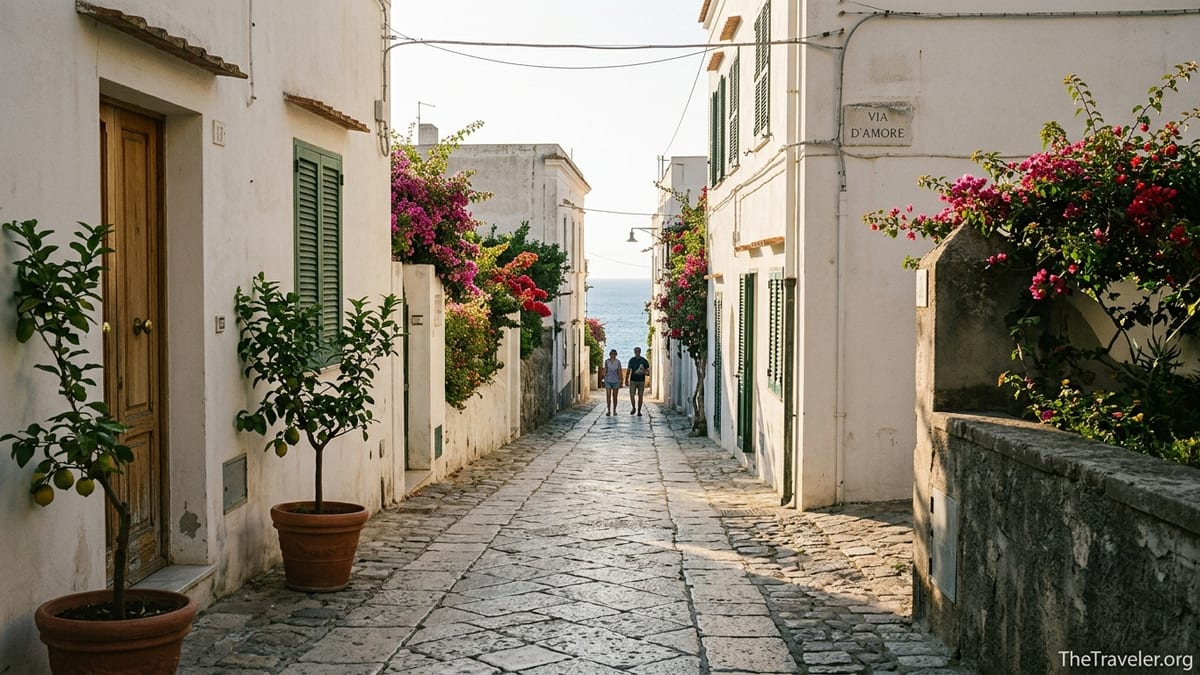
Cetrella: The Hermitage Above The Clouds
High on the slopes of Monte Solaro, the tiny hermitage of Santa Maria a Cetrella feels worlds away from the souvenir stalls below. The 16th century chapel and former friars’ retreat sits around 500 meters above sea level, perched on a ledge that drops straight toward Marina Piccola. Reaching it is part of the magic: most visitors soar over this valley on the Monte Solaro chairlift, take their photos at the summit, and ride straight back down without realizing a footpath leads to one of the quietest places on the island.
The most atmospheric way to arrive is on foot from central Anacapri. From the church of Santa Sofia it takes around 30 to 40 minutes along old stone paths that wind between garden walls and low scrub, gradually opening out to views of the Faraglioni and the Sorrento Peninsula. The climb is moderate rather than punishing, but sturdy walking shoes and water are a must in summer. If you prefer to save energy, ride the chairlift up to Monte Solaro and descend on the signposted trail; allow about 20 minutes down to Cetrella and another 30 into town.
What makes Cetrella a true hidden gem is the sense of intimacy. The whitewashed church has low vaulted ceilings, a simple altar and a small cloister garden where cats doze in the shade. On quiet mornings there may be a volunteer caretaker making coffee in the rustic kitchen; on other days you might have the terrace entirely to yourself, with only swallows and the distant putter of boats far below. Bring a simple picnic, keep noise low and treat it as a living place of devotion rather than a viewpoint to rush through.
Time your visit for early morning or late afternoon when the light is soft and the paths are cooler. On clear days in spring and autumn the air can feel crystal sharp, with views stretching across the Bay of Naples to Vesuvius. In high summer, when Capri town is elbow to elbow, Cetrella often remains uncrowded simply because it takes effort to reach. That small barrier is what keeps this corner special.
Secret Sunset: Punta Carena & The Forts Trail
On the far southwestern tip of Anacapri, the Punta Carena lighthouse marks one of the island’s last wild frontiers. Built in the 19th century, its brick tower rises above low cliffs and a scatter of beach platforms where locals come to sunbathe on hot rock and slide into deep, clear water. Tour groups rarely make it this far because it is not bundled into standard day-trip itineraries. Those who do come usually arrive for an hour or two in the afternoon, then hurry back for evening drinks in Capri town, leaving the sunset to a small crowd of insiders and islanders.
From the center of Anacapri, a local bus runs out to the faro stop in about 15 to 20 minutes, winding past gardens and stone pines before the landscape opens to sheer cliffs. There is no sandy beach, just concrete platforms and ladders bolted into rock, but the sea is typically cleaner and less hectic than at Marina Grande. Simple snack bars and a couple of casual beach clubs rent sunbeds at prices that are often lower than the more famous beach clubs near the Faraglioni. You can expect to pay in the range of 20 to 30 euros for a chair and umbrella in high season, less in spring and autumn, but prices change year to year so it is worth checking current boards when you arrive.
If you want to escape even the modest crowd at Punta Carena itself, follow the beginning of the Sentiero dei Fortini, the coastal path linking old fortifications that once guarded the island’s western shore. Even a short section of the trail delivers solitude, with views across open sea and the lighthouse shrinking behind you. The path is rocky, exposed and unlit, so good footwear and a headlamp are important if you plan to stay out for sunset. Many visitors simply walk 15 to 20 minutes along the trail, find a flat rock ledge and settle in to watch the sky fade from gold to violet over the open Tyrrhenian.
For a quieter sunset with less walking, another option is the viewpoint of Belvedere della Migliara, a short stroll from the end of Via Migliara on the southern edge of Anacapri. A narrow lane lined with garden gates ends at a railing where the cliffs drop steeply toward Punta Carena and the open sea. It is just far enough from the bus routes that most day-trippers never get here. Bring a light sweater even in summer as the breeze can be surprisingly cool once the sun drops behind the island.
Hidden Coves Near The Blue Grotto
The Blue Grotto draws thousands of visitors a day in high season, arriving by boat from Capri town or by bus from Anacapri and queuing in the sun for a chance to duck through its famously low entrance. What many of them miss is that the coastline around the grotto hides smaller coves and swimming spots where the water is the same luminous turquoise but the atmosphere is far more relaxed.
A short walk from the Blue Grotto bus stop, a set of steps leads down toward the sea at Gradola. Locals have long used this rocky inlet as a place to swim before or after work. There is a small beach establishment that manages access to the platforms, usually with modest entry fees that can include a changing cabin or sunbed. Exact prices fluctuate with season and management, but you can roughly expect to spend less here than at the marquee beach clubs on the other side of the island. Since the coast is rocky, water shoes can make getting in and out more comfortable.
Sea conditions are critical on this exposed coast. On days when the Blue Grotto itself is closed due to waves or high tide, swimming at the nearby coves may also be limited. Lifeguards or staff at the platforms usually post flags or announcements; always respect local advice and avoid the temptation to slip into the water when conditions look marginal. Early mornings often offer the calmest seas and emptiest platforms, making this the best time for a peaceful dip followed by a coffee at one of the low-key bars above.
If you are staying overnight in Anacapri, ask your guesthouse owner or hotel receptionist whether there are any temporary access restrictions or changes in schedules for the buses that run to the Blue Grotto area. These details can change from one season to the next. Planning your visit on a weekday rather than a weekend, and away from the peak of July and August, will also make it easier to enjoy these coves without feeling rushed or crowded.
Walking Back Roads And Forgotten Stairways
One of Anacapri’s greatest strengths is not a single attraction but its network of lanes, stairways and mule paths that pre-date mass tourism. While Capri town can feel like a continuous flow of window-shoppers, Anacapri still offers long stretches where you are more likely to meet a local carrying groceries than another visitor with a camera. Exploring these back roads on foot reveals a slower island rhythm that coaches and tour groups can never quite reach.
Start in the main pedestrian street, Via Giuseppe Orlandi, then deliberately peel off onto side alleys. Small stone staircases climb between houses to tiny chapels, vegetable gardens and glimpses of sea. It takes only a block or two for the souvenir shops to give way to everyday life: laundry strung between balconies, children riding bicycles, the smell of tomato sauce drifting from open windows. Walking here in the early morning, when bakers roll up their shutters and delivery vans squeeze into improbably tight corners, offers a taste of how the village operates outside visitor hours.
Strong walkers sometimes tackle the ancient Phoenician Steps, the flight of over a thousand stone steps that once connected Anacapri with the marina far below. Even if you do not plan to walk their full length, seeking out a small section near the top gives a powerful sense of the island’s history, with weathered stones underfoot and terraces of olives and vines on either side. If you do decide to hike the entire staircase, most people find that descending is easier than climbing, but the steps are steep and can be hard on knees, so consider taking the bus uphill and walking down in the cooler part of the day.
Unlike marked attractions, these back routes have no opening hours, but they are still part of a lived-in community. Keep voices low, avoid photographing directly into private courtyards, and step aside for residents moving more quickly than you. When in doubt, a simple greeting in Italian breaks the ice; many locals are used to helping visitors find their way and may point you toward their favorite viewpoint or café if you show genuine interest.
Artisan Anacapri: Sandals, Ceramics And Scent
While Capri town concentrates international fashion brands, Anacapri is still the place to seek out independent artisans working in centuries-old island trades. Handcrafted sandals, small ceramics workshops and niche perfume studios hide behind unassuming storefronts along Via Giuseppe Orlandi and the lanes that branch off from it. Spend an unhurried afternoon browsing, and you will discover pieces that feel rooted in place rather than designed for a global shop window.
Traditional Caprese sandals, with their slim leather soles and customizable straps, are among the most practical souvenirs you can bring home. Family-run sandal makers in Anacapri typically display sample styles in the window, from simple tan leather to designs decorated with shells or small stones. Once you choose a model, they trace your foot and cut the sole on the spot, then fix the straps by hand. Depending on materials and decoration, prices often start somewhere under 100 euros and rise from there for more elaborate versions. Turnaround times vary: some pairs are ready within an hour, others later the same day, especially in high season when orders stack up.
Ceramics tell another side of the island story. Small studios along streets such as Via Capodimonte and Via Giuseppe Orlandi produce hand-painted tiles, platters and jugs in patterns inspired by lemon groves, marine blues and the geometric floors of old churches. Because pieces are made in small batches or to order, it is worth asking whether the artist can sign or date your purchase on the back. Shipping home is often possible for larger items, though costs for insured international delivery can easily exceed the price of the object itself, so many travelers opt for smaller tiles or bowls that slip into hand luggage.
Scattered among these workshops are boutiques selling perfumes and home fragrances created specifically for the island. Rather than rushing in for a quick spray and purchase, ask staff about the inspirations behind different scents: some are built around wild herbs that grow on the cliffs, others around citrus orchards or the salty air near Punta Carena. Take your time, step outside with a blotter strip to see how a fragrance develops in real air, and resist pressure to buy on the spot. The joy of Anacapri’s artisanal scene lies as much in conversation as in consumption.
Quiet Corners Of Faith And History
Beyond headline sights like Villa San Michele and the chairlift, Anacapri shelters a series of quiet religious and historical sites that reward a slower look. The parish church of Santa Sofia anchors the main square with its baroque façade, but step inside outside of service times and you will often find just a handful of worshippers or a caretaker arranging flowers. Simple side chapels and worn stone floors tell the story of centuries of village life in a way that glossy postcards never can.
A short walk away, the Church of San Michele Arcangelo is more famous, yet still easy to experience peacefully if you time it outside tour-group peaks. Its most distinctive feature is the 18th century majolica floor depicting the Garden of Eden, a vivid swirl of animals, trees and figures best viewed from the small wooden walkway that circles the nave. Visit early in the day or in the final hour before closing and you may have the floor almost to yourself, free to linger over the details without feeling pushed along by a guide’s timetable.
Elsewhere in Anacapri, tiny votive shrines are built into street corners and garden walls. Many passersby barely notice them, but pausing to look reveals layers of domestic faith: hand-painted tiles of the Madonna, framed prints weathered by sun and sea air, flickering candles in red glass holders. These small, almost hidden devotions echo the larger sanctuaries and hermitages, reminding you that for residents the island is not only a postcard landscape but also a lived spiritual geography.
When visiting any place of worship, dress modestly and keep conversation discreet. Photography is often tolerated, especially without flash, but not always encouraged. A quick glance at other visitors’ behavior or a polite question to a caretaker will usually make expectations clear. Respecting these unspoken rules helps keep these spaces welcoming rather than weary in the face of tourism.
Eating Like A Local: Off-Main-Street Tables
Food in Anacapri can be as touristy or as local as you allow it to be. Pizzerias and trattorias directly on the main pedestrian strip unsurprisingly cater to a steady flow of visitors with laminated menus and rapid turnover. Step just a block or two away, however, and the mood changes: shaded pergolas, handwritten daily specials and a pace that follows the kitchen rather than the clock.
Look out for small family restaurants on side streets where the tables are mostly filled with Italian voices and the menu leans heavily on whatever came in from the sea that morning. Typical dishes include spaghetti with clams, grilled local fish dressed with little more than lemon and olive oil, and insalata caprese made with buffalo mozzarella and sun-ripe tomatoes rather than hothouse produce. Prices for a main course in these less prominent places can be surprisingly reasonable by Capri standards, especially at lunch or outside high summer.
One advantage of staying overnight in Anacapri rather than visiting on a day trip is the chance to eat dinner after the last tour groups have left. Around 9 pm, when the air cools and the streets fall quiet, restaurant terraces take on a village feel. You might see neighboring tables greeting each other by name, servers lingering to chat and children weaving between chairs. Ordering a carafe of local white wine and a simple plate of grilled vegetables in this atmosphere can be more memorable than any elaborate tasting menu.
Advance reservations are still wise from late June through early September, especially on weekends, but last-minute walk-ins are easier to manage here than in Capri town. Ask your accommodation host which places they go to with their own families; they are often candid about which restaurants have maintained quality and which have begun to rely too heavily on passing trade.
The Takeaway
Hidden gems in Anacapri are less about secret addresses and more about choices: to walk rather than queue, to wander side streets rather than stick to signposted routes, to stay overnight rather than rush back to the ferry. Hermitages like Cetrella, coves near the Blue Grotto, quiet lanes above the Phoenician Steps and small artisan studios will not remain empty forever, but they do still reward travelers willing to look beyond Capri’s greatest hits.
Approach Anacapri as a village to inhabit briefly rather than a checklist to conquer. Leave time for unplanned detours, for climbing steps just to see where they emerge, for stopping at a corner bar when you notice locals gathering over afternoon coffee. In doing so, you will find that the most memorable corners of the island are still the ones most visitors never quite reach.
FAQ
Q1. Is Anacapri really quieter than Capri town?
Anacapri is generally less crowded and more residential than Capri town, especially in the early morning and evening once day-trippers have left.
Q2. How much time should I allow to explore Anacapri’s hidden spots?
A full day lets you see a few highlights, but staying one or two nights gives you time for Cetrella, Punta Carena and backstreet wandering without rushing.
Q3. Do I need hiking experience to reach the Cetrella hermitage?
No technical skills are required, but you should be comfortable with uneven paths, some steep sections and walking for 30 to 40 minutes in each direction.
Q4. Are the Punta Carena area and the forts trail suitable for children?
The lighthouse platforms can work for families who are cautious around deep water, but the forts trail has exposed, rocky sections and suits older, sure-footed children.
Q5. Can I visit the Blue Grotto and nearby coves on the same trip?
Yes, many visitors combine a Blue Grotto visit with swimming at nearby rocky platforms, but openings depend on sea conditions and safety rules on the day.
Q6. What should I wear for exploring Anacapri’s back roads and stairways?
Wear sturdy closed shoes, light breathable clothing, a hat and sunscreen. Bring water, especially in summer, as shade can be limited on longer walks.
Q7. Are artisan sandals and ceramics in Anacapri expensive?
Prices vary widely, but simple handmade sandals and small ceramic pieces are often more affordable than designer goods in Capri town, especially outside peak months.
Q8. Do restaurants in Anacapri require reservations?
In high season it is wise to reserve for dinner, particularly on weekends, but at lunchtime and in shoulder seasons walk-ins are often possible.
Q9. Is Anacapri a good base without a car?
Yes, local buses and the chairlift connect Anacapri with Capri town, the harbor and major sights, and most hidden gems can be reached easily on foot from the center.
Q10. When is the best time of year to enjoy Anacapri without crowds?
Late April to early June and late September to October usually offer mild weather and fewer visitors than the peak months of July and August.