


More news on this day
Thousands of air travelers across the United States are facing long waits, missed connections and overnight airport stays as at least 2,499 flights are delayed and 77 canceled, with disruptions concentrated at major hubs in Massachusetts, Florida, Illinois, Texas and New York and affecting airlines such as United, Alaska, SkyWest, Delta and Southwest, according to flight-tracking tallies and aviation data published on July 2, 2026.
Get the latest news straight to your inbox!
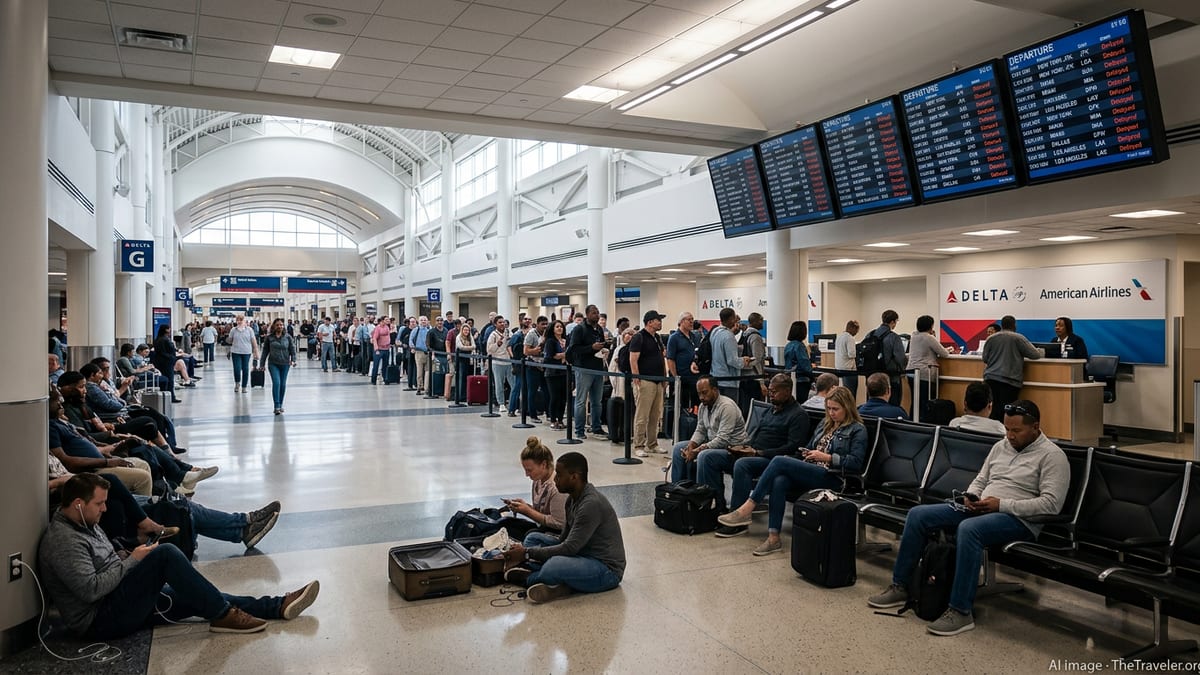
Delays Concentrated at Key Summer Gateways
The latest wave of disruption is rippling through some of the country’s busiest summer gateways, where dense schedules and heavy holiday traffic leave little margin for error. Published reports drawing on live flight-tracking data indicate that large airports serving Boston, New York City, Chicago, Dallas and major Florida destinations are among those showing the highest numbers of late departures and arrivals.
In the Northeast, operations at airports serving Massachusetts and the wider New York region have been strained by a combination of congestion in crowded airspace and weather-related traffic management programs. Boston Logan and the New York hubs routinely feature among the nation’s most delay-prone facilities during peak travel periods, and today’s figures suggest that pattern is continuing as the Independence Day surge begins.
In the Midwest, Chicago-area traffic has again emerged as a pinch point. Publicly available airport dashboards for Chicago’s major hubs show elevated delay activity, mirroring recent trends where thunderstorms and tight turnarounds have translated into rolling schedule disruptions. With many cross-country itineraries connecting through Illinois, delays at Chicago can quickly cascade nationwide.
Texas is also seeing significant impacts, particularly around the Dallas–Fort Worth area, a key interchange for both domestic and international routes. When a high-volume hub like Dallas experiences gate and runway congestion, passengers traveling between unrelated city pairs can find themselves stranded as aircraft and crews fall out of position.
United, Alaska, SkyWest, Delta and Southwest Among Most Affected
The disruption is not confined to a single carrier. Data aggregated from flight-status trackers and summarized in industry coverage show that major network airlines and their regional partners share responsibility for today’s delays and cancellations. United Airlines, Alaska Airlines, Delta Air Lines and Southwest Airlines all appear prominently in the statistics, alongside regional operators such as SkyWest that feed passengers into larger hubs.
United, with significant operations in Chicago, New York and across Texas and Florida, is particularly exposed when delays build at multiple hubs simultaneously. Tightly timed connections mean that an aircraft arriving late into a hub can trigger knock-on delays across the rest of its flying day, affecting passengers far beyond the original problem airport.
Alaska Airlines and SkyWest, while smaller in overall scale, play outsized roles in connecting secondary and regional airports to the national network. When routes operated by these carriers fall behind schedule, travelers bound for larger hubs may miss onward flights, contributing to growing crowds at customer-service desks and rebooking counters.
Delta and Southwest, which maintain large presences in Florida, Texas and other affected states, are also contending with compressed schedules and high demand at the start of the holiday weekend. Recent analyses of federal air travel consumer data have highlighted that many large U.S. airlines continue to wrestle with late-arrival and crew-related delays at levels above pre-pandemic norms, and today’s figures appear consistent with that broader pattern.
Complex Mix of Weather, Congestion and Operational Strain
Aviation analysts point to a familiar mix of drivers behind the disruptions: unsettled summer weather, chronic airspace congestion and lingering operational strains within airline networks. Thunderstorms and rapidly changing conditions in busy corridors can prompt air traffic managers to slow the rate of takeoffs and landings, which in turn backs up departures and arrivals across multiple states.
Industry tracking from recent weeks has underscored how quickly such constraints can spread. A single ground delay program in the Northeast can lead to missed connections in Chicago or Dallas, while storms around major Florida airports can strand aircraft and crews far from where they are needed for later legs. Once rotations are disrupted, it can take many hours, or even days, for schedules to fully recover.
Operational challenges inside airlines add to the strain. Factors such as crew scheduling rules, maintenance requirements, and the need to keep aircraft on specific routes for future flights can limit the flexibility to recover from an initial disruption. Analysts reviewing the performance of U.S. carriers through 2026 note that even relatively modest weather events can produce disproportionate impacts when networks are already stretched by record summer demand.
Publicly available commentary on recent disruption events also highlights the role of tight turnaround times and high aircraft utilisation. With many carriers attempting to maximise flying during peak periods, any delay at the start of the day can ripple through multiple subsequent segments, increasing the risk that later flights are significantly delayed or canceled outright.
Holiday Travel Surge Magnifies Passenger Impact
The timing of the latest disruptions is especially challenging for travelers. The July 4 holiday window is one of the busiest periods of the year for U.S. aviation, with federal security agencies and airport operators forecasting passenger volumes that in some cases exceed last year’s records. Crowded terminals and full flights leave few spare seats for rebooking when cancellations occur.
Travel columns and advisory pieces published this week have warned that passengers should expect packed security lines, congested gate areas and limited flexibility on popular routes. Many of the airports reporting high delay totals today, including those in Florida’s leisure markets and major connection points in Texas and Illinois, are also among the primary gateways for holiday beach trips and family visits.
The strain is visible not only in departure boards but also in the scramble for hotel rooms and alternative transportation. When cancellations force overnight stays, airport-area accommodations can quickly sell out, particularly near large hubs such as Dallas and Chicago. Passengers arriving late into vacation destinations may find car rental counters overwhelmed and local transit services operating at capacity.
These conditions increase the likelihood that disruptions will be felt beyond the confines of the airports themselves, spilling into local tourism economies that are otherwise counting on a strong holiday weekend. For travelers, the result is a heightened sense of uncertainty around when, and even if, they will reach their destinations as planned.
What Travelers Can Do As Disruptions Continue
With delays and cancellations still evolving through the day, travel experts recommend that passengers take a proactive approach to managing their itineraries. Public guidance from consumer advocates and transportation agencies stresses the importance of checking flight status frequently, using airline apps where possible, and arriving at the airport early, particularly when connecting through known congestion points such as New York, Chicago, Dallas or major Florida hubs.
Travel advisories also point out that passengers experiencing significant disruptions can often rebook through digital channels rather than waiting in long lines at airport counters. Same-day changes, standby lists and alternative routings through less congested hubs may offer options for those willing to adjust their plans, especially when storms or traffic-management initiatives appear likely to persist.
For upcoming trips over the remainder of the holiday period, planning strategies suggested in recent coverage include scheduling flights earlier in the day, building in longer connection times and considering non-stop routes when available. Morning departures are statistically less likely to be affected by the cumulative delays that build throughout a busy schedule, while longer layovers allow additional buffer if an initial flight runs late.
As airlines, airports and federal agencies continue to navigate the combination of heavy demand, volatile summer weather and structural pressures within the air traffic system, today’s tally of 2,499 delays and 77 cancellations offers another reminder that U.S. air travel remains vulnerable to rapid, nationwide disruption. For thousands of travelers scattered across terminals from Massachusetts to Florida and Illinois to Texas, the experience is being felt one delay notification at a time.