


Most travelers come to Capri dreaming of glamorous piazzas, designer boutiques and boat trips past the Faraglioni. Many leave with camera rolls full of those classic Capri scenes, yet without ever setting foot in Anacapri, the quieter hilltop village that locals consider the island’s most authentic side. Skipping Anacapri is one of the most common mistakes visitors make, and it can mean missing Capri’s most relaxed landscapes, slow rhythms and surprisingly down‑to‑earth experiences.
Get the latest updates straight to your inbox!
Capri vs Anacapri: Two Different Worlds on One Small Island
Capri town and Anacapri sit just a few kilometers apart, but the atmosphere between them can feel like crossing a border. Capri town climbs steeply above Marina Grande, where ferries arrive from Naples and Sorrento. Its famous Piazzetta, luxury boutiques and grand hotels are packed in high season, especially between late May and September, when cruise excursions and Amalfi Coast day trippers arrive in waves. Even simple things such as getting a seat at a café on the main square or finding space on the viewpoints above Via Krupp can require patience at peak hours.
Anacapri sits higher on the island’s western plateau, reached by a winding road of hairpin turns. The village center around Piazza Vittoria and Via Giuseppe Orlandi has its share of souvenir shops and sandal makers, but the scale feels smaller and more residential, with whitewashed houses, kitchen gardens and older residents chatting on benches in the shade. Instead of jostling for space in front of designer windows, you are more likely to be browsing small ceramic workshops or popping into a bakery for a slice of torta caprese to take away.
The difference in pace becomes especially clear in the evening. Capri’s main streets remain lively with aperitivo crowds well into the night, and hotel terraces above the Piazzetta hum with cocktail shakers. Anacapri grows quieter after sunset, except around a few restaurants and bars near Piazza Vittoria and along Via Migliara. The air feels cooler, the streets emptier, and views toward the Gulf of Naples or Punta Carena lighthouse glow under the last light. For travelers who want to enjoy Capri without the constant buzz, staying or at least spending a full afternoon in Anacapri can completely change how the island feels.
Crucially, Anacapri is not an inconvenient add‑on. Buses run frequently between Capri town and Anacapri, with the ride taking around ten minutes on minibuses that climb the panoramic road between the two villages. As of 2026, a one‑way bus ticket on the island typically costs only a few euros, and you can buy tickets at small kiosks near the main bus terminals in Marina Grande, Capri town and Anacapri. Taxis are more expensive yet still straightforward, with official fixed rates between Capri and Anacapri published by the municipality; for example, a Capri to Anacapri ride for up to four people is around 25 euros. Once you know how easy the connection is, skipping Anacapri stops looking like a time saver and more like a missed opportunity.
Slow Views and Big Horizons: Monte Solaro and Its Trails
One of Anacapri’s greatest assets is Monte Solaro, Capri’s highest point at about 589 meters above sea level. While the crowded viewpoints above Capri town frame the Faraglioni and Marina Piccola, Monte Solaro opens up the entire Gulf of Naples, with sweeping views towards the Sorrentine Peninsula, the Amalfi Coast and, on clear days, as far as the Apennines inland. From this single peak you can see both sides of the island at once, something impossible if you stay only around the Piazzetta and Marina Piccola.
The easiest way up is the single‑seat chairlift that departs right from Piazza Vittoria in Anacapri. The ride lasts around 12 minutes and feels surprisingly peaceful once you float above gardens and stone terraces toward the summit. Recent visitor reports for summer 2026 mention a round‑trip ticket price of roughly 12 euros, with slightly reduced fares for children. Operating hours typically run from mid‑morning to late afternoon, varying a little by season, so it is worth checking the schedule on the day you arrive. Many travelers find that taking the chairlift up and then walking back down gives a good balance between comfort and a taste of the island’s hiking paths.
For those who prefer to keep their feet on the ground, there are walking trails from Anacapri to Monte Solaro that take about an hour depending on fitness and the heat. Paths wind through pine woods and past the ruins of old forts built to guard the island. Good walking shoes and water are essential, especially under the summer sun, and in the warmer months an early start from Anacapri is more comfortable. Whichever route you choose, reaching Monte Solaro is one of the most rewarding ways to understand Capri’s geography, as you can trace the route of boats leaving Marina Grande and see the famous Faraglioni rocks from a new angle.
A practical detail that often surprises day trippers who base themselves only in Capri town is that the chairlift is exclusively in Anacapri. There is no direct funicular or lift from the port to Anacapri itself; you must first take the funicular or bus up to Capri town, then a bus or taxi along the hairpin road to reach Piazza Vittoria. Visitors who have planned a tight day and skip Anacapri altogether often realize too late that they have missed the island’s highest and most airy viewpoint, even though it was only a short bus ride away.
Villa San Michele and Anacapri’s Cultural Calm
Anacapri is not only about scenery. It also holds some of Capri’s most interesting cultural sites, which are easier to enjoy at an unhurried pace than many attractions around Capri town. The star among these is Villa San Michele, the former home of Swedish physician and writer Axel Munthe. Perched on a rocky ledge above the coast, the villa and its gardens were built around fragments of Roman and medieval ruins that Munthe collected on the island. Today the house functions as a museum, but it feels more like stepping into a lived‑in story, particularly if you have read even a few pages of Munthe’s memoir about life here.
The gardens of Villa San Michele are a highlight in themselves, with cypress trees framing views over the Bay of Naples and marble statues silhouetted against the sea. The famous sphinx gazing toward the water has become an emblem of Anacapri, yet many visitors to Capri never meet it because they stay anchored to the Piazzetta and the designer shopping streets below. Entry tickets are modestly priced compared with the cost of most Capri hotel cocktails, and the villa hosts occasional concerts and cultural events in summer that are particularly atmospheric in the late light.
Just a few minutes’ walk away, in Anacapri’s historic center, the Church of San Michele hides one of the island’s more unusual artistic treasures: an 18th‑century majolica floor depicting the expulsion of Adam and Eve from the Garden of Eden. Visitors cross a narrow wooden walkway suspended above the colorful tiles, looking down on animals and plants painted in vivid glaze. The experience contrasts sharply with the more familiar image of Capri as only sea caves and nightclubs and is the kind of discovery most travelers say they did not expect to find on a day trip focused only on views.
What makes these sites special in practice is the way they encourage lingering. On a busy August day, you might find a gentle stream of visitors at Villa San Michele, but you can still step aside to a shaded bench and listen to the wind in the trees or the clink of cutlery from the small on‑site café. In the Church of San Michele, you often share the wooden walkway with only a handful of others, even at midday. Instead of feeling rushed to snap a picture and move on, you have space to absorb details and let the island’s slower rhythm sink in, which is one of the main reasons to seek out Anacapri in the first place.
The Blue Grotto and the Quiet Side of the Sea
The Blue Grotto, or Grotta Azzurra, is often presented as a Capri essential, yet many visitors do not realize it is actually within the municipality of Anacapri. Boat tours around the island that depart from Marina Grande on Capri’s main harbor typically include a stop outside the cave, where visitors transfer to smaller rowboats that can navigate the low entrance, conditions permitting. Once inside, sunlight filtering through the underwater opening turns the water an intense shade of blue that has fascinated travelers since Roman times.
Weather and sea conditions strongly influence whether the Blue Grotto is open on a given day, and official notices encourage visitors to check status in the morning, especially outside peak summer. When it is open, boats usually operate roughly between late morning and late afternoon, though specific sailing times vary by provider and season. Basic boat tours from Marina Grande that include a circuit of the island with a Blue Grotto stop typically start from several tens of euros per person, with small group or private excursions costing more. Inside the grotto itself, there is usually a separate, small fee paid in cash to the rowboat operator at the mouth of the cave.
Reaching the Blue Grotto from Anacapri provides a different experience. Local buses run from Anacapri center down to the Grotta Azzurra area in around ten minutes, following a scenic road that hugs the hillside. From the bus stop it is a short walk down a staircase to the entrance terrace, where ticket booths and boatmen coordinate access. Some visitors choose to go by land first thing in the morning, entering the cave before the boat excursions from Marina Grande arrive, then returning to Anacapri for lunch. Others combine the cave with a leisurely seaside afternoon at one of the nearby lidos and platforms carved into the rocks.
This Anacapri‑based approach to the Blue Grotto can be calmer and more flexible than joining a packed circuit from the main harbor. If the cave happens to be closed due to waves, which can happen even on sunny days, you are still close to scenic walking paths and viewpoints along the coast. At the same time, you avoid spending much of your limited time in Capri queuing on busy marina piers, as often happens in high season. Once again, building Anacapri into your day gives you more control over how and where you wait, rest and enjoy the island’s famous sea cave.
Sunsets, Sea Platforms and Long Swimming Days at Punta Carena
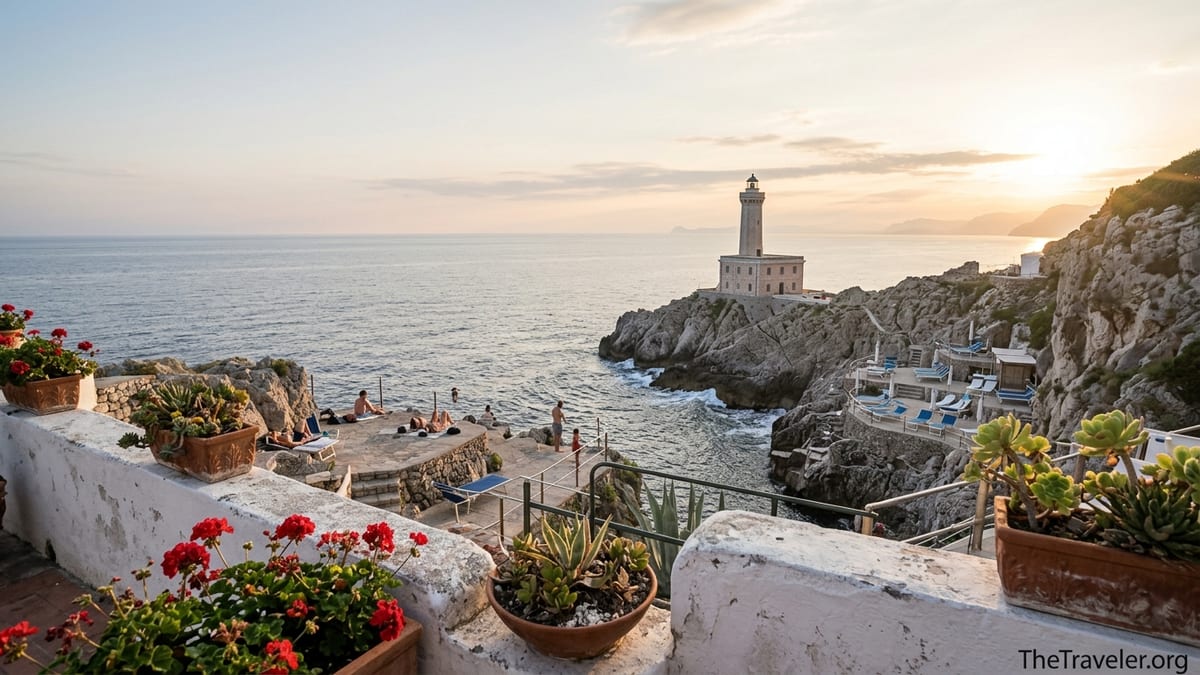
Another reason skipping Anacapri can feel like a mistake comes at the end of the day, around the lighthouse at Punta Carena. This is Capri’s wild western corner, where cliffs drop steeply into deep blue water and the sun sets directly over the sea. While Capri town looks east and south, losing the sun earlier in the afternoon behind its own slopes, Punta Carena keeps the light until late. Locals and in‑the‑know visitors come here for long swims, rock platforms and some of the island’s most dramatic aperitivo sunsets.
Punta Carena is served by a direct bus from Anacapri center, with the ride taking about fifteen minutes along a road that feels far from the glossy storefronts of Capri. At the end of the line, a small bay framed by cliffs and the lighthouse opens up, with public rock platforms and private beach clubs sharing the shoreline. One of the best known is Lido del Faro, whose terraced decks carved into the rock look straight onto the open sea. Recent information for 2025 and 2026 highlights that it is among the sunniest beach clubs on Capri, with opening hours from late April to mid‑October and loungers that remain in the light until near sunset.
Unlike the narrow pebble strips at Marina Piccola, the terraces at Punta Carena feel spacious and unhurried, especially if you arrive earlier in the day. At Lido del Faro, for example, guests can alternate between dives directly into the sea and swims in a small saltwater pool with massage jets set into the rock. There is table service for light lunches and late afternoon aperitivi, so you can order grilled fish or a simple caprese salad without leaving your lounger. Prices for sunbed and umbrella rental vary by season and position, but you can expect to pay a premium for front‑row spots in July and August, which many consider worthwhile given the lingering sun and relative calm compared with Capri’s more central beaches.
Even without entering a beach club, Punta Carena offers free space on the rocks where locals spread towels and small umbrellas. The atmosphere is friendly and informal, with teenagers jumping from marked spots on the rocks and families staying until the light turns golden. Watching the lighthouse flash on as the sky colors is one of those Capri moments that never make it into high‑gloss brochures, partly because it belongs more to Anacapri’s slower, everyday rhythm than to the island’s official glamorous image.
Eating and Staying in Anacapri: A Gentler Side of Capri Hospitality
Anacapri’s dining scene is quieter and often a little more approachable than that of Capri town, with a mix of simple trattorie, family‑run pizzerias and a handful of high‑end addresses. Near the Blue Grotto, Il Riccio is among the island’s most celebrated restaurants, with white and blue interiors that echo the sea below and a terrace positioned almost directly above the cave’s entrance. The menu focuses on fresh seafood and classic island dishes, and reviews consistently mention the experience as an event in itself rather than just a meal. Dinner here is not inexpensive, and advance reservations are recommended in season, but for many it becomes a highlight of their time on Capri.
Further inland, away from the cliffs, places like Da Gelsomina combine homestyle cooking with big views. Reached via a narrow lane from Anacapri’s outskirts and offering a shuttle service from the nearest bus stop, this long‑standing family restaurant sits near a panoramic walking path known as the Sentiero dei Fortini. Guests come for rabbit stew, ravioli capresi and fried zucchini blossoms served on a terrace overlooking vineyards and the sea. Prices here, while not budget, feel closer to mainland coastal towns than to Capri’s five‑star hotel terraces, which is part of Anacapri’s appeal for travelers who want to enjoy the island without constant sticker shock.
When it comes to accommodation, Anacapri offers a broad spread of mid‑range hotels, small boutique properties and family guesthouses. Nightly rates often undercut comparable rooms in Capri town, especially for stays of two nights or more in shoulder seasons like May, early June or late September. Many rooms come with garden or sea views, and you are more likely to find amenities such as small kitchen corners or shared terraces where guests mingle in the evening. This can be especially attractive for families, walkers and travelers who prefer to wake up in a village rather than above a nightlife hub.
Staying in Anacapri also helps you sidestep some of the logistical crunch that day trippers face. You can visit the Blue Grotto early, ride the Monte Solaro chairlift before queues build, or reserve a late dinner at Punta Carena without worrying about catching the last crowded bus back to Capri town. Instead of rushing to fit Capri into a single day, Anacapri encourages a two or three night stay that makes the entire island feel more like a place you inhabit, not just a postcard you pass through.
Practical Tips: How to Fit Anacapri into Your Capri Plan
Integrating Anacapri into your itinerary does not require complex planning, but a few practical choices help you make the most of it. If you are visiting Capri just for the day from Naples, Sorrento or the Amalfi Coast, consider heading to Anacapri first. From the ferry dock at Marina Grande, you can either take the funicular up to Capri town and then switch to the bus for Anacapri, or walk directly to the bus stop and catch a bus that climbs straight to Anacapri’s Piazza Vittoria. Travel times vary with traffic, but in general you can be in Anacapri within about 30 minutes of stepping off your boat if connections line up smoothly.
A popular one‑day loop looks like this in practice: morning chairlift to Monte Solaro from Anacapri, followed by a stroll through Villa San Michele and lunch at a simple trattoria in the village center. In the early afternoon, take the bus down to the Blue Grotto if conditions allow, then return to Anacapri and either continue to Punta Carena for a late swim and sunset aperitivo or transfer back to Capri town to catch the funicular to Marina Grande for your evening ferry. This route balances some of the most peaceful views on the island with enough time to pass briefly through Capri’s busier heart.
For travelers staying overnight on Capri, giving Anacapri at least a full dedicated day, plus an evening at Punta Carena, is ideal. You can spread activities out: one morning at Monte Solaro, another at the Blue Grotto and the coastal paths, plus cultural time at Villa San Michele and the Church of San Michele interspersed with lazy coffees in Anacapri’s piazzas. Because buses between Capri and Anacapri usually run every 10 to 20 minutes in the main season, you do not need to tie yourself to exact timetables, though in the busiest weeks of July and August it is sensible to build in extra time for queues at bus stops.
As always on Capri, season matters. Spring and early autumn often offer the best balance of mild weather, open services and manageable crowds. In shoulder months, Anacapri can feel especially serene, with locals sweeping doorsteps and chatting outside grocery shops in the morning, while terraces at places like Lido del Faro or Da Gelsomina still capture plenty of sun. In winter, some restaurants, hotels and the chairlift may close or run on shorter schedules, while the Blue Grotto is more frequently affected by sea conditions, so always check the latest information once you arrive on the island.
The Takeaway
Capri’s reputation for glamour is well deserved, but it tells only half the island’s story. Anacapri, stretched across the western heights and cliffs, holds much of what makes Capri feel like a real place rather than just a set of famous viewpoints. Here you find the highest peak at Monte Solaro, intimate gardens at Villa San Michele, religious art tucked inside a small church, rock platforms where local teenagers swim after school, and family restaurants serving dishes that taste as if they could come from a mainland village rather than a celebrity resort.
Skipping Anacapri is often a simple oversight. Ferries funnel visitors up to Capri town, day tour brochures focus on the Piazzetta and boat loops from Marina Grande, and a single crowded afternoon can leave you feeling that you have “done” Capri. Yet with just a short bus ride and a bit of curiosity, Anacapri opens the island out into wider horizons and slower hours. Whether you are chasing unforgettable views, a quieter place to swim or just a corner of Capri that still belongs to its residents as much as to its visitors, making time for Anacapri is the difference between seeing Capri and truly staying on it.
FAQ
Q1. How do I get from Capri town to Anacapri without a tour?
Public minibuses run regularly between Capri town and Anacapri, with the ride taking around ten minutes and tickets costing only a few euros each way. You can buy tickets at small kiosks near the main bus terminals or at some newsstands, and buses generally run more frequently in the main summer season.
Q2. Is Anacapri worth visiting on a day trip if I am staying on the Amalfi Coast?
Yes, if you are taking a day trip to Capri from the Amalfi Coast or Sorrento, you can comfortably include Anacapri. Plan to go there first for the Monte Solaro chairlift and Villa San Michele, then add the Blue Grotto or Punta Carena if time and sea conditions allow. Even a few hours in Anacapri will show you a far quieter side of the island than Capri town alone.
Q3. How much time should I allow for the Monte Solaro chairlift in Anacapri?
Most visitors should plan about 1.5 to 2 hours for the Monte Solaro experience, including the chairlift ride both ways and time at the top for photos, a drink and walking around the viewpoints. The lift ride itself is around 12 minutes each way, but queues can build in the late morning and early afternoon during high season.
Q4. Can I visit the Blue Grotto from Anacapri without taking a boat tour from Marina Grande?
Yes, you can reach the Blue Grotto by bus from Anacapri center, then walk down from the bus stop to the entrance terrace and join the small rowboats there. This option often works well early in the morning or later in the afternoon and lets you avoid some of the crowds that gather around organized boat tours in Marina Grande.
Q5. Are there good swimming spots in Anacapri?
Punta Carena, near the lighthouse on Anacapri’s west coast, is one of Capri’s best areas for long swims and sunset views. It offers both a public rocky shoreline and private beach clubs such as Lido del Faro, where terraced decks, sunbeds and a small pool carved into the rock provide an all‑day seaside base.
Q6. Is Anacapri cheaper than Capri town?
In general, Anacapri offers slightly more moderate prices than Capri town for accommodation and many restaurants, though it is still a popular and not inexpensive island destination. Mid‑range hotels and family‑run guesthouses are more common here, and you may find better value on room rates and meals, especially outside the peak months of July and August.
Q7. What are the main sights in Anacapri apart from the Blue Grotto?
Key highlights include the Monte Solaro chairlift and summit views, Villa San Michele with its panoramic gardens, the Church of San Michele with its painted majolica floor, and the lighthouse and sea platforms at Punta Carena. Wandering through the narrow streets of the historic center, with small workshops and local cafés, is also part of the appeal.
Q8. When is the best time of year to experience Anacapri’s relaxed atmosphere?
Late spring and early autumn, particularly May, early June and late September, are ideal for enjoying Anacapri in relatively mild weather with fewer crowds. High summer months bring more visitors and hotter temperatures, though evenings in Anacapri still feel calmer than in Capri town. In winter, some services and attractions operate on reduced schedules or close, so it is important to check details locally.
Q9. Is Anacapri suitable for families or travelers who dislike crowds?
Yes, Anacapri is particularly appealing for families and anyone who prefers quieter streets and more open space. The village center is compact, there are several shaded squares and playgrounds, and activities such as the chairlift, short walks and relaxed meals on terraces work well for mixed‑age groups who do not want a constant party atmosphere.
Q10. Should I stay overnight in Anacapri or Capri town?
If you value nightlife, shopping and being at the heart of Capri’s famous scene, Capri town may suit you better. If you prefer calmer evenings, easier access to the Blue Grotto, Monte Solaro and Punta Carena, and a more residential village feel, then basing yourself in Anacapri is often the better choice. Many travelers combine both by staying in Anacapri and making short, focused visits to Capri town during the day.