


Ask people along the French Riviera where they would actually choose to live, and Antibes enters the conversation fast. Wedged between glitzier neighbors Nice and Cannes, this small coastal city has a lived-in warmth that locals cling to fiercely. Its sandy beaches, working Old Town and everyday port life create a balance that many residents quietly prefer to red-carpet glamour. For travelers, understanding why Antibes works so well for the people who call it home is the key to experiencing more than just a pretty seaside stop.
Get the latest updates straight to your inbox!
A Mediterranean Town That Still Feels Like a Town
For locals, the charm of Antibes starts with scale. You can cross much of the center on foot in 20 minutes, yet the city rarely feels tiny or limited. The train station sits a short walk from the Old Town and beaches, which means a commuter can hop to an office in Nice or Sophia Antipolis in the morning and still swim at Plage de la Gravette or Salis in the evening. Parents walk children to school through streets that many visitors only glimpse between gelato stops, and that everyday rhythm is part of the appeal.
Antibes is busy in summer, but it is not an artificial resort that shutters in October. Around Place Nationale and Rue de la République, year-round cafés stay open for locals who come for an espresso before work or a glass of rosé after. On a Tuesday in January, you might see retirees wrapped in scarves on the ramparts, dog walkers heading toward Plage du Ponteil and teenagers cutting down to the marina, even when the sea breeze feels sharp. That continuity of life makes Antibes feel more like a hometown than a holiday postcard.
Property searches reflect this pull. Many French and international buyers seek small apartments near the Old Town ramparts or around the beaches, not just for rental potential but because they want to be able to walk to the marché, the sea and the station without driving. Even visitors picking short-term rentals often end up in the same streets residents favor, sharing stairwells and courtyards with people who have lived there for decades.
Although tourism is important, Antibes is anchored by its port, tech jobs in nearby zones and the daily services any medium-sized French town needs: schools, clinics, sports clubs, supermarkets set back from the historic core. For locals, that mix is what allows them to enjoy Riviera sunshine without feeling like they live in a theme park.
Why the Beaches Work So Well for Everyday Life
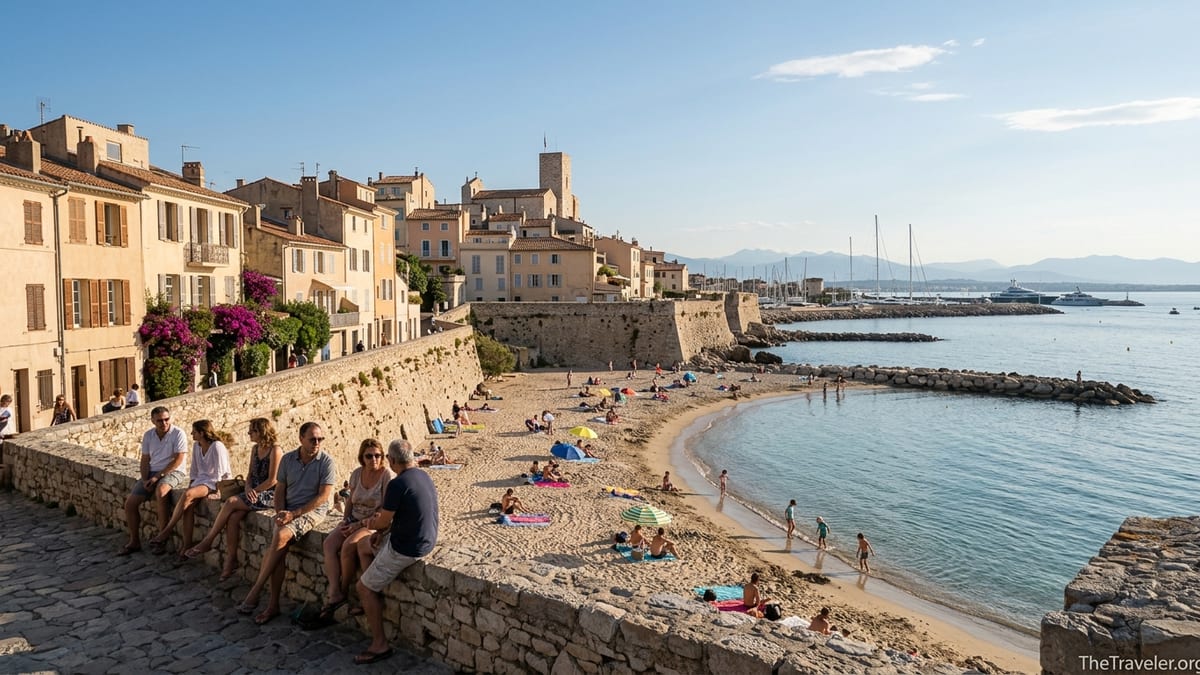
One reason Antibes is beloved by residents is practical: the beaches are genuinely usable. Plage de la Gravette, tucked directly under the stone ramparts below the Old Town, is a public, sandy cove that many locals treat as an extension of their backyard. It is sheltered by breakwaters, which keep the water calm enough for children and make quick early-morning swims possible even on breezier days. Office workers sometimes come down before 9 am for a dip, then walk five minutes back to town in wet hair and sandals.
A short stroll around the headland brings you to Plage du Ponteil and Plage de la Salis, two long, gently shelving sandy beaches that run toward Cap d’Antibes. Families appreciate that you can spread a towel anywhere on the public sections without paying club fees, then pop to a nearby bakery for a baguette and packet of chips for an easy beach picnic. On a summer Saturday, you will see multi‑generation groups set up with folding chairs, Tupperware salads and thermoses of coffee, staying from late morning until the light turns golden over the bay.
Locals also know where to adapt with the seasons. In August, some avoid Gravette at peak hours when the enclosed water can feel a little murkier from sheer use, and instead opt for Salis, Ponteil or the rocky coves of the Cap where the sea often looks clearer. In winter, the same ramparts that trap summer heat make Gravette a sheltered sun trap. You will spot residents in jackets and sunglasses sitting on the wall at lunchtime, eating takeaway socca or a ham-and-butter baguette with their shoes off in the sand.
A short hop away in Juan les Pins, within the same commune, wide sandy arcs such as Grande Plage draw locals who like a livelier scene, water sports and beach clubs with loungers. Someone living near Antibes Old Town might ride a bike 10 minutes to Juan les Pins for paddleboarding or a sunset drink in July, then switch back to quieter Ponteil in September when the crowds thin. It is the variety at such a small distance that keeps people loyal to the area.
Old Town Antibes: A Place Locals Actually Use
Vieil Antibes, the Old Town within the ramparts, is more than a photogenic maze of cobbled lanes. Locals use it as their living room and pantry. Many residents do not need a large home because most of life happens outdoors: catching up with friends at a small bar on Rue Sade, buying cheese directly from a producer at Marché Provençal, or letting children play around the fountains near Place Nationale while adults nurse coffees at café terraces.
Marché Provençal, the covered food market on Cours Masséna, is a daily ritual. Early in the morning, chefs and home cooks weave among stalls selling olives, seasonal vegetables, goat cheese from the backcountry and fragrant bunches of basil. A local might pick up a bag of sun-dried tomatoes, a handful of Niçoise olives and a slab of tapenade for less than the cost of a glass of wine at a seafront bar. On two trips, you begin to recognize the same vendors and watch as they greet regulars by name.
Beyond the market, the backstreets host small but very real businesses: a cobbler who repairs worn sandals, a laundromat used by yacht crews, convenience stores that stay open past tourist hours, tiny art studios that double as social hubs. Around Rue Clemenceau and Rue Thuret, independent boutiques sell Provençal fabrics, linen shirts and locally made soaps. For a resident, it is easier to pop downstairs and buy a punnet of strawberries or a new pair of espadrilles here than to drive to a mall on the outskirts.
Even the main sights come with a lived-in layer. The Picasso Museum occupies the Château Grimaldi, which looms over the sea at the edge of the Old Town. Locals might only go inside occasionally, perhaps when a new temporary exhibition arrives, but they constantly pass the square in front of it while crossing from the market to the ramparts. The view from those city walls, with the Alps snowcapped in spring and sailboats heading out from Port Vauban, belongs just as much to the schoolchildren on a field trip as to the visitors posing for photos.
Port Vauban and the Working Waterfront
Port Vauban is often described in superlatives as one of Europe’s largest yachting harbors, and the line of superyachts along the so‑called Billionaires’ Quay certainly attracts attention. For locals, though, the port is not just a display of luxury but a working waterfront and transport hub. Many residents have jobs tied to the port, from yacht crew and marine electricians to provisioning services delivering crates of produce from Marché Provençal directly to galleys.
Everyday life along the quays is surprisingly accessible. On a calm evening, Antibes families stroll the waterfront promenade, children counting the flags of different nationalities on boat sterns. Joggers loop around from Ponteil Beach through the marina and back along the ramparts. Near the older section of the harbor, modest fishing boats bob in the water, reminding everyone that before the mega‑yachts arrived, this has been a shelter for sailors since ancient times.
Fort Carré, the 16th‑century star‑shaped fortress standing on a hill above the port, dominates the skyline and gives a sense of continuity. Residents often send visiting friends up for the panoramic views over Antibes and the sea, but for locals its presence is almost subconscious, a landmark you glance at while stuck in traffic on the coastal road or while waiting for a train. School sports clubs sometimes use the surrounding parkland for runs and drills, combining history and daily life in a way that feels very specific to this corner of the Riviera.
Prices in port-side cafés vary, yet locals know where to get fair value. A morning espresso at a bar set back a street or two from the quays can still cost roughly the same as elsewhere in provincial France, while a sunset cocktail on a rooftop overlooking the marina will come at a premium but reward you with views of pastel skies and mast silhouettes. The choice allows residents to enjoy the scenery without always paying tourist rates.
Everyday Mediterranean Rhythm: Food, Seasons and Social Life
Part of Antibes’ appeal for locals is how easily the Mediterranean climate and lifestyle shape the day. In summer, the town shifts into an early-morning and late-evening rhythm. Residents may avoid the midday crush by grocery shopping at 8 am, slipping home for a long lunch and heading to the beach after 5 pm when the light softens and the mistral, if it has blown, has cleared the air. Evening swims at Ponteil, with the old town glowing behind you, are a local favorite.
Food is central to that rhythm. Instead of stockpiling for a week, many residents shop several times, picking up seasonal produce at Marché Provençal or at smaller neighborhood markets and bakeries. A typical weekday dinner might involve grilled fish from the market, a simple tomato salad with olive oil and basil, and a chilled bottle of local rosé from a nearby cave à vin. During summer, families and groups of friends often move these meals outdoors, turning them into beach picnics or impromptu apéro gatherings on apartment balconies.
Antibes also retains a sense of seasonality that can be missing in cities dominated by tourism. In autumn, the sea stays warm enough for locals to swim well into October, but the crowds ease and the air smells of damp pine from nearby hills. Winter brings crisp days when the mountains are snowcapped, and residents bundle into padded jackets but still sit on sunny terraces with a café crème. Spring means wisteria and bougainvillea erupting over stone walls and the first bare‑legged strolls along the ramparts after work.
Social life reflects this outdoor focus. Locals meet friends for a pre-dinner drink in small bars tucked into Old Town alleys or along quieter stretches near the port rather than only in high‑profile beach clubs. Parents chat at playgrounds near the sea walls while children run in circles; older residents walk in pairs along the promenade every afternoon, greeting acquaintances they have known for decades. For visitors, slipping into these small rituals, even for a few days, can transform Antibes from a pretty stop into a place that feels momentarily like home.
How Visitors Can Experience Antibes Like a Local
To understand why locals love Antibes, it helps to structure your visit more like their day. Instead of racing through in a single afternoon between Nice and Cannes, consider spending at least two or three nights. Stay within walking distance of the Old Town or beaches so you can forget about your car. Many residents barely drive in summer, relying on trains, bikes or their own feet to get around, and you can do the same: it takes only a few minutes to walk from the station to the market, another few to reach Gravette or Ponteil.
Start your morning early with a stroll through Marché Provençal while stalls are still being set up. Buy fruit, a piece of local cheese and some bread, then carry your finds to the ramparts for breakfast with a view. Take a mid-morning swim at Salis or Gravette, when many visitors are still at hotel buffets. If you want a truly local moment, sit on the low wall at Gravette at lunchtime on a sunny winter or spring day and watch how many Antibois come down simply to eat a sandwich and feel the sun on their faces.
In the afternoon, wander the Old Town backstreets beyond the postcard views. Notice where laundry hangs from windows, where schoolchildren spill out of side doors and where shopkeepers greet each other across the street. Pop into small galleries and artisan workshops, not just the big-ticket sights. If you have the energy, walk around Cap d’Antibes along the coastal path, where locals hike and run, or rent a bike and follow the seafront toward Juan les Pins for a change of scene and a late swim on its broad sandy beaches.
Evenings are the time to slow down. Rather than booking the flashiest seafront restaurant, consider a simple bistro on a quieter Old Town lane, where menus lean on grilled fish, stuffed Provençal vegetables and classic Niçoise dishes. Follow dinner with a stroll along the ramparts or through Port Vauban, watching the harbor lights shimmer. By pacing your days like this, you will begin to feel why people choose to root their lives in Antibes instead of only passing through.
The Takeaway
Locals love Antibes because it delivers a rare balance on a coastline often split between raw, sleepy villages and hyper‑polished resorts. It offers sandy, accessible beaches that work for everyday life, an Old Town that remains a true community hub and a waterfront where fishing boats and superyachts sit side by side. The Mediterranean climate shapes days without dictating that everything revolve around visitors, and the town’s modest scale keeps most of what matters within walking distance.
For travelers, tuning into that rhythm is the real reward. Swim where residents swim, shop where they shop, walk their favorite promontories and linger over the same long, simple meals that mark the seasons. Do that, and Antibes reveals itself not just as another Riviera stop, but as a place with enough warmth and depth that many who could live anywhere on this coast quietly choose to stay.
FAQ
Q1. Is Antibes a good base compared with Nice or Cannes?
Yes, Antibes works well as a base if you prefer a smaller-town feel, sandy beaches and a lived-in Old Town, while still having easy train links to Nice, Cannes and Monaco.
Q2. Which Antibes beach do locals prefer for daily swims?
Locals often favor Plage de la Gravette for quick dips from the Old Town and Plage du Ponteil or Plage de la Salis for longer, calmer swims and family outings.
Q3. Is the Old Town very touristy, or do people actually live there?
People genuinely live in the Old Town year-round. While it is popular with visitors, it remains a real neighborhood with schools, small services and daily markets.
Q4. Do I need a car to enjoy Antibes like a local?
No. Many residents walk, cycle and use trains. Staying near the Old Town or beaches lets you reach the market, port and sea on foot without relying on a car.
Q5. What is the best time of year to experience Antibes’ local atmosphere?
Late spring and early autumn are ideal. The weather is usually warm, the sea is pleasant for swimming and the town feels lively without peak summer crowds.
Q6. How expensive is eating out in Antibes compared with other Riviera towns?
Prices vary, but you can still find modest bistros and cafés comparable to other French towns, especially if you eat a set lunch menu rather than dining in the priciest seafront spots.
Q7. Is Antibes suitable for families with children?
Yes. The gently sloping sandy beaches, sheltered coves like Gravette and traffic-calmed Old Town streets make Antibes particularly appealing for families.
Q8. What is the easiest way to get from Antibes to nearby towns?
The regional train is the simplest option, with frequent services to Nice, Cannes, Monaco and other coastal stops, allowing day trips without the stress of driving and parking.
Q9. Are there things to do in Antibes if the weather is bad?
On cooler or rainy days you can visit the Picasso Museum, explore galleries and shops in the Old Town, linger over long meals, or tour Fort Carré above Port Vauban.
Q10. How many days should I plan to stay in Antibes?
Staying at least two or three nights allows you to enjoy beaches, markets and the Old Town at a relaxed pace, and still take a couple of easy day trips along the coast.