


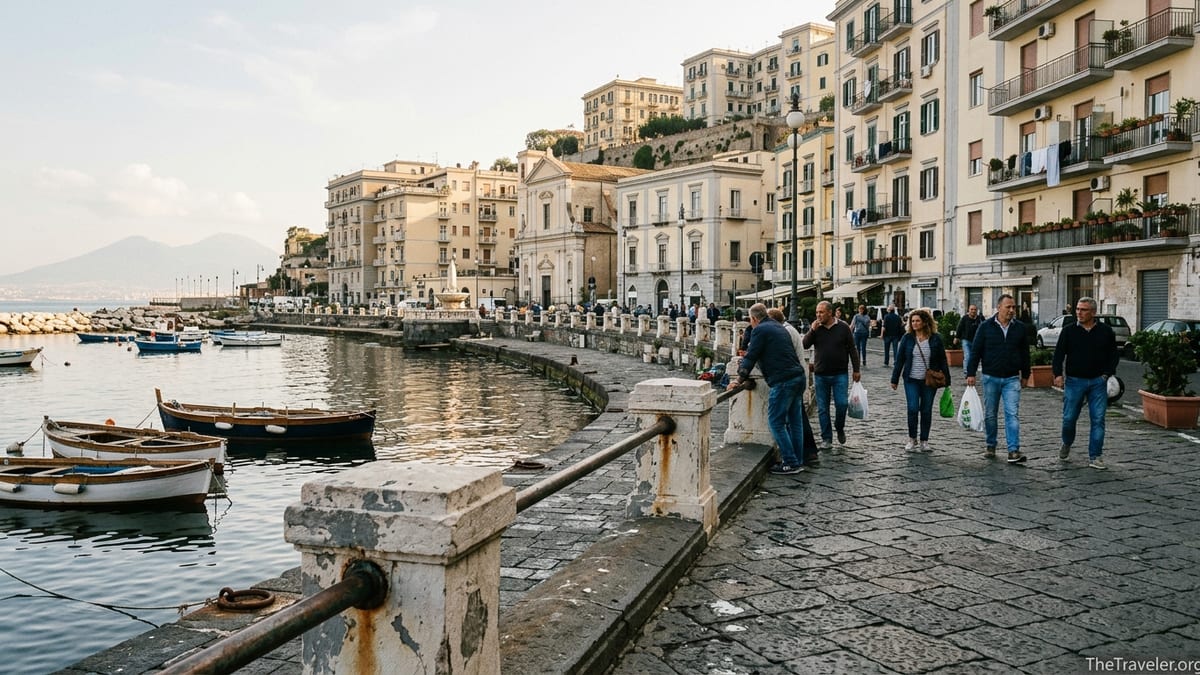
Mergellina is where many visitors first fall for Naples: fishing boats rocking in the bay, the curve of the waterfront under Posillipo, and the evening passeggiata along the lungomare. Yet most travelers never stray more than a few hundred meters from the main promenade and its cluster of bars and gelaterie. Look just a little deeper and this coastal neighborhood reveals small, human-scale surprises: pocket parks, story-filled churches, family-run spots where prices are still local rather than touristy, and corners of the waterfront where the city’s real rhythm continues largely unnoticed.
Get the latest updates straight to your inbox!
Why Mergellina Rewards Travelers Who Slow Down
Stand at the busy traffic circle by Mergellina’s harbor and it can feel like everything here has already been discovered. You will see boat tour kiosks, taxi drivers, and a strip of waterfront restaurants that could be in any Mediterranean city. But step one or two streets back, or take a staircase that locals use without thinking, and you quickly realize how layered this neighborhood is. Centuries of history and daily Neapolitan life sit side by side with the postcard views.
Mergellina lies on the edge of the Chiaia district, long considered one of Naples’ more elegant waterfront areas, yet its personality is more lived-in than polished. Apartment blocks lean against old churches, scooters dart out of tiny alleyways, and neighbors argue amiably from balcony to balcony. The best way to experience this is on foot, without a rigid timetable. Plan to spend at least half a day here, with space to follow your curiosity whenever you notice a stairway, courtyard, or side street that feels inviting.
For visitors used to covering as many “must-sees” as possible in a short time, Mergellina’s hidden gems can feel almost secretive. They do not announce themselves with big signs or ticket offices. Instead, they are integrated into everyday life. A small bar under the railway line may serve some of the most generous coffee and cornetti in the area for a couple of euros, while a corner bakery opens early for commuters and closes again by lunchtime, long before most tourists arrive. Accept that you will miss some sights, and you will start noticing the more intimate details that make this neighborhood memorable.
Parco Vergiliano: Tombs, Tunnels and a Quiet Hill Above the Trains
Directly behind Mergellina’s railway station is one of the neighborhood’s strangest and most atmospheric spaces: Parco Vergiliano, sometimes called the Park of Virgil’s Tomb. Many guidebooks confuse it with the larger Parco Virgiliano in Posillipo, but this is a small terraced park carved into the tufa hillside, just a few minutes’ climb from the station platforms. It is easy to miss if you simply exit the station and head straight for the sea.
The entrance, up a short slope from the station and behind the church of Santa Maria di Piedigrotta, leads into a surprisingly peaceful garden. Here, the city noise drops away and you climb gently through terraces of greenery, stone staircases, and viewpoints that frame the harbor beyond the railway lines. On one side of the path stands a Roman-era columbarium long associated, at least in popular tradition, with the poet Virgil. Nearby is a later monument marking the resting place of Giacomo Leopardi, one of Italy’s most beloved 19th century poets, whose remains were moved here in the 20th century.
In practical terms, Parco Vergiliano offers more than literary history. It is a cool, shaded retreat on hot days, with benches and stone walls where locals come to read or eat a quick lunch. There is usually no entry fee, and it rarely gets crowded, even in high season. Opening hours can vary slightly depending on the season, but arriving in the late morning or mid-afternoon is usually a safe choice. A simple picnic from a nearby bakery or deli eaten on one of the upper terraces can be one of the most relaxed meals you will have in Naples.
At the foot of the park you will also see the entrance to the Crypta Neapolitana, an ancient tunnel cut through the rock to link Mergellina with the inland neighborhood of Fuorigrotta. You cannot currently walk through the tunnel itself, but knowing it exists adds another layer to the sense that this quiet corner has been part of Naples’ infrastructure and imagination for centuries. Many visitors pass through Mergellina by train and never realize that, just behind the station, this green hillside preserves so much history in such a compact space.
Santa Maria del Parto: A Waterfront Church With Stories in the Stone
A short stroll from the harbor, slightly raised above the coastal road, sits the church of Santa Maria del Parto a Mergellina. It is easy to overlook if your eyes are drawn only to the sea, yet this 16th century church carries stories of noble patrons, poets, and Neapolitan devotion that reveal a quieter side of the waterfront. Its modest façade gives little away, which is perhaps why so few visitors step inside.
The church was founded by the poet and courtier Jacopo Sannazaro, who dedicated it to the Virgin Mary and chose it as his burial place. Inside, the light filters softly through small windows onto chapels and altars decorated over the centuries. You may find only a caretaker or one or two parishioners at prayer, especially outside of mass times. The atmosphere is hushed and noticeably cooler than the busy streets outside, making it an ideal pause if you have been walking the promenade under the sun.
Many visitors rush from Castel dell’Ovo towards the far end of the lungomare without realizing that Santa Maria del Parto stands at a kind of hinge between different faces of Naples: the official, monumental waterfront and the more intimate, local Mergellina. Stop for ten or fifteen minutes to look at the details of the altars, the artworks dedicated to the Madonna, and Sannazaro’s tomb. Some days you may see fresh flowers or candles that remind you this is still an active parish, not just a historical monument.
From the small square in front of the church you can also look back across the water toward Castel dell’Ovo and the curve of the bay. It is a less photographed angle than the classic postcard shots, but at sunset, when the façade is bathed in warm light and fishermen are packing up their gear below, it feels distinctly of Mergellina rather than of generic Naples.
The Waterfront Beyond the Postcards: Fontana del Sebeto and Working Harbor Life
Walk west along the sea from the main Mergellina marina and you quickly leave the densest cluster of restaurant terraces behind. The promenade opens out, traffic thins slightly, and locals take over the benches with takeaway pizza slices or paper cones of fried seafood. Along this stretch, at Largo Sermoneta, stands one of Naples’ lesser-known baroque fountains, the Fontana del Sebeto. Built in the 17th century and moved here in the 20th century, it celebrates the mythic river Sebeto that once flowed near Naples but has long since disappeared.
The fountain is an elaborate composition of carved stone figures, coats of arms, and decorative scrolls. Up close you can see the texture of centuries of wind and salt on the surface. Restoration works in recent years have helped preserve its details, but it still feels like a lived object rather than a polished museum piece. Cruise passengers and day-trippers often walk right by without understanding what they are looking at, or without noticing the historical plaques on the back side of the monument that reference its relocation.
Prices along this part of the waterfront are surprisingly mixed. A coffee at a small bar a couple of blocks inland can still cost around 1.50 to 2 euros, while a spritz with a sea view in a more design-conscious venue might run 7 to 9 euros. Gelato is often in the 3 to 4 euro range for two flavors, but some small, family-run gelaterie on side streets offer generous portions for a little less, especially if you order at the counter and eat while strolling rather than sitting at a table.
For a sense of Mergellina as a working harbor rather than a purely scenic spot, head down in the early morning. Around 7 or 8 am, when the light is soft and the air still cool, you can see fishermen checking nets and locals buying fresh catch directly from small boats or simple stalls near the docks. The selection changes daily, but you may find clams, small local fish, and squid that will end up on plates in nearby trattorie by lunchtime. This ritual, almost invisible to late-rising visitors, is one of the most grounded ways to see how the neighborhood still depends on the sea.
Everyday Mergellina: Bakeries, Bars and Staircases Locals Actually Use
One of the secrets to finding hidden gems in Mergellina is to follow residents rather than views. If you see a steady flow of people disappearing up a narrow staircase between buildings, consider taking that route instead of sticking to the main road. Many of these steps connect the lower waterfront with the hillside streets of Posillipo, passing small shrines, tiny gardens, and unexpected viewpoints on the way.
In the morning, watch where commuters grab their coffee. Small stand-up bars under the railway arches or on corners slightly back from the water often serve better espresso than the more scenic promenade cafés, for lower prices. A classic Neapolitan breakfast of caffè and a cornetto or sfogliatella typically costs between 3 and 4 euros if you stand at the counter. Look for places where the barista knows regulars by name and the pastry trays empty quickly; this is a good sign that everything is fresh and that you are tapping into local routines.
Similarly, neighborhood bakeries and friggitorie sell snacks that double as an inexpensive, impromptu lunch. A slice of pizza al taglio might be 2 to 3 euros, while a paper cone of fritto misto or simple fried pasta bites is usually in the same range. Many of these spots close by mid-afternoon or take a break until evening, so if you are exploring around lunchtime it pays to step off the main road and scan the side streets for handwritten signs and the smell of fresh bread.
Stay alert to small details that signal everyday community life: laundry strung high between buildings, a barber shop with only Italian signage, or a tiny florist keeping late hours for last-minute gifts. These are not traditional “sights,” yet they give Mergellina its texture and help balance the more polished, tourist-facing side of the waterfront. Even a five-minute detour to buy fruit from a street vendor rather than a supermarket can lead to unexpected conversations and recommendations for places that never appear in guidebooks.
Riding the Mergellina Funicular to Local Viewpoints
Another overlooked feature of the neighborhood is the Mergellina Funicular, one of Naples’ four remaining funicular lines. The lower station sits a short walk inland from the harbor. Many visitors never realize it exists, preferring to stay on the flat waterfront, yet a quick ride up the hillside opens up a very different perspective on the city and the bay.
The funicular links Mergellina with the higher Posillipo area, stopping at intermediate stations that serve residential neighborhoods rather than tourist highlights. A single ticket costs roughly the same as a standard urban transport fare in Naples, and you can use the same contactless passes or paper tickets valid on the metro and buses. Trains generally run every 10 to 15 minutes during the day, though schedules can tighten slightly at peak commute times.
For visitors, the real attraction is the gradual reveal of the bay as you climb. Through the carriage windows you see the harbor drop away, the line of the lungomare curve in both directions, and Mount Vesuvius appear more fully on the horizon. At one of the mid-level stops, you can get off and explore quiet streets with small grocery stores, bakeries, and balconies overflowing with plants. There are no major monuments here, but the everyday feel is exactly what many travelers look for when they say they want to experience a neighborhood “like a local.”
Plan your ride for late afternoon to catch warm light on the bay, or early evening when the city lights begin to glow. After wandering a little in the upper neighborhoods, you can return to Mergellina by funicular or, if you feel energetic and confident with stairs, by following some of the stepped alleyways downhill. Just remember that these routes are steep and not always well marked, so wearing comfortable shoes and allowing extra time is important.
How to Eat Well in Mergellina Without Breaking the Budget
The lungomare around Mergellina can be a trap for the hungry and tired. Menus in several languages, staff calling to you from doorways, and prices tailored to short-stay visitors rather than locals are common along the most visible stretch of the promenade. Yet just a few minutes’ walk inland, you can find trattorie and osterie where the atmosphere is more relaxed and the bill more in line with what Neapolitans pay for a good meal.
As a rough guide, in the more tourist-centered seafront restaurants mains often start around 16 to 20 euros, with seafood platters and whole fish significantly higher. In backstreet spots, a plate of pasta with local clams, linguine alle vongole, may be closer to 12 to 14 euros, and a carafe of house white wine might add another 6 to 8 euros for two people. Look for menus with a short list of daily specials written by hand, which often indicates the kitchen is working with whatever came in fresh that morning from the harbor.
For something lighter, seek out small wine bars or enoteche a block or two away from the sea. Many offer aperitivo formulas in the early evening: order a glass of Campanian wine for 5 to 7 euros and receive a plate of simple snacks such as olives, taralli, and small sandwiches included. It is an economical way to sample local flavors while people-watching without committing to a full dinner.
Do not underestimate the appeal of simple street food, either. A folded slice of margherita pizza from a busy takeout counter, eaten sitting on the low wall overlooking the boats, costs only a few euros and may be more memorable than a more formal meal. If you are unsure where to go, ask the staff at a neighborhood café where they themselves eat lunch. Locals quickly distinguish between places that mainly cater to visitors and those that see a steady stream of regulars year-round.
The Takeaway
Mergellina rewards travelers who are willing to look beyond the obvious promenade shots and explore at the level of individual streets, staircases, and neighborhood rituals. Its hidden gems are less about grand monuments and more about how history and daily life overlap in small, tangible ways: a quiet literary park rising above train tracks, a modest church that still shelters a poet’s tomb, an old baroque fountain facing a modern traffic flow, or a funicular that continues to carry residents between hillside apartments and the sea.
If you give yourself time to wander, follow locals rather than guidebook lists, and pay attention to how the neighborhood changes from early morning to late evening, you will experience a version of Naples that many visitors never see. Mergellina’s secrets are not really secret at all. They are simply woven so tightly into everyday life that you need to slow down enough to notice them. In doing so, you come away with a richer, more resilient memory of the city than any single viewpoint or landmark could offer.
FAQ
Q1: How much time should I plan to explore Mergellina’s hidden spots?
Most travelers will be satisfied with a half day, but if you plan to ride the funicular, visit Parco Vergiliano, linger along the harbor, and enjoy a sit-down meal, a full day allows a more relaxed pace.
Q2: Is Parco Vergiliano difficult to find from Mergellina station?
No. When you exit the station, look for the small uphill street behind the church of Santa Maria di Piedigrotta. The park entrance is a short climb away and is signposted, although the signs can be modest.
Q3: Are there entry fees for Parco Vergiliano and Santa Maria del Parto?
At the time of writing, both are generally free to enter, although opening hours can vary slightly by season and local regulations. It is wise to check locally or allow some flexibility in case of temporary closures.
Q4: What is the best time of day to see Fontana del Sebeto and the waterfront?
Early morning offers softer light and fewer crowds, while late afternoon and sunset provide warmer colors and more local activity. Midday in summer can be hot and bright, so shade is limited along the open promenade.
Q5: Is the Mergellina Funicular suitable for visitors with limited mobility?
The funicular cars themselves are step-free or have only a small step, but access to some stations may involve stairs or sloping streets. If mobility is a concern, it is best to assess the lower station area in person or ask local staff for assistance.
Q6: Are there affordable places to eat near the harbor, or is everything expensive?
While seafront terraces tend to be pricier, you can find more affordable trattorie, pizzerie, and takeout counters by walking a few streets inland. Standing at the bar for coffee or eating pizza to go are both budget-friendly options.
Q7: Is Mergellina safe to explore after dark?
The main waterfront and streets around the harbor are usually active into the evening, with many locals out for a stroll. As in any city, keep normal precautions in mind, stick to well-lit areas, and avoid very quiet backstreets late at night if you are alone.
Q8: Can I combine a visit to Mergellina with other nearby neighborhoods?
Yes. Mergellina connects easily by metro and seafront promenade to Chiaia and Castel dell’Ovo, and by funicular or bus to Posillipo. Many visitors spend a morning in Chiaia, an afternoon in Mergellina, and head up to Posillipo for sunset views.
Q9: Are there beaches in Mergellina where I can swim?
The immediate Mergellina waterfront is more harbor and promenade than beach, but in summer small bathing platforms and private lidos operate along the coast toward Posillipo. These usually charge a fee for entry and sunbed rental.
Q10: Do I need to speak Italian to enjoy the more local side of Mergellina?
Basic Italian phrases are appreciated and can make interactions smoother, especially in very local bars or bakeries. However, many younger people and hospitality staff understand at least some English, and a combination of simple words and gestures usually works well.