


North Carolina is packed with marquee names that appear on every itinerary, from Asheville’s breweries to the lighthouses of the central Outer Banks. Yet when you talk to frequent visitors, the stories that linger are often about the places they nearly skipped. They are the villages tucked behind bigger beach towns, the wild gorges beyond the well-known parkway overlooks, and the historic waterfronts overshadowed by resort islands next door. These are the corners of the state that travelers remember most vividly, often with the rueful admission: “I wish I’d given myself more time there.”
Get the latest updates straight to your inbox!
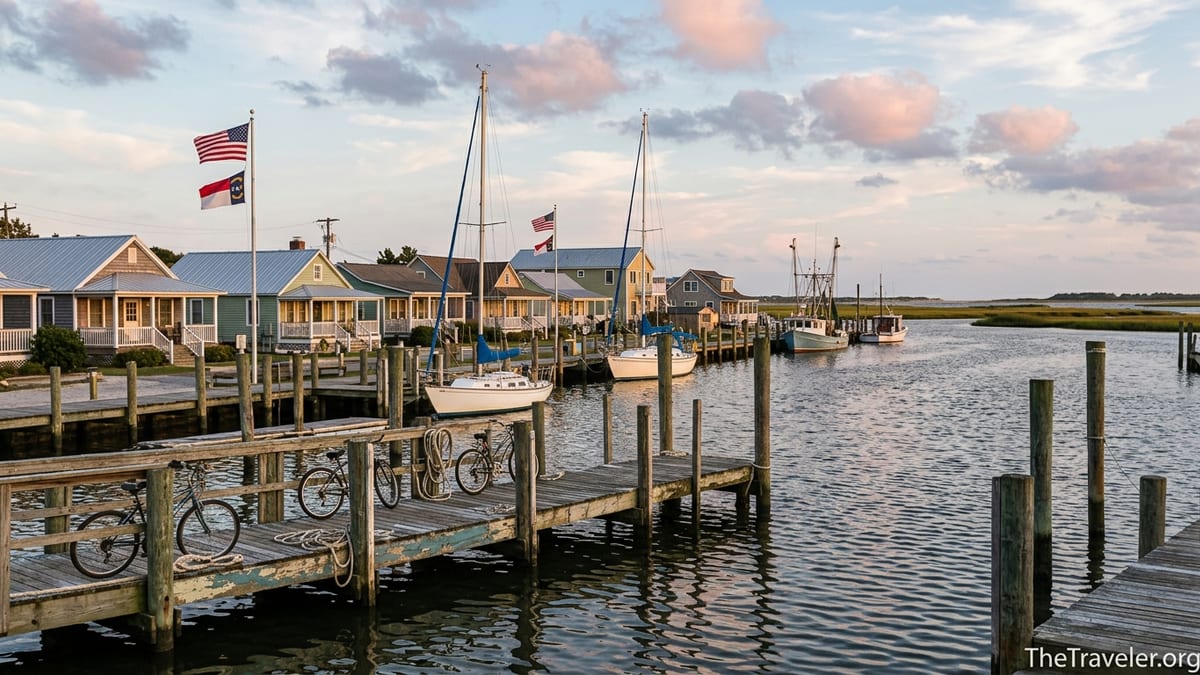
Ocracoke Island: The Remote Outer Banks Gem Hiding in Plain Sight
For many road trippers, the Outer Banks means busy stretches like Nags Head, Kill Devil Hills, and Corolla. Ocracoke Island, by contrast, requires an extra step: you can only reach it by ferry, private boat, or small plane, and the main village wraps around a harbor called Silver Lake rather than a four-lane highway. That extra bit of effort is exactly why so many travelers later say they regret not carving out a day or two for it. Once you roll off the ferry and onto the narrow lane shaded by live oaks, the frenetic pace of the main Outer Banks feels very far away.
The island stretches roughly 16 miles, but the developed village area is only a few square miles thick with weathered cottages, tiny inns, and golf carts quietly buzzing between the harborfront and sandy side streets. Visitors are often surprised to discover that the oceanfront outside town is nearly undeveloped, with miles of national seashore dunes and wide, uncrowded surf where you can still walk for 20 minutes without seeing another beach setup in shoulder seasons. Instead of large chain hotels, you find small family-run motels, harbor-view bed-and-breakfasts, and vacation cottages tucked behind cedar and yaupon hedges.
Because Ocracoke is logistically harder to slot into a standard one-week beach rental, many people tell themselves they will visit “next time” and stick to the easier drive-on islands. Those who do make the detour often end up building future trips entirely around it. Simple experiences stick: biking to the white Ocracoke Lighthouse at golden hour, waiting in line at a casual seafood shack where the day’s catch might have come off a boat that morning, or sitting at the harborfront as the sky turns peach and ferries glide in. The regret is rarely about what Ocracoke lacks, but about not giving it more than a hurried afternoon.
From a practical standpoint, the cost is not dramatically higher than other Outer Banks towns. Ferry rides for a car from the mainland are typically priced in the range of a casual dinner out for two, and many of the island’s eateries are closer to small-town diners and pubs than luxury resorts. What travelers underestimate is the time: reaching Ocracoke from central Outer Banks hubs like Nags Head can take three to four hours including the free Hatteras ferry, which nearly demands an overnight to feel worthwhile. Skipping that overnight is the choice many seasoned visitors say they would change if they could redo their trip.
Beaufort: Historic Waterfront That Outsmarts the Crowds
On the central coast, many vacationers hurry toward the better-known beaches of Atlantic Beach and Emerald Isle, crossing bridges with coolers and beach chairs stacked high. Historic Beaufort, set slightly off that main flow on the edge of the Intracoastal Waterway, is easy to relegate to a quick lunch stop or bypass entirely. Yet ask people who have wandered its grid of 18th and 19th century streets for an afternoon, and you will hear the same refrain: “We should have stayed here instead.”
Founded in the early 1700s, Beaufort has the compact, walkable feel of a small New England harbor town but with live oaks, front porches, and a slower Southern rhythm. The main waterfront boardwalk faces a marshy channel where wild horses graze on nearby barrier islands, and locally owned restaurants cluster along the water serving fresh shrimp, soft-shell crab in season, and regional takes on clam chowder. Just a few blocks inland you can step into a maritime museum, browse small bookstores and galleries, and still be close enough to hear halyards clinking in the marina during a northeast breeze.
Because Beaufort sits on the “Inner Banks” side of the barrier islands rather than directly on the Atlantic surf, many travelers assume it is less of a beach destination. In practice, a short passenger-ferry ride puts you on Carrot Island or Shackleford Banks, where wide, undeveloped beaches unfold with fewer crowds than some of the better-known resort islands. Day trips to these islands often cost less than a guided tour or attraction ticket in larger coastal cities, and you can still be back in Beaufort in time for a sunset drink on a second-floor porch overlooking the water.
Where regret creeps in is for those who only see Beaufort in the harsh noon light of a rushed lunch stop while en route elsewhere. The town shines in the shoulder seasons and evenings: strolls along the waterfront when the air cools and boats return, or quiet winter weekends when inn rates drop and locals linger over coffee. Travelers who discover it late often say they wish they had traded one or two generic condo nights in a busier resort for a couple of evenings here, where they could park the car and explore on foot.
New Bern: Colonial Streets and Riverfront Sunsets Many Drive Right Past
New Bern sits at the junction of the Neuse and Trent rivers, roughly halfway between Raleigh and the Crystal Coast. For many, it is little more than a name on the highway sign as they continue toward the beach. Those who do take the 10-minute detour from the main route find a brick-paved downtown framed by historic homes, church steeples, and a riverfront park where locals gather for festivals and evening walks.
The town served as North Carolina’s colonial capital, and traces of that history appear everywhere. You can tour a restored governor’s palace with gardens, step into centuries-old cemeteries, or simply wander past rows of restored homes with wide front porches and intricate woodwork. Unlike some larger cities where the historic quarter feels separated from everyday life, New Bern’s downtown still houses hardware stores, coffee shops, and small businesses alongside galleries and restaurants. It feels lived-in rather than preserved behind glass.
Because New Bern is not directly on the ocean, it is often dismissed by travelers whose mental picture of a North Carolina vacation revolves entirely around beaches. Yet the riverfront delivers its own kind of coastal atmosphere, with sailboats anchored offshore, waterfront hotels that are often priced comparably to mid-range beach motels, and public docks where you can watch fireworks or music events in summer. The slower pace can be a welcome change after days of traffic and parking hunts on barrier islands.
People who circle back to New Bern on a future trip frequently mention the same simple pleasures: sunset walks in Union Point Park, discovering a surprisingly good dinner at a brick-walled bistro housed in an old warehouse, or enjoying a quiet morning coffee along Middle Street while the town wakes up around them. The regret is often that they previously saw New Bern only through the windshield at highway speed, never suspecting there was a weekend getaway hiding just off the main road.
Linville Gorge and the High Country Beyond the Parkway Overlooks
Blue Ridge Parkway viewpoints are among the most photographed spots in North Carolina, and for many visitors the experience begins and ends at those neatly signed overlooks. Just south of the small community of Linville, however, the landscape drops away into one of the wildest canyons on the East Coast: Linville Gorge, sometimes nicknamed the Grand Canyon of North Carolina. It is protected as a designated wilderness area of more than 11,000 acres, with steep, rocky trails, backcountry campsites, and cliff-top vistas that feel far removed from pull-off parking lots.
Travelers often hear about Linville Falls, which sits at the edge of the gorge and is easily accessed via short, well-maintained paths suitable for most families. What many do not realize is that beyond the standard waterfall viewpoints lies a labyrinth of rugged routes such as the Pine Gap, Table Rock, or Shortoff Mountain trails, where you can spend hours following narrow ridgelines and looking down at the river far below. These hikes require more planning, sturdy footwear, and often a map or offline navigation, which is precisely why they reward those who invest extra time with solitude and expansive views.
The regret here usually comes in two forms. The first is travelers who stop for the quick waterfall overlook photo, then later see images of the expansive canyon vistas they did not realize were accessible with an extra half-day’s effort. The second are those who pack Linville Gorge into an already crowded High Country day of driving from Boone to Little Switzerland and back, leaving only an hour or two to explore. In both cases, people often say they underestimated how much there is beyond the visitor center signboard.
Logistically, visiting the gorge does not have to be expensive. Parking at trailheads in the national forest is typically free, and nearby lodging ranges from basic motels in Marion or Spruce Pine to cabins and small inns scattered along back roads. The real currency here is physical effort and planning: checking trail descriptions, bringing enough water, and understanding that a three-mile hike in this steep terrain can feel far more demanding than a similar distance around a suburban lake. Those who respect that challenge and build a day around it tend to come away with some of their favorite North Carolina memories.
Mount Airy: The Real-Life Mayberry in the Foothills
In the northwestern corner of the state, where rolling farmland gives way to the first true foothills before the Blue Ridge, Mount Airy sits quietly beside major interstates. Classic television fans know it as the inspiration for Mayberry, the fictional town from The Andy Griffith Show. But many travelers driving between Virginia and the mountains barely register it as they pass. When they eventually turn off and explore its compact downtown, the usual comment is that they did not expect it to feel so instantly familiar and so genuinely lived in at the same time.
Main Street is lined with brick storefronts, old-fashioned diners, and shops that lean into the Mayberry connection with squad car tours, a recreated sheriff’s office, and nods to characters like Barney Fife. Yet beyond the nostalgic signage, Mount Airy functions as a real small town: locals linger over coffee in independent cafes, high school students walk past the hardware store after class, and farmers drive pickups into town for errands. You can tour a museum dedicated to the show’s star, then grab a barbecue plate at a modest restaurant frequented more by residents than by tour groups.
Because Mount Airy is not as dramatic as the big-name mountain towns or as bustling as college hubs like Boone, many travelers expect a quick, kitschy stop and then end up staying for the afternoon. Side streets lead to historic neighborhoods with tidy bungalows, while a short drive puts you at the base of Pilot Mountain, whose quartz-capped summit is visible from town. A day here can easily include a morning hike, a casual lunch on Main Street, and an evening bluegrass performance at a local venue, all at prices that undercut those in larger tourist centers.
Those who regret skipping Mount Airy usually do so after hearing friends rave about their experiences at the annual Mayberry-themed festival, or after realizing how close they drove to the town en route to the Blue Ridge Parkway without stopping. It is the kind of place that fits naturally into a North Carolina road trip: modest in scale, rich in character, and best appreciated at the slower pace it encourages.
Small-Town Detours That Steal the Show
Beyond these headline destinations, North Carolina is full of smaller detours that quietly become the highlight of a trip. Travelers on their way from Raleigh to the coast sometimes discover a favorite bakery or coffee shop in a tiny downtown and end up rearranging their return route just to stop again. On mountain drives, a hand-painted sign for peaches or apples can lead to a family-run orchard where you chat with growers and sample cider on a picnic table with a view.
What ties these regrets together is not just scenery or history but the decision to keep moving instead of turning off. In a state where major beaches and cities can be busy and expensive in peak season, these overlooked stops often offer better value: an inn on a quieter riverfront street that costs less than a chain hotel by the interstate, a farm-to-table dinner that feels special yet reasonably priced compared with big-city tasting menus, or a guided kayak trip in a lesser-known marsh that runs cheaper than more heavily marketed dolphin cruises elsewhere.
Travelers who learn from past trips tend to adjust future itineraries in simple but powerful ways. They give themselves one “flex day” without fixed reservations, leave room in the budget for an extra night if a place captures their imagination, or swap a third visit to the same popular town for a first-time stay in somewhere like Ocracoke, Beaufort, or New Bern. Over time, those choices add up to a more textured understanding of the state, one that extends far beyond the postcard spots.
The Takeaway
Regret on the road rarely comes from seeing too many places. More often it lingers around the edges of a map: the ferry ride you put off, the gorge you decided was too much trouble, the historic riverfront you passed with a promise to “stop next time.” In North Carolina, those skipped corners are often where the deepest sense of place lives, whether in the salty air of a remote island village or the quiet of a foothills main street just after sunset.
If you are planning a future trip, the simplest way to minimize that regret is to build in space for curiosity. Look twice at the towns just off your main route. Ask locals where they go when they are off work. Consider trading one busy beach day for a ferry to a quieter harbor, or one more overlook stop for a half-day hike into a wilder canyon. The state’s most memorable experiences often sit just beyond the obvious headliners, waiting for travelers willing to slow down, turn off, and stay a little longer than planned.
FAQ
Q1. Is Ocracoke Island worth the extra ferry ride if I’m already staying on the Outer Banks?
Yes, many travelers say Ocracoke ends up being the most memorable part of their trip because it feels quieter, more walkable, and less commercial than the drive-on beach towns. The ferry ride adds time but also creates a sense of escape that standard beach accesses do not provide.
Q2. How many days should I plan for Beaufort instead of just a quick stop?
Ideally, spend at least one night so you can experience the waterfront in the evening and take a half-day ferry trip to nearby barrier islands. Many visitors who only come for lunch later wish they had booked a weekend to slow down and explore on foot.
Q3. Can I visit New Bern and still make it to the beach the same day?
Yes, you can stop in New Bern for a few hours on the way to coastal destinations, but the town rewards an overnight stay. If your schedule allows, consider arriving in the afternoon, enjoying dinner and a riverfront sunset, then continuing to the beach the next morning.
Q4. Do I need special gear or permits to hike in Linville Gorge?
You do not need technical climbing gear for the main hiking routes, but sturdy shoes, plenty of water, and a good trail map are important because the terrain can be steep and rugged. Overnight backpacking in the gorge may require permits in peak seasons, so check current regulations before you go.
Q5. Is Mount Airy interesting if I’m not a fan of The Andy Griffith Show?
Yes, even visitors unfamiliar with the show often enjoy Mount Airy’s small-town atmosphere, foothills scenery, local diners, and proximity to nearby parks like Pilot Mountain. The themed attractions add color, but the town’s appeal goes beyond television nostalgia.
Q6. Are these smaller destinations more affordable than the major beach towns?
Often they are. Lodging in places like New Bern, Beaufort, or Mount Airy can be comparable in price to mid-range chain hotels but with more character, and many key experiences, such as hiking or strolling historic districts, are low-cost or free.
Q7. When is the best time of year to explore these underrated parts of North Carolina?
Spring and fall are especially rewarding, with milder temperatures, fewer crowds, and often better lodging availability. Coastal towns like Beaufort and Ocracoke can be busy in mid-summer, while mountain areas such as Linville Gorge see more hikers in peak foliage season.
Q8. Do I need a car to enjoy these places, or can I rely on public transportation?
Public transportation options are limited in most of these destinations, so having a car makes it much easier to reach them and move between small towns, trailheads, and ferry docks. Once you arrive, though, many areas are pleasantly walkable or bikeable.
Q9. How can I fit one of these stops into a tight one-week North Carolina itinerary?
Pick one region to focus on. For example, if you are heading to the central coast, plan a full day and night in Beaufort or New Bern. If you are visiting the mountains, trade one extra day on the parkway for a deeper visit to Linville Gorge or Mount Airy, rather than trying to see everything at once.
Q10. What’s the best way to discover similar overlooked places while I’m already on the road?
Ask locals where they would take visiting friends, pay attention to small town names on highway signs, and be willing to follow your curiosity when a historic district or scenic side road appears nearby. Building a little flexibility into your schedule makes it much easier to say yes when an unexpected gem presents itself.