


Ask people why they are heading to North Carolina, and most will tell you one of two things: they are going to the mountains or they are going to the beach. Yet after a week of winding along the Blue Ridge Parkway or walking a windswept stretch of the Outer Banks, many travelers discover the real magic of the state lies in how easy it is to fall for both. North Carolina is one of the few places in the United States where you can watch sunrise over the Atlantic and, with a reasonably short drive, toast sunset from a Blue Ridge overlook. The result is a growing style of vacation that refuses to choose between salt air and spruce forest, and instead stitches them together into a single, satisfying trip.
Get the latest updates straight to your inbox!
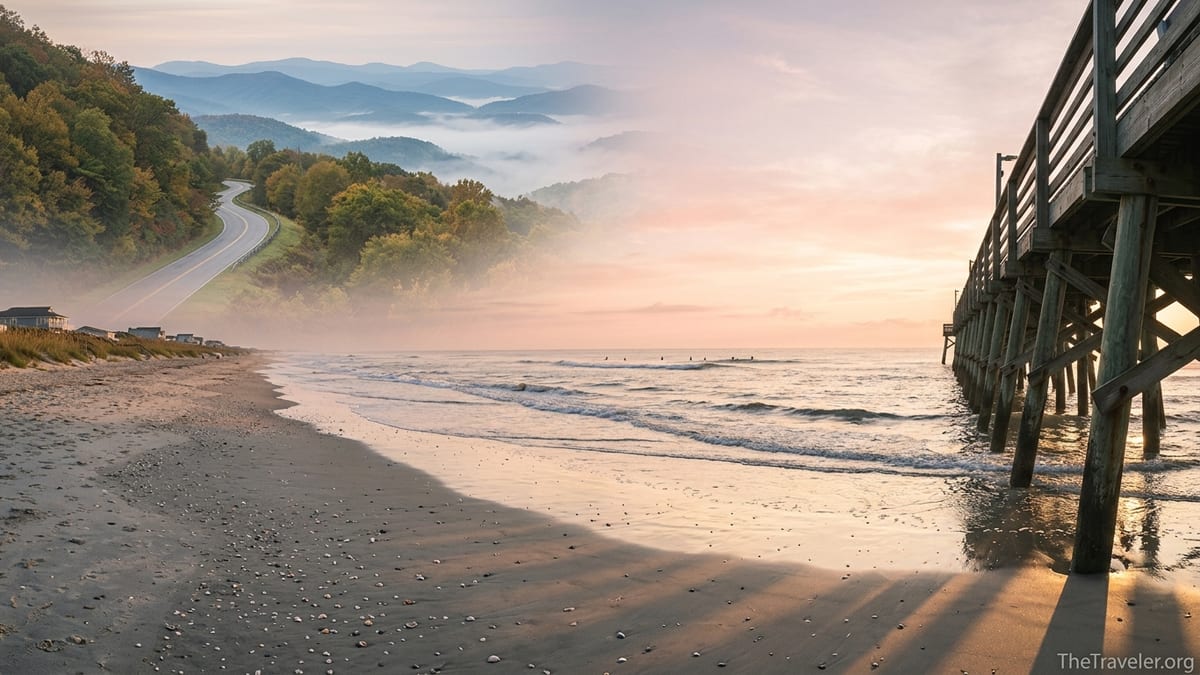
Mountains or Beaches: A Choice You Do Not Really Have to Make
On paper, North Carolina looks divided into two obsessions. In the west, the Blue Ridge and Great Smoky Mountains carve a serrated skyline of 6,000-foot peaks, trout streams and hardwood forests. In the east, barrier islands like the Outer Banks, Topsail Island and Bald Head Island form a ribbon of sand along the Atlantic. Travelers often book flights to Asheville or Wilmington convinced they are “mountain people” or “beach people.” But the state’s tourism pattern tells another story: road trips that start in one landscape and quietly detour into the other as visitors realize how close the two really are.
In practical terms, the distances are friendly. The drive from Asheville, the unofficial capital of western North Carolina, to Wrightsville Beach near Wilmington is roughly five and a half hours in normal traffic. Boone to the northern Outer Banks typically takes about six to seven hours, especially if you break it up with a barbecue stop near Raleigh. That means a week-long trip can comfortably include three or four nights in the mountains and two or three on the coast, without feeling rushed.
For many visitors, cost helps nudge them toward a blended itinerary. Summer ski-condo rentals at Sugar Mountain or Beech Mountain often drop in price once the snow melts, making them competitive with mid-range beach cottages on Topsail Island or Carolina Beach. Families will sometimes spend the pricier Fourth of July weekend in a small cabin outside Bryson City or Black Mountain, where night temperatures stay cool without air conditioning, then move to a more affordable stretch of coast such as Oak Island or Surf City once peak holiday pricing eases.
The result is a style of travel where people arrive imagining a single landscape but leave with camera rolls full of two. A couple might come for the famous curves of the Blue Ridge Parkway, then find themselves wading into warm water at Carolina Beach later the same week. A family that booked an oceanfront rental in Nags Head could end their trip fly-fishing on the Davidson River near Brevard. North Carolina invites that kind of quiet pivot.
Western North Carolina: Blue Ridge Towns That Hook Beach Lovers
Many confirmed “beach people” discover their mountain side in and around Asheville. The city’s compact downtown makes it easy to park once and explore on foot, moving between breweries, galleries and restaurants in converted brick warehouses. You can spend a morning walking the French Broad River Greenway, then be at a Blue Ridge Parkway overlook, such as the popular Folk Art Center access, within a 15 to 20 minute drive. In October, when the maples and oaks flare into red and gold, that contrast between urban energy and wilderness views is especially striking.
Smaller towns often deliver the conversion moment. In Boone and nearby Blowing Rock, cool evening air, mountain sunsets and front-porch rocking chairs feel like the opposite of a humid day on the sand. Travelers who usually crave long beach walks find themselves hiking the Tanawha Trail beneath Grandfather Mountain’s cliffs, or buying picnic fixings before driving up to the Linn Cove Viaduct pull-offs for lunch with a sweeping view of the Blue Ridge. Winter visitors who come to ski at Appalachian Ski Mountain or Sugar Mountain in December and January sometimes return the following June just to hike and float the New River.
Farther southwest, Bryson City and the towns edging Great Smoky Mountains National Park have a similar effect. A family that is used to renting a beach house in Emerald Isle might instead book a riverside cabin along the Tuckasegee River, then spend their days riding the Great Smoky Mountains Railroad, rafting the Nantahala River or chasing waterfalls in Deep Creek. Even beach loyalists appreciate the sense of discovery that comes with standing at Newfound Gap on the state line and realizing the ocean they usually visit is only a half day’s drive away.
For visitors who love waterfront settings, the mountain lakes ease the transition. Lake Lure, Fontana Lake and Lake James are ringed with cabins and small lodges where you can swim or paddle in clear, cool water. It is not the same as walking straight from a hotel onto the sand, but it scratches a similar itch. Many travelers who first chose these lakes as “compromises” for a multigenerational trip end up returning specifically for the mix of mountain views and shoreline access.
Atlantic Icons: How Beach Towns Turn Mountain Fans into Wave Chasers
On the other side of the state, people who swear by mountain vacations unlock a new affection for the coast when they hit the Outer Banks or the beaches near Wilmington. The Outer Banks in particular feel surprisingly wild, especially for travelers used to crowded East Coast resort strips. Long, undeveloped stretches of Cape Hatteras National Seashore give the same sense of space you might feel standing at an overlook along the Parkway. Instead of valleys and ridges, you see endless dune lines and the Atlantic meeting the sky.
Beach towns appeal to the same laid-back travelers who love small mountain communities. Nags Head and Kill Devil Hills have the relaxed, slightly weathered feel of a place that has hosted family vacations for decades. Oak Island and Topsail Island attract people looking for low-key rentals, simple seafood dinners and quiet evenings on decks. Even the more energetic Carolina Beach, with its neon-lit boardwalk and summer amusement rides, can win over travelers who thought they preferred quiet mountain evenings listening to crickets.
Cost and atmosphere are often what surprise mountain devotees most. While oceanfront houses in parts of the Outer Banks or Wrightsville Beach can rent for high weekly rates in July, more modest duplexes or condos a short walk from the sand are common along Topsail Island, Emerald Isle and Atlantic Beach. For couples used to booking a cabin with a hot tub near Waynesville or Maggie Valley, a second-row beach house with a covered porch and a charcoal grill can feel like a similar sort of affordable escape, just with the sound of waves instead of wind in the trees.
Active mountain travelers also find plenty to do besides sunbathing. Surf schools around Wrightsville Beach, stand-up paddleboard rentals in Beaufort, and kiteboarding lessons along Pamlico Sound give hikers and mountain bikers an outlet for their energy. Visitors who have spent years chasing fall color along the Blue Ridge quickly understand why locals talk equally passionately about late-September sea temperatures and October swells.
Designing a Mountains-to-Coast Road Trip in One Week
The most convincing way to understand how mountains and beaches work together is to drive between them on a single trip. A popular one-week itinerary for first-time visitors starts in Asheville and ends on the coast near Wilmington. Travelers typically spend three nights based in Asheville or nearby Black Mountain, two nights around Boone or Blowing Rock, then drive east for two or three nights in Wrightsville Beach or Carolina Beach.
In reality, this kind of trip is straightforward. On day one, you might land in Asheville, pick up a rental car and settle into a small hotel or vacation rental in the River Arts District. Day two can be devoted to the Blue Ridge Parkway, stopping at overlooks like Craggy Gardens for short hikes. Day three might include a morning tour of the Biltmore Estate gardens, followed by an afternoon drive along the French Broad River and dinner in West Asheville. With three nights, you have time for at least one long hike in Pisgah National Forest or a drive to the waterfalls around Brevard.
From there, a short relocation day takes you to Boone or Blowing Rock. The drive along the Parkway between Asheville and the High Country rewards frequent stops at places like Price Lake or the Linn Cove Viaduct. Two nights in Boone give you enough time to walk the campus of Appalachian State, climb the short but steep trail at Rough Ridge for panoramic views, and linger over a long dinner in town. Many travelers at this point feel they have already “done” the mountains, but the road trip is only half finished.
On day six, you point the car east on Interstate 40 and drive toward Wilmington, where the air gradually turns warmer and more humid. Checking into a simple motel or vacation rental near Wrightsville Beach that evening, you will likely notice a culture shift: surfers rolling boards down side streets, children pedaling beach cruisers to get ice cream, and a horizon that stretches flat instead of rising into peaks. Day seven might be nothing more complex than coffee on a balcony overlooking the marsh, a late morning swim, and a stroll to a casual seafood spot. After days of structured hiking and sightseeing in the mountains, the unhurried rhythm of the coast can feel like a revelation.
Seasonal Sweet Spots: When Mountains and Beaches Shine
Timing shapes how visitors experience both parts of North Carolina. Summer school holidays send crowds to the coast, where ocean temperatures often feel comfortable for swimming by late May and stay warm well into September. July in particular is popular in the Outer Banks, Carolina Beach, Topsail Island and Oak Island, when family reunions fill large rental houses and boardwalks light up with evening events. Those same weeks can feel hot and humid in the Piedmont, which nudges many residents to escape either uphill or to the ocean.
In the mountains, summer heat is softer. High-elevation towns like Beech Mountain, Blowing Rock and Highlands stay several degrees cooler than the cities below, with many evenings cool enough for light jackets. That makes July and August ideal for travelers who like active days on the trail but dislike the heavy humidity common along the coast. Air-conditioned cabins and hotels abound, but plenty of older lodges still rely on open windows and ceiling fans, a welcome change for people used to sealed beach condos.
Spring and fall are the true bridge seasons, when it becomes easiest to combine both landscapes in one trip. In April and early May, mountain trees leaf out while azaleas and dogwoods bloom along coastal towns from Wilmington to Beaufort. Late September and October bring a kind of double season: ocean water remains relatively warm for swimming on many beaches, but overnight lows in Asheville, Boone and Bryson City sink enough to produce crisp mornings and, by mid-October, reliable fall color. Travelers who aim for these shoulder periods often find better weekly rental rates and thinner crowds in both regions.
Winter skews toward the mountains, especially for those interested in skiing or cozy weekends with fireplaces and hot drinks. Resorts near Banner Elk typically open by December if weather cooperates, and towns like Blowing Rock decorate their main streets for the holidays. On the coast, some restaurants and smaller shops scale back hours in January and February, but oceanfront rentals in places like Nags Head or Ocean Isle Beach can become attractively affordable, drawing visitors who like long, solitary walks on chilly sand and storm watching instead of sunbathing.
Cost, Logistics and Real-World Tradeoffs
One reason travelers talk themselves into choosing either mountains or beaches is a fear of complexity. They picture extra rental car days, higher fuel costs and two sets of lodging reservations. In practice, the tradeoffs are manageable with basic planning. Rental cars from airports such as Charlotte, Raleigh-Durham, Asheville and Wilmington are generally competitive with other U.S. mid-size city rates, especially if booked several weeks ahead. Fuel prices fluctuate, but the total mileage for a loop that connects Charlotte to Asheville, Boone and then the Wilmington area often falls in the 700 to 900 mile range, a reasonable number for a week-long trip.
Lodging costs vary more sharply. Oceanfront houses on the Outer Banks or Wrightsville Beach can command high rates in peak summer weeks, especially around holidays. Yet stepping a block or two off the sand often reduces prices noticeably, and smaller beach markets like Topsail Island, Atlantic Beach or Holden Beach tend to offer better value than the most famous stretches. In the mountains, cabins with hot tubs, fire pits and big views near towns such as Bryson City, Black Mountain or Burnsville are often less expensive on weeknights outside of leaf season in October.
Travelers also weigh the cost of activities. A day of hiking in Pisgah National Forest or along the Appalachian Trail usually carries little more than a modest parking or trailhead fee, making it an attractive option for budget-focused families. On the coast, simple pleasures like shell-seeking walks at low tide or fishing from a public pier can be just as affordable. More specialized outings, such as guided fly-fishing trips near Waynesville or kiteboarding lessons on Hatteras Island, add to the bill but often become trip highlights that visitors remember long after the price fades.
Food tends to balance out across both regions. In mountain towns, diners bounce between barbecue joints, farm-to-table restaurants and casual taprooms, often spending less than they would for seafood-focused dinners in major coastal resort towns. On the coast, fresh shrimp baskets, oyster specials and waterfront cocktails compete with simple burger stands and taco trucks. Many travelers keep costs predictable by booking rentals with kitchens, cooking breakfast and some dinners in both settings while splurging selectively on memorable meals, such as a white-tablecloth restaurant in downtown Asheville or a sunset seafood spot overlooking a marsh near Topsail.
The Takeaway
North Carolina’s enduring travel appeal lies in a kind of gentle bait-and-switch. People come believing they are choosing between two very different vacations. The reality on the ground is more fluid. Mountain towns like Asheville, Boone and Bryson City share an easygoing, outdoorsy spirit with beach communities from Nags Head to Oak Island. Lakefront cabins feel like a cousin to second-row beach houses. Hikers who chased waterfalls near Brevard one day may find themselves walking a tidal creek boardwalk in Wilmington a few days later, wondering why they ever felt the need to choose.
For repeat visitors, this realization changes how they plan. A family that once alternated years between a Smokies cabin and an Emerald Isle cottage might begin designing looping road trips that make room for both. Couples who used to book long weekends in either Asheville or Wrightsville Beach can now imagine a four-night trip that starts with craft beer and mountain sunsets, then ends with a quiet morning surf and a walk through maritime forest. Over time, many travelers stop thinking of themselves as mountain or beach people at all and start thinking of themselves simply as North Carolina people.
That shift is what keeps drawing visitors back. The state’s landscapes are not interchangeable, but they speak to the same desire to slow down, breathe deeply and feel small in a place much bigger than yourself, whether that is a ridge of ancient rock or a restless stretch of ocean. Once you have watched fog lift off a Blue Ridge valley and, a few days later, watched pelicans glide low over Atlantic waves, it becomes difficult to imagine a perfect North Carolina trip that does not include at least a taste of both.
FAQ
Q1. How many days do I need to see both the North Carolina mountains and beaches in one trip?
Most travelers find that seven to ten days is enough for a satisfying “mountains and coast” loop, with at least three nights in the mountains and two or three on the beach.
Q2. What is the best time of year to combine the Blue Ridge Parkway with a beach stay?
Late April through early June and late September through October are ideal, when mountain temperatures are comfortable and many beaches are warm enough for walks and, often, swimming.
Q3. Which mountain town pairs best with a Wilmington or Wrightsville Beach getaway?
Asheville is the most practical pairing, thanks to direct highway connections and plenty of lodging, but Boone, Blowing Rock and Black Mountain also work well for a loop that ends on the coast.
Q4. Are North Carolina’s mountain and beach roads suitable for nervous drivers?
Most main routes are modern highways, though portions of the Blue Ridge Parkway and some mountain backroads are winding. Drivers who prefer straighter roads can stick to interstates and primary state highways.
Q5. Can I visit both areas without renting a car?
Public transportation between the mountains and beaches is limited. A rental car gives you far more flexibility, especially for reaching trailheads, smaller towns and barrier islands.
Q6. How should I budget for lodging if I split time between the mountains and the coast?
Many visitors save money by choosing modest cabins or motels in the mountains and then booking smaller, second-row or off-beach rentals on the coast instead of peak-priced oceanfront houses.
Q7. Is it realistic to visit Great Smoky Mountains National Park and the Outer Banks on the same vacation?
It is possible, but the driving time between them is long. Most travelers who want both in one trip plan at least ten days and break up the drive with a night in the central part of the state.
Q8. What should I pack if I am visiting both high elevations and the beach?
Layered clothing is important. Pack a light jacket or fleece for cool mountain evenings, breathable clothing and swimwear for the coast, and comfortable shoes for both hiking and walking on sand.
Q9. Are there family-friendly activities that work in both the mountains and on the coast?
Yes. Easy hikes, waterfall walks, tubing or paddling on calm rivers, beach play, pier fishing and simple nature walks in maritime forests all appeal to a wide range of ages.
Q10. How far in advance should I book if I want both a cabin and a beach rental in peak season?
For popular summer and fall weeks, it is wise to reserve key lodging three to six months ahead, especially if you need a larger house or have fixed school or work dates.