


More news on this day
A freight train derailment in Hidalgo County during a period of powerful winds is drawing attention to the growing risk that severe weather poses to rail operations in South Texas, as early reports suggest gusts may have played a role in tipping cars off the tracks.
Get the latest news straight to your inbox!
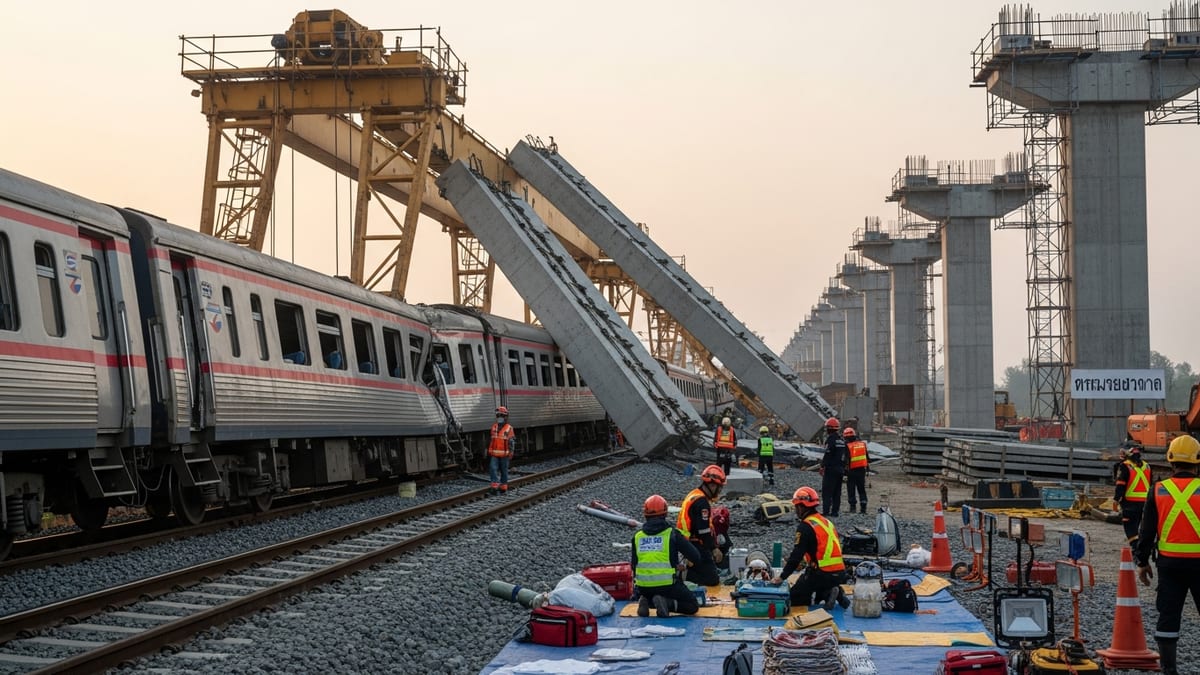
Derailment Near Border Communities Raises Safety Concerns
Initial accounts from local and regional media describe a freight train traveling through rural Hidalgo County when several rail cars left the tracks during a period of intense wind. Images shared on social platforms and referenced in news coverage show cars lying on their sides near the right of way, with debris scattered along the line and emergency responders blocking nearby roads while rail crews assessed the scene.
Reports indicate the derailment occurred along a key freight corridor that parallels the Rio Grande and serves as a major conduit for goods moving between the U.S. interior and the border. While no fatalities were immediately reported in early coverage, images suggest significant damage to rail equipment and track infrastructure, along with localized disruption to road traffic where the line intersects county routes.
According to published coverage, the train was hauling mixed freight typical of the corridor, including intermodal containers and bulk commodities. Early accounts do not indicate a large hazardous-materials release, though rail companies in the region typically move fuel, chemicals, and agricultural products, prompting routine checks by hazmat teams whenever a derailment occurs.
Publicly available information from rail safety databases and prior incident reports in Texas show that Hidalgo County and neighboring border counties have seen a modest but steady volume of freight movements in recent years, as cross-border trade has expanded and logistics hubs along U.S. 281 and Interstate 2 have grown.
High Winds Sweep Across South Texas
The derailment coincided with a round of severe weather that swept across the Rio Grande Valley, bringing strong, shifting winds and pockets of heavy rain. Forecast discussions and storm summaries from meteorological agencies cited gusts more commonly associated with severe thunderstorms and downbursts, conditions that can create powerful crosswinds along exposed stretches of track.
In recent seasons, publicly available storm analyses for Hidalgo and neighboring Cameron and Starr counties have noted episodes of damaging straight-line winds and microbursts capable of toppling trees, damaging structures, and overturning high-profile vehicles. Similar weather patterns were referenced around the time of the derailment, reinforcing early speculation that wind may have been a contributing factor rather than a mechanical defect or track failure alone.
Rail operations through South Texas frequently traverse elevated embankments, open fields, and low-lying farmland with little natural wind break, which can leave long strings of empty or lightly loaded cars more exposed to lateral gusts. Safety guidance cited in industry and advocacy publications notes that high-sided freight cars, particularly empty intermodal or autorack cars, can be vulnerable under certain wind conditions.
Published accounts from other regions of the country describe railroads temporarily reducing speeds or pausing operations when forecasts call for extreme winds to reduce the risk of cars being pushed off the rails. The circumstances in Hidalgo County remain under review, but the timing of the incident alongside a severe wind event is a central focus of early public discussion.
Investigators Examine Weather as a Contributing Factor
Rail accident investigations in the United States typically weigh a combination of factors, including track condition, train handling, mechanical performance, and weather. Publicly available summaries of past freight incidents have documented cases in which intense crosswinds were cited as a primary or contributing cause when trains derailed on exposed segments of line.
Analyses of previous Texas incidents, accessible through federal rail safety records, describe scenarios in which severe thunderstorms with estimated wind speeds near or above 90 miles per hour caused strings of freight cars to topple over. Those historical records are shaping expectations among rail observers that the Hidalgo County derailment review will consider wind speeds and direction in detail, alongside data from event recorders and track inspections.
Experts writing in transportation safety journals and technical reports emphasize that while derailments from wind alone are relatively uncommon compared with track defects or equipment failures, the risk increases when high-profile cars are combined with high speeds and sudden gusts. In such conditions, even small variations in train handling or local track geometry can influence whether cars remain upright.
The inquiry into the Hidalgo County derailment is expected to draw on local weather station data, radar analyses, and post-storm surveys, alongside field inspections of the rail line. Any formal determination of cause, according to prior investigative patterns, is likely to take weeks or months before appearing in publicly accessible reports.
Service Disruptions and Community Impact
Following the incident, publicly available traffic alerts and social media posts referenced detours for drivers near the derailment site and warnings of possible delays for freight and passenger movements on nearby lines. The affected corridor is frequently used by long-haul freight trains that supply warehouses, grain elevators, and industrial facilities across the Rio Grande Valley.
Local coverage indicates that rail traffic was temporarily halted in both directions as crews worked to clear derailed cars and inspect the integrity of the track structure and signaling equipment. Images from the scene show heavy machinery repositioning cars and crews placing ballast and replacement ties along the damaged section of line.
Residents in nearby communities have voiced concerns in public forums about noise, vibrations, and proximity of tracks to homes and businesses, especially when derailments occur close to road crossings or neighborhoods. While early accounts from this incident do not point to significant structural damage off railroad property, the sight of derailed cars near populated areas has renewed conversations about setback distances and land use along busy freight corridors.
Economic impacts from even a short disruption can ripple through the region, as agricultural exporters, manufacturers, and trucking companies depend on predictable rail schedules. Analysts who track freight movements in Texas note that delays near the border can affect multi-state supply chains, particularly when trains are rerouted or staged to wait for track repairs.
Spotlight on Weather Resilience in Rail Operations
The Hidalgo County derailment is adding urgency to broader discussions about how rail networks adapt to increasingly volatile weather. Climate assessments focused on Texas and the Gulf Coast have highlighted a pattern of more frequent severe storms, intense localized wind events, and rapid shifts from drought to heavy rain, all of which can stress transportation infrastructure.
Rail industry publications and academic studies describe a range of emerging strategies to address weather-related risks, from enhanced wind monitoring along vulnerable segments of track to the use of real-time data that allows dispatchers to slow or hold trains when gusts exceed defined thresholds. Some analyses propose updated engineering standards for embankments, bridges, and ballast to better withstand cycles of extreme heat, saturation, and erosion.
In South Texas, where freight lines intersect flood-prone areas and open plains, planners and community advocates are increasingly focused on how rail infrastructure interacts with nearby homes, schools, and businesses. The Hidalgo County incident is likely to feature in future discussions about emergency planning, land-use policy, and investments in rail safety technology designed to account for more intense wind events.
As crews restore normal operations, the derailment near the border stands as a reminder that transportation systems along the Rio Grande Valley are on the front line of changing weather patterns, and that understanding the role of high winds in this and similar incidents will be central to preventing future disruptions.