


More news on this day
Severe winter storms in early 2026 triggered days of cancellations, diversions and missed connections for Icelandair, Austrian Airlines and Air Canada passengers, as seven major hubs on both sides of the Atlantic struggled to keep operations running in freezing temperatures, heavy snow and reduced runway capacity.
Get the latest news straight to your inbox!
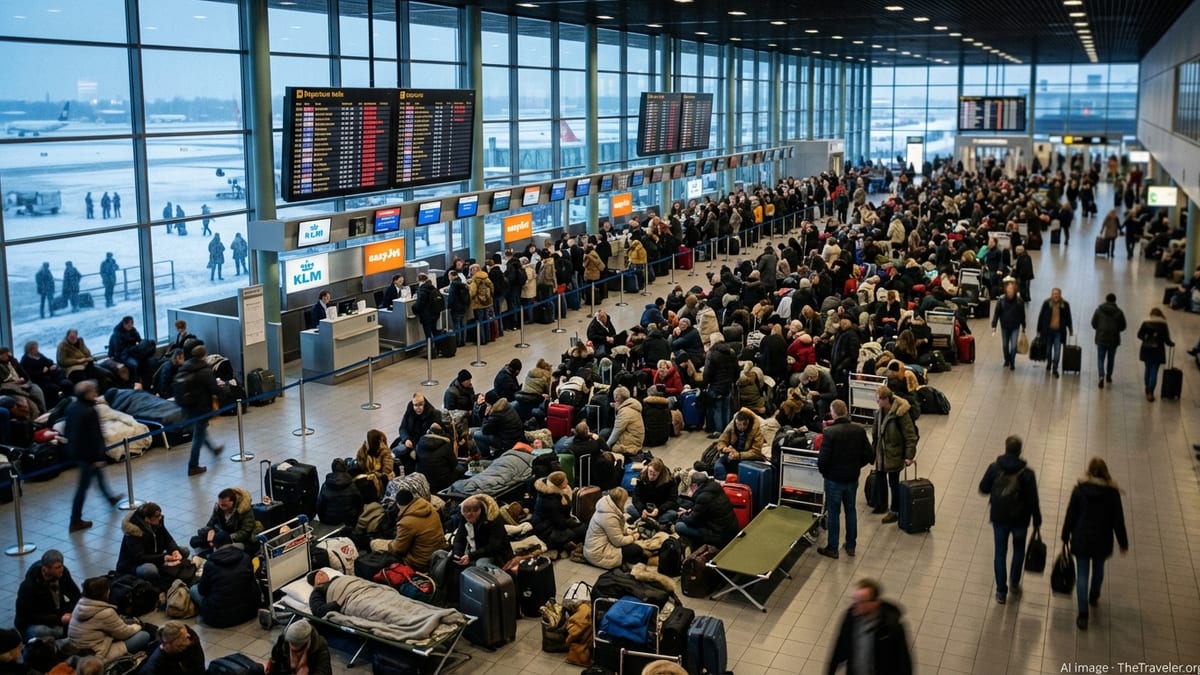
Storm systems test airline resilience across North Atlantic and Europe
The 2025–26 winter season brought a succession of powerful storm systems that put airline winter operations under intense pressure across North America and Europe. Network data for January 2026 show weather-related constraints increasing compared with the previous year, as airports contended with heavier snowfall, low visibility and strong crosswinds that reduced runway availability and slowed aircraft movements.
North Atlantic carriers with hub-and-spoke models were particularly exposed. Icelandair at Keflavík, Austrian Airlines at Vienna and Air Canada at Toronto and Montréal each faced the challenge of keeping tightly timed banks of transatlantic and regional flights running while de-icing queues, temporary runway closures and air traffic control flow restrictions accumulated. Publicly available operations updates and network reports point to an uptick in average delays per flight and a spike in day-of-operation schedule changes during peak storm periods.
Industry analysis published in recent years has highlighted how extreme winter weather can quickly cascade through airline networks, as additional de-icing time and disrupted aircraft rotations multiply initial delays. The winter of 2026 provided a live demonstration of these dynamics, with storms in North America rippling into European schedules within hours, and vice versa, as airlines adjusted departure waves, retimed connections and preemptively cancelled flights to preserve safety margins.
Icelandair diverts and cancels as Keflavík and U.S. East Coast are hit
Icelandair’s transatlantic network, which relies on short connections through Keflavík between North America and Europe, was directly affected by severe weather at both ends of the routing. In late February 2026, poor conditions at Keflavík forced multiple Icelandair aircraft to divert to Akureyri in northern Iceland, with flights waiting there until weather and runway conditions improved sufficiently for safe operations back into the main hub.
Earlier in the season, a powerful winter storm on the United States East Coast led Icelandair to cancel a series of flights between Keflavík and key American gateways. Coverage from Icelandic and international outlets indicates that services to Boston, New York area airports, Washington and Baltimore were among those affected as snow, wind and deteriorating conditions disrupted traffic along the corridor from Maryland to New England.
Icelandair’s publicly available customer-care material emphasizes that during disruptions the airline uses contact details in bookings and its mobile app to push schedule changes and rebooking options. The same guidance outlines meal and accommodation provisions under European passenger rights rules when delays or cancellations extend overnight and passengers become stranded at Keflavík or outstations.
For travelers, the combination of hub diversions and long-haul cancellations meant missed onward connections to Europe and North America, extended ground waits and, in some cases, unexpected overnight stays in Iceland or U.S. cities. Travel forums and passenger reports through the season described tight rebooking inventories during storm peaks as Icelandair sought to consolidate traffic onto operating flights.
Air Canada confronts prolonged snow and cold at Toronto and Montréal
In Canada, Air Canada’s main hubs at Toronto Pearson and Montréal–Trudeau saw significant disruption in January 2026 as a major winter storm and a broader cold wave settled over eastern provinces. Local media and airport operations updates documented hundreds of cancellations and delays at Pearson on some of the worst days, as heavy snowfall and blowing snow cut visibility, slowed runway clearing and extended de-icing times.
Environment and climate monitoring agencies reported record or near-record snowfall totals at Toronto Pearson during one late-January storm, accompanied by subfreezing temperatures that complicated snow removal and ramp work. In response, Air Canada activated flexible rebooking policies for affected dates, allowing passengers to change itineraries without fees when their travel touched Toronto or other storm-affected cities such as Montréal, Ottawa and Quebec City.
Air Canada’s public-facing travel outlook pages through the winter repeatedly highlighted winter-operations constraints at its hubs, flagging possible delays and cancellations linked to snow, freezing rain and low visibility. The carrier also issued broader operational updates describing how severe winter weather, combined in one period with an aircraft incident that reduced available capacity at Toronto, forced it to pare back flying to stabilize the schedule.
Passenger accounts posted online during and after the storms pointed to long call-center wait times, congested terminals and difficulty securing new seats as flights filled quickly following preemptive cancellations. While many travelers were rebooked before arriving at the airport, others reported same-day cancellations that left them relying on airport staff, self-service tools and notifications through airline apps to navigate changing options.
Austrian Airlines adjusts Vienna schedules amid Europe’s winter bottlenecks
Across Europe, a series of winter systems, including storms that disrupted major hubs in western and central Europe, created periodic bottlenecks for Vienna, where Austrian Airlines concentrates its operations. Network performance reports for January 2026 indicate that airport weather was a notable source of delay, with snow and low-visibility procedures affecting movements at several large European airports and feeding knock-on effects into the broader network.
While Vienna did not experience the same headline-making levels of disruption as some coastal hubs, Austrian Airlines still had to manage short-notice schedule adjustments as flights to and from affected cities encountered delays or cancellations. The airline’s online disruption guidance explains that passengers are notified of changes via its app, email or text message and are encouraged to monitor the “flight status” section for gate changes or significant time shifts.
For passengers facing missed connections at Vienna during winter storms, Austrian’s published policies describe access to meal vouchers, accommodation and, in some cases, rail alternatives within Austria. Under European passenger rights regulations, the airline also outlines eligibility for compensation in cases where cancellations or long delays are not attributable to extraordinary circumstances such as severe weather or air traffic control restrictions.
Travelers connecting through Vienna during the most challenging winter days in 2026 reported longer minimum connection times, crowded transfer areas and occasional baggage delays as ground crews worked within limited weather windows. However, when compared with the more dramatic shutdowns at certain European and North American hubs, Vienna’s hub operations largely remained intact, albeit with reduced punctuality.
Seven hubs illustrate growing exposure to extreme winter events
The disruptions that touched Keflavík, Akureyri, Toronto Pearson, Montréal–Trudeau, Vienna and several major U.S. East Coast airports in early 2026 underscore how interconnected the global aviation network has become and how sensitive it remains to extreme winter events. When East Coast storms forced Icelandair to cancel transatlantic departures, for example, repercussions were soon felt in Iceland and onward in Europe. Likewise, when Toronto and Montréal scaled back operations, Air Canada’s long-haul and regional networks saw schedule changes that reached across North America and into transatlantic markets.
Industry and academic studies on winter-weather resilience note that preventive cancellations and significant de-icing operations are meant to preserve safety and can shorten recovery times, even if they initially increase disruption for some passengers. The 2026 winter season offered further evidence that carriers with complex hub structures must weigh the short-term impact of cancellations against the operational benefits of avoiding gridlock on the ground and in the air.
For travelers planning itineraries through winter-prone hubs, the experiences of Icelandair, Austrian Airlines and Air Canada in 2026 highlight the value of leaving generous connection times, monitoring airline apps closely and understanding passenger-rights frameworks in both North America and Europe. As climate patterns drive increased variability in winter weather, analysts suggest that such large-scale disruption episodes are likely to recur, keeping winter operations a central concern for airlines and airports along the busy North Atlantic and European corridors.