


Los Angeles International Airport is big, busy and often stressful, which makes the promise of a quiet airport lounge sound very appealing. But with day passes, premium credit cards and airline memberships all competing for your money, a reasonable question emerges: are the lounges at LAX actually worth it, or are you better off grabbing a coffee by the gate and saving your cash for the trip itself?
Get the latest updates straight to your inbox!
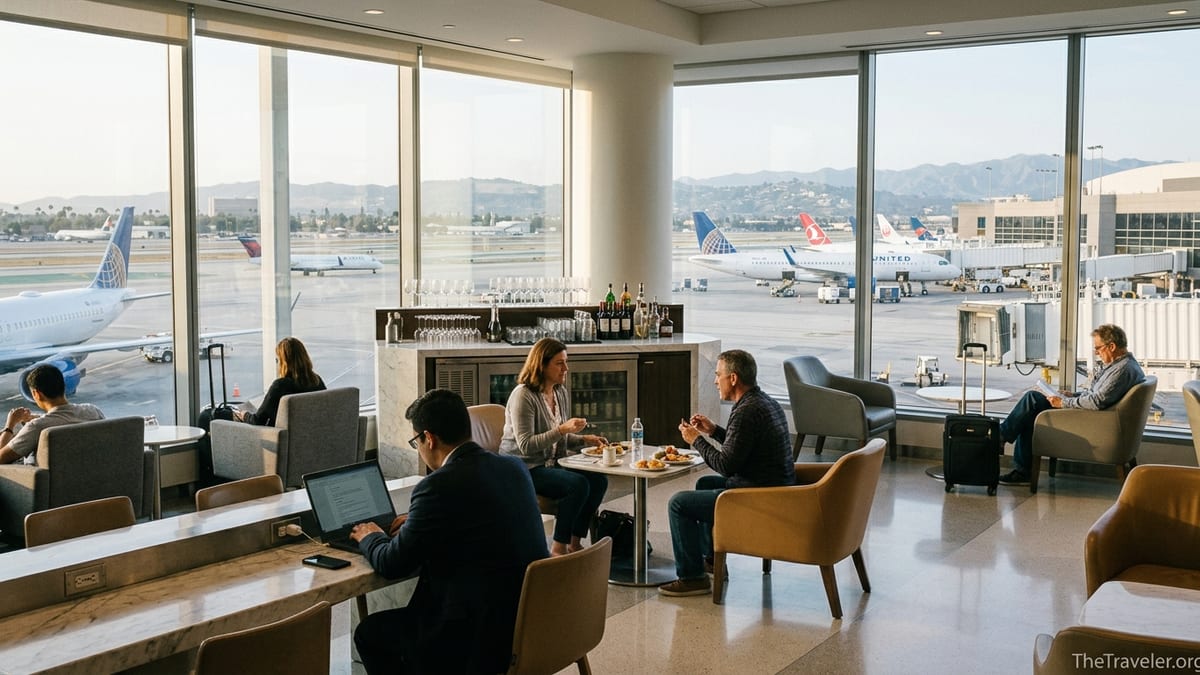
What Lounge Options You Will Actually Find at LAX
LAX has more than 20 lounges spread across its nine terminals, but they are not created equal, and not everyone can access each one. In broad strokes, there are three main categories: airline-operated lounges like the Delta Sky Club in Terminals 2/3 and United Club and Polaris Lounge in Terminals 7/8, alliance or partner lounges clustered in the Tom Bradley International Terminal, and independent or card-based spaces such as the American Express Centurion Lounge in Tom Bradley and the Alaska Lounge in Terminal 6. Most domestic travelers will encounter airline clubs first, since American, Delta, United and Alaska all have a presence.
In Tom Bradley International Terminal, which handles many long-haul flights, the lounge density is highest. There you will find the Centurion Lounge, Star Alliance Lounge, oneworld and SkyTeam alliance lounges, as well as individual airline spaces run by carriers like Korean Air and Qantas. This is also the area where premium cabin and elite status passengers tend to congregate before an overnight flight to Asia, Australia or Europe.
A recurring surprise for many visitors is that LAX is relatively weak for Priority Pass access compared with its size. Several data-driven lounge guides note that Priority Pass covers only a small fraction of the lounges at the airport, and that coverage is concentrated in Tom Bradley rather than in the domestic terminals. For many travelers who rely on a Priority Pass membership bundled with a credit card, that means they either need to be departing internationally or pair Priority Pass with another strategy, such as airline status or a premium card that unlocks a specific lounge.
Independent pay-per-use lounges are less prominent at LAX than at some other large hubs. Instead of a classic pay-in club open to all airlines, the market is dominated by airline-branded spaces and one major card-based player in American Express. There are also a couple of gaming-focused spaces that accept Priority Pass in certain terminals, but these feel closer to entertainment venues than to traditional lounges with showers, buffets and quiet zones.
How Much LAX Lounges Really Cost You
The headline prices for lounge access at LAX vary widely, and the true cost depends on how often you travel and which tools you already have in your wallet. Buying a one-time day pass directly at an airline club typically runs in the range of about 60 to 80 dollars per person. For instance, a walk-up day pass at a major U.S. carrier lounge in LAX commonly hovers around the mid-70-dollar mark for a single visit, subject to capacity controls and changing policies.
Annual memberships for airline clubs can easily reach several hundred dollars per year, often landing somewhere in the 700 to 850 dollar range depending on your elite status and whether you hold a co-branded credit card. At that price, you need to use the lounge at least a dozen times a year to approach reasonable value, and ideally more. For a road warrior flying out of LAX weekly on American, Delta, United or Alaska, the math becomes compelling; for someone who passes through LAX twice a year, the economics are far less convincing.
Premium credit cards reshape the picture. The American Express Platinum and Business Platinum cards, for example, include access to the Centurion Lounge in Tom Bradley for the cardholder when flying that day, along with some airline club partnerships on certain carriers. These cards carry annual fees measured in the hundreds of dollars, but many frequent travelers justify them not solely for lounge access but for a wider bundle of perks such as statement credits and travel protections. Guest fees in the Centurion Lounge at LAX are a significant factor: recent policy updates mean most cardholders now pay around 50 dollars per adult guest, and around 30 dollars per child, unless they reach high annual spending thresholds with American Express.
Priority Pass, which many cards still include, offers limited classic lounge access at LAX but may unlock alternative experiences such as gaming lounges or a small selection of partner spaces, sometimes with additional co-payments. A recent example is access to certain partner airline lounges where Priority Pass members may be admitted only during restricted hours and only after paying a surcharge of around 30 to 40 dollars per person. That reality can catch travelers off-guard who assume their membership means free and unlimited entry everywhere.
What You Actually Get Inside: Comfort, Food and Showers
The appeal of a lounge at LAX rests on more than soft seats and free coffee. On the comfort front, most airline clubs at the airport provide reasonably quiet seating, fast Wi-Fi, work tables with power outlets, and cleaner restrooms than many gate areas. Some, including the more recently renovated Delta Sky Club in Terminals 2/3, add features such as large windows and outdoor terraces. The Sky Deck attached to that Delta lounge offers runway views and fresh air, which can feel like a small luxury in an otherwise crowded terminal.
Food quality is a differentiator. At many standard airline clubs in LAX, you can expect a buffet of soups, salads, simple hot dishes such as pasta or rice-based entrees, and snack items like hummus, chips and cookies. Alcoholic drinks are usually complimentary for house wine and beer, with premium spirits available for purchase. By contrast, the Centurion Lounge in Tom Bradley is known among frequent flyers for its chef-designed menu that leans toward California-inspired cuisine, along with a stronger cocktail program and barista coffee. Travelers report that the hot dishes rotate seasonally and feel more like restaurant-quality small plates than the typical lounge carb-heavy fare.
For long-haul passengers, showers and quiet areas matter a lot. The Centurion Lounge at LAX offers shower suites, a spa area and a dedicated quiet room, which can be invaluable if you are arriving on a red-eye from the East Coast and connecting to Asia or the Pacific. Some alliance lounges in Tom Bradley also provide showers for premium cabin and elite passengers. In contrast, typical domestic airline clubs elsewhere in the airport may not always offer shower facilities, or they may operate them in limited numbers, leading to wait lists at peak times.
Not every LAX lounge feels luxurious. Travelers regularly report crowding, especially in the afternoon and early evening departure banks. In popular spaces such as the Centurion Lounge and the larger airline clubs, it is common to find most seats taken between roughly 3 p.m. and 8 p.m., with lines forming at the entrance when capacity limits are reached. At those moments, the experience can feel closer to a nicer food court than a sanctuary. When weighing whether it is worth paying for access, it is important to acknowledge that you are not guaranteed a tranquil, half-empty private club.
Time, Terminals and How Easy It Is to Reach a Lounge
Whether a lounge at LAX is worth it often comes down to timing and logistics. If you have a 45-minute connection from a domestic flight in Terminal 7 to another domestic flight in the same terminal, making a detour to Tom Bradley to visit the Centurion Lounge is rarely practical. Even with the network of airside walkways that now connects many LAX terminals, simply walking from one end of the airport to the other, finding the lounge, checking in and then backtracking to the gate can eat up most of your layover.
The situation improves if you have a longer connection or if your flights line up favorably with the terminal layout. Passengers flying American out of Terminals 4 or 5, for example, can often walk airside to Tom Bradley, visit the Centurion Lounge or an alliance lounge, and return without re-clearing security. United flyers departing from Terminal 7 can also weave through the internal walkways to reach Tom Bradley, although it is a longer trek and may not be comfortable with tight schedules or heavy luggage.
Terminal 1, dominated by Southwest, is the outlier. It is not connected airside to the rest of the airport, which means a Southwest passenger who wants to use a lounge in Tom Bradley or another terminal must exit through security, take a landside shuttle or walk, and then clear security again at the target terminal. For most travelers, this time penalty outweighs the benefits of a lounge visit unless you have a very long layover or are willing to arrive at the airport earlier purely for the lounge experience.
Another practical factor is check-in and security timing. LAX is notorious for congestion, especially at peak times and during ongoing construction projects associated with the new people mover system and terminal renovations. If you arrive late and spend an extra 30 to 40 minutes in security lines, the premium you paid for lounge access might end up buying you only a hurried drink before boarding. Conversely, if traffic is light and you clear security quickly, you may have two or three hours to enjoy the space, which shifts the value calculation in the opposite direction.
Case Studies: When LAX Lounges Pay Off and When They Do Not
Consider a family of four flying economy from LAX to Hawaii on a Saturday morning. Without any elite status or premium credit cards, their option is likely a paid day pass at an airline lounge, perhaps in the 70-dollar-per-person range. Spending nearly 280 dollars before stepping on the plane can be a shock. If their flight is on time and they only arrive at the airport two hours early, the per-hour cost of the lounge could exceed what they would spend having a sit-down breakfast at one of the airport restaurants. In this scenario, unless the family highly values a quieter place for kids to rest, the lounge is probably not worth it.
Now imagine a solo business traveler who flies from LAX to New York twice a month on American and holds an Admirals Club membership or a co-branded card that discounts that membership. They typically arrive early to work from the lounge, take advantage of the reliable Wi-Fi, power outlets and light meals, and often squeeze in phone calls in semi-private work pods. Spread across 20 or more visits per year, the effective cost per visit drops significantly, and the benefit of consistent productivity time and fewer gate-area distractions can easily justify the yearly fee.
International connections provide another clear example. A traveler arriving from Mexico in the early afternoon, connecting to an overnight flight to Sydney from Tom Bradley, may be facing a four or five-hour layover. With access to an alliance lounge or the Centurion Lounge through a premium card, they can shower, change clothes, enjoy a proper hot meal and perhaps even use a spa service before boarding. Compared with sitting in a crowded general waiting area, trying not to fall asleep, the difference in rest and comfort can materially improve how they feel on arrival in Australia.
On the flip side, there are regular complaints from Priority Pass members at LAX who expect the same breadth of access found at airports like Dallas or Miami but discover that only a handful of partners are available, sometimes with surcharges and sharply limited hours for cardholders. One example discussed frequently in online travel communities involves a partner airline lounge that allows Priority Pass entry only during a narrow mid-afternoon window and charges an additional fee of about 35 dollars per person. For a traveler who fought traffic to reach the airport, rushed through security and then faces an access restriction sign, the perceived value of their membership often drops dramatically.
How LAX Lounges Compare to Simply Eating and Working in the Terminal
To judge whether an LAX lounge is worth it, you need a realistic sense of what you would otherwise spend in the terminal. A sit-down meal with a drink at a mid-range airport restaurant in LAX often runs between 25 and 40 dollars per person, more if you add cocktails or dessert. Add a coffee from a branded chain and perhaps a snack for the flight, and a single traveler can easily spend 40 to 60 dollars just to pass time before boarding.
With that in mind, a day pass priced around 70 dollars that includes an all-you-can-eat buffet, coffee, tea, soft drinks and beer or wine can feel reasonable for a long layover of three or more hours, especially if you plan to have both a meal and drinks. For a couple spending two and a half hours in an airline club, the combined value of two meals, several beverages and a quieter work-friendly environment might justify a 140-dollar outlay, particularly on a long travel day when stress levels run high.
However, not everyone needs unlimited food and a desk. Many terminals at LAX now have upgraded seating zones with power outlets, and gate areas often sit near branded coffee shops that offer relatively comfortable spaces to sit with a laptop. If your main objective is to check email for 30 minutes and sip one drink, a lounge might feel like overkill. It is also worth noting that some of the most atmospheric parts of LAX, such as certain upper-level bars with runway views in Tom Bradley, are open to all passengers and can provide a similar sense of escape for the price of a single drink.
Some travelers create a hybrid strategy. They might use a Priority Pass gaming lounge in Terminal 3 or 6 for an hour of distraction, then move to a regular restaurant for a meal, especially if children are in tow and prefer games over quiet reading. Others maximize credit card credits for airport dining where available, reducing their out-of-pocket costs and making the absence of lounge access feel less painful. At LAX, this kind of patchwork approach can be surprisingly effective if you research in advance what each terminal offers.
The Takeaway
Lounges at Los Angeles International Airport are worth it for some travelers, some of the time, but they are far from a universal must-have. The airport is rich in airline-branded clubs and has a standout option in the Centurion Lounge for those with eligible American Express cards, yet it is relatively poor in classic Priority Pass coverage and independent pay-per-use spaces. That means the value you get depends heavily on which airlines and cards you already use.
If you are a frequent flyer based in Los Angeles, investing in an annual airline club membership or holding a premium card with strong lounge benefits can pay off through consistent comfort, productivity and food value spread over many trips. For international travelers facing long layovers, especially overnight connections in Tom Bradley, access to a high-quality lounge with showers, hot meals and quieter spaces can transform an exhausting journey into a manageable one.
On the other hand, if you only pass through LAX once or twice a year, are traveling with a large family, or have short connections, paying out of pocket for lounge access often fails the cost-benefit test. Crowding at peak times can further erode the experience, leaving you with something that feels only marginally better than the main terminal. In those cases, smart use of regular airport restaurants, upgraded seating areas and careful timing can deliver much of the comfort you need without the lounge price tag.
The bottom line is that LAX lounges are tools, not necessities. When aligned with your travel habits, schedule and financial reality, they can provide real value and a significant reduction in stress. When treated as a travel accessory to be purchased on impulse, they often disappoint. A little homework on terminal layout, access rules and your own priorities before you head to the airport will go a long way in deciding whether stepping behind the frosted glass doors at LAX is truly worth it.
FAQ
Q1. Is there a Priority Pass lounge in every terminal at LAX?
Priority Pass coverage at LAX is limited and concentrated mainly in and around Tom Bradley International Terminal, with some alternative experiences like gaming lounges in select domestic terminals. Many terminals have airline clubs that do not accept Priority Pass at all.
Q2. Which LAX lounge is best if I have an American Express Platinum card?
If your flight timing and terminal allow it, the Centurion Lounge in Tom Bradley International Terminal is generally considered the strongest option for Amex Platinum holders, thanks to its higher-quality food, cocktails, showers and quiet areas compared with many standard airline clubs.
Q3. Are day passes to LAX lounges worth buying for a short layover?
For layovers under about two hours, paying around 60 to 80 dollars for a day pass rarely makes sense unless you especially value a quiet environment. Once you have three or more hours to spend, the combination of food, drinks and comfort can begin to justify the cost.
Q4. Can I use a lounge at LAX if I am flying Southwest from Terminal 1?
Terminal 1 is not connected airside to the other terminals, so using most lounges would require exiting security, traveling landside to another terminal, and going through security again. For many travelers this time and hassle outweigh any lounge benefits, unless the layover is especially long.
Q5. Do LAX lounges have showers for economy passengers?
Some lounges in Tom Bradley International Terminal, including select alliance lounges and the Centurion Lounge, have showers. Access for economy passengers depends on whether you have the right credit card, paid access, or airline status that qualifies you to enter the specific lounge.
Q6. How crowded are LAX lounges during peak travel times?
Many popular lounges at LAX become crowded in the afternoon and early evening, especially between about 3 p.m. and 8 p.m. At those times, you may encounter wait lists at the door, difficulty finding seats and busier buffet lines, which can diminish the sense of exclusivity.
Q7. Is lounge access included with business or first class tickets at LAX?
Most international business and first class tickets from LAX include lounge access, usually to an alliance or airline-operated lounge associated with your flight. For domestic premium cabins, policies vary by airline and route, so you should check your specific carrier’s rules.
Q8. Do LAX lounges offer real meals or just snacks?
Standard airline clubs in LAX typically offer light buffets with a mix of snacks and simple hot dishes, while higher-end lounges such as the Centurion Lounge and some international alliance lounges serve more substantial hot meals that can replace a full restaurant visit.
Q9. Can families with children use LAX lounges comfortably?
Yes, families can use many LAX lounges, and some spaces have family-friendly seating and quieter corners. However, guest fees for children in card-based lounges and crowded conditions at peak times can make the experience expensive and sometimes less relaxing than expected.
Q10. How do I decide if a lounge at LAX is worth it for my trip?
Start by estimating how long you will realistically spend in the lounge, what you would otherwise spend on food and drinks in the terminal, and whether you have any work or rest needs that a lounge can uniquely meet. If the value of those benefits exceeds the cost or is covered by a card you already hold, a lounge visit is likely worthwhile.