


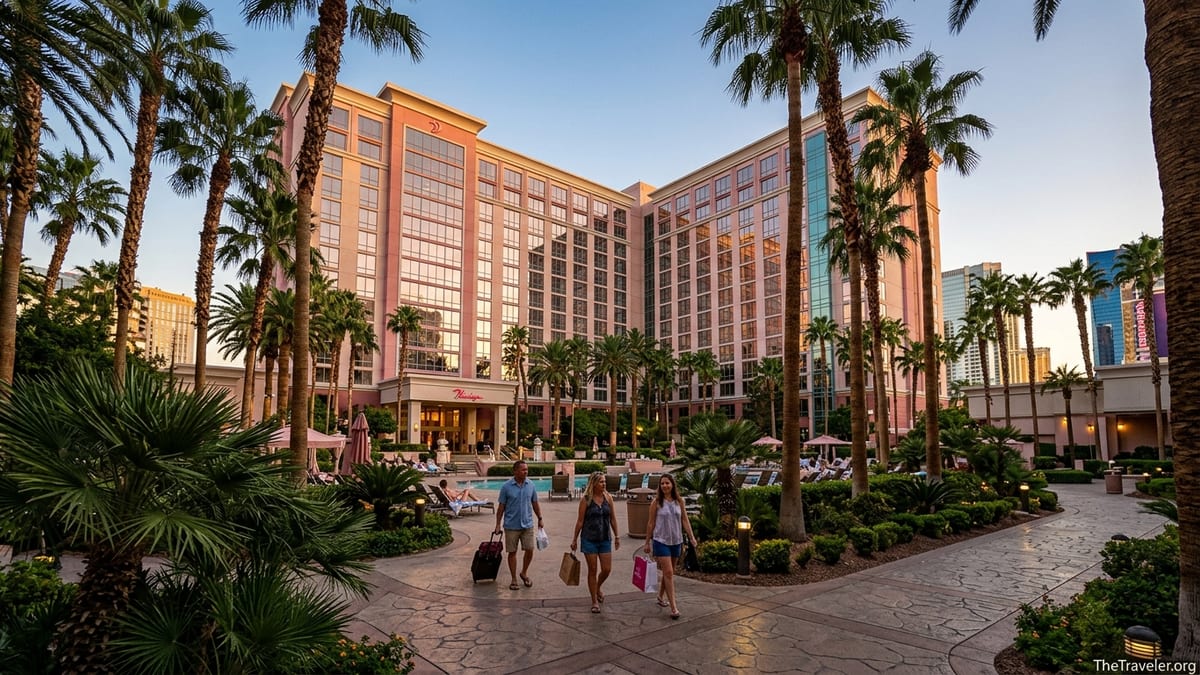
Hilton Grand Vacations Club Flamingo Las Vegas sits quietly behind the classic Flamingo casino on the center Strip, offering a non-gaming, condo-style base that appeals to families and longer‑stay travelers. While nightly rates can look reasonable, the true cost of a stay depends on resort fees, parking rules, deposits, and a handful of extra charges that are easy to overlook. This guide breaks down the typical costs you can expect in 2026, using real‑world examples so you can budget with confidence before you check in.
Get the latest updates straight to your inbox!
Resort Fee: When It Applies and What It Covers
One of the biggest cost questions in Las Vegas is whether a hotel charges a daily resort fee. Hilton Grand Vacations Club Flamingo Las Vegas is a timeshare-style, non‑casino property, and many guests booking directly through Hilton report that there is no traditional Las Vegas resort fee added on top of the room rate. Instead, the nightly rate for standard cash bookings generally includes access to the pool, fitness center, and Wi‑Fi. However, policies can vary by rate type and how you book, so it is wise to double‑check your reservation summary carefully before you confirm.
As an example, if you book a one‑bedroom suite directly on the Hilton site for 3 nights at a base rate of around 220 dollars per night plus tax, the price breakdown typically lists room rate and taxes only, without a separate 40 to 50 dollar per night resort charge line item. In contrast, if you stay next door at a traditional Strip casino such as Flamingo Las Vegas, you can expect a resort fee around the mid‑40‑dollar range per night before tax, which can add roughly 140 to 160 dollars to a three‑night stay. That difference is one of the reasons many repeat visitors choose the Hilton Grand Vacations property behind the casino.
If you are staying on a timeshare package or using Hilton Grand Vacations Club points, you also generally avoid a daily resort fee, though you will still pay normal taxes on any cash components of your stay and on incidentals. Guests who book through third‑party travel sites occasionally report confusion where the site lists a resort fee by default because it assumes all Strip properties charge one. In those cases, contacting the hotel directly before arrival to verify the presence or absence of a resort fee is the safest way to avoid surprises at checkout.
Because Las Vegas fees continue to evolve, treat any rate you see online as a snapshot rather than a guarantee. Before locking in non‑refundable reservations, take a minute to review the “Price Details” or “Rate Details” section of your booking, looking specifically for a line labeled “Resort Charge” or “Daily Resort Fee.” If it is not listed there for Hilton Grand Vacations Club Flamingo, the total you see for room and tax is typically what you will pay, aside from parking, deposits, and optional extras.
Parking: Free Self‑Parking and When You Might Still Pay
One of the biggest money‑savers at Hilton Grand Vacations Club Flamingo Las Vegas is parking. Guests can generally use the shared self‑parking garage, accessed via the same structure used for Flamingo and nearby LINQ, without a separate nightly self‑parking fee. This is a sharp contrast to many Strip resorts, where self‑parking can run around 15 to 20 dollars per night for hotel guests, especially on weekends and event dates.
In practice, this means that if you are staying four nights and driving a rental car, you could save 60 to 80 dollars compared with staying at a casino hotel that charges daily self‑parking. For example, a visitor who rents a compact car at Harry Reid International Airport for 55 dollars per day all‑in and parks it at Hilton Grand Vacations Flamingo will likely pay only the rental charges. The same guest at a resort that charges 18 dollars per night for parking would see their total bill climb by more than 70 dollars over a four‑night stay.
Valet parking is a different story. While self‑parking is typically free for Hilton Grand Vacations guests, travelers who prefer valet service at the adjacent Flamingo casino can expect typical Strip‑level valet rates that often sit around 30 to 40 dollars for 24 hours, plus gratuity for attendants. If you are tempted to use valet for an arrival or departure day only, make sure you factor that charge into your budget, since a single night of valet can easily cost as much as a nice dinner off‑Strip.
A final point to keep in mind is that parking policies can shift, especially during big events or holidays when the Strip is busier than usual. Some garages introduce “event rates” that are higher than standard pricing or restrict access to hotel guests only. Before you arrive, it is worth confirming current parking rules on your reservation or by calling the front desk, particularly if free self‑parking is a deciding factor in choosing the property.
Deposits, Holds, and How Much to Put on Your Card
Like most major hotels, Hilton Grand Vacations Club Flamingo Las Vegas places an incidental hold on your credit or debit card at check‑in. This is not a fee the hotel keeps as long as you do not charge extras to your room or damage anything, but it does temporarily reduce your available credit or bank balance. Travelers across Las Vegas often report holds in the 50 to 150 dollar per night range at many Strip properties, and Hilton‑branded hotels commonly fall somewhere in that band.
For a typical stay, you can plan on an incidental hold that may total several hundred dollars. For instance, on a four‑night booking, the front desk might authorize around 50 to 100 dollars per night, meaning a 200 to 400 dollar hold in addition to the full amount of room and tax. If your nightly rate is 250 dollars before tax and the hotel holds 75 dollars per night for incidentals, you would see about 1,000 dollars in room and tax plus a 300 dollar hold, for a total of roughly 1,300 dollars temporarily reserved on your card.
Using a credit card instead of a debit card is usually the most practical way to handle these holds, since debit holds can tie up real cash in your checking account for several days after checkout. If you must use a debit card, consider bringing a backup card for day‑to‑day expenses so that a large hold does not interfere with your food, entertainment, or rideshare budget while your bank processes the release.
The hold amount is generally released a few days after your stay, once the final bill posts and any room charges are settled. The exact timing depends on your bank, not the hotel. To avoid surprises, ask the front desk at check‑in how much per night they plan to hold and how it will appear on your statement. If you know you will not be charging anything to your room, you can sometimes request a smaller hold, but approval will depend on the hotel’s policies and the front desk manager’s discretion.
Breakfast, Food, and On‑Site Dining Costs
Hilton Grand Vacations Club Flamingo Las Vegas does not operate like a full‑service casino resort with a large buffet or a dozen restaurants on property. Instead, many guests rely on the in‑room kitchens or kitchenettes to prepare breakfast and simple meals, which can significantly reduce day‑to‑day costs. Studios typically include a small fridge and microwave, while one‑ and two‑bedroom suites usually offer full kitchens with a stove, full‑size refrigerator, and basic cookware.
For travelers who prefer not to cook, Hilton occasionally sells a “Breakfast Included” package for this property. In those cases, a higher nightly rate bundles in breakfast for registered guests at a designated venue, sometimes a partner cafe on site or nearby. Breakfast packages can add roughly 10 to 20 dollars per person per day to the room cost compared with the lowest flexible rate. For a couple staying three nights, that might mean spending an extra 60 to 120 dollars total for the convenience of starting each day with a pre‑paid meal.
If you book a standard rate without breakfast included, you will pay menu prices at on‑site or neighboring venues. As a real‑world example, a casual breakfast at a Strip‑adjacent cafe might run about 16 dollars for an omelet or breakfast sandwich, 4 dollars for coffee, and 3 to 4 dollars for juice, before tip. For two people, that can easily reach 45 to 55 dollars per morning. Over a four‑night stay, that difference between eating out and using your in‑room kitchen can add up to 150 to 200 dollars or more.
Grocery runs are one of the best ways to keep costs predictable. Many guests take a rideshare or short drive to a local supermarket just off the Strip and stock up on basics like coffee, cereal, eggs, snacks, and bottled water. A 75 dollar grocery trip can often cover several breakfasts, light lunches, and late‑night snacks for two or three people, which would cost several times more if purchased in resort cafes or casino food courts.
Taxes and How They Affect Your Final Bill
Beyond nightly rates and possible resort fees, state and local taxes significantly shape the final cost of a stay in Las Vegas. Hotel rooms in Clark County are subject to a combined lodging tax that is just under 14 percent for Strip‑area properties. This tax applies to the room rate itself and typically to any mandatory fees such as resort charges, but it does not usually apply to refundable incidental holds.
To see how this plays out in practice, imagine you book a one‑bedroom suite at 250 dollars per night for three nights, without a resort fee. The base room total would be 750 dollars. Applying roughly 14 percent in room tax would add about 105 dollars, bringing your pre‑incidentals total to around 855 dollars. If a resort fee of 45 dollars per night did apply, that would add 135 dollars, plus another 19 dollars or so in tax, pushing your total closer to 1,010 dollars.
Local sales tax in Nevada, which hovers around 8 percent in the Las Vegas area, also affects the price of food, drinks, and retail purchases charged to your room. If you run a tab of 200 dollars at the pool bar over a weekend, you can expect roughly 16 dollars in sales tax to be layered on top, before you add tip. That same tax applies whether you pay directly with a credit card at the outlet or post the charge to your room.
Because taxes are mandatory and not something you can waive with elite status or package deals, they are worth factoring into your budgeting from the start. A good rule of thumb is to add 15 percent to whatever base room total you see when you are rough‑planning a trip. That buffer usually covers room taxes and keeps your expectations realistic when the final bill arrives.
Other Extra Costs: Cleaning, Amenities, and Timeshare Pitches
One advantage of a timeshare‑style resort like Hilton Grand Vacations Club Flamingo is that many amenities, such as Wi‑Fi, fitness center access, and use of the pool and hot tub, are included in the rate for registered guests. There is typically no separate daily charge for the gym, and towels at the pool are usually complimentary. However, there are still smaller extras that can add up over the course of a stay if you are not paying attention.
Daily housekeeping is less frequent at many condo‑style properties than at traditional hotels. Standard stays may receive light service every few days rather than full daily cleanings. Guests who want more frequent service can sometimes request additional cleanings for an extra fee, which might be charged per visit. For a week‑long stay, paying for two extra mid‑week cleanings could add 50 to 100 dollars if the property applies a housekeeping surcharge beyond the standard schedule.
Another cost category is convenience items. Extra coffee pods, replacement kitchen utensils, or additional toiletries are typically free, but services like late check‑out, printing at the business center, or using certain recreation facilities may carry small fees. For example, a late check‑out extending your stay to 2 p.m. instead of 11 a.m. might cost a flat fee that varies by occupancy and demand. If you are flying out late in the evening and want to keep your room, factor this potential charge into your travel budget.
Finally, many guests staying at Hilton Grand Vacations resorts are invited to attend timeshare presentations in exchange for perks such as resort credits, show tickets, or discounted stays. The presentation itself does not cost money, but the packages that come with it often require an upfront promotional fee and a commitment to attend. A typical promotional offer might be a three‑night stay at a reduced rate plus a 150 dollar resort credit in exchange for a 90‑minute sales tour. If you miss the presentation or leave early, the resort can charge you the full standard room rate for your stay, wiping out the discount and potentially costing several hundred dollars more than you expected.
How This Property Compares to Nearby Strip Hotels on Costs
When you compare Hilton Grand Vacations Club Flamingo Las Vegas to large Strip casinos, the cost differences often come down to resort fees, parking, and dining habits. Traditional resorts such as Flamingo, Caesars Palace, or Planet Hollywood usually charge daily resort fees and nightly self‑parking unless you hold elite status or qualify for special exemptions. Over a four‑night trip, those line items alone can add 250 to 400 dollars to your total bill.
At Hilton Grand Vacations Flamingo, by contrast, many guests avoid resort fees entirely and enjoy free self‑parking, which makes the nightly rate feel more straightforward. If you are driving and plan to prepare some meals in your kitchen, the savings can be substantial. A family of four staying in a two‑bedroom suite for five nights might easily save 150 to 200 dollars in parking and 200 to 300 dollars in breakfast costs compared with staying in two standard rooms at a resort with daily fees and no kitchen facilities.
However, not every cost skews in favor of the condo‑style property. You will not usually find heavily discounted weekday casino promotions, free drink vouchers from gaming, or buffet credits tied to players’ club activity. If you spend most of your time in the neighboring casinos and rarely use your kitchen, a traditional resort where you can leverage gaming comps or loyalty perks might work out cheaper overall. The best value depends on your travel style.
For many visitors who want a calmer base just off the gaming floor with predictable nightly costs, Hilton Grand Vacations Club Flamingo Las Vegas hits a sweet spot. The key is to map out your likely spending in advance: estimate how many restaurant meals you will eat, whether you will rent a car, and how much you tend to charge to your room. Comparing those estimates across a few different properties often reveals which hotel truly offers the best value for your specific plans.
The Takeaway
Staying at Hilton Grand Vacations Club Flamingo Las Vegas can be surprisingly cost‑effective, especially for travelers who value kitchen access, a quieter environment, and the ability to avoid some of the Strip’s most notorious add‑on fees. In many cases, you will not face a separate nightly resort fee, and self‑parking for hotel guests is typically free, which already sets it apart from many neighboring properties. When you combine that with thoughtful grocery runs and limited room charges, the total cost of your trip can come in well below what you might pay at a similarly located casino resort.
At the same time, it is important to account for incidental holds on your card, sales and room taxes, and optional extras such as valet parking, housekeeping add‑ons, and late check‑outs. These expenses can quietly accumulate if you do not check your folio during the stay. Before you book, read the rate details carefully, confirm whether a resort fee applies to your specific reservation, and ask the front desk about current incidental hold amounts and parking rules when you arrive.
With a clear understanding of resort fees, parking policies, deposits, and typical daily spending on food and extras, you can decide whether Hilton Grand Vacations Club Flamingo Las Vegas fits your budget and travel style. For many visitors, especially families and repeat Vegas travelers who prioritize space and value over casino perks, this timeshare‑style resort behind the Strip delivers a straightforward, relatively fee‑light way to enjoy the heart of Las Vegas.
FAQ
Q1. Does Hilton Grand Vacations Club Flamingo Las Vegas charge a daily resort fee?
Many guests booking directly through Hilton report that there is no separate daily resort fee added, but you should always check your specific reservation’s price breakdown to confirm.
Q2. Is self‑parking free for guests at Hilton Grand Vacations Club Flamingo?
Yes, self‑parking is typically free for registered hotel guests using the shared garage, which can save you 15 to 20 dollars per night compared with many Strip casinos.
Q3. How much is valet parking if I do not want to self‑park?
Valet parking at nearby Strip properties usually runs around 30 to 40 dollars for 24 hours, plus tip, and is not included in your room rate at Hilton Grand Vacations Flamingo.
Q4. What kind of incidental deposit or hold should I expect at check‑in?
You can generally expect an incidental hold in the ballpark of 50 to 100 dollars per night, which is released after checkout as long as your room charges are settled.
Q5. Is breakfast included in the room rate?
Standard rates usually do not include breakfast, but Hilton sometimes offers breakfast‑included packages at a higher nightly rate. Otherwise, you will pay regular menu prices at cafes or use your in‑room kitchen.
Q6. Are there extra fees for using the pool or fitness center?
No, access to the pool and fitness center is typically included for registered guests, and there is not a separate daily access fee beyond your room rate and taxes.
Q7. How much tax will be added to my room rate?
Strip‑area hotel rooms in Las Vegas are subject to a combined lodging tax just under 14 percent, which is added to your room rate and any mandatory fees listed in your reservation.
Q8. Do I have to pay for housekeeping or cleaning during my stay?
Basic housekeeping is included, but at timeshare‑style properties it may be less frequent than at a traditional hotel. Extra cleanings beyond the standard schedule can sometimes carry an additional fee.
Q9. Are there any surprise charges related to timeshare presentations?
If you book a discounted promotional stay tied to a timeshare presentation, missing or skipping the presentation can cause the resort to charge you the full standard rate, which may be significantly higher than your promotional price.
Q10. What is the best way to avoid unexpected costs at this property?
Review your reservation details for resort fees, confirm parking and incidental hold policies at check‑in, use your kitchen and free self‑parking when possible, and monitor your folio during the stay so you can question any unfamiliar charges right away.