


More news on this day
San Francisco International Airport is experiencing significant arrival delays approaching two hours as a federal ground delay program slows flights into the Bay Area hub following one of the busiest July Fourth travel periods on record.
Get the latest news straight to your inbox!
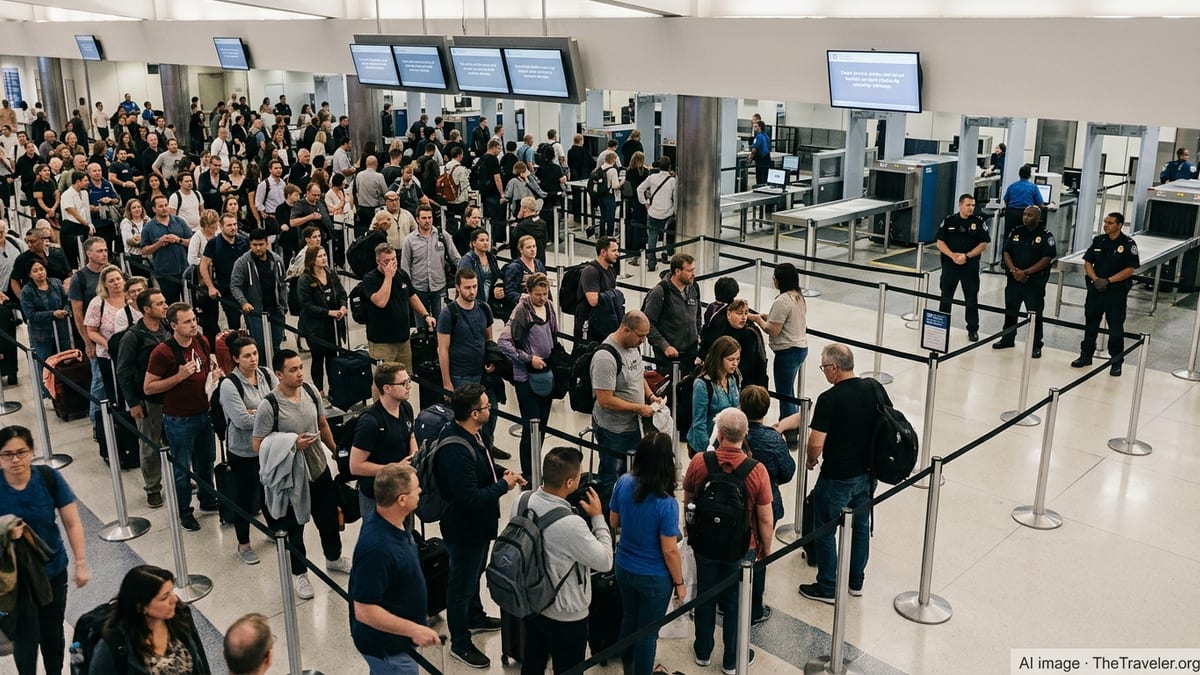
Ground delay program slows arrivals into SFO
Publicly available Federal Aviation Administration advisories for July 6 indicate that arrivals into San Francisco International Airport were subject to a ground delay program, a traffic management tool that meters flights into a congested airport by holding planes at their departure points. Such programs are typically used when the rate of arriving traffic must be reduced, whether because of weather, runway configuration constraints or other operational limits.
According to published coverage from the San Francisco Chronicle, the advisory for San Francisco listed average arrival delays of roughly 54 minutes through the afternoon, with maximum delays reaching 113 minutes. That put some inbound passengers almost two hours behind schedule, even as their flights departed on time from other airports across the United States and Canada.
The FAA advisory also showed San Francisco operating with an arrival rate of about 36 flights per hour, using the airport’s two closely spaced west-facing runways, 28 Left and 28 Right. With the arrival flow restricted, departures bound for the Bay Area from multiple regions were held on the ground until slots into San Francisco’s landing sequence became available.
While the ground delay program focused on arrivals, its effects spilled over into the broader network, leading to schedule disruptions for onward connections and later departures using the same aircraft. Travelers connecting through San Francisco or waiting for aircraft arriving from delayed inbound flights experienced knock-on schedule changes throughout the day.
Holiday travel surge adds pressure to constrained airport
The operational squeeze at San Francisco came immediately after an exceptionally busy Independence Day travel period nationwide. Data cited in recent broadcast reports and AAA projections indicate that more than 70 million travelers took trips for the holiday this year, with both highways and airports seeing record volumes compared with previous Fourth of July periods.
On Sunday and Monday, as travelers began returning from long-weekend trips, major hubs across the country reported crowded terminals and heavy traffic on access roads. Coverage from national and regional outlets described peak passenger volumes at airports such as Chicago O’Hare, New York area hubs and Boston, where thunderstorms and high demand contributed to waves of delays and cancellations.
San Francisco was part of that broader pattern. While the city’s July 4 celebrations were marked by familiar traffic congestion and low coastal clouds, the real impact for air travelers emerged as the holiday ended and inbound flights converged on the airport. The combination of strong national demand and San Francisco’s existing capacity constraints created limited room for absorbing schedule disruptions.
For passengers, the timing meant that even minor issues elsewhere in the system could cascade into longer waits at the gate or on the tarmac. Those scheduled on late-afternoon and evening arrivals into San Francisco were particularly exposed, as earlier delays reduced the flexibility for airlines to recover their timetables before the end of the operating day.
Runway work and federal spacing rules deepen delay risk
The ground delay program and extended arrival waits are unfolding against a backdrop of structural changes at San Francisco International Airport that have already driven a sharp increase in delays this spring. In April, the Federal Aviation Administration imposed new limits on how closely aircraft can land on the airport’s parallel east west runways, citing safety considerations related to their narrow spacing.
At roughly the same time, San Francisco began a major runway construction project that closed Runway 1 Right, part of a one hundred eighty million dollar upgrade expected to last through early October. With one runway out of service and stricter spacing rules on the others, the airport’s capacity for handling peak arrival surges has been reduced compared with previous years.
A recent analysis published by the San Francisco Chronicle found that between early April and mid June, average arrival delays at San Francisco roughly quadrupled compared with the same period last year, rising from about five minutes to around twenty minutes per flight. The share of flights arriving more than fifteen minutes late roughly doubled over the same interval, underscoring how closely the airport now operates to its throughput limits.
Airport planning documents and financial disclosures released this spring have also highlighted the impact of construction and regulatory changes on day to day operations. These materials note that while scheduled seat capacity for 2026 is comparable to pre construction levels, actual realized throughput is increasingly vulnerable to bottlenecks when weather, volume or traffic management restrictions coincide.
National ripple effects and comparisons with other hubs
San Francisco was not alone in experiencing holiday weekend disruptions. Published coverage from Chicago, New York and other major markets describes severe delays and cancellations triggered by thunderstorms and congestion at several large hubs on July 4 and the following days. In Chicago, for example, hundreds of flights were delayed or canceled at O’Hare International Airport as storms swept through northern Illinois, prompting ground delay programs and temporary ground stops.
Similar patterns were reported at New York area airports and Boston Logan, where traffic management initiatives reduced the rate of arrivals to safely accommodate adverse weather. These measures, while necessary for safety, often lead to extended holds for departing flights bound for affected airports, similar to the system used for San Francisco on Monday.
Industry analyses and traveler reports suggest that the increasingly interconnected nature of airline networks means disruptions at one hub can quickly propagate to others, even when local weather is favorable. When large numbers of aircraft and crews are delayed or out of position, it becomes more difficult for airlines to reset their schedules overnight, leading to residual delays the following morning.
For San Francisco, the convergence of local capacity constraints, national storm related disruptions and record passenger volumes created conditions in which even a routine ground delay program could produce outsized impacts. Comparing performance data across the thirty largest U.S. airports, recent discussions based on federal on time statistics have consistently placed San Francisco near the bottom for punctuality in recent months.
What travelers can expect in the weeks ahead
With runway construction at San Francisco scheduled to continue into early October and federal spacing restrictions on parallel landings in effect for the foreseeable future, aviation analysts expect elevated delay risk to persist through the peak summer travel season. The recent July Fourth surge offers an early indication of how the airport may perform during other high demand periods later this summer.
Public guidance from airlines, airport operators and advocacy groups continues to emphasize the importance of checking flight status frequently, building extra time into travel plans and considering earlier departures when possible. Historical delay patterns at San Francisco show that late afternoon and evening operations tend to be more vulnerable to cascading disruptions as the day progresses.
Travel data specialists observing federal on time performance figures note that flights scheduled early in the day generally experience fewer and shorter delays, because aircraft and crews have not yet accumulated the knock on effects of earlier disruptions. For passengers with critical connections or time sensitive plans, shifting to morning departures or arrivals may reduce the likelihood of being caught in extended holding patterns such as those seen after the July Fourth weekend.
As the summer peak continues, publicly available information from the FAA, airlines and airport dashboards will remain key tools for travelers assessing conditions at San Francisco and other busy hubs. The experience of delays approaching two hours after the holiday rush underscores how sensitive today’s air travel network is to a combination of strong demand, infrastructure work and increasingly tight safety driven operating limits.