


More news on this day
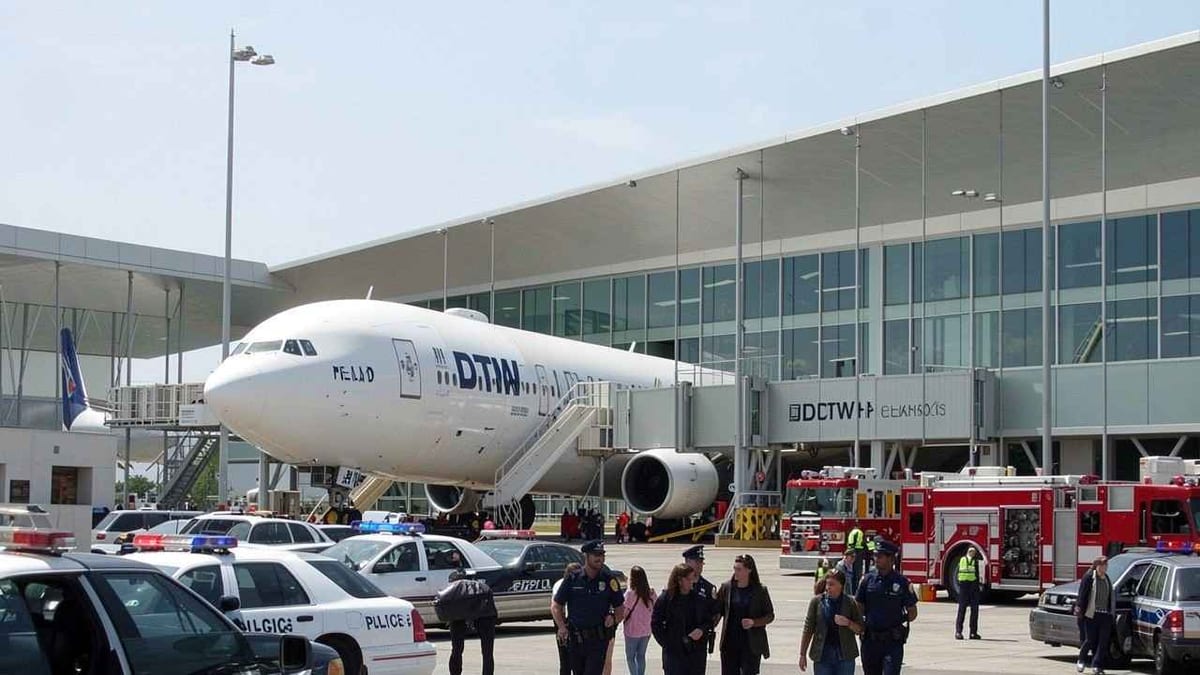
Passengers on Allegiant Air flight G4492 from Appleton, Wisconsin, to Fort Lauderdale, Florida, experienced an unexpected change of plans when the Boeing 737 MAX 8 diverted to St. Pete-Clearwater International Airport amid wider operational disruption affecting arrivals into Florida.
Get the latest news straight to your inbox!
What Happened to Flight G4492
Allegiant Air flight G4492 was scheduled as a nonstop service from Appleton International Airport to Fort Lauderdale, connecting a popular midwestern origin to one of South Florida’s busiest leisure gateways. Partway through the journey, however, the flight diverted from its planned routing and instead headed to St. Pete-Clearwater International Airport on Florida’s Gulf Coast.
Publicly available flight-tracking data shows the aircraft, a Boeing 737 MAX 8, proceeding normally through much of the route before altering course toward the Tampa Bay area. The diversion placed the aircraft at St. Pete-Clearwater, an Allegiant operating base frequently used as an alternative when other South Florida airports are constrained.
Reports indicate the change in destination was linked to broader operational challenges affecting arrivals into Florida, rather than a single mechanical or onboard incident. While the precise sequence of internal airline decisions has not been made public, the outcome for passengers was a significant deviation from the original plan to arrive in Fort Lauderdale.
As of the latest available information, the flight was expected to deplane passengers at St. Pete-Clearwater, with onward travel options arranged using a combination of ground transportation and potential rebooking for those needing to continue to South Florida.
Florida Arrival Disruptions Behind the Diversion
Florida’s airspace is among the most congested in the United States, especially in summer when leisure travel peaks. Operational disruptions affecting arrivals can stem from several overlapping factors, including convective thunderstorms, air traffic control flow programs, and ground stops or delays at individual airports such as Fort Lauderdale-Hollywood International.
On the day of the diversion, conditions across parts of the state contributed to delays and reroutes for multiple carriers, not only Allegiant. Thunderstorm systems and associated lightning in particular can halt ramp operations at Florida airports, preventing aircraft from being marshaled, fueled, or loaded safely. When ground activity pauses for extended periods, arriving aircraft may be forced to hold or divert to airports with available capacity.
In such scenarios, airlines sometimes direct flights to alternate airports where they maintain a significant operational footprint. St. Pete-Clearwater serves as a major base for Allegiant, with multiple daily departures to destinations around the country. That network and staffing presence can make PIE a more practical diversion point than other regional airports when flights bound for South Florida need an immediate and predictable place to land.
Published coverage of similar events in recent seasons shows that diversion decisions in Florida are often a blend of weather considerations, traffic management initiatives, and internal fleet and crew scheduling constraints, rather than a single clear-cut cause.
Why St. Pete-Clearwater Was Chosen
St. Pete-Clearwater International Airport has become a key hub for Allegiant’s point-to-point model, with an extensive map of routes to mid-sized cities in the Midwest and Northeast. The airport’s role as an operating base gives Allegiant access to local maintenance resources, flight crews, and customer service teams that can help manage irregular operations.
For a flight like G4492, diverting to an Allegiant base can simplify the logistics of safely parking the aircraft, coordinating refueling, and making decisions about whether the plane and crew can continue to the original destination once conditions improve. It also increases the likelihood that the airline can provide buses, hotel support when applicable, or alternative flights using its existing infrastructure.
From a passenger perspective, however, the choice of St. Pete-Clearwater as a diversion airport introduces new complications. The Gulf Coast airport is roughly four hours by road from Fort Lauderdale, depending on traffic, and there are no high-speed rail connections linking the two regions. Travelers may therefore face a mix of ground transfers, rebooked air segments, or changes to their hotel and rental car plans in South Florida.
Historical data on Allegiant’s Florida operations indicates that PIE has previously been used in diversions and operational workarounds, reflecting the airline’s strategy of leaning on its strongest bases when irregular operations ripple across the state.
What Affected Passengers Can Expect
When a flight diverts within the United States due to operational disruption, passengers typically move through a defined set of next steps. First, the priority is safely disembarking at the diversion airport and clearing any local security or customs formalities, if applicable. Once at the terminal, travelers may receive updated information through gate announcements, the airline’s mobile app, website, and airport display boards.
For those whose final destination is Fort Lauderdale or nearby parts of South Florida, options can include ground transportation organized by the carrier, rebooking onto later flights into Fort Lauderdale or another regional airport, or in some cases accepting travel credit or refunds in line with the airline’s policies. In many irregular operation events in Florida, passengers report being offered buses to bridge the gap between Gulf Coast airports and South Florida, though the exact arrangements vary by event.
Accommodation support can depend on the underlying cause of the diversion. If weather and air traffic constraints are categorized as outside the airline’s control, policies may be more limited, while operational or crew-related issues sometimes lead to broader assistance. Travelers are generally encouraged to retain boarding passes, receipts, and any written communication received from the airline to support later reimbursement requests or travel insurance claims.
In the case of flight G4492, early accounts from public forums and tracking data suggest a relatively orderly diversion, but the true measure for passengers will be how quickly and clearly Allegiant communicates rebooking options and compensates for missed connections, prepaid hotels, or other time-sensitive plans in Fort Lauderdale.
Practical Advice for Future Allegiant Passengers
The diversion of Allegiant flight G4492 underlines the importance of planning for contingencies when flying into Florida, particularly during busy travel periods and thunderstorm seasons. Travelers using ultra-low-cost carriers, which often operate less frequent schedules on each route, can face longer waits for the next available flight if theirs is diverted or canceled.
Experts and frequent flyers commonly recommend building in extra buffer time before cruises, major events, or nonrefundable activities in Florida, especially when flights rely on a single daily frequency. Purchasing flexible hotel rates, considering third-party travel insurance, and carrying essential items in a cabin bag rather than checked luggage can all help mitigate the impact of an unexpected diversion.
Passengers on Allegiant and other budget carriers also benefit from actively monitoring flight status on the airline’s official channels and reputable flight-tracking platforms rather than relying solely on airport displays. Enrolling in text or app notifications can provide earlier warning of gate changes, extended holding patterns, or emerging disruption affecting arrivals into key airports like Fort Lauderdale.
While most flights to and within Florida operate as planned, the experience of those aboard G4492 shows that diversions to airports such as St. Pete-Clearwater remain a real possibility when weather and operational pressures collide. Travelers who understand the network, know their rights, and prepare for the occasional curveball are better positioned to adapt when plans suddenly change.