


More news on this day
Severe thunderstorms and airspace congestion on July 6 led to widespread disruption at Philadelphia International Airport, with publicly available tracking data indicating at least 208 delayed flights and significant knock-on effects for services linking the city to Zurich, Copenhagen and Toronto.
Get the latest news straight to your inbox!
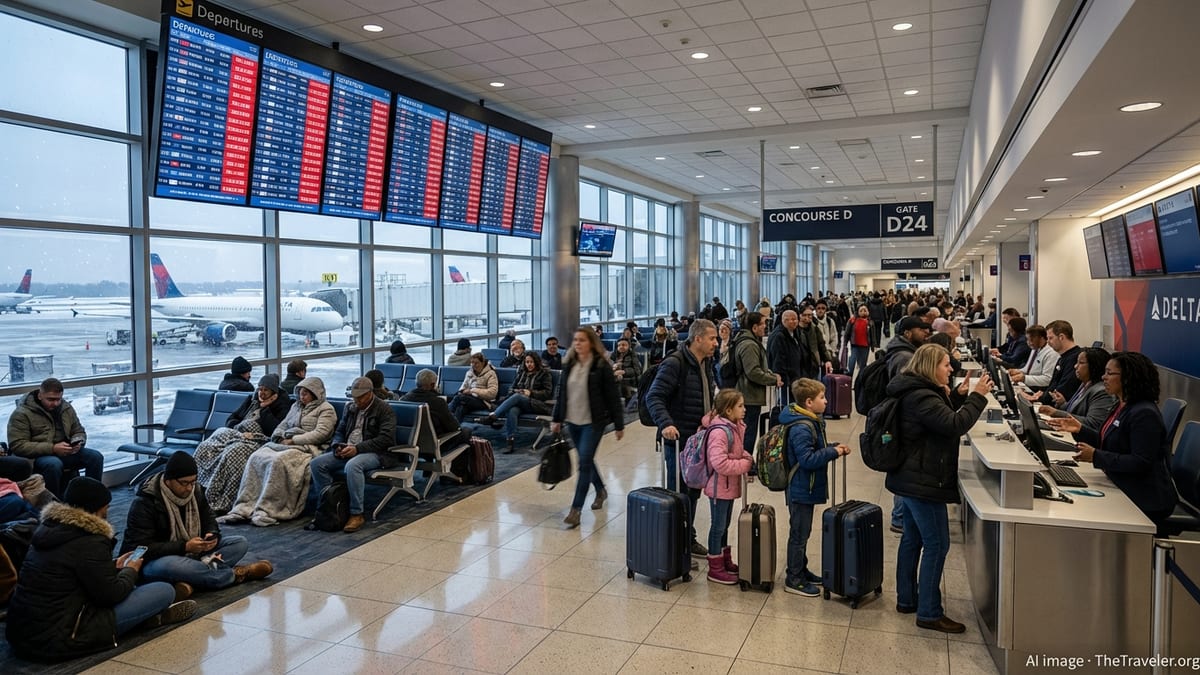
Weather Turbulence Turns Into Operational Gridlock
Data from national airspace monitoring platforms for July 6 show a day of unstable summer weather across the northeastern United States, with convective storms building through the afternoon and evening and triggering a series of flow restrictions around major hubs. That broader pattern appears to have caught Philadelphia International in a squeeze point between storm cells and crowded air routes, limiting the airport’s ability to move departures and arrivals on schedule.
Operational summaries indicate that while Philadelphia did not face a full ground stop, a combination of reduced arrival rates, spacing requirements between aircraft and rerouted traffic produced mounting delays through the peak travel window. As the afternoon pushed into evening, departure backlogs grew, with aircraft waiting for available slots in the national system and for safe routing around storm-affected sectors.
By late evening on July 6, aggregated tracking feeds pointed to at least 208 delayed movements linked to Philadelphia, spanning both domestic and international services. While many individual delays measured under an hour, the concentration of late departures created waves of disruption across connecting banks, particularly for long-haul flights that rely on tight turnarounds and onward connections in Europe and Canada.
The picture emerging from flight-status dashboards aligns with previous patterns seen during active summer weather, where even modest air traffic control restrictions, layered onto heavy holiday-period demand, can tip a busy hub into protracted congestion.
Transatlantic Links to Zurich and Copenhagen Affected
Among the most visible impacts on July 6 were disruptions on Philadelphia’s transatlantic routes to Zurich and Copenhagen, important gateways into continental Europe for both business and leisure travelers. Public flight-tracking records show services between Philadelphia and Zurich departing significantly behind schedule, with pushback times sliding as the local departure bank became constrained.
The Zurich route is typically timed to arrive early morning in Switzerland, allowing passengers to connect across the wider European network. Delays of more than an hour at Philadelphia therefore risked missing those early bank connections, forcing rebookings and extended layovers once passengers reached Europe. According to airline-facing schedule tools, at least one Philadelphia–Zurich rotation on July 6 departed late enough to compress connection windows considerably on arrival.
A similar pattern appears on the Copenhagen link, where aircraft departing Philadelphia into the Atlantic evening flow faced slot controls and weather-related routing adjustments. Flight tracking snapshots indicate departure pushbacks lagging scheduled times, with airborne holding and elongated routings added on some tracks as traffic managers steered aircraft around active cells and congested corridors.
These delays matter disproportionately for travelers bound to Nordic and Baltic destinations, who often rely on a single overnight connection via Copenhagen. Any late departure from the United States can cascade into missed morning departures from Denmark, effectively turning a planned overnight journey into an unplanned day-long wait at the transfer airport.
Toronto Services Caught in Cross-Border Ripple
Shorter cross-border routes between Philadelphia and Toronto Pearson were also caught in the July 6 disruption. Schedules and status feeds for flights from Philadelphia to Toronto list multiple services operating behind timetable, reflecting the same departure congestion affecting longer-haul routes.
Because Toronto flights are frequently used as feeders into Canadian domestic and transatlantic banks, even modest delays out of Philadelphia can cause missed onward flights once passengers arrive in Canada. On July 6, publicly visible status updates show certain Philadelphia–Toronto departures reaching Pearson later than planned, narrowing or eliminating viable transfer options for some itineraries.
Unlike the overnight European services, the Philadelphia–Toronto corridor runs throughout the day, which can offer more opportunities for same-day reaccommodation. However, when delays hit during peak evening hours, options tighten as last departures to smaller Canadian cities close out. Data from consumer flight-tracking platforms on July 6 suggest that some passengers arriving late into Toronto would have faced overnight stays before continuing their journeys.
The Toronto disruptions also highlight how quickly a weather event in the northeastern United States can ripple into Canadian airspace, affecting carriers and airports far from the original storm cells.
How 208 Delays Built Up Across a Single Day
Delay-count summaries compiled from multiple tracking sites for July 6 indicate that Philadelphia’s disruptions developed in a familiar pattern. Morning operations were relatively stable, with on-time performance close to seasonal norms and only isolated late departures. As storms intensified and airspace demand rose into the afternoon, departure and arrival queues began to lengthen.
By mid-afternoon, the cumulative effect of required spacing between aircraft, reroutes around active weather and revised flow programs at neighboring hubs started to push Philadelphia off its planned schedule. Each late inbound reduced the time available to turn aircraft for their next departures, and fresh storms periodically forced short pauses or reduced arrival rates. As a result, minor delays in the early afternoon evolved into more substantial pushes of 45 minutes or longer on some evening services.
In total, monitoring services recorded at least 208 flights associated with Philadelphia operating behind schedule on July 6. That figure includes a broad spectrum of delays, from relatively modest holds to extended disruptions on long-haul routes like Zurich and Copenhagen. While not every affected flight experienced severe lateness, the sheer number of delayed movements underscores how quickly a weather-affected day can degrade overall reliability.
The pattern also illustrates the interconnected nature of hub operations. Once day-of delays are embedded into the schedule, there are limited opportunities to recover time, particularly when aircraft and crews are already tightly utilized during peak summer travel.
Broader Context for Summer Travel Through Philadelphia
The July 6 disruption at Philadelphia International comes amid a broader summer travel season characterized by strong demand and recurring weather volatility across the northeastern United States. Historical passenger statistics for the airport show July as one of the busiest months of the year, with millions of travelers moving through the terminals and heavy reliance on connecting traffic to Europe and Canada.
Aviation performance reports for major European hubs such as Zurich and Copenhagen already point to a finely balanced operation, with average departure delays counted in the low double digits of minutes under normal conditions. When a North American gateway like Philadelphia introduces additional lateness into the system, those European hubs must absorb the shock through re-timed connections, busier transfer banks and potential misconnects.
Travel industry coverage in recent weeks has emphasized that summer thunderstorms, combined with constrained air traffic control staffing and full flights, leave little slack in the network for irregular operations. Data points from July 6 at Philadelphia align with that assessment, showing how a single storm-affected day can generate more than 200 delayed flights and send disruption rippling from the U.S. East Coast across the Atlantic and into Canada.
For travelers planning itineraries through Philadelphia in the coming weeks, publicly available performance data suggest that building extra time into connections, especially on transatlantic and cross-border routes, may help mitigate the impact of similar weather-driven disruptions.