


More news on this day
Hong Kong Airlines has retimed and cancelled several Hong Kong–Okinawa services as Super Typhoon Saudel tracks toward Japan’s Ryukyu Islands, prompting wider regional disruption to late August flight schedules.
Get the latest news straight to your inbox!
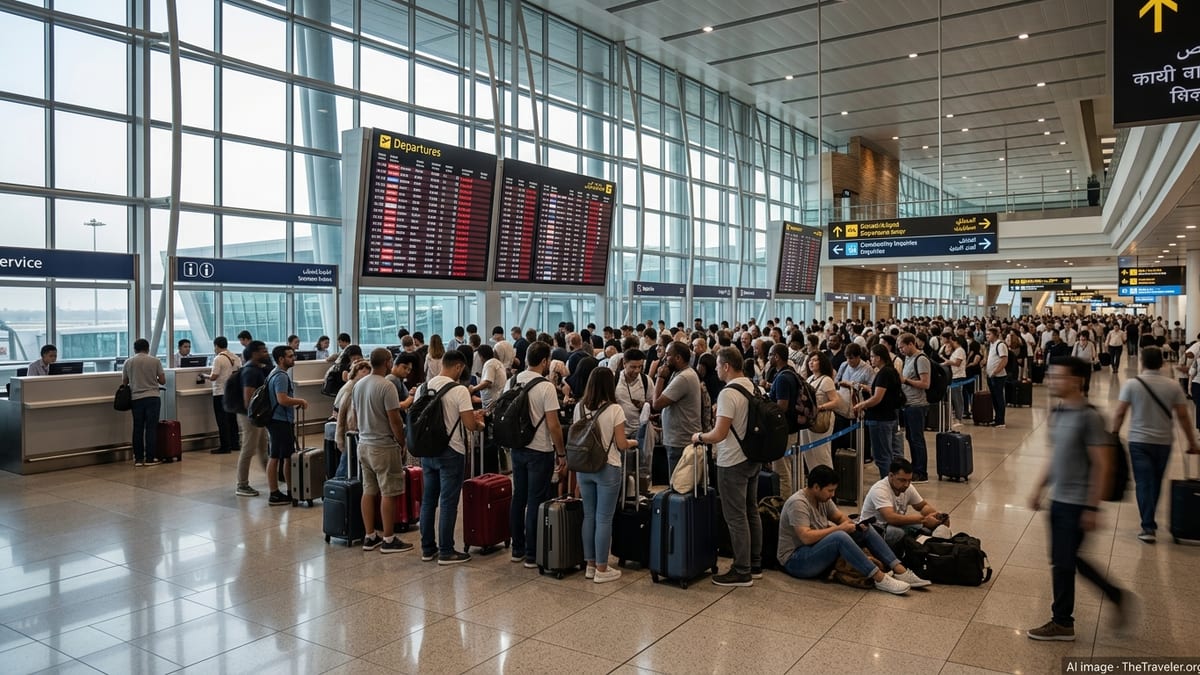
Multiple Hong Kong–Okinawa Flights Adjusted
According to publicly available flight information and Japanese domestic flight status pages, services to and from Naha Airport in Okinawa are being thinned out as Super Typhoon Saudel approaches the region around August 25. All Nippon Airways has already cancelled a number of domestic Okinawa flights and scheduled extra services to Tokyo Haneda on August 25 to help clear stranded passengers once weather conditions improve, reflecting a broader pattern of disruption across the archipelago.
Within this wider operational context, Hong Kong Airlines has begun adjusting its Hong Kong–Okinawa operation. Data from route and fare aggregators that track Hong Kong Airlines services between Hong Kong International Airport and Naha indicate that some HX flights are being removed from sale or shifted in timing around the projected peak of the storm, reducing what is normally a busy late summer schedule on this leisure route.
These changes build on a recent run of weather related disruptions for carriers linking Hong Kong and Okinawa. Over recent months, typhoon systems in the northwest Pacific have already led airlines serving the corridor to cancel or retime flights, demonstrating how quickly capacity on this short regional sector can change when severe weather moves through the East China Sea.
Retimings and Cancellations Focused Around Storm’s Peak
Saudel is forecast to pass near or over the northern Ryukyu Islands, including Okinawa, around August 25, with strong winds and heavy rainfall expected in the 24 to 36 hours surrounding the closest point of approach. This window typically represents the highest risk period for airlines operating into Naha, when crosswinds, low visibility and airfield safety checks can force last minute adjustments.
Reports from Japanese aviation channels and airline flight status tools show that many carriers are proactively reducing operations to and from Okinawa in that time frame. While all decisions remain subject to short notice change as forecasts evolve, Hong Kong Airlines’ recent retimings align with industry practice in the region, where departures are brought forward, pushed back or consolidated to avoid the most hazardous conditions.
Recent storm events provide a relevant comparison. In early June, for example, another tropical system in the western Pacific led Hong Kong based airlines to cancel or shift multiple Okinawa flights over a two day period, while in July the approach of Typhoon Bavi prompted Hong Kong Airlines to cancel or reschedule services between Hong Kong, Taipei and Okinawa and waive change fees for affected passengers. That history underlines how quickly operations can be scaled back when a new super typhoon emerges on a similar track.
What the Changes Mean for Passengers
For travelers, the immediate impact of Saudel is a higher likelihood of last minute schedule shifts, longer connection times and potential overnight stays if flights are moved outside the originally planned travel window. Booking platforms tracking Hong Kong Airlines’ Hong Kong–Okinawa fares show narrowing availability on alternative dates as passengers attempt to rebook away from the expected storm peak, a pattern commonly seen whenever a major typhoon threatens Okinawa.
Based on recent practice during other storms this season, passengers holding Hong Kong Airlines tickets on the route can expect some flexibility options. During July’s Typhoon Bavi disruption, Hong Kong Airlines published special ticketing arrangements that waived change and refund fees for affected flights, and similar approaches have been adopted by carriers throughout the region in response to typhoon related cancellations. Publicly available advisories from Hong Kong Airlines emphasize the importance of checking the airline’s website or contacting travel agents to confirm the latest status rather than proceeding to the airport on speculative schedules.
Travelers heading to Okinawa in the coming days may also need to account for knock on effects even after Saudel passes. Experience from previous super typhoon events, such as the powerful storms that affected Hong Kong and the Ryukyu Islands in recent years, suggests that aircraft repositioning, crew duty limitations and backlogs of stranded passengers can continue to affect flights for at least a day or two beyond the immediate weather window.
Regional Aviation Network Under Strain
The Hong Kong–Okinawa market is normally served by a combination of full service and low cost carriers, with route databases showing three airlines offering nonstop flights between Hong Kong International Airport and Naha and an average block time of around two hours and 30 minutes. When a super typhoon such as Saudel approaches, this compact, high frequency network can quickly become constrained as each carrier pares back its schedule for safety reasons.
Saudel’s trajectory affects not only international flights but also the dense web of domestic services linking Okinawa with the Japanese mainland. All Nippon Airways’ decision to cancel multiple Okinawa flights and lay on extra capacity to Tokyo once conditions allow illustrates how operators are attempting to prioritize recovery. Similar choices are likely across other Japanese and regional airlines, reducing overall seat supply and complicating rebooking options for Hong Kong based travelers aiming to connect beyond Okinawa.
Airport operators in the region are also activating their own typhoon playbooks. Recent statements from Airport Authority Hong Kong in response to earlier tropical cyclone threats describe how the airport uses a dedicated flight rescheduling control system to coordinate adjusted timetables with airlines and manage passenger flows when strong storms impact the Pearl River Delta. Measures of this type typically come into play again when a system of Saudel’s strength approaches the wider region.
Monitoring Tools and Practical Advice for Travelers
Given the dynamic nature of typhoon related disruptions, the most reliable information for passengers comes from airline and airport status pages that are updated in real time as Saudel’s track shifts. Hong Kong Airlines directs travelers to its website and contact channels to verify departure times and any fee waivers, while Japanese airlines and Naha Airport publish rolling updates on cancellations and additional flights as they are confirmed.
Travel planning resources that aggregate schedules on the Hong Kong–Okinawa route can also help passengers understand how capacity is changing across different airlines, although these tools may lag behind official status pages during rapid operational changes. Separate weather and typhoon tracking services provide forecast tracks and intensity estimates that help explain why particular flights on certain dates are at greater risk of disruption.
For travelers yet to depart, recent experience from this typhoon season suggests it can be prudent to secure accommodation and transport that allow for flexible date changes, and to maintain backup itineraries in case a preferred Hong Kong–Okinawa flight is retimed or cancelled. As Saudel moves closer to the Ryukyu Islands, Hong Kong Airlines and its regional peers are likely to continue refining their schedules, making close monitoring essential for anyone planning to fly through Hong Kong or Okinawa in late August.