


More news on this day
From Baker Street to Farringdon, some of the world’s oldest subway stations are being reinterpreted for a new generation, as museums and cultural institutions across London highlight the 160-year evolution of the London Underground and its pioneering role in global metro history.
Get the latest news straight to your inbox!
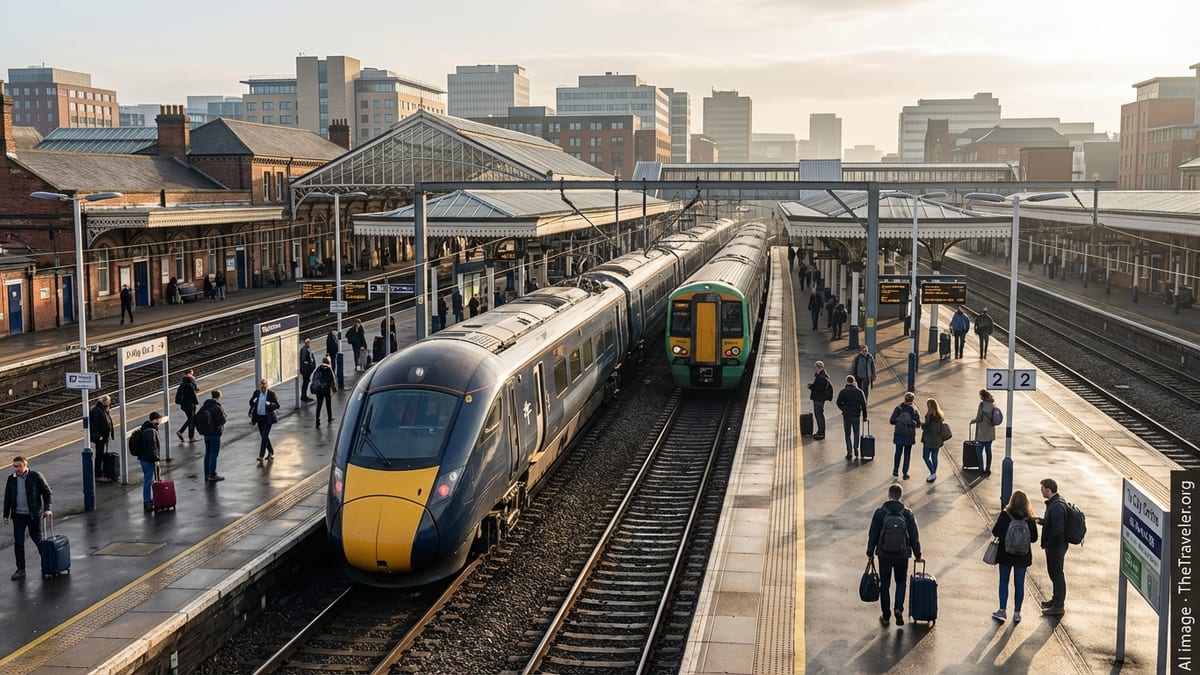
Revisiting the Birthplace of the Modern Metro
Publicly available historical records show that the London Underground began on 10 January 1863, when the Metropolitan Railway opened a 3.75-mile line between Paddington, then known as Bishop’s Road, and Farringdon Street. This route, built largely using cut-and-cover tunnelling under what is now the Euston Road corridor, is widely recognised as the world’s first underground passenger railway and the foundation of today’s Tube network.
The original Metropolitan Railway included stations such as Paddington (Bishop’s Road), Edgware Road, Baker Street, Great Portland Street, Euston Square, King’s Cross (now King’s Cross St Pancras) and Farringdon. Contemporary accounts and modern summaries from Transport for London describe how steam-hauled trains ran in shallow tunnels and open cuttings, with early passengers largely undeterred by smoke-filled platforms. The same alignment still anchors central London’s Circle and Hammersmith & City lines, giving today’s riders a direct link to 19th-century engineering.
Network anniversaries in recent years, including the Underground’s 160th birthday in 2023, have prompted renewed interest in this corridor. Campaign material and heritage programming have focused on the area between Paddington and Farringdon as a living museum of metro history, where many of the world’s oldest continuously operating underground stations retain elements of their Victorian character alongside contemporary upgrades.
Baker Street and Farringdon: Icons of the Underground Age
Baker Street and Farringdon now sit at the centre of efforts to tell the story of the Underground’s earliest years. Reference works on both stations note that they opened in 1863 as part of the original Metropolitan Railway and are among the oldest surviving underground stations in the world. Baker Street’s sub-surface platforms, in particular, have been repeatedly highlighted in popular coverage as emblematic of the earliest Tube architecture, with brick arches, ventilation openings and long low canopies that recall the age of steam.
Farringdon, originally known as Farringdon Street, served as the eastern terminus of the first line and connected directly to Smithfield and the City of London. Historical descriptions underline its role as a key interchange for mainline rail and early suburban services, a function that has expanded significantly with the arrival of the Elizabeth line. For many visitors, this blend of Victorian brickwork and new cross-London platforms illustrates how a 19th-century terminus has evolved into a 21st-century regional hub without losing its historic footprint.
Recent cultural programming in the Square Mile has also highlighted the Underground’s architectural and sensory legacy. Guildhall Art Gallery’s 2026 exhibition “Underground (and Surface)” presents large-scale paintings of Tube stations and soundscapes built from the creaks, echoes and rhythms of the network, inviting audiences to experience the system not just as transport infrastructure but as a distinctive urban environment shaped by more than a century and a half of continuous use.
Museums Reframe 160 Years of Subterranean Travel
London’s museum sector is increasingly positioning transport heritage as a central strand in the capital’s cultural offer. London Transport Museum in Covent Garden has been expanding its galleries and programming to foreground the Underground’s social, design and engineering history. Coverage of the museum’s redevelopment indicates that a new Platform media gallery opened in late 2025, using large-scale audio-visual displays to explore how life in the capital has changed over two centuries of mobility.
Another major project is the creation of a Global Poster Gallery, which hosts long-running exhibitions on London transport poster design. Current shows focus on art deco and later graphic traditions, situating iconic Underground advertising within wider design movements. The gallery’s narrative links classic moquette patterns, station signage and wayfinding diagrams to the wider story of how Londoners have navigated the city’s tunnels since the 1860s.
Alongside this, London Transport Museum and its supporters have continued to invest in heritage rolling stock, signalling equipment and disused infrastructure tours, providing a tangible context for today’s visitors. Reports covering the museum’s activities note that special events tied to the Underground’s 160th anniversary drew strong public interest, underlining the enduring appeal of the Tube’s early decades and the appetite for deeper historical interpretation both on the surface and underground.
New Storylines for the World’s Oldest Subway Network
Beyond specialist museums, a wider wave of heritage initiatives is broadening how the Underground story is told. The new London Museum at Smithfield, scheduled to open its main site in late 2026, has signalled that London’s transport history, including the development of subterranean infrastructure, will feature prominently in its permanent displays. Early previews outline a curatorial approach that links engineering milestones to themes such as migration, work and the growth of modern London.
Elsewhere on the network, the Brunel Museum at Rotherhithe has been updating its interpretation of the Thames Tunnel, the pioneering 19th-century underwater passage that predates and influenced later underground railways. Recent project updates describe new displays that trace how this tunnel evolved from an engineering showpiece into a vital part of London’s rail system, connecting directly to the story of deep-level tubes and sub-surface lines that followed.
Programming at Guildhall Library and other City venues is also drawing attention to the Underground’s place in London’s architectural history. Talks and displays during the 2026 festival season focus on tunnel design, station architecture and the use of Tube platforms as shelters and civic spaces in times of crisis. Together, these projects present the Underground as not just a transport network but as a lens through which to view the city’s changing relationship with technology, public space and identity.
From Victorian Tunnels to Future-Facing Journeys
Current Transport for London campaigns have been using key anniversaries to connect this heritage with the contemporary network. Materials marking TfL’s 25th anniversary as an integrated transport authority in 2025 have spotlighted “then and now” imagery, including photography of early Underground stations compared with modern interchanges. Exhibitions and competitions hosted with partners such as London Transport Museum invite younger audiences to reconsider how a system built for steam-era commuters now underpins low-emission mobility strategies and digital wayfinding.
Digital storytelling is reinforcing that shift. Online features produced in collaboration with archives and cultural partners chart the Metropolitan line’s journey from steam-hauled shuttle to a line that now stretches deep into suburban and commuter-belt territory. These narratives stress that while rolling stock and signalling have changed dramatically, the basic geography of the first 1863 route remains embedded in today’s map, allowing visitors to travel beneath streets that once echoed to the sound of early locomotives.
As new galleries open and heritage projects mature, London’s oldest subway stations are increasingly framed as places where past and present meet. Brick vaults that once carried smoke from steam engines now carry fibre optic cables and passenger information screens, while original platform layouts continue to shape passenger flows. For travellers tracing the “timeless story” of the Underground, a journey from Paddington to Farringdon offers both a practical cross-city connection and a rare opportunity to ride through the living fabric of metro history.
Transport for London: 160 Years of the London Underground
Metropolitan Railway historical overview