


Hong Kong International Airport is efficient, busy and deceptively large. Whether you are stepping into Hong Kong for the first time or simply changing planes, a little planning at HKG can translate into real savings in minutes, money and stress. The tips below draw on how the airport actually works today, from Airport Express fares to food options and transfer logistics, so you can move with confidence instead of confusion.
Get the latest updates straight to your inbox!
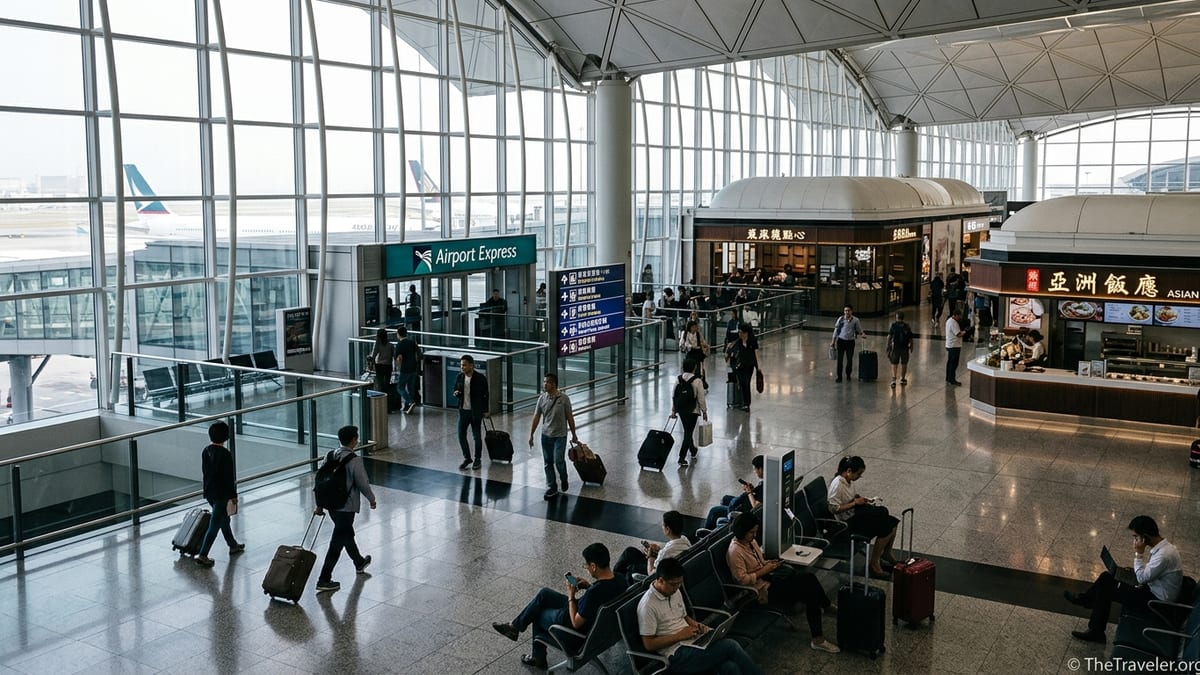
Know the Layout Before You Land
One reason travelers lose time at Hong Kong International Airport is underestimating its scale. The main Terminal 1 now includes an East Hall, West Hall, Midfield Concourse and a satellite concourse connected by an automated people mover and walkways. If you arrive at a Midfield or satellite gate and your next flight departs from the opposite side of the terminal, it can easily take 15 to 25 minutes of walking and riding the people mover, even if everything goes smoothly. Checking your arrival and departure gate areas on the in-terminal displays as soon as you disembark helps you decide whether to walk or ride the people mover first, instead of wandering in the wrong direction.
For example, if your Cathay Pacific long haul from Europe arrives at a Midfield gate in the 200s and your onward flight to Southeast Asia leaves from an East Hall gate in the 20s, you should follow the clear “Sky Bridge / Terminal 1” and “Automated People Mover” signs immediately after immigration or at the transfer point. Staying on the concourse side closest to your departing gate, rather than cutting through the central retail area too early, typically saves 5 to 10 minutes in backtracking. It is also worth noting that some low cost carriers use the West Hall, which sits a shuttle or people mover ride away from the East Hall where many lounges, bigger food courts and luxury shops are concentrated.
First time visitors sometimes worry about getting lost. In practice, the signage at HKG is very strong in English and Chinese, and the route choices are binary: you are either heading toward immigration and baggage claim, or toward transfer and departure gates. The risk is not getting lost but misjudging distance. Building in a 15 minute cushion between your planned meal or shopping stop and the time you want to be at your gate is usually enough for most reasonably fit travelers, even when departing from the far ends of the concourses.
Another subtle layout tip is to pay attention to vertical levels. Departures, security and many restaurants sit on a higher level than some gate waiting areas. If you are short on time for a quick bite, look for the nearest escalator symbol on overhead signs instead of walking horizontally toward a big food court that may actually be one level up or down from where you are. Grabbing a fast meal at a smaller café just above your gate often takes less time than trekking to a flagship food court several hundred meters away.
Beat Immigration and Security Bottlenecks
For most arriving passengers who are entering Hong Kong, the biggest wild card is immigration. At popular arrival times in the afternoon and evening, queues can stretch significantly, especially for visitors without e-channel access. While exact processing times vary, it is common for lines to range from 10 minutes in quiet periods to 45 minutes or more when multiple long haul flights land together. If your schedule is tight, sitting near the front of the aircraft or choosing a seat that lets you disembark quickly can shave crucial minutes off the walk to immigration and put you ahead of the crowds.
Travelers from many passport jurisdictions can now use automated e-channels after a short enrollment or via passport eligibility, which cuts time dramatically. If you have previously entered Hong Kong and had your passport details captured, you may be able to head straight to an e-channel with only a brief wait. The difference is practical: while the manual desk line might snake back several switchbacks, the e-channel line is often just a handful of travelers at busy times. Before you travel, it is worth checking whether your nationality and passport type are eligible for Hong Kong’s automated border clearance so you know which signage to follow on arrival.
On departure days, plan your security and check in timing around how you are reaching the airport. Travelers using the Airport Express train can usually check in at the airline counter in the city or at the airport without huge lines outside peak holiday periods, but traditional counters can still be busy two to three hours before major long haul flights. If you are checking bags on a Friday evening or during Chinese New Year and flying airlines such as Cathay Pacific or Emirates, arriving at least two and a half to three hours before departure is a sensible hedge against queues at both check in and security. When traveling carry on only, using online check in and mobile boarding passes lets you bypass the check in counters entirely and head straight to security, which is often smoother in early morning and mid afternoon slots than in the late evening wave.
Airport security in Hong Kong generally runs efficiently, yet lines still build in bursts. At times when security is visibly long at the main lane near a central transfer point, look for signs indicating additional checkpoints further along the concourse. Walking an extra two or three minutes to a quieter checkpoint can be faster than queuing in the first line you encounter. This tactic is especially helpful if you are departing from gates in the 40s or 60s and see a dense crowd at the main screening area near the central retail hall.
Save Big on Airport to City Transport
Getting from the airport into the city is where many travelers overspend. Hong Kong’s Airport Express train is fast and comfortable, reaching Hong Kong Station in around 24 minutes, but it is one of the more expensive options. Recent published fares with an Octopus stored value card have been around HK$120 for a one way adult journey to Hong Kong Station, slightly less to Kowloon and Tsing Yi. Dedicated single journey tickets often cost more than simply using an Octopus card, and taxis into Central can run roughly HK$350 to HK$400 including tolls and luggage surcharges, depending on traffic and exact location.
If you are traveling as a pair or small group with light luggage, Airport Express group tickets can offer meaningful savings versus single adult fares. For instance, a same day group ticket for four adults between the airport and Hong Kong Station has been priced noticeably below the sum of four individual single journey tickets. The catch is that all group members must travel together on the same train and these tickets are typically only valid on the day of purchase. This works very well for families or friends arriving on the same flight and heading to a hotel near Hong Kong or Kowloon stations, but is less flexible if members of your group are arriving at different times.
Budget conscious travelers should seriously consider airport buses. Routes such as A11 and A21 connect the airport with key areas of Hong Kong Island and Kowloon, and typical fares are significantly lower than the Airport Express, often in the range of HK$40 to HK$50 per adult. Journey time into Central or Tsim Sha Tsui can be 60 to 75 minutes depending on traffic, but if you are not in a rush this is a substantial saving, especially for solo travelers. As a concrete comparison, a single traveler taking the A21 bus to Tsim Sha Tsui may pay around one third of what they would for the Airport Express plus onward MTR ride.
For maximum convenience with moderate cost, some visitors combine the Airport Express with free connecting services. Airport Express tickets to Hong Kong or Kowloon stations typically include free use of dedicated shuttle buses that run to major hotels and transport hubs in each district. For example, staying at a large hotel in Tsim Sha Tsui or near the Central business district, you can ride the Airport Express to Kowloon or Hong Kong station and then board a free shuttle that stops near your hotel instead of paying extra taxi fare. When you factor in time saved versus the airport bus and money saved versus a taxi all the way from the terminal, this hybrid strategy often hits the sweet spot for many travelers.
Smart Money Moves: Octopus, Currency and Duty Free
The single most useful money saving tool in Hong Kong is the Octopus card, a contactless stored value card used widely on public transport and in many shops and restaurants. Buying an adult Octopus at the Airport Express or MTR customer service counters on arrival costs a modest refundable deposit plus stored value you choose to load. You can tap it to pay for the Airport Express, regular MTR lines, buses, trams, ferries and even small purchases at convenience stores. For a typical three day visit involving multiple MTR rides and at least one bus or tram journey per day, the card pays for itself in saved time at ticket machines and often in slightly cheaper fares compared with single ride tickets.
When it comes to currency exchange, rates at airport counters are generally less favorable than in the city. If you arrive with a major bank card that waives or keeps foreign transaction and ATM fees low, withdrawing a modest amount of Hong Kong dollars from an ATM in the arrivals hall is usually more cost effective than changing a large sum at a bureau de change. Many city center money changers in areas like Central, Causeway Bay or Tsim Sha Tsui also offer better rates than the airport. A good practical strategy is to take out enough cash at the airport ATM to cover your immediate needs such as transport, snacks and a small buffer, then make any larger exchanges in town once you have compared rates.
Heading through duty free, it is easy to be tempted by deals that are not always deals. Prices on cosmetics, liquor and electronics can be competitive, but not necessarily the lowest you will find in Hong Kong’s city center retail districts. For example, a mid range bottle of whisky on promotion might only be slightly cheaper than sale prices at reputable downtown stores, and some international skincare brands routinely run city promotions that match or beat airport offers. Unless you are sure an item is heavily discounted or difficult to find in the city, consider using the airport for last minute essentials and gifts rather than major high value purchases. This approach keeps your carry on lighter and reduces the risk of impulse spending when you are tired or jet lagged.
One area where buying at the airport can make sense is local SIM cards and eSIM activation. Stands in the arrivals hall often sell visitor SIMs with a fixed number of days of local data and calls at straightforward prices, and some support quick eSIM activation via QR code. If you value getting connected immediately without needing to navigate language or payment apps in the city, the small premium over downtown shops can be worthwhile. However, if your phone supports international roaming at reasonable daily caps through your home provider, activating that before departure may be simpler than queuing at a crowded airport counter right after you land.
Eat, Rest and Recharge Without Wasting Time
Hong Kong International Airport has an unusually strong food offering compared with many airports. You will find familiar international chains alongside local favorites serving congee, noodles and dim sum. Branches of Cantonese restaurants such as Duddell’s in Terminal 1 cater to travelers looking for quality dim sum and barbecued meats with full table service, while food courts offer quicker options like wonton noodles, roast meats on rice and Hong Kong style milk tea at more modest prices. A bowl of noodles or a rice plate in a food court is commonly priced at a fraction of what you would pay for a sit down meal at a premium branded restaurant near the gates.
To avoid stress during short connections, match your food choice to your layover length. With a two hour international to international transfer, for example, it is usually safe to sit down for a simple meal after you pass through the transit security check, as long as you already know your departure gate area and it is within the same concourse. With a tighter 60 to 90 minute window, it is safer to grab a fast option near your departure gate instead of walking all the way to a central food court. Many coffee chains and quick service outlets have grab and go counters where you can pick up rice boxes, sandwiches or buns in a few minutes.
If you need rest, there are several ways to recharge without booking an airport hotel. Many seating areas in the departure halls now offer reclined or bench style seating where you can stretch out if it is not too busy, and there are charging points dotted around most gate clusters. Some travelers find quieter corners near the far ends of concourses or around less used gates in off peak hours, which can be better for napping than main central waiting areas filled with constant announcements. For longer layovers, paid lounges operated by airlines and independent providers offer showers, hot food and quieter seating. Buying a same day access pass can be worthwhile if you have a six or seven hour wait and value a shower and workspace.
Healthy eating and special diets are increasingly catered for at HKG, but choices can still feel scattered when you are in a rush. Vegetarian, vegan and gluten friendly items appear on many menus, yet they may be limited to one or two dishes in smaller outlets. If you have stricter dietary needs, allowing a little extra time to find a suitable place is wise. Browsing the airport’s own shop and dine information in advance can help you pinpoint outlets with clearly marked vegetarian or vegan dishes so you are not stuck at the last minute choosing between unsuitable options near your gate.
Transit Like a Pro on Tight Connections
Hong Kong is designed as a major transfer hub, and for most passengers on a single ticket with through checked baggage, international to international connections work smoothly. Typical recommended minimum connection times published by airlines for international to international transfers are in the range of 1.5 to 2 hours, but in practice many travelers successfully make slightly shorter connections when flights are on time and both segments are on the same airline group, such as Cathay Pacific and its oneworld partners. On arrival, transit passengers follow purple or clearly labeled transfer signs rather than immigration, pass through a security check, then emerge into the departures level without clearing Hong Kong passport control.
Stress levels rise on self made or separate ticket connections where baggage must be reclaimed and rechecked. In these cases, you must clear immigration, collect bags from the carousel, walk to the departure check in area and then pass through security again. Even with Hong Kong’s generally efficient processes, anything under three hours becomes risky, particularly in the afternoon and evening waves. A real world example: a traveler landing from Southeast Asia on a low cost airline at noon with a separate long haul ticket leaving at 14:30 may technically be able to complete the steps if everything is perfectly on schedule, but any delay or long immigration line could put the onward flight in jeopardy. Booking at least four hours between separate tickets is a safer choice.
Another key point is how you handle boarding passes in transit. If your airline has issued boarding passes for all legs of your journey at your origin, you can usually go directly to the transit security check and then to your departure gate. If not, you may need to visit a transfer desk airside to obtain your next boarding pass. These desks are generally efficient but can attract queues when many flights on the same airline arrive together. Checking online before departure that your onward airline can issue boarding passes for all segments, even on codeshares, is a small administrative step that can save you time and worry during the connection itself.
Transit passengers leaving the secure area to visit the city during a long layover need to be realistic about timing. While the Airport Express can whisk you into Central in around 24 minutes, you must budget for immigration, possible baggage storage, the train journey each way and new security checks on your return. For a six or seven hour daytime layover, a quick trip into the city for a harbor view and meal in Central or Kowloon can be enjoyable. For anything under five hours, you are usually better off staying at the airport, enjoying a good meal, perhaps a shower in a lounge, and relaxing without watching the clock too anxiously.
Hidden Time and Stress Savers Around the Terminal
Some of the best stress saving tricks at Hong Kong International Airport are small details that frequent travelers quietly exploit. One example is using less obvious washrooms and water fountains located slightly away from food courts and main retail corridors. The closest facilities to central hubs are often crowded, but walking an extra 30 to 60 seconds toward a quieter gate area can give you a much calmer environment. This matters when you are trying to refill your water bottle, freshen up after a long flight or help small children who need a bit more space.
Families and travelers needing a bit more personal space should also look for dedicated family rooms, nursing rooms and play areas scattered around Terminal 1. These spaces are designed with privacy, child friendly seating and in some cases basic toys or play structures. Spending even 20 minutes in one of these rooms instead of a noisy gate lounge can make a big difference in how rested everyone feels before boarding. Signs for these facilities are often displayed with icons rather than large text, so keeping an eye out for baby or family symbols on overhead signs is useful.
Power and connectivity are other areas where small decisions pay off. Free Wi Fi is widely available throughout the airport, but signal strength can vary between busy seating zones and quieter corners. If you need to download large files or hold a work call, testing the Wi Fi near several seating clusters before committing to one spot can save later frustration. Likewise, charging points are often clustered near structural columns or at specific seating designs. Carrying a small travel power strip lets you share a single outlet among multiple devices, which is useful when the airport is busy and outlets are in high demand.
Finally, consider your packing strategy for security. Hong Kong’s security procedures are in line with many international standards, and you will need to present liquids in small containers and remove laptops or tablets from bags when directed. Packing these items near the top of your carry on, in a dedicated sleeve or pouch, lets you comply quickly and repack without using extra trays or struggling at the end of the belt. Watching how frequent local travelers organize their items can be revealing: many have laptops in easy access sleeves and keep liquids in a single transparent pouch, which reduces fumbling at the checkpoint and helps lines move faster for everyone.
The Takeaway
Hong Kong International Airport works best for travelers who respect its size, plan their city transfers intelligently and make a few small but deliberate choices about time and money. Understanding that gates can be far apart, that immigration and security ebb and flow in waves, and that Airport Express, buses and taxis occupy very different price tiers gives you a framework for decision making as soon as you land. Combined with practical tools like the Octopus card, realistic connection planning and a sensible approach to food, rest and spending, these tips turn a potentially overwhelming mega hub into a smooth and even enjoyable part of your journey.
Instead of treating HKG as a hurdle between you and your destination, think of it as an efficient, well signposted system you can navigate on your own terms. Take a moment before you travel to check your gate areas, transport preferences and rough timings. You will arrive in the city or step onto your next flight calmer, better fed and with more of your budget intact, leaving you free to focus on the experiences that really matter once you leave the terminal behind.
FAQ
Q1. How early should I arrive at Hong Kong International Airport before my flight?
For most long haul international flights, arriving around three hours before departure is a comfortable buffer, especially if you need to check bags. For regional flights on quieter days and when you already have a boarding pass and only carry on luggage, two hours is usually sufficient. During major holidays or peak evening periods, adding an extra 30 minutes reduces stress in case check in or security lines are longer than usual.
Q2. Is the Airport Express worth the price compared with buses or taxis?
The Airport Express is usually worth it if you value speed and are staying near Hong Kong or Kowloon stations, particularly when using group tickets or the free shuttle buses to major hotels. Solo budget travelers often prefer airport buses, which are much cheaper but slower. Taxis are best when door to door convenience matters more than cost, such as late at night or when traveling with several large suitcases.
Q3. Can I make a 90 minute connection at Hong Kong International Airport?
A 90 minute international to international connection on a single ticket with through checked baggage is possible when flights are on time, but it leaves little room for delays. If your itinerary is ticketed as a legal connection by the airline, they are implicitly accepting the risk. For separate tickets where you must clear immigration and recheck bags, 90 minutes is not realistic and you should plan for at least three to four hours.
Q4. Where can I store my luggage at the airport if I want to go into the city?
Hong Kong International Airport has left luggage services in the landside area where you can store bags for a few hours or longer for a fee per item. This is useful for long daytime layovers when you want to ride the Airport Express into Central or Kowloon without hauling heavy suitcases. Prices vary by duration and bag size, so it is wise to check the current tariff boards at the counter before storing multiple items.
Q5. Are there showers available at Hong Kong International Airport?
Yes, showers are available in several airline lounges and in some independent pay in lounges located airside in Terminal 1. Access may be included with your ticket or frequent flyer status, or sold as a separate day pass. If you know you will want a shower after a long overnight flight, checking which lounges your airline uses and whether they include shower access can help you decide whether to buy lounge entry on the day.
Q6. What is the best way to get local currency on arrival?
Using an ATM in the arrivals hall with a debit or bank card that has reasonable international fees is usually the most straightforward option. You can withdraw a modest amount of Hong Kong dollars to cover transport and immediate expenses, then compare rates at city money changers for any larger exchanges. Airport currency counters tend to have less favorable rates, so avoiding large conversions there can save money over the course of your trip.
Q7. Do I need a visa to transit through Hong Kong if I am not leaving the airport?
Many nationalities do not need a visa for airside transit if they remain in the secure area and have confirmed onward tickets, but rules depend on your passport and final destination. Because visa and transit policies change, you should always verify the latest official requirements from Hong Kong immigration authorities or your airline before travel, especially if you plan to enter the city during your layover.
Q8. How can I find vegetarian or vegan food options at HKG?
Vegetarian and some vegan options are available at a mix of full service restaurants and food court outlets throughout Terminal 1. Menus often highlight meat free dishes with clear icons, and international chains usually carry at least one plant based choice. If your diet is strictly vegan or you have additional restrictions, allowing extra time to look around, particularly in larger food courts, will give you a better chance of finding suitable meals.
Q9. Is free Wi Fi reliable at Hong Kong International Airport?
Free Wi Fi is widely available and generally reliable for typical use such as messaging, browsing and email. In very busy areas near major gates or central seating zones, speeds can dip when many travelers are connected at once. If you need a more stable connection for work calls or large downloads, moving to a quieter seating area away from the busiest gates usually improves performance.
Q10. What should I do if my flight from Hong Kong is delayed and I am already at the airport?
If you are already airside when a delay is announced, first check the updated departure time on the information screens and through your airline’s app. Then look at your options: you may be eligible for meal vouchers, rebooking or lounge access depending on the airline, ticket type and cause of delay. Using the extra time to have a proper meal, recharge devices and stay near your updated gate avoids last minute rushing when boarding is finally called.