


More news on this day
With the Strait of Hormuz effectively shut by conflict involving Iran, shipping planners are racing to redraw global trade maps, sending more cargoes toward the Panama Canal just as a fresh El Niño watch raises new climate and travel risks along key routes.
Get the latest news straight to your inbox!
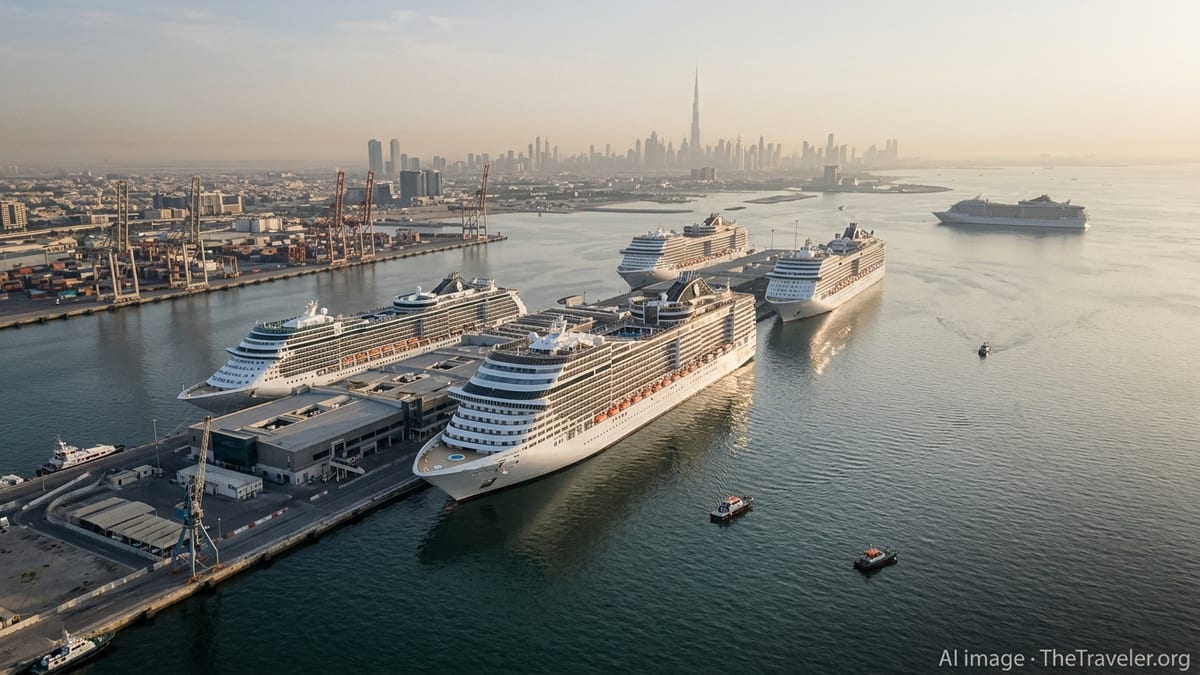
Oman’s Rising Role as Gulf Gateway
As commercial traffic through the Strait of Hormuz has fallen sharply since late February 2026, attention across the Gulf has shifted to ports that sit outside the immediate conflict zone. Publicly available shipping data and trade press coverage point to Oman’s deep-water hubs, including Sohar and Duqm, as emerging staging points for cargo that once moved freely through Hormuz.
Reports indicate that containers and roll-on/roll-off cargoes originally bound for Gulf ports inside the strait are increasingly being discharged in Oman or on the outer rim of the United Arab Emirates before continuing overland. Logistics analysts describe a pattern in which Sohar functions as a relief valve, with trucks carrying food, consumer goods and industrial components into the United Arab Emirates and beyond, bypassing the closed waterway but adding time and cost.
For travelers, Oman’s growing role has a dual effect. On one hand, the country’s relative distance from the most contested waters is supporting more stable flight and cruise schedules compared with ports and airports closer to Hormuz. On the other, the surge in cargo handling and overland trucking is intensifying congestion around key transport corridors, increasing the risk of delays for passengers moving between seaports, airports and popular tourism destinations.
Tourism authorities across the Gulf are promoting alternative itineraries routed via Oman and other ports outside Hormuz, particularly for cruise and expedition ships that previously relied on turnaround calls inside the strait. Travel professionals caution, however, that conditions remain fluid, with routing decisions by cruise lines and ferry operators closely tied to evolving security assessments and insurance costs.
Panama Canal Traffic Surges After Hormuz Shocks
The closure and extreme risk environment around the Strait of Hormuz have not only reshaped energy flows in the Middle East but also rippled across oceans to the Americas. Analytical notes from shipping consultancies and recent coverage by international outlets describe a sharp increase in transits and slot demand at the Panama Canal as shippers seek reliable alternatives to both Hormuz and the still-uncertain Red Sea and Suez corridor.
According to publicly available statements from the Panama Canal Authority cited in recent reports, some ship operators have paid several million dollars in auction premiums to secure short-notice passage, underscoring how valuable predictable access has become. Liquefied natural gas carriers, refined products tankers and container ships carrying goods that have been rerouted or re-sourced away from the Gulf are among the vessels now queuing for passage across Central America.
For Panama, the surge offers a chance to recoup revenue lost during the severe drought of 2023 and 2024, when El Niño–linked water shortages forced authorities to slash daily transits and impose draft restrictions. Industry analysis published this spring suggests the waterway is operating close to pre-drought capacity again, but with operators acutely aware of how vulnerable bookings remain to both security shocks and weather swings.
Travelers transiting Panama by cruise ship are already seeing the effect of this new demand. Cruise lines are adjusting departure times and occasionally reordering port calls to account for tighter transit windows and potential auction-related scheduling shifts. Travel agents report that some long-haul itineraries between Asia, the Americas and Europe are highlighting a Panama Canal transit as both a selling point and a potential pinch point, advising guests to allow additional buffer time for flight connections.
Iran Crisis Turns Chokepoints into a Connected System
The 2026 conflict involving Iran has underlined how quickly one regional flashpoint can cascade across distant trade corridors. Research organizations and risk consultancies have warned throughout the spring that engineered passages such as the Panama and Suez canals, natural straits from Hormuz to Malacca, and alternative capes now function as a tightly linked system. Pressure at one point amplifies vulnerability at others.
With Hormuz largely closed to foreign commercial shipping and war-risk insurance premiums at elevated levels, tanker and container traffic has been forced into a patchwork of alternatives. Some energy cargoes are moving via pipelines to Red Sea ports, while containerized goods and reefer shipments have been pushed toward Panama or routed around the Cape of Good Hope. The result is longer voyages, higher fuel burn and rising transport surcharges that ultimately filter through to consumers and travelers.
Analysts note that tourist-facing sectors are not insulated from these shifts. Higher bunker costs can translate into fuel surcharges for airlines and cruise lines, particularly on long-haul routes that must detour around risk zones. In parallel, complex re-routing raises the chance of luggage misconnection, port congestion and schedule bunching at secondary hubs, from Caribbean cruise terminals to Pacific transshipment ports.
Travelers planning around the Indian Ocean and Middle East are being advised by industry bulletins to pay close attention to routing details, especially where itineraries once called for transits through the Red Sea or Gulf. While some carriers continue to operate under enhanced security frameworks, many have adopted more conservative paths, which may increase total travel time even when headline routes appear unchanged on maps.
El Niño Watch Revives Fears for Panama and Beyond
Layered on top of the security crisis is a new climate signal that could again reshape shipping and travel. Climate and maritime risk briefings issued in recent weeks highlight that forecasters have placed the tropical Pacific under an El Niño watch, reviving questions about rainfall patterns in Central America and water availability for the Panama Canal.
During the last pronounced El Niño period, prolonged drought forced Panama Canal authorities to restrict daily transits and impose lower maximum drafts, leaving some ships to either lighten cargo, wait for scarce slots or detour thousands of additional nautical miles. Analysts warn that a similar pattern during the current Hormuz crisis would compound strain on global shipping capacity, particularly for containerized and refrigerated cargo that relies on punctual deliveries.
For leisure travelers, renewed water stress at Panama could mean tighter cruise scheduling, changes in advertised canal transits and, in some cases, substitution of Caribbean or Pacific coastal calls in place of a full passage. Airlines serving Panama City and nearby hubs might also experience more volatile demand, as tour operators adapt itineraries in response to any canal-related bottlenecks.
Beyond Panama, El Niño conditions can alter storm tracks across the Atlantic and Pacific basins, influencing hurricane and typhoon seasons that are critical for both aviation and cruising. Travel risk specialists are watching closely for any alignment between chokepoint congestion and peak storm periods, a combination that could magnify disruption if ships or aircraft have fewer viable options to reroute around extreme weather.
What Travelers Should Watch in the Months Ahead
While cargo owners and ship operators remain the most exposed to the immediate financial impact of the Hormuz crisis, the consequences are steadily filtering into the travel economy. Published analyses emphasize three overlapping themes for travelers: heightened sensitivity to chokepoint disruptions, renewed climate-driven constraints at waterways such as Panama, and the likelihood of higher underlying fuel and logistics costs.
Passengers booking complex itineraries that involve both air and sea segments may face more frequent schedule adjustments as carriers juggle war-risk assessments, canal booking slots and seasonal weather. Industry advisories recommend purchasing flexible tickets where possible, building longer layovers into self-planned connections and monitoring airline or cruise notifications closely in the weeks before departure.
Destination planners in regions adjacent to critical shipping lanes, from the Gulf of Oman to Central America, are meanwhile trying to balance opportunity and exposure. Increased ship calls can bring more visitors and revenue, but they also raise pressure on port infrastructure, local transport and hotel capacity. As Oman joins Panama and Iran at the center of this evolving chokepoint story, travelers can expect itineraries to reflect both the promise and the uncertainty that accompany a world where a single strait or canal can reshape global movement in a matter of weeks.